By The Rio Times | Created at 2026-08-13 08:06:58 | Updated at 2026-08-13 09:03:13
1 hour ago
By The Rio Times | Created at 2026-08-13 08:06:58 | Updated at 2026-08-13 09:03:13
1 hour ago
Brazil · Politics
Key Facts
- —The program titled ‘Para o Brasil Vencer o Atraso’, it was detailed on 13 August 2026 as his 2026 platform.
- —The courts it would end the Supreme Court’s criminal jurisdiction, sending cases against authorities to other courts.
- —The quarantine a one-year wait for former ministers and state secretaries before they could be named to the Supreme Court.
- —Re-election a proposed amendment to Article 14 would end presidential re-election, applying to the October 2026 winner.
- —The economy priorities include rare earths, data centres and R$900 billion (about US$174 billion) for infrastructure over four years.
Presented as the senator formalizes his run for the Planalto, the plan leans heavily on a contested overhaul of the Supreme Court. Supporters call it a reset; some analysts call parts of it vague.
One-stop reference
Company Intelligence
Every listed company in Latin America — financials, ownership and structure for 1,450+ companies across 26 exchanges, in one place.
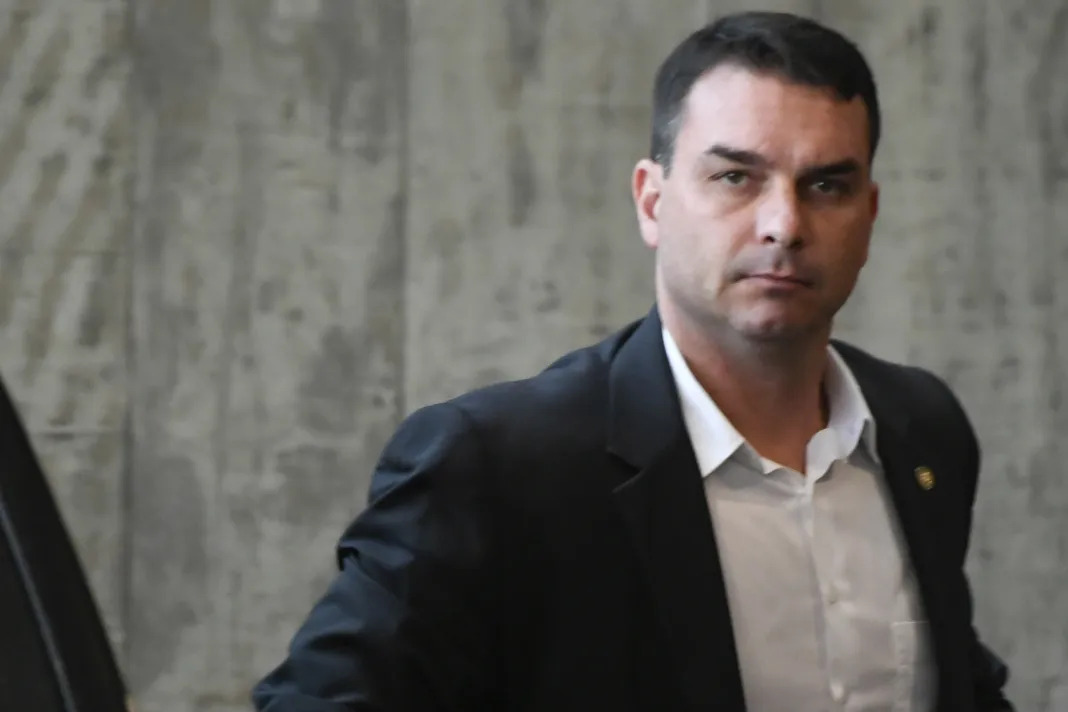
Senator Flávio Bolsonaro has presented a government program that would reshape Brazil’s top court. End presidential re-election and push hard on strategic minerals.
He laid out the plan, titled ‘Para o Brasil Vencer o Atraso’, as he formalizes his run for the presidency in October.
A Formal Program for 2026
Flávio detailed his government program on 13 August 2026, after weeks of releasing pieces of it in interviews and speeches. The document carries the name ‘Para o Brasil Vencer o Atraso’, or ‘For Brazil to Overcome Backwardness’.
It arrives after the Liberal Party (PL) officialized his candidacy at its national convention in São Paulo on 25 July 2026. The written plan fleshes out ideas he had been trailing for months.
The program spans the courts, the economy, security and social policy. Its most talked-about sections deal with the judiciary and with the country’s mineral wealth.
Ending Presidential Re-Election
One of the plan’s headline pledges is an end to presidential re-election. Flávio had already filed a proposed constitutional amendment on the point earlier in the year.
The proposal changes Article 14 of the Constitution. It would make the sitting head of the federal Executive ineligible for the same office in the following term.
By his own account, the rule would apply to whoever wins in October 2026. That would include himself, meaning he could not seek a second term in 2030.
Reshaping the Supreme Court
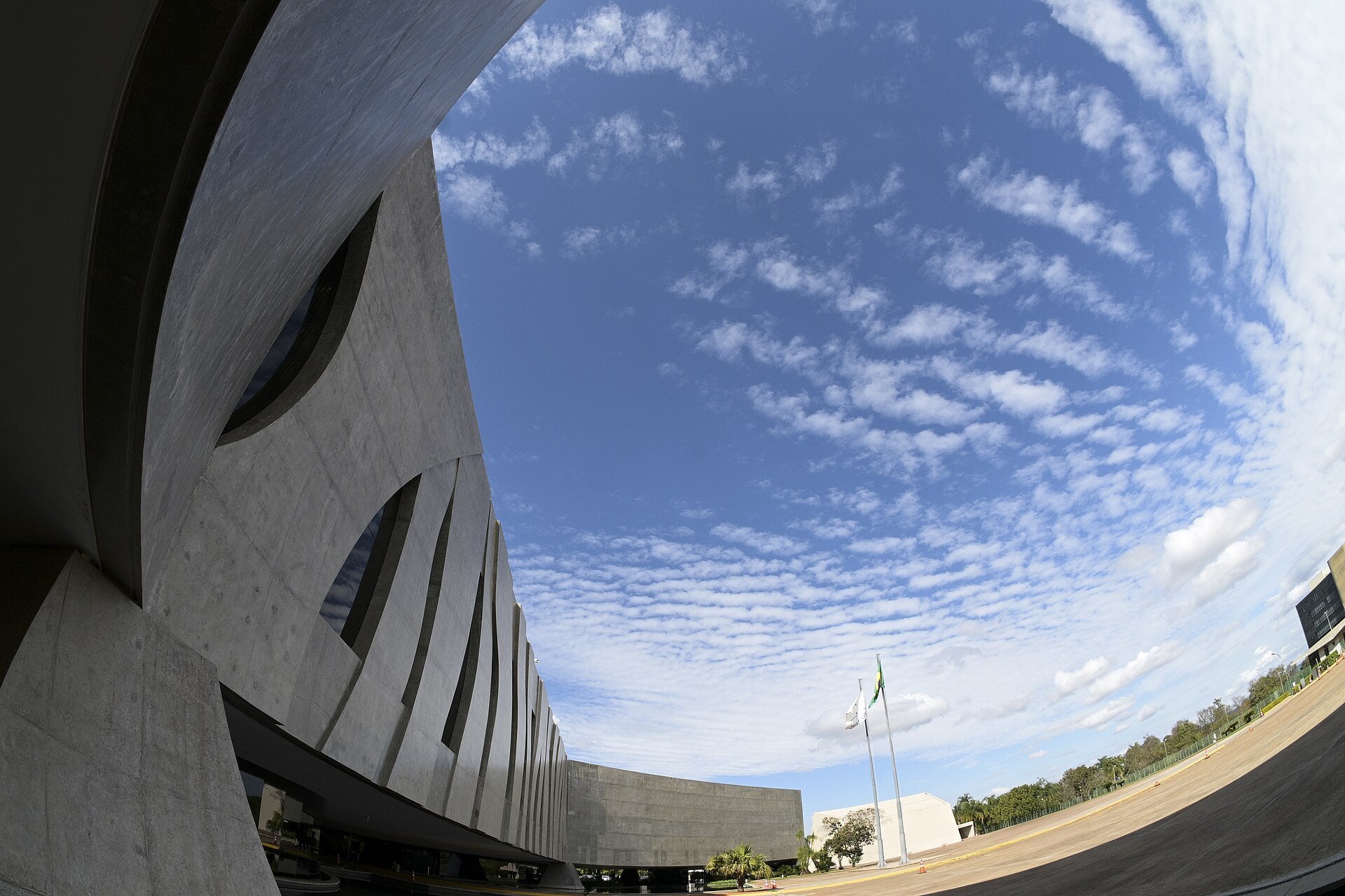
The most contested part of the program concerns the Supreme Federal Court, known as the STF. Flávio proposes stripping the court of its criminal jurisdiction over authorities.
Under the plan, parliamentarians and officials would still answer to the judiciary. But their criminal cases would move to bodies such as the Superior Court of Justice or the federal regional courts.
He frames it as a separation of roles, not as immunity. The idea, he argues, is to stop one court from both interpreting the Constitution and judging major political cases.
A One-Year Quarantine for Justices
The program also proposes a one-year quarantine tied to appointments to the Supreme Court. It would apply to people who had held a ministerial post or a state secretariat.
Such figures would have to wait a year before they could be named to the court. The stated aim is to slow the immediate passage of political actors onto the bench.
Flávio presents this as a way to shore up the perception of judicial independence. He has also pushed to limit solo rulings by individual justices on politically sensitive matters.
Betting on Rare Earths
On the economy, the plan puts a spotlight on rare earths and other critical minerals. It lists lithium, niobium, graphite, copper, nickel and rare earths as strategic priorities.
The goal, as written, is to keep Brazil from staying merely a raw-material exporter. It calls for more domestic processing to add value at home.
Flávio has tied the theme to closer strategic ties with the United States. That framing has drawn sharp pushback from parts of the left, which accuse him of giving away national resources.
Data Centres and Cheaper Energy
The program treats data centres and artificial intelligence as growth bets. It links them to the cost of electricity, a persistent complaint of Brazilian industry.
To draw such investment, the plan leans on cheaper, more reliable energy. Flávio has called for reorganizing the power sector to bring costs down.
The pitch fits a broader promise to modernize the economy. It sits alongside the mineral agenda as part of the plan’s technology and industry push.
A R$900 Billion Infrastructure Push
The plan also carries a large infrastructure ambition. It envisions mobilizing R$900 billion over four years for transport, about US$174 billion at the mid-August 2026 rate of R$5.16 per US$.
That money would go toward highways, railways, waterways, ports and airports. The financing would lean on privatizations and public-private partnerships rather than public spending alone.
The approach mirrors the liberal, market-first tone of the wider document. It leans on private capital to carry projects the state has struggled to fund.
Keeping Bolsa Família
On social policy, the program is less of a break than some might expect. It keeps Bolsa Família and similar income-transfer benefits in place.
The plan pairs that continuity with promises of better administration. It talks of tightening the programs and cutting fraud rather than scrapping them.
The choice signals an effort to reassure lower-income voters. Those benefits reach millions of households across the country.
Where Flávio Bolsonaro Stands
Flávio Bolsonaro is a sitting senator for Rio de Janeiro and the eldest son of former president Jair Bolsonaro. His party made him its presidential candidate on 25 July 2026.
His rise owes much to his father’s legal troubles. Jair Bolsonaro is ineligible to run, which pushed Flávio to the front of the family’s political project.
He now carries the Bolsonaro banner into a crowded race. The government program is his attempt to define what that banner stands for in 2026.
Critics and Open Questions
Not everyone is convinced by the detail on offer. Specialists quoted earlier in the year described several of his proposals as vague, with gaps still to fill.
The court measures are the sharpest flashpoint. Supporters cast them as a fix for legal overreach, while critics warn they could weaken checks on power.
The rare-earths plan splits opinion along familiar lines too. How the courts, Congress and voters respond will shape whether any of it becomes law.
Frequently Asked Questions
What is Flávio Bolsonaro’s government program called?
It is titled ‘Para o Brasil Vencer o Atraso’, meaning ‘For Brazil to Overcome Backwardness’. He detailed it on 13 August 2026.
What does the plan propose for the Supreme Court?
It would end the STF’s criminal jurisdiction, moving authorities’ cases to other courts. It also adds a one-year quarantine for certain appointees and limits on solo rulings.
Does the program end presidential re-election?
Yes, it backs an amendment to Article 14 ending presidential re-election. Flávio says the rule would apply to the winner of the October 2026 vote.
Why is Flávio Bolsonaro the PL candidate and not his father?
Jair Bolsonaro is ineligible to run, so the party chose his son. The PL officialized Flávio’s candidacy on 25 July 2026.
Sources: Poder360, Agenda do Poder, g1, O Globo, Veja, R7, Terra, CNN Brasil, BBC News Brasil.