By The Straits Times | Created at 2026-09-02 21:06:26 | Updated at 2026-09-02 21:59:53
59 minutes ago
By The Straits Times | Created at 2026-09-02 21:06:26 | Updated at 2026-09-02 21:59:53
59 minutes ago
PARIT BUNTAR/SELAMA, Perak – Whenever Parti Islam Se-Malaysia (PAS) deputy commissioner Misbahul Munir Masduki is in his constituency, he holds gatherings for more than 20 male party members and supporters.
The “family” gatherings, known as usrah in Arabic, are part of PAS’ grassroots political outreach, combining religious discussion, community ties and conversations about current affairs.
“At least once a month, I will meet them in the same village, but at different houses, to discuss religion and answer questions about current affairs,” Misbahul, the Parit Buntar MP in northern Perak state, told The Straits Times on Aug 23. Parit Buntar is a small town located just south of the Penang border.
Such grassroots organisation – combining religious outreach with community engagement – has been a key feature of PAS’ political activism in Perak and has since spread nationwide. Over the decades, the approach helped the opposition Islamic party build a durable support base among Malay-Muslim voters.
PAS’ roots in Perak stretch back to Malaya’s first general election in 1955, when the party – then known as the Pan-Malayan Islamic Party (PMIP) – won its sole parliamentary seat in Krian, which was later renamed Parit Buntar following successive electoral boundary changes.
From grassroots to political force
PAS has spent two decades building a formidable grassroots network in Perak, helping it overtake UMNO as the state’s dominant Malay political force in the 2022 general election.
Now, closer cooperation between PAS and UMNO – which are respectively part of Perikatan Nasional (PN) and Barisan Nasional (BN) – could strengthen PAS’ bid for state power at the next general election, due by February 2028. A win in Perak would allow PAS to expand its dominance beyond its current four-state bloc of Kelantan, Terengganu, Kedah and Perlis.
But seat negotiations, a fightback by ruling coalition Pakatan Harapan (PH) and the emergence of Parti Wawasan Negara could affect the electoral equation.
The religious gatherings are just one part of PAS’ grassroots machinery. Misbahul and his team also organise activities to strengthen ties with locals, including a 5km Independence Day brisk walk along a road flanked by irrigation canals and harvested padi fields.
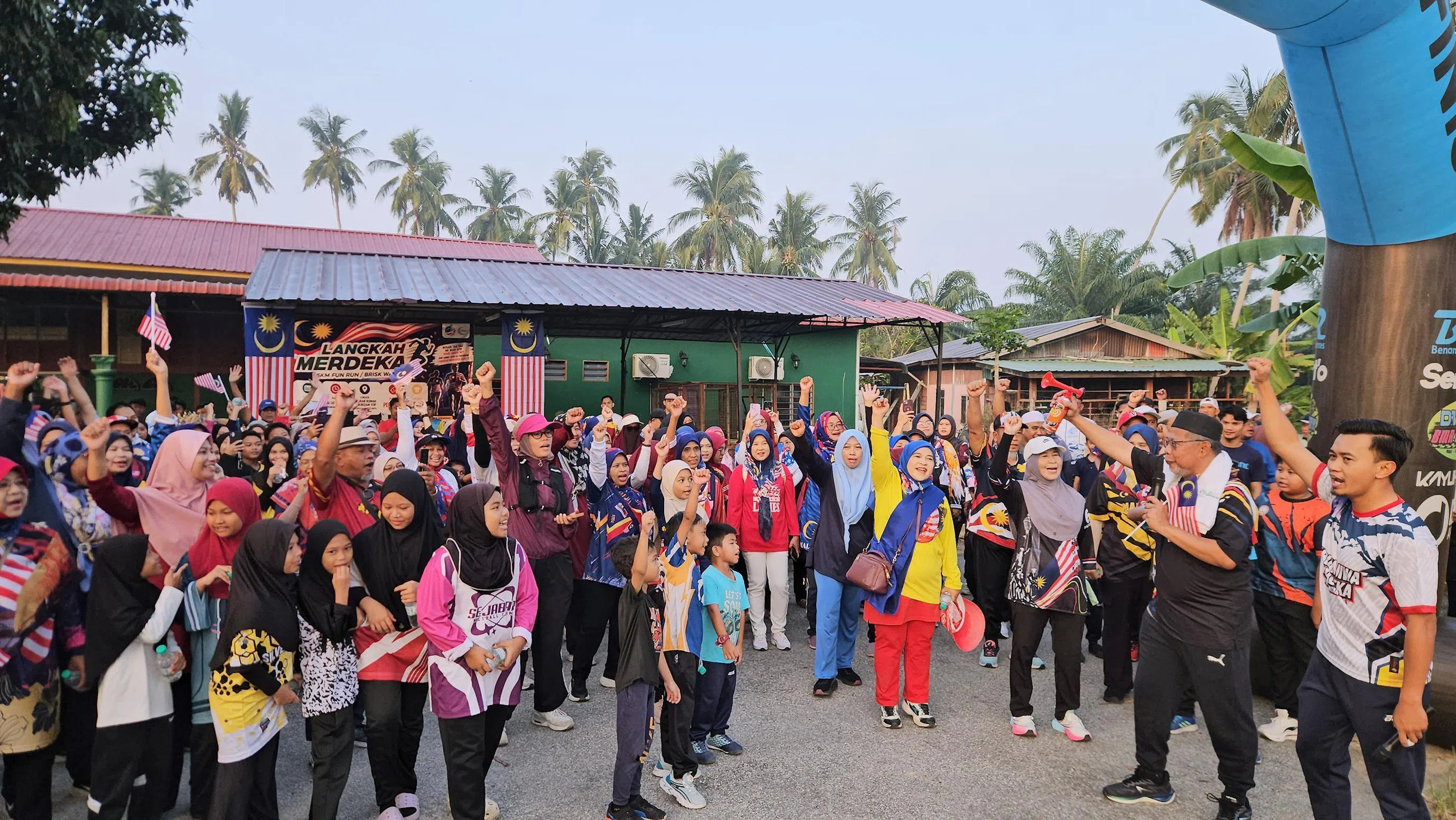
Northern Perak PAS MP Misbahul Munir (second from right) joining the Malaysia Independence Day brisk walk event at Batu Mosque, Kuala Kurau, Perak, on Aug 23.
ST PHOTO: LU WEI HOONG
They also distributed 50 boxes of basic food necessities, crowdfunded by party members and supporters, to needy residents.
That afternoon, Misbahul met 15 padi farmers to discuss rising pesticide prices and delayed government subsidies, promising to raise their concerns in Parliament. At the same time, his wife hosted a cake-baking workshop for 30 women.
Political analyst Kamles Kumar said Perak PAS could leverage its strong Islamic education networks and rural grassroots movements to BN’s advantage.
“With rising conservatism and PAS’ growing rural support base in Perak, messaging from Parti Amanah Negara (Amanah) – the PH component party tasked with countering PAS – may fall on deaf ears,” Kamles, the Malaysia country lead at Asia Group Advisors, told ST.
“Its less charismatic and more progressive stance limits its ability to appeal to voters already sceptical of PH.”
Except in 2018, PAS has secured close to 40 per cent of the vote in Parit Buntar at every general election since its first contest there.
In the 2022 general election, PAS emerged as the dominant Malay political force in Perak, winning four of the 24 parliamentary seats and 17 of the 59 state seats; UMNO was reduced to two parliamentary seats and eight state seats.
UMNO president Zahid Hamidi narrowly retained southern Perak’s Bagan Datuk, winning by just 300 votes. With support from PH, UMNO eventually formed the Perak state government and joined the federal government as a junior partner.
Old foes, new calculations
The political landscape shifted in 2026, as BN and PN moved towards closer cooperation in Negeri Sembilan, while running separate campaigns in Johor.
PAS is holding its annual party congress, or muktamar, from Sept 2 to 5 in Kota Bharu, Kelantan.
The recent state polls have strengthened the case for closer PAS-UMNO cooperation in Malay-majority areas such as Perak, even as the political landscape within opposition bloc PN becomes more fluid.
Wawasan, formed largely by former Bersatu figures, has emerged as a new player, potentially broadening PN’s appeal among Malay voters less inclined towards PAS’ religious narrative.
However, as both are component parties of PN, Wawasan and PAS could complement each other, appealing to different segments of the Malay electorate rather than competing for the same voters.
Adib Zalkapli, managing director of geopolitical risk firm Viewfinder Global Affairs, said: “Wawasan could be useful in winning over moderate Malay voters who may not be too comfortable with PAS.”
Perak PAS deputy commissioner Akmal Kamarudin welcomed a united PAS-UMNO front in Perak, modelled on Negeri Sembilan. Ahead of the Aug 1 state election, BN and PN cooperated in the contest and went on to win a two-thirds majority, defeating the incumbent PH government.
“My personal view is for PAS and UMNO to work together as they did in Negeri Sembilan. It’s more harmonious. But we don’t mind going solo. We will adhere to the central leadership’s decision,” Akmal told ST on Aug 22 while visiting his constituents in Selama, a Malay-dominant seat in northern Perak.
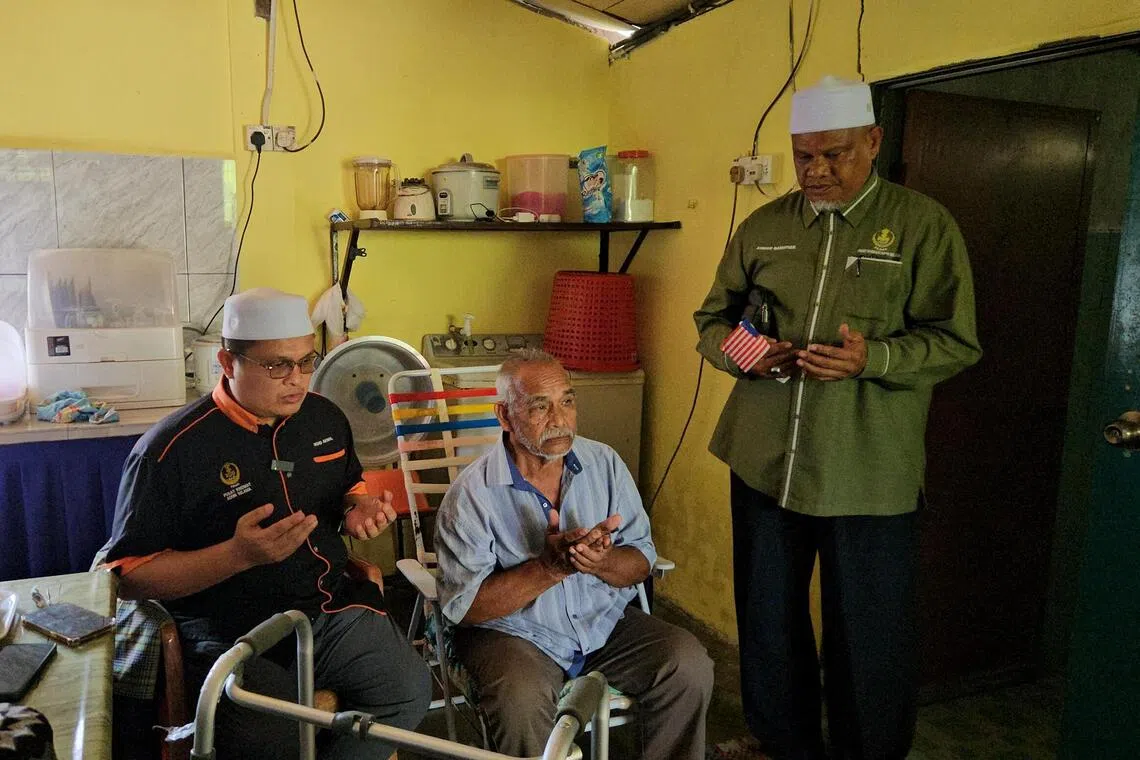
Northern Perak PAS assemblyman Akmal Kamarudin (left) and his right-hand man, Ahmad Bakhtier Muslim (right, green shirt), offering a prayer during a pre-Independence Day appreciation visit in Selama, Perak on Aug 22.
ST PHOTO: LU WEI HOONG
PN chairman Ahmad Samsuri Mokhtar said PN’s chances of winning Perak could rise to 75 per cent if it were to cooperate with BN, based on PN’s analysis.
But he warned that seat negotiations could be a stumbling block.
“With such a high winning chance, I believe BN will try to claim seats from us... If grassroots leaders receive invitations to meet them
, inform the party leadership. Don’t go alone
... Don’t promise or give them hope that they may contest any seat,” Samsuri, who is also a PAS vice-president, told hundreds of delegates at the Perak PAS convention on Aug 9.
While welcoming the Malay-Muslim unity narrative, UMNO Parit Buntar division deputy chief Mua’ammar Ghadafi Jamal said the leadership should be cautious in choosing allies to form a government. “Sincerity is the key,” he told ST.
Political analyst Adib says a PAS-UMNO alliance could materialise amid the current push for Malay unity.
“(But) seat negotiations will be the trickiest part between the two. Giving up safe seats to another party for the sake of what they call Malay unity is a difficult proposition. Very likely, the negotiations will be influenced and shaped by division leaders,” he told ST.
He added that PH needs to prepare to contest Perak on its own, without UMNO.
Still, four out of five northern Perak Malay voters interviewed by ST support PAS, including street food vendor Kak Ani, 46. She praised Perak assemblyman Akmal for helping resolve a past shop-lot dispute.

Northern Perak PAS assemblyman Akmal Kamarudin (right) and his Mandarin-fluent right-hand man, Ahmad Bakhtier Muslim (centre, green shirt) delivering aid to a Chinese senior citizen on Aug 22.
ST PHOTO: LU WEI HOONG
“I couldn’t operate at my old site, but he stepped in with government agencies to help. He even buys my kuih for charity during Ramadan,” she told ST after serving a bowl of laksa on Aug 22.
To broaden his appeal among non-Malay voters, many of whom have traditionally backed PH, Akmal brought in Mandarin-speaking PAS grassroots leader Ahmad Bakhtier Muslim, 60, to assist with a visit to senior citizens born before Malaysia’s independence.
Ahmad greeted an 83-year-old Chinese grandmother, asking: “Popo, how is your health?” before Akmal presented her with a goodie bag, cash aid and a Malaysian flag to mark Independence Day, which fell on Aug 31.
To assuage Chinese voters’ concerns about pork supplies following the closure of a pig farm in neighbouring Selangor in February, Akmal said that existing pig farms in Perak will not be shuttered as long as they fulfil zero-pollution discharge requirements.
“It’s a non-Muslim’s right to eat pork, as long as there is no pollution. Not only pig farms, but poultry, goat and cattle farms must also adhere to zero-pollution requirements,” he told ST.
Perak has about two million voters, of whom 34 per cent are Chinese and 12 per cent are Indian, with the remainder being Malay. This makes non-Malay support potentially important in a state where PAS’ strongest base is Malay-Muslim.
PH fights back
To challenge PAS’ strength in northern Perak’s Malay-Muslim belt, Pakatan Harapan component Amanah is pushing back.
Led by deputy president Mujahid Yusof Rawa, who lost Parit Buntar in 2022, the team is running targeted activities to rebuild support.
“We have 2,500 members in 60 branches who help us run constituency work,” Parit Buntar Amanah chief Adnan Abd Rahman told ST, expressing hope that PH and Umno can sustain their cooperation in Perak.
One such effort to reconnect with younger voters was an Aug 21 youth meet-and-greet in Parit Buntar, where 30 attendees received food aid boxes and a briefing on government entrepreneurship grants.
Among those receiving aid was Junairi, a 28-year-old factory worker. But he remains unsure who to vote for, saying the political alliances could still change.
“The coalition cooperation could change at any time. So let’s see how it goes,” he said, between bites of hot beef noodle soup served at the event.