By The Straits Times | Created at 2026-08-02 21:26:33 | Updated at 2026-08-03 03:39:21
6 hours ago
By The Straits Times | Created at 2026-08-02 21:26:33 | Updated at 2026-08-03 03:39:21
6 hours ago
JOHOR BAHRU – After two years of running a French pastry central kitchen in the Bandar Dato Onn suburb, Annie Low decided to relocate her business closer to downtown Johor Bahru earlier in 2026, hoping that the upcoming Rapid Transit System (RTS) Link will attract a new wave of customers.
The 26-year-old found an ageing bungalow in Taman Abad, a neighbourhood just outside the JB city centre, for about RM10,000 (S$3,140) a month in rent, cheaper than the rent for shops in the city centre.
Together with two business partners, she spent nearly RM500,000 transforming the decades-old house into Shuu Patisserie, a European cottage-style cafe in a quiet residential estate.
“I wanted to take a shoplot in town, but I feel that people will think, ‘Oh, it is just another cafe’,” Low told The Straits Times during a recent interview at her cafe.
“With my new space, I wanted people to have an experience they couldn’t find elsewhere. And with the RTS Link coming, I am hoping to capitalise on my current customer base from Dato Onn and also try to get the Singaporean crowd too,” said the Malaysian.
Low is among entrepreneurs who are turning or have turned homes in areas near the JB city centre into cafes and lifestyle joints in anticipation of the RTS Link, which is expected to start operations in January 2027.
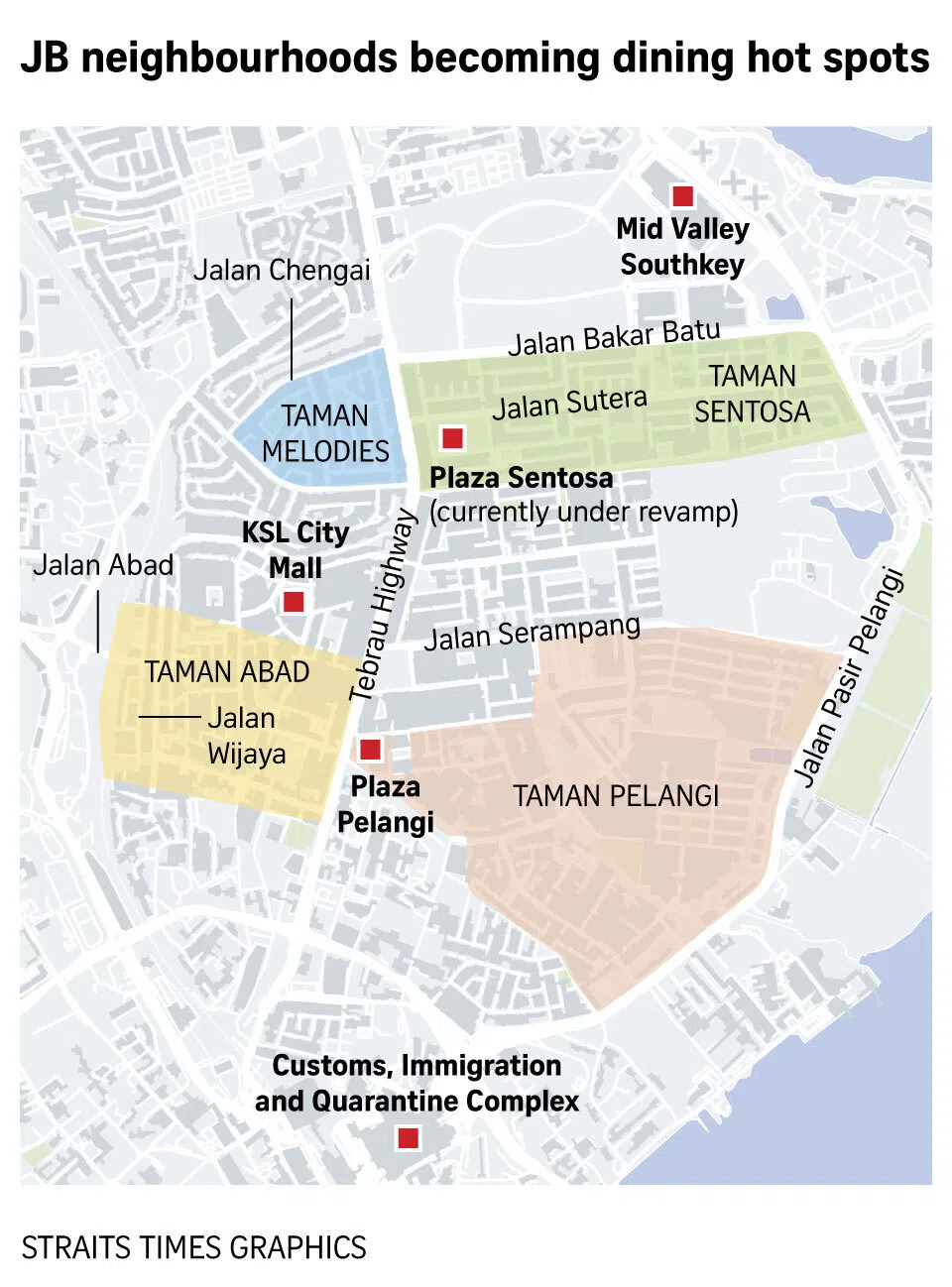
Older bungalows and semi-detached houses in areas such as Taman Melodies and Taman Sentosa are being converted into cafes, restaurants, salons, event spaces and hostels, transforming once-quiet residential streets into lifestyle destinations.
In Johor Bahru, a home cannot legally be used as a cafe without first being converted to commercial use through approval from the state government. The owner must also obtain planning approval and the necessary business permits from the Johor Bahru City Council (MBJB) before renovations or operations can begin.
Betting on old JB neighbourhoods
A drive through the neighbourhoods reveals homes under renovation and former residences now operating as businesses, including a once-dilapidated bungalow reborn as a three-storey mansion serving Chinese cuisine.
There are nearly 300 food-and-beverage outlets across Taman Melodies, Taman Abad, Taman Sentosa and Taman Pelangi, according to real-time data from MBJB’s geomap database.
Johor property analyst Samuel Tan of Olive Tree Property Consultants said: “We are seeing a distinct wave of rejuvenation in mature, older neighbourhoods just outside the immediate city centre, places like Taman Pelangi, Taman Melodies, Taman Century and Kampung Melayu.
“This trend is very real and gaining momentum quickly,” he added, noting that it is driven by the upcoming RTS Link as businesses position themselves to capture spending by Singaporeans, who have a “massive appetite” for dining and wellness services.
He added: “The demand from locals is not much different, especially the younger folk. Old bungalows offer something standard commercial shoplots simply cannot, such as mature gardens, high ceilings, spacious alfresco areas and a distinct retro or secret garden aesthetic.”
Concern over increase in rents in JB
The opening of new lifestyle businesses in areas around the JB city centre comes amid concerns about a rise in rental prices ahead of the RTS Link opening.
A joint study by the Singapore Business Federation, Restaurant Association of Singapore and Singapore Retailers Association released on July 16 projects that Singaporeans will spend an additional $1.05 billion in Johor Bahru in 2027 once the RTS Link begins operations.
It also forecasts a 51 per cent increase in cross-border trips, with groceries, dining, beauty services and pharmaceuticals among the biggest spending categories.
One Malaysian investor, who declined to be identified citing sensitivity over rental prices, said he had acquired two shoplots in Johor Bahru’s heritage district, a bungalow in Taman Melodies, a car wash site near KSL City Mall and several other properties over the past two years.
He told ST that he had more than doubled the rent of some units because of the upcoming RTS Link. “To my surprise, some of the tenants are still willing to pay because the footfall, especially from Singaporeans, is good,” he said.
ST could not independently verify the rental increases across his property portfolio. Checks on PropertyGuru show downtown Johor Bahru shoplots renting for RM8,000 to RM25,000 a month, while commercial bungalows in Taman Melodies and Taman Sentosa start from RM15,000. These bungalows sit on land lots ranging from 5,000 sq ft and command rents of about RM2.47 to RM3.70 per sq ft.
Jia Jun Lew, managing director of F&B-oriented holdings firm Fire Pitz Group, has had to absorb soaring rents to keep operating Flame & Fern. The cafe serves char-grilled specialities from a repurposed bungalow in Jalan Chengai, Taman Melodies, located less than 10 minutes from the Johor Bahru checkpoint.
When he first leased the property in 2023, his monthly rent was RM7,000, and it was increased to RM18,000 when the tenancy was renewed in 2026. He bit the bullet as business is good.
“Every weekend, around 70 per cent to 80 per cent of reservations for Flame & Fern are all from +65 numbers,” said the 36-year-old, referring to Singapore’s telephone country code.
He described higher rents and tougher competition from foreign businesses as a “new reality” that requires constant innovation, staff training and premium pricing.
“This is a good sign for me, and the market is really changing,” he said, adding that the average spending per customer at his cafe is between RM80 and RM100 for a complete meal.
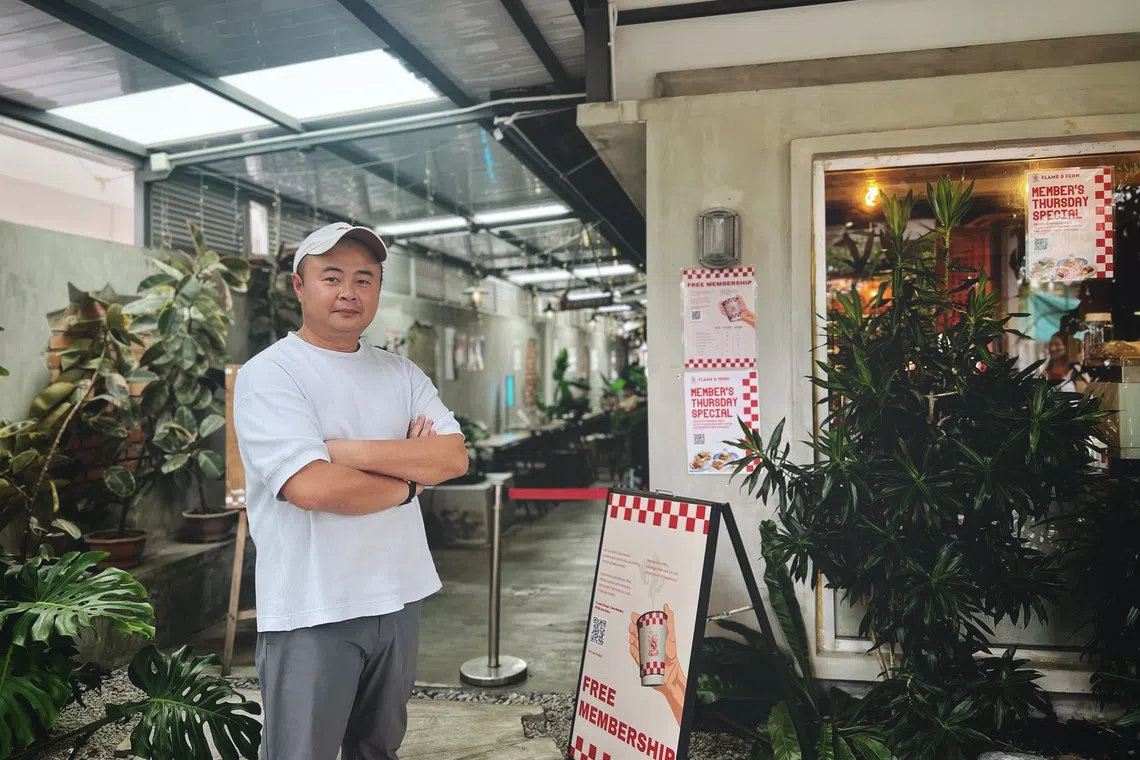
Jia Jun Lew, managing director of Fire Pitz Group, at his cafe Flame & Fern, which occupies a repurposed bungalow in Jalan Chengai in Johor Bahru.
ST PHOTO: HARITH MUSTAFFA
The same pressures, however, weigh heavily on Safi Udin, who has been running a car wash and a mamak diner near KSL City Mall for more than a decade. He fears he might lose out to the competition.
“You look around here, there has been more (mainland) Chinese investors opening up wellness centres and restaurants,” said the 50-year-old.
“If they find that my location is good and offer a higher price to my landlord, it is going to be difficult for me to counter their offer.”
Heavier commercial activity in neighbourhoods, a strain on residents
While businesses are hopeful about the increased footfall that the RTS Link would bring, residents of the neighbourhoods around the city centre worry about worsening congestion, noise and parking shortages.
Accounts assistant Niccole Liau, 43, who rents an apartment near Taman Melodies, said the growing number of cafes, restaurants and foreign businesses in residential areas was becoming “too much”, with patrons flouting local rules by parking along narrow roads.
Some home owners have put up “no parking” signs on their gates and fences.
Former Johor Bahru parliamentary officer Stanley Tan said his parliamentary office received hundreds of complaints over the past year regarding noise, parking and illicit hostels operating in residential homes.
He pointed to complaints about bungalows converted into key-card-access hostels with multiple rooms housing migrant workers and Malaysians commuting to Singapore for work daily.
Olive Tree’s Samuel Tan said parking is often the biggest challenge when older homes are converted for commercial use, forcing owners to pave over gardens or lease nearby lots.
“The city council requires a Traffic Impact Assessment or specific parking provisions to alleviate the situation,” he said. “A bungalow designed for two cars cannot suddenly host 30 cafe patrons without causing severe neighbourhood congestion.”
Sign up for our weekly Asian Insider Malaysia Edition newsletter to make sense of the big stories in Malaysia.