By The Straits Times | Created at 2026-07-18 16:11:42 | Updated at 2026-08-02 19:03:47
2 weeks ago
By The Straits Times | Created at 2026-07-18 16:11:42 | Updated at 2026-08-02 19:03:47
2 weeks ago
JOHOR BAHRU – At the lobby of Johor’s Forest City Marina Hotel, a cafe has an exclusive menu and clientele. It serves high-protein meals alongside coffee and tea, but only to members of a technology commune.
Dozens of young people in sneakers and sweatshirts fill the plush sofas in the glass-clad lobby overlooking Singapore’s Tuas across the Johor Strait. They are hooked up to their laptops, practising a pitch, or swopping ideas on the latest tech projects they are building.
They are participants of Network School. And for the struggling man-made metropolis in Malaysia’s southernmost state of Johor which has a reputation as a “ghost town”, the commune is perhaps its most visible pocket of life.
While the self-styled “frontier community” of about 200 tech enthusiasts from around the world sees itself as a place where ambitious ideas can come true, elsewhere in Malaysia it has become the centre of a controversy for allegedly hosting Israeli citizens.
“All that’s been reported in the media are all rumours and speculations,” said one Network School participant.
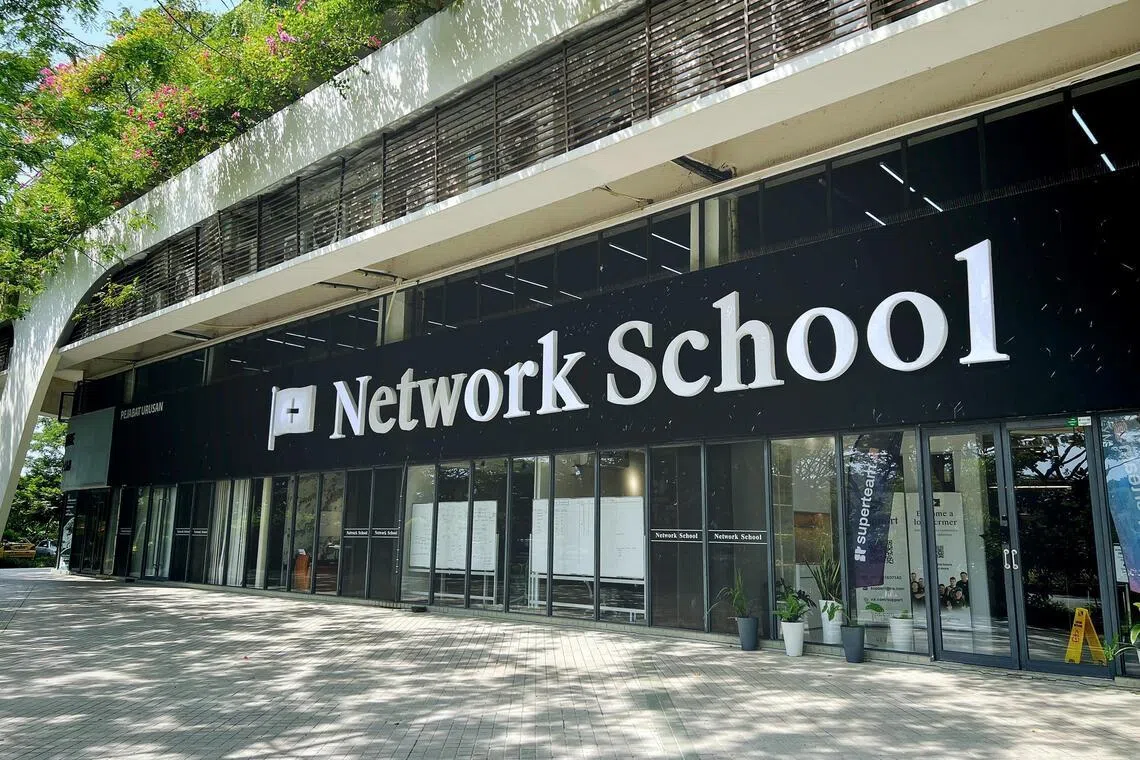
Network School was launched in 2024 by American entrepreneur and investor Balaji Srinivasa.
ST PHOTO: HARITH MUSTAFFA
All of the participants who spoke to The Straits Times did so on the condition of anonymity – it is understood that they were issued a gag order and risked expulsion if they spoke to the media.
On July 15, Prime Minister Anwar Ibrahim said that any Israeli citizens who are in Network School would immediately be deported.
Malaysia does not have diplomatic ties with Israel owing to its pro-Palestine stance. Israeli passport holders are barred from entering Malaysia unless granted special permission by the Home Ministry.
However, Israeli citizens cannot be barred if they enter using passports from other countries – itself a practice that is not unlawful.
When ST visited Forest City on July 16, staff and participants said immigration officers had conducted checks at the hotel the day before. The Immigration Department said on July 15 that 266 people from 40 countries had been investigated, and their immigration documents appeared to be in order.
Why participants are buying into the Network State
Network School was launched in 2024 by American entrepreneur and investor Balaji Srinivasan – who was formerly chief technology officer of cryptocurrency exchange Coinbase.
It is essentially a co-living and co-working space for tech professionals, entrepreneurs and content creators. For US$1,500 (S$1,940) a month, it offers hotel accommodation, meals, gym access, and tech workshops and hackathons.
As a comparison, a check on property website PropertyGuru found that renting a one-bedder apartment in Forest City costs as low as RM1,100 (S$350) a month.
The school’s operations are split between the Forest City Marina Hotel, which houses participants, its members-only cafe and event spaces, and a management office at the nearby Starview Bay residential block.
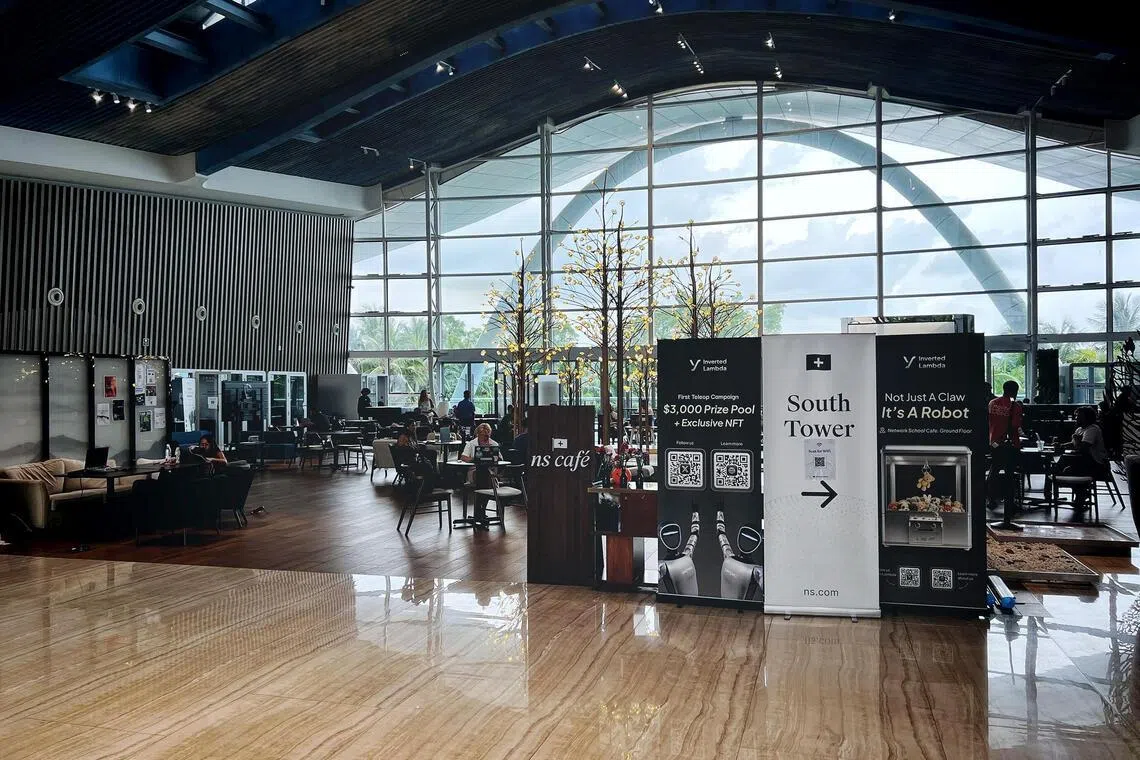
Network School’s ns cafe at the Forest City Marina Hotel lobby.
ST PHOTO: HARITH MUSTAFFA
The crackdown has since been criticised by Srinivasan, who said it will now put a planned RM500 million expansion in Malaysia on hold. He is now seeking to meet Anwar to discuss the matter.
In a lengthy post on social media platform X, Srinivasan also directed barbs at activist group Malaysia Protest 4 Palestine (MP4P), which surfaced the accusation on social media.
“We aren’t talking about a credible accuser, but just someone screaming inconsistently at the top of their lungs on social media for traffic, an all-too-common phenomenon these days,” he wrote.
MP4P had cited among others, the presence of Israeli content creator Nuseir Yassin, better known as Nas Daily, who appeared in a 2025 promotional video for Network School. Yassin had in 2022 said he managed to enter Malaysia despite the ban – by entering Johor Bahru via Singapore using a Saint Kitts and Nevis passport.
For now, participants told ST that programmes were continuing as normal despite the controversy.
One participant from South Asia said the programme is far cheaper than similar tech communes in Silicon Valley and in the United Arab Emirates, which they said can cost three to five times more.
Those who spoke to ST are also true believers in Srinivasan’s vision of a “Network State” – a futuristic ideal where online communities can crowdfund and eventually establish new countries with the eventual goal of attaining “diplomatic recognition” from existing governments.
One college dropout in his 20s said he grew up in a small town without access to a strong tech community, and could now bypass conventional education and career paths to build start-ups alongside others with similar ambitions.
Another participant lauded the concept of removing “friction” created by traditional institutions such as schools and governments, allowing people to fully develop what believers call their “dark talent” – or unrealised potential.
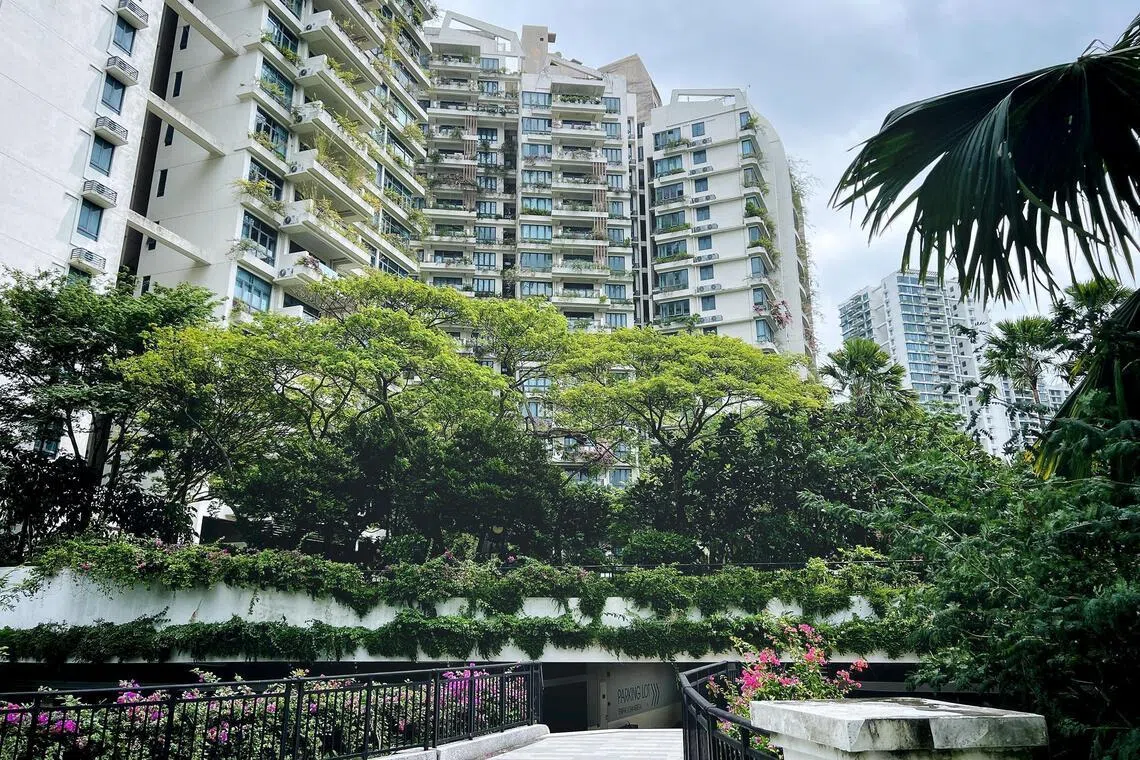
A block of residential apartments in Johor's Forest City.
ST PHOTO: HARITH MUSTAFFA
Farlina Said, director of cyber and technology policy at think-tank Institute of Strategic and International Studies Malaysia, said “knowledge communities” like Network School are not new.
Despite that, she explained how there may be tension over how Network School’s broader benefits fail to contribute to Malaysia’s tech and talent-building efforts.
“The community may be unconnected to other innovation circles in Malaysia, which affects the potential positive impact on local communities though such programmes are purposefully designed to cultivate creativity,” said Farlina.

Rows of vacant shops at Fisherman Wharf in Forest City.
ST PHOTO: HARITH MUSTAFFA
Pressure on Forest City as it recovers from ‘ghost city’ tag
The allegations may also complicate Johor’s efforts to re-inject life into the US$100 billion Forest City mega project by Chinese developer Country Garden Pacificview after years of criticism over its low occupancy.
The project, which initially was meant to house a population of 700,000 people across four man-made islands, is only 15 per cent complete with roughly 1 per cent of the targeted population living there.
Srinivasan said on X he had invested RM100 million to establish the school and said that Network School has created “dozens” of jobs for Malaysians.
Yet, signs of Forest City’s slow recovery remain evident. During ST’s visit, many retail units stood vacant.
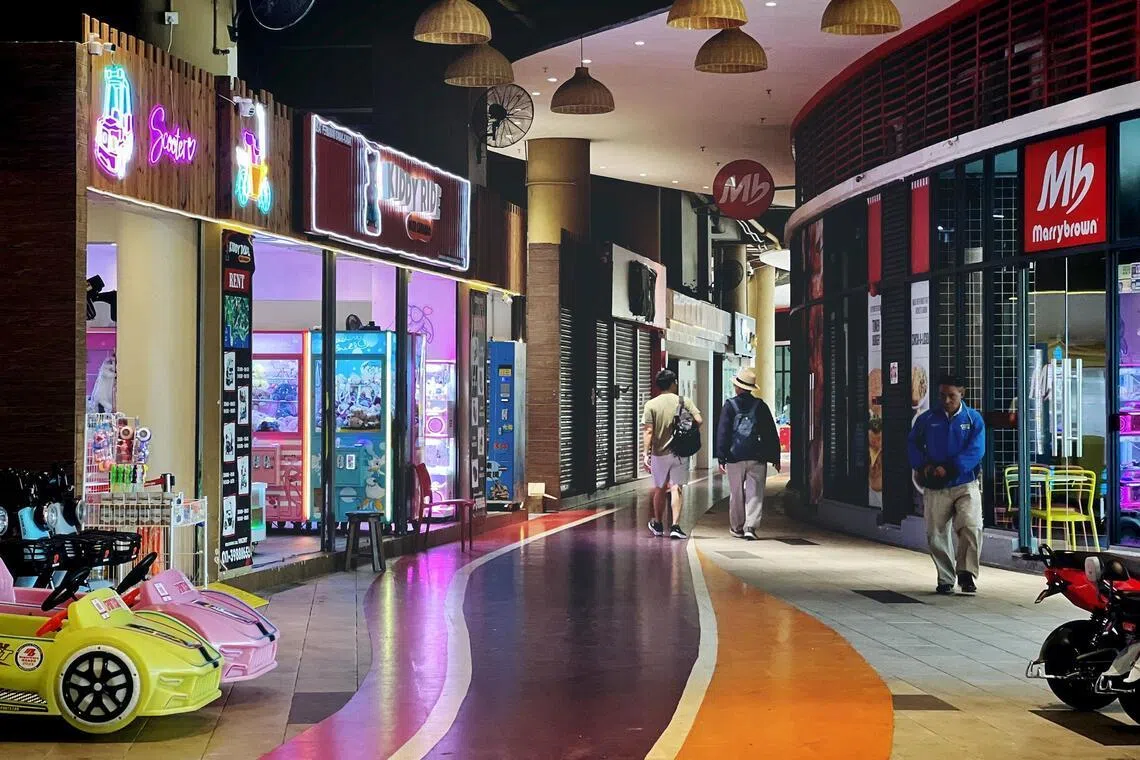
A row of shops at the Fisherman Wharf in Johor's Forest City.
ST PHOTO: HARITH MUSTAFFA
Apart from golf shops and a handful of fast-food outlets, most businesses were sparsely stocked convenience stores selling random household goods and trinkets, and partially furnished eateries.
Nur Mia, 25, who moved from Sabah to Johor in 2025 to work as a cashier at a restaurant near one of Network School’s premises, said that the news reports alleging Israeli involvement had made her feel worried about her safety.
But she also worries that if the school pulled out of Forest City, she might lose her job.
“In the past year I’ve noticed more and more customers, mostly foreigners, coming to eat at our restaurant. They mostly come at night,” said Mia. “But if this place becomes quiet again, I worry I might lose my job.”

A convenience shop at Forest City's Fisherman Wharf.
ST PHOTO: HARITH MUSTAFFA
Srinivasan has hinted at moving Network School elsewhere if Malaysia is not comfortable with it, writing on X: “If you don’t want our investment, or those of our colleagues at billion-dollar funds and trillion-dollar companies, we will of course respect your wishes and reallocate our capital to other countries instead.”
In the replies, his supporters commented that it should have just relocated elsewhere, such as to India. Malaysian critics retorted by saying Srinivasan is welcome to do so, among others saying how Network School barely employs Malaysians.
Johor-based property analyst Samuel Tan from Olive Tree Property Consultants said the episode could dent investor sentiment. But he downplayed the possibility that it may undermine Johor’s broader investment story.
He said bigger projects like the Johor-Singapore Special Economic Zone and the RTS Link project linking Singapore and Johor would continue to spur investment into the state.
“Forest City has spent years shedding its ‘ghost town’ image. Any reputational shock weighs on buyer sentiment in the near term,” he said.
Johor state investment agency Invest Johor’s chief executive Natazha Harris concurred. He told ST the issue is unlikely to affect investors in the long term, as Johor is mainly focused on advanced manufacturing, production and diversifying the supply chain – with significant investment interest from China.
“We basically don’t have issues with their activities which are mainly facilitating start-ups and capital flows, and their operations are mainly to provide training and a platform for tech start-ups, but their ideology is what is causing discomfort for the state,” he explained.
“It’s in a different sector of focus altogether,” he said, referring to Network School’s involvement with start-ups. “We don’t see it causing a shock to the market or our investors.”
Sign up for our weekly Asian Insider Malaysia Edition newsletter to make sense of the big stories in Malaysia.