By The Rio Times | Created at 2026-10-08 15:47:04 | Updated at 2026-10-08 19:13:27
4 hours ago
By The Rio Times | Created at 2026-10-08 15:47:04 | Updated at 2026-10-08 19:13:27
4 hours ago
GUYANA · PEOPLE AND CULTURE
Key Facts
- —The country Guyana, an English-speaking South American nation of 878,674 people (2022).
- —Largest groups Indo-Guyanese 39.8%, Afro-Guyanese 29.2%, mixed 19.9% (2012 census).
- —Indigenous peoples Nine nations, 10.5% of residents in the 2012 census.
- —Faith Hindus 24.8%, Christians about 64%, Muslims 6.8% (2012 census).
- —US diaspora 273,423 Guyana-born US residents in 2024; 121,231 in New York City.
- —Still open Ethnic and religious results of the 2022 census are unpublished.
Census data on Guyana’s ethnic groups, its languages and festivals, and the large Guyanese diaspora in New York and Florida.
Guyanese people descend mainly from India, Africa and the country’s nine Indigenous nations, with mixed, Portuguese and Chinese minorities. Guyana counted 878,674 residents in its 2022 census, about the population of San Francisco.
More than a quarter of a million people born in Guyana now live in the United States, mostly in New York.
Who the Guyanese People Are by the Numbers
The Bureau of Statistics, the national statistics office, published its last full ethnic breakdown from the 2012 census. That census counted 746,955 people and sorted them by race or ethnic background.
The bureau describes six main groups plus a mixed group, all “fused together by a common language, that is, English.” Here is how the 2012 count looked:
- Indo-Guyanese (the census term is East Indian): 297,493 people, or 39.8%. Most descend from indentured labourers brought from India.
- Afro-Guyanese (African or Black): 218,483, or 29.2%. Most descend from Africans enslaved on colonial plantations.
- Mixed heritage, any combination of the groups: 148,532, or 19.9%.
- Amerindians, the census term for Indigenous peoples: 78,492, or 10.5%.
- Portuguese: 1,910, or 0.26%. Their forebears came mainly from the Atlantic island of Madeira.
- Chinese: 1,377, or 0.18%. Whites of other European origin: 415, or 0.06%.
The mix has shifted. In 1980 East Indians were 51.9% of the population and mixed Guyanese only 11.2%.
Mixed and Amerindian numbers nearly doubled between 1980 and 2012, while the two largest groups shrank. The bureau tentatively links that to emigration from the coast, where most Indo- and Afro-Guyanese live.
The 2022 census counted 878,674 people on census night, 14 to 15 September 2022. That was 17.6% more than in 2012.
Its preliminary report, released on Monday, 12 January 2026, gives headcounts only. It has no ethnic or religious tables, and the bureau’s census page listed no final report as of 8 October 2026.
The bureau estimated the population at 956,044 at the end of 2024. Foreign-born residents rose to 3.07% in 2022, from 1.10% in 2012.
The government links that rise to new economic opportunities.
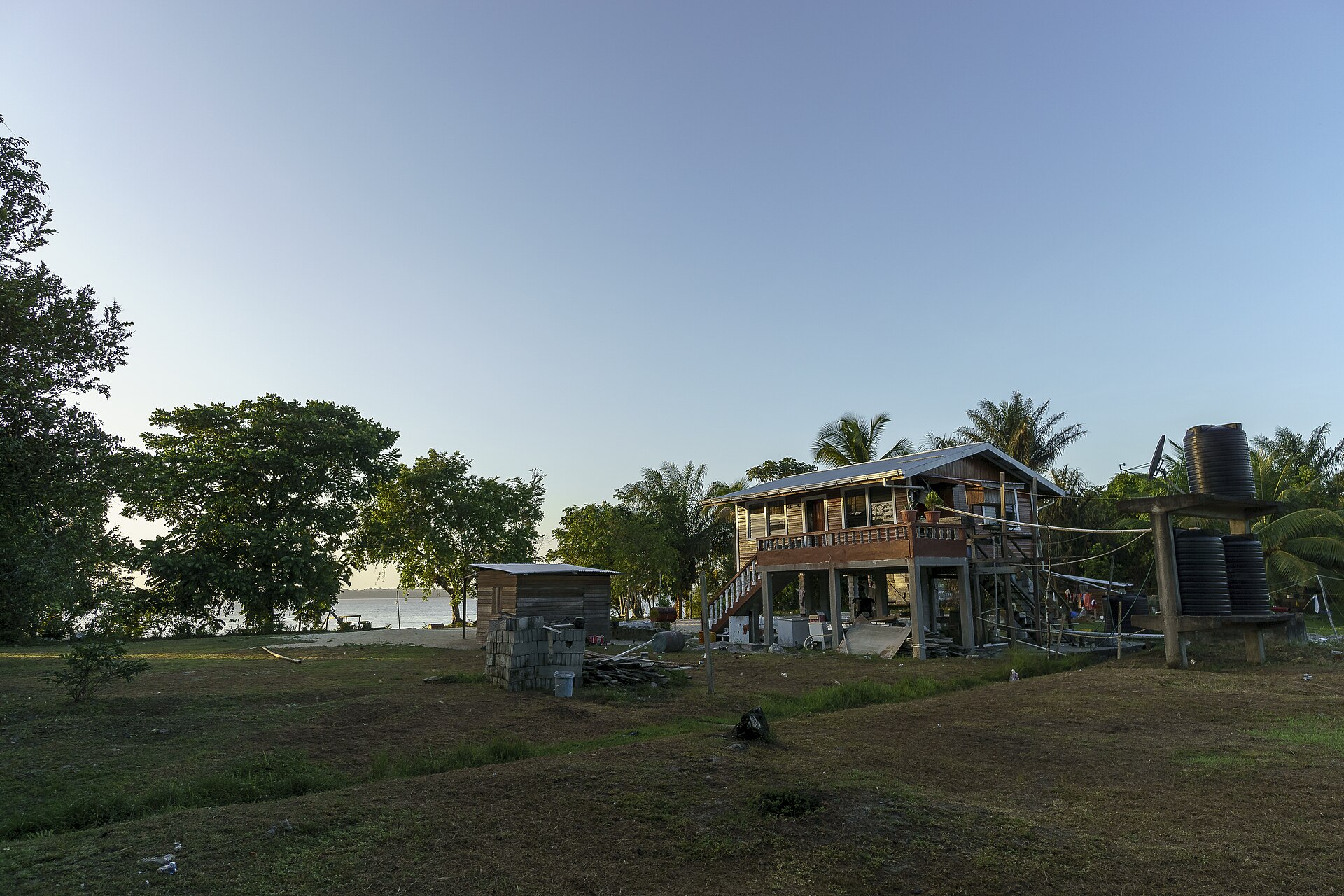
How Slavery and Indentureship Shaped Guyana
Indigenous peoples were the first inhabitants and stewards of the land, said President Irfaan Ali, the head of state. He was giving his Arrival Day message on Tuesday, 5 May 2026.
Africans, he said, were brought by force in the transatlantic slave trade and enslaved until emancipation in 1834. Waves of indentured labourers, bound by contract for a fixed term, and other migrants followed.
Portuguese migrants, mainly from Madeira, began arriving in 1835. The first Indian indentured labourers landed on 5 May 1838 aboard the ship Hesperus.
Between 1838 and 1917, about 240,000 Indians were brought to what was then British Guiana. Chinese indentured labourers followed from 1853.
Guyana became independent from Britain in 1966 and a republic on 23 February 1970. Smaller groups from other regions also added to the mix, Ali said in May.
Opening the Guyana Festival on Friday, 15 May 2026, Ali said colonialism left the country “divided by design.” He urged Guyanese to leave behind “the politics of suspicion” and ethnic comparison.
His government’s “One Guyana” slogan is pitched as the answer to that history. For the politics and the oil economy behind it, see Guyana explained.
Where Each Community Lives
Most Guyanese live on a narrow coastal strip. The coastland holds 87.16% of the people on 32.39% of the land, the 2022 count shows.
The country covers about 83,000 square miles, roughly the size of Idaho. Yet it averages only about four people per square kilometre, or roughly 11 per square mile.
Guyana is divided into ten numbered administrative regions. Region 4, Demerara-Mahaica, around the capital, had 347,759 people in 2022.
Georgetown itself counted 125,683.
The 2012 census shows a clear ethnic geography. East Indians formed 66.0% of Region 6, East Berbice-Corentyne, and 59.6% of Region 3, just west of the capital.
Afro-Guyanese were 49.0% of Region 10, home to the mining town of Linden, and 40.6% of Region 4.
Amerindians were 85.8% of Region 9, the Rupununi savannahs along the Brazilian border, and 72.3% of Region 8. Mixed Guyanese were the largest group in Region 7, Cuyuni-Mazaruni, at 40.9%.
Languages: English, Creolese and Nine Indigenous Tongues
English is the official first language, says the Guyana Tourism Authority, the state tourism agency. It calls English Creolese, usually just Creolese, the most commonly spoken language.
Creolese is an English-based Creole: most words come from English, but its grammar and sounds are its own. First-timers may need a couple of days to tune in, the authority advises.
The Ministry of Amerindian Affairs lists nine Indigenous nations: Wai Wai, Macushi, Patamona, Arawak, Carib, Wapishana, Arecuna, Akawaio and Warrau. Its mandate includes preserving their nine languages through dictionaries, literature and music.
UNESCO has identified Guyana’s Indigenous languages as endangered, Health Minister Frank Anthony said in September 2026.
Amerindian Affairs Minister Sarah Browne-Shadeek named Lokono, the Arawak language, as most at risk, followed by Carib and Warao. Her ministry is working to bring Lokono into the primary-school curriculum.
In the south, near Brazil, some locals also speak Portuguese, the tourism authority says. In 2023 Ali announced compulsory Spanish in primary schools, calling Guyana South America’s only English-speaking country.
Religion and Festivals From Phagwah to Mashramani
Hindus were the largest single faith in the 2012 census, at 24.8%. Pentecostals followed at 22.8%, then other Christian groups at 20.8%.
Roman Catholics were 7.1%, Muslims 6.8%, Seventh-day Adventists 5.4% and Anglicans 5.2%. All Christian denominations together made up about 64%, and 3.1% reported no religion.
Festivals cross those lines, and the national calendar shows it:
- Mashramani, or Mash, marks Republic Day on 23 February with costume bands, floats, calypso and steel pan. The word is Arawak for “celebration after hard work”; the festival began in Linden in 1970.
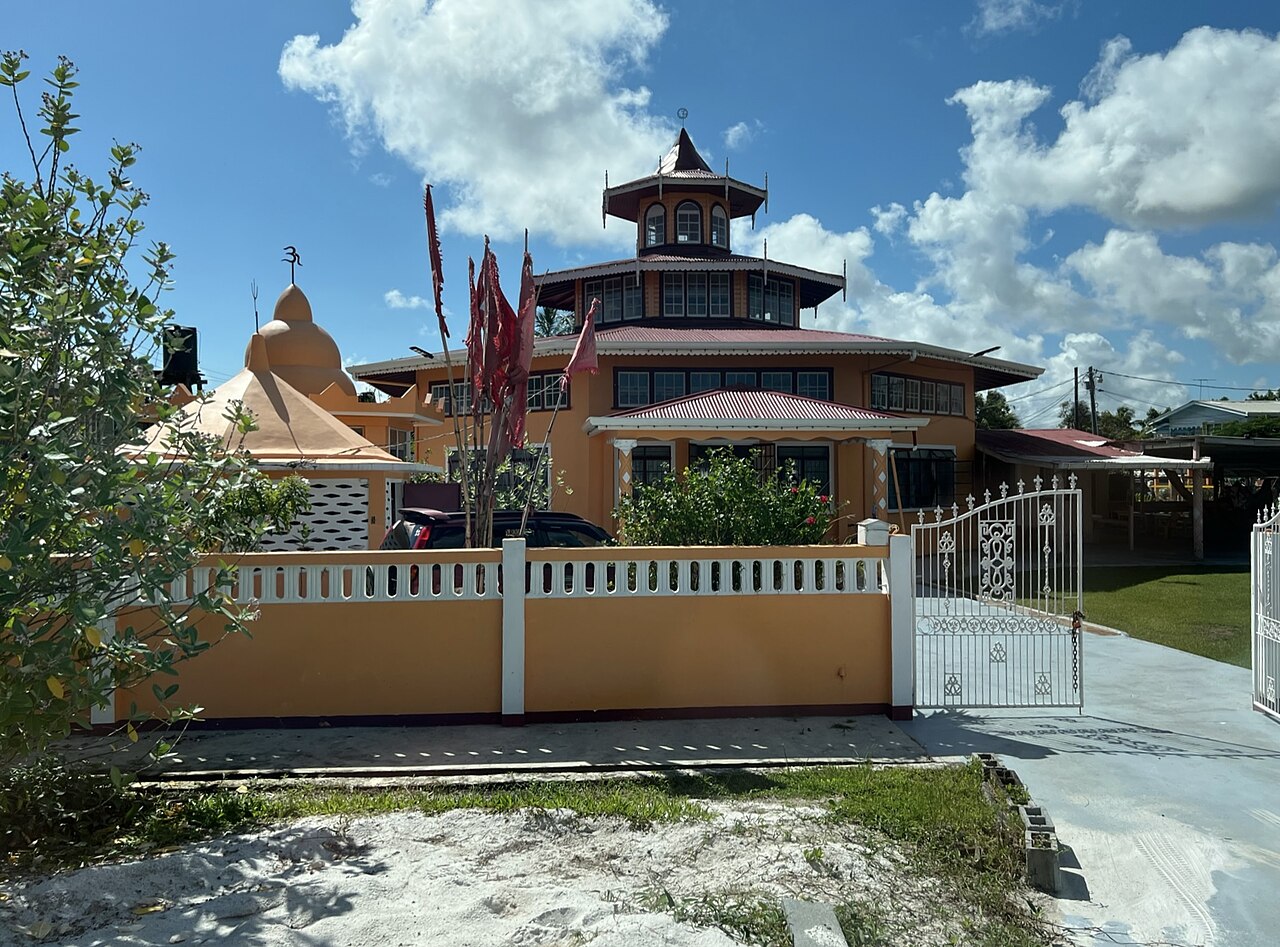
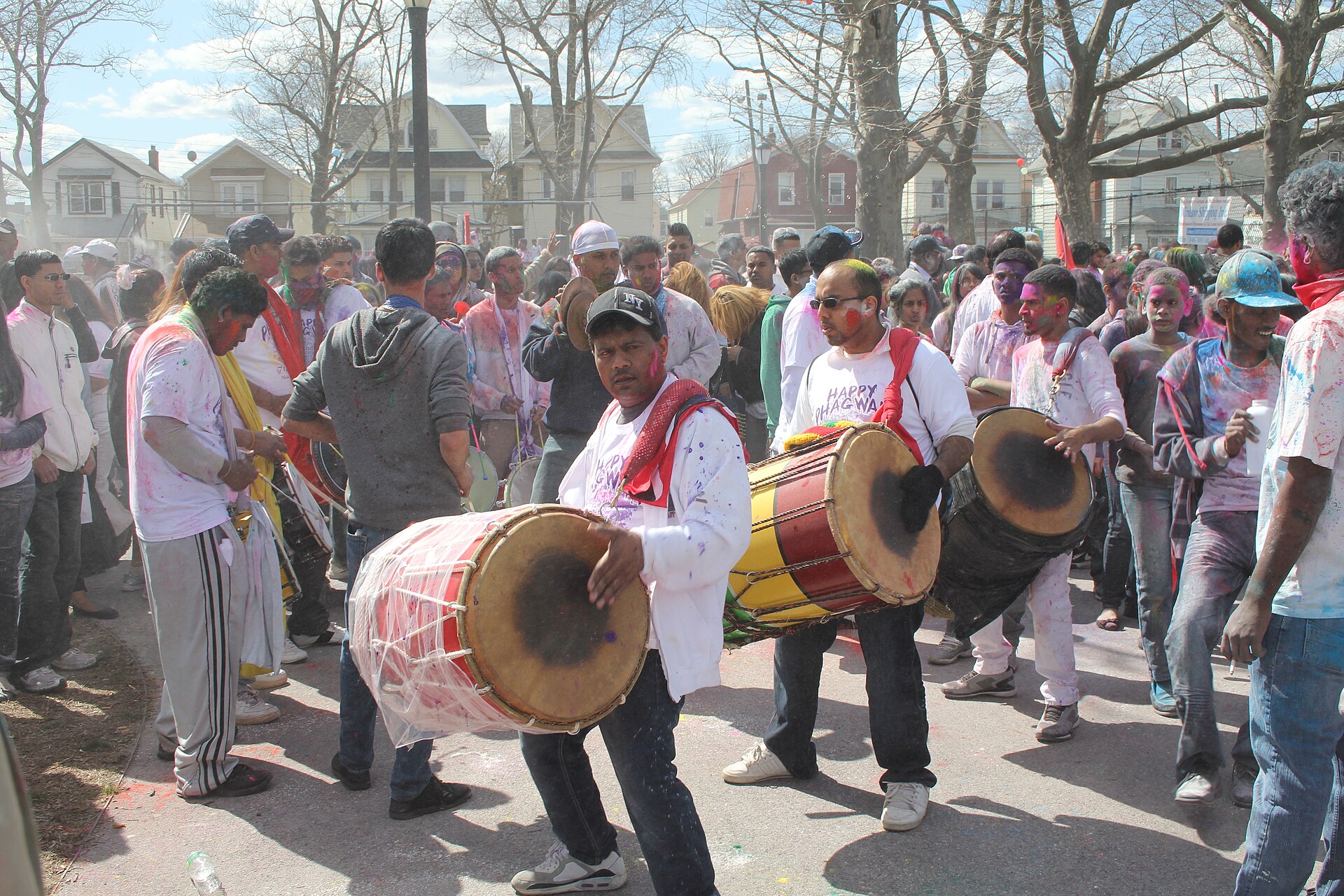
- Phagwah, the Hindu spring festival also called Holi, fell on Tuesday, 3 March 2026. Revellers of every background throw coloured powder.
- Arrival Day, 5 May, marks the landing of the first Indian indentured labourers in 1838.
- Emancipation Day, 1 August, honours the end of slavery with African food, music and dress at Georgetown’s National Park.
- Amerindian Heritage Month runs through September. Health Minister Frank Anthony credits the designation to Cheddi Jagan, president from 1992 to 1997.
- Diwali, the Hindu festival of lights, falls in October or November. In October 2025, 40 floats from temples and cultural groups paraded through Georgetown.
The Department of Public Information (DPI), the state news agency, described thousands of Guyanese of all backgrounds at Phagwah in 2026. First-time celebrant Marcus Tripp told it Guyana is where “everyone just celebrates everyone else’s holiday with full vigour.”
For Mashramani 2026 the government pledged more than GYD 120 million (about US$574,000), its largest outlay on the festival yet. Heritage Month also brings the capital Indigenous games and food, as in Georgetown’s Heritage Month games.
Caribbean or South American? Food, Music and Daily Life
Guyana borders Venezuela, Brazil and Suriname. Yet it belongs to CARICOM, the Caribbean Community, a regional bloc whose secretariat sits in Georgetown.
The tourism authority describes a mix of Caribbean culture and Indigenous roots, with a distinctly Caribbean feel on the coast. South American politics still press in, through Guyana’s border case against Venezuela at the International Court of Justice.
That dispute concerns an 1899 award that fixed the frontier. The court closed its hearings on 11 May 2026 and had not ruled by 8 October.
For the regional picture, see Guyana and its neighbours in the Guianas.
Food shows the blend best. The tourism authority traces Guyanese cuisine to Indigenous peoples, East Indians, Africans, Chinese, British and Dutch colonists and Caribbean neighbours.
Ali’s own list of dishes, in May 2026, ran from pepperpot and roti to cook-up rice, chowmein and cassava bread. What a visitor will meet:
- Pepperpot: meat stewed slowly in cassareep, a dark, bittersweet sauce made from cassava.
- Cook-up rice: rice and peas cooked in one pot with coconut milk and meat or fish.
- Roti and curry: Indian-style flatbread with chicken, goat or vegetable curry.
- Chowmein and fried rice: Chinese-Guyanese staples. The tourism authority claims Guyana has the best Chinese food in the Caribbean.
- Garlic pork and cassava bread: pork cured in vinegar and garlic, and a flat bread of grated cassava.
Music follows the same lines. Ali called chutney, calypso, Indigenous chants and gospel hymns evidence of “fusion rather than fragmentation.”
Chutney mixes Indian folk songs with Caribbean rhythms. Soca, calypso and steel pan drove the 2026 Mashramani parade through Georgetown, the DPI reported.
The Guyanese Diaspora in New York and Florida
The US Census Bureau’s American Community Survey (ACS), an annual sample survey, counted 273,423 Guyana-born US residents in 2024. That equals almost a third of the 878,674 people counted in Guyana in 2022.
The estimate carries a margin of error of plus or minus 13,880. The same survey counted 251,108 people reporting Guyanese ancestry, so many Guyana-born residents apparently describe their roots differently.
New York State had 151,190 Guyana-born residents in 2024, and New York City 121,231. Queens alone had 73,976 and Brooklyn 34,585.
Five-year ACS data for 2020 to 2024 show the neighbourhoods. South Ozone Park and Howard Beach in Queens had 24,178 Guyana-born residents, about one in six people there.
Jamaica, St Albans and Hollis had 22,746. Kew Gardens, Richmond Hill and Woodhaven had 11,507, and Queens Village, Bellerose and Rosedale 10,409.
Florida had 36,904 Guyana-born residents in 2024. The five-year data put the largest groups in Broward County (6,942) and Orange County, around Orlando (6,881).
Palm Beach (2,387), Lake (2,358) and Miami-Dade (2,263) counties followed. New Jersey had 23,413 Guyana-born residents in 2024.
Money flows home. The Bank of Guyana, the central bank, recorded US$632.8 million in workers’ remittance inflows in 2025, up from US$555.0 million in 2024.
On Thursday, 24 September 2026, Ali told hundreds of Guyanese in Queens Village, New York, to “come home” and invest. He said a special investment vehicle for diaspora money would soon be launched.
For the government’s earlier diaspora bond plan, see Guyana wants its diaspora’s money.
What It Means for US Readers
For Guyanese Americans, the census categories explain a common puzzle. A family can be Indian by ancestry, Hindu by faith, Caribbean by culture and South American by passport.
For visitors, entry is simple. US citizens need no visa for stays of 90 days or less, and passports need six months’ validity, the State Department says.
The department rated Guyana at Level 3, reconsider travel, because of crime, as of October 2026. It advises against walking or driving after dark and against displaying valuables.
Access is improving. Tourism Minister Susan Rodrigues said on Wednesday, 7 October 2026, that 12 new airlines have begun serving Guyana since 2020.
Guyana recorded 360,623 visitor arrivals in the first nine months of 2026, after a record 453,489 in 2025.
Cash is used across most of Guyana, and the State Department warns that counterfeit US currency is common. Conversions use Bank of Guyana rates for 7 October 2026: GYD 207.98 buying, 210.45 selling, about GYD 209 per US$1.
Without flying, Queens is the easiest introduction: 73,976 Guyana-born residents lived there in 2024. For a longer stay, see moving to Guyana and the Rio Times Guyanas page.
What Is Not Known
The ethnic and religious make-up of Guyana today is not known from official data. The 2022 census results on those questions had not been published as of 8 October 2026.
The bureau itself says the 2022 count may understate the foreign-born population, because some migrants avoid enumerators.
No official count of Creolese speakers was found. The size of the full diaspora, including US-born children, is also uncertain.
The ACS counts birthplace and self-reported ancestry, not citizenship or dual nationality. Its 2025 one-year figures were not available on the Census Bureau’s data portal on 8 October 2026.
The Bank of Guyana does not publish remittances by sending country, so the US share is unknown.
Frequently Asked Questions
What ethnic groups are Guyanese people?
In the 2012 census, 39.8% were Indo-Guyanese, 29.2% Afro-Guyanese, 19.9% mixed and 10.5% Indigenous. Portuguese, Chinese and white Guyanese together made up about 0.5%.
Is Guyana part of the Caribbean or South America?
Both. It sits on the South American mainland, but its culture and CARICOM membership tie it to the Caribbean.
What language do Guyanese people speak?
English is the official language, but most people speak Creolese, an English-based Creole, in daily life. Nine Indigenous languages are also spoken.
What is the main religion in Guyana?
Christians made up about 64% of the population in the 2012 census, Hindus 24.8% and Muslims 6.8%. Hindus were the largest single faith.
How many Guyanese live in the United States?
The Census Bureau counted 273,423 Guyana-born US residents in 2024, plus or minus 13,880. That excludes their US-born children.
Where do most Guyanese live in New York?
Mostly in Queens, especially South Ozone Park, Richmond Hill, Jamaica and Queens Village. New York City had 121,231 Guyana-born residents in 2024.
Do US citizens need a visa to visit Guyana?
No, not for stays of 90 days or less, according to the State Department. Passports need six months of validity, and Guyana carries a Level 3 crime advisory.
Sources: Bureau of Statistics: 2012 Census Compendium 2, Population Composition (ethnicity, religion, regions); Bureau of Statistics: Preliminary Report, 2022 Population and Housing Census; Bureau of Statistics: Census page; DPI: census release (12 January 2026); Ministry of Amerindian Affairs: Amerindian nations; Ministry of Amerindian Affairs: Amerindian heritage; Guyana Tourism Authority: FAQ; Guyana Tourism Authority: About Guyana; Guyana Tourism Authority: Culture; Guyana Tourism Authority: Chinese in Guyana; DPI: President’s Arrival Day message (5 May 2026); DPI: Guyana Festival opening (15 May 2026); DPI: Indigenous languages (6 September 2026); DPI: Lokono curriculum (7 September 2026); DPI: Spanish in primary schools (12 July 2023); DPI: Phagwah 2026; DPI: Mashramani 2026; DPI: Mashramani 2026 budget; DPI: Mashramani history; DPI: Emancipation Day 2026; DPI: Diwali 2025; DPI: President in Queens Village (25 September 2026); DPI: visitor arrivals (7 October 2026); DPI: ICJ case on the 1899 award; International Court of Justice: Arbitral Award of 3 October 1899 (Guyana v. Venezuela); CARICOM: member states and secretariat; US Census Bureau: ACS 2024 1-year, table B05006 (place of birth); US Census Bureau: ACS 2020-2024 5-year, table B05006; US Census Bureau: ACS 2024 1-year, table B04006 (ancestry); Bank of Guyana: Quarterly Report March 2026, Table 8 (transfers); Bank of Guyana: exchange rates (7 October 2026); US State Department: Guyana country information; US State Department: Guyana travel advisory (all accessed 8 October 2026).