By The Straits Times | Created at 2026-08-13 21:02:07 | Updated at 2026-08-13 22:01:29
1 hour ago
By The Straits Times | Created at 2026-08-13 21:02:07 | Updated at 2026-08-13 22:01:29
1 hour ago
SAN MARIANO, ISABELA – The instruction, whispered on the bank of Dunoy Lake at seven in the evening, was that I should keep very still.
Conservationist Amante Yog-yog Jr swept his torch across the black water. Two points of pale yellow caught the beam and held it: the eye-shine of an adult Philippine crocodile, the rarest crocodilian on Earth. Then a second pair, and a third. Two more sat low in the vegetation ringing the lake, and in a shallower arm, two hatchlings moved among the fish.
On my own, I would not have seen them.
Dunoy Lake lies at the back end of San Mariano, a town in Isabela province about 460km north of the capital Manila and the gateway to the Northern Sierra Madre Natural Park. It is roughly twice the land area of Singapore, with 60,000 people scattered across it.
Reaching the lake took two hours on foot from where the paved road gave out, over rain-slick hills and mud that nearly took my boots, then wading across the Catallangan River, also crocodile territory. It is the walk families around Dunoy make weekly to reach the town centre.
I arrived on July 28 caked in mud, and quickly learnt how elusive the creature is.
That is the trick of the Crocodylus mindorensis after dark. You never see the animal whole, only two dots of reflected light that go out the instant you shift your weight on the mud.
“If you make a noise, if it even hears your footsteps, that’s it,” Yog-yog had told me earlier that day. “It jumps into the water and you won’t see it.”
Believed to be extinct in the wild in northern Luzon in the 1990s, the Philippine crocodile now numbers about 125 in Isabela, protected by residents who once hunted it.
In Manila, the crocodile is not shy. It is the fat, grinning creature on placards at every anti-corruption protest, the effigy hauled through the streets, symbolising the government official who eats and eats and is never full. Nobody at those rallies is picturing Crocodylus mindorensis. They are picturing, whether they know it or not, Lolong, the 6.17m saltwater crocodile taken from a creek in Agusan del Sur in 2011, which died in captivity within 18 months.
In fact, the Philippine crocodile is endemic, critically endangered and small, topping out at about 3m. You can tell it from its saltwater cousin by the large scales behind its head. In San Mariano’s recorded history, it has never killed a human.
“It makes me sad that they compare the crocodile to greed,” said Yog-yog, 39, who manages the Philippine Crocodile Conservation Centre for the Mabuwaya Foundation inside the Isabela State University.
“The truth is, they eat very little, and only once every four days.”
How a protective spirit became a symbol of greed
So where did the negative connotation come from? Before the Spanish arrived in 1565, the Agta, among the oldest forest-dwelling peoples in northern Luzon, did not regard crocodiles as monsters at all. They were “anito” or protective spirits of a parallel underwater world.
Colonisation and Christianisation, however, inverted that. Colonial officers who arrived in the 1560s did not distinguish the Philippine crocodile from the far larger saltwater crocodile, and wrote letters back to their motherland that the rivers were full of bloodthirsty animals. The friars who followed arrived with a mediaeval European idea of the crocodile as the devil’s creature, and found Filipinos making offerings to it. Crocodile veneration had to be stamped out along with the old religion.
The killing for money came later. Commercial hunting for skins began in the 1920s and intensified after the war, with hunters turning to the Philippine crocodile as the larger saltwater species grew scarce, according to a 2011 study in the journal Environment and History co-authored by Mabuwaya co-founder Merlijn van Weerd. By the late 1960s, the wild populations were too depleted for the trade to pay. Crocodile farming came long after the damage was done.
Logging opened the forests, wetlands were drained for irrigated rice, and fishing stripped the rivers of their food. By the 1990s, researchers assumed the Philippine crocodile was extinct in the wild in northern Luzon.
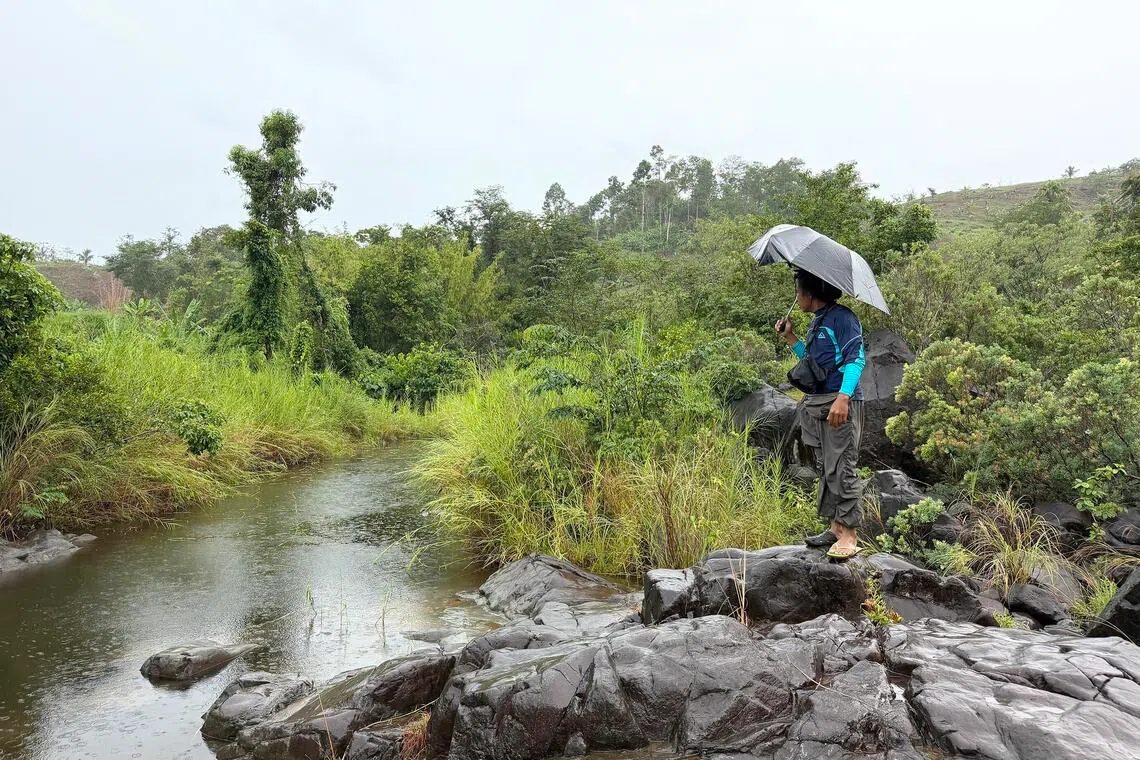
Conservationist Amante Yog-yog Jr watches over a body of water where a Philippine crocodile recently laid eggs.
ST PHOTO: MARA CEPEDA
The turning point came in 1999, when a farmer produced a live juvenile for sale, and Filipino and Dutch researchers surveying the Cagayan Valley confirmed it was Crocodylus mindorensis.
The Mabuwaya Foundation grew out of that discovery in 2003 and began surveying species numbers.
Today, the Philippine crocodile is protected by law. The Wildlife Act of 2001 makes killing a critically endangered species in the Philippines punishable by six to 12 years in prison and up to 1 million pesos (S$20,880) in fines. San Mariano went further, declaring the crocodile its flagship species, turning several bodies of water into sanctuaries and requiring farmers to leave a 10m buffer of vegetation along the riverbanks.
Much of the conservation work is unglamorous. Mabuwaya staff and their volunteer sanctuary guards, the “Bantay Sanktuwaryo”, walk the creeks and count how many crocodiles are in them, often after dark and by eye-shine, since the animal is adept at remaining hidden in the light of day.
Each season, nests are searched for, and when found, covered with wooden branches and dried leaves to warn off farmers, chickens, and monitor lizards alike. It is also monitored by camera.
Juveniles reared at the centre and released are caught again where possible to measure their growth. Mabuwaya also engages in public education through school talks, exhibitions, social media, radio guest spots and village consultations.
From hunters to protectors
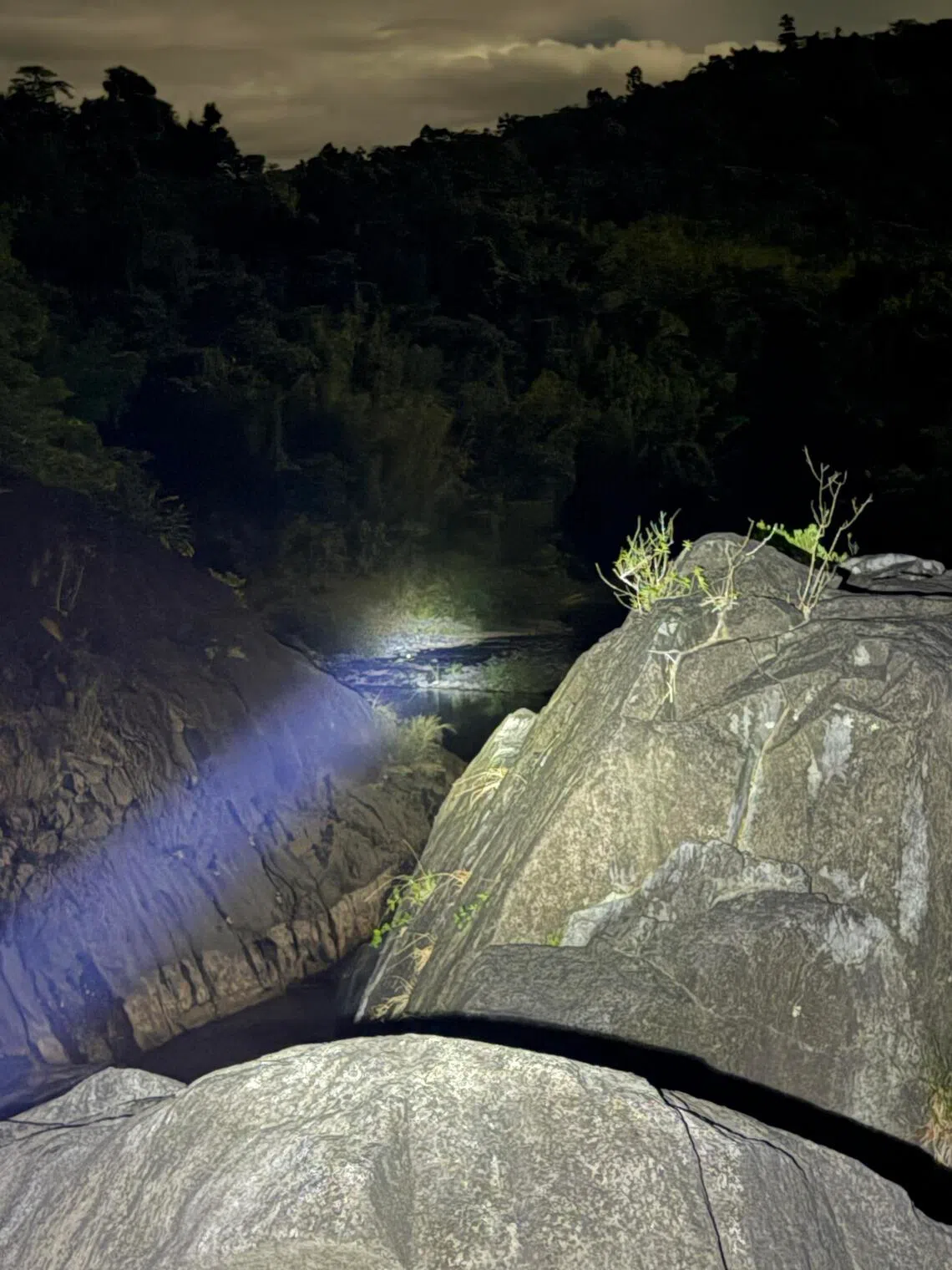
Crocodiles are near-impossible to spot at night. Surveyors usually sweep a torch across the water and watch for the pale yellow shine of a crocodile's eyes.
ST PHOTO: MARA CEPEDA
The wardens protecting these creatures were, in some cases, the men who used to do the hunting in the past.
“They are actually the crocodile experts,” said Yog-yog. “They know exactly how they behave or where to find them, because they used to be the ones hunting the crocodiles”.
Samuel Francisco, 64, took his one and only crocodile from San Mariano’s Disulap River in 1999, a hatchling he sold for 200 pesos to a man who wanted to bathe his fighting cock in its water for luck in the cockpit.
Mabuwaya came and told him the hatchling he had sold was a rare baby Philippine crocodile. He vowed never to hunt the animal again and has been a warden since 2003.
“They’re gentle creatures, and they know when you don’t mean to harm them,” Francisco tells me, recalling how a crocodile he accidentally stepped on while swimming in a river 10 years ago did not even bite him.
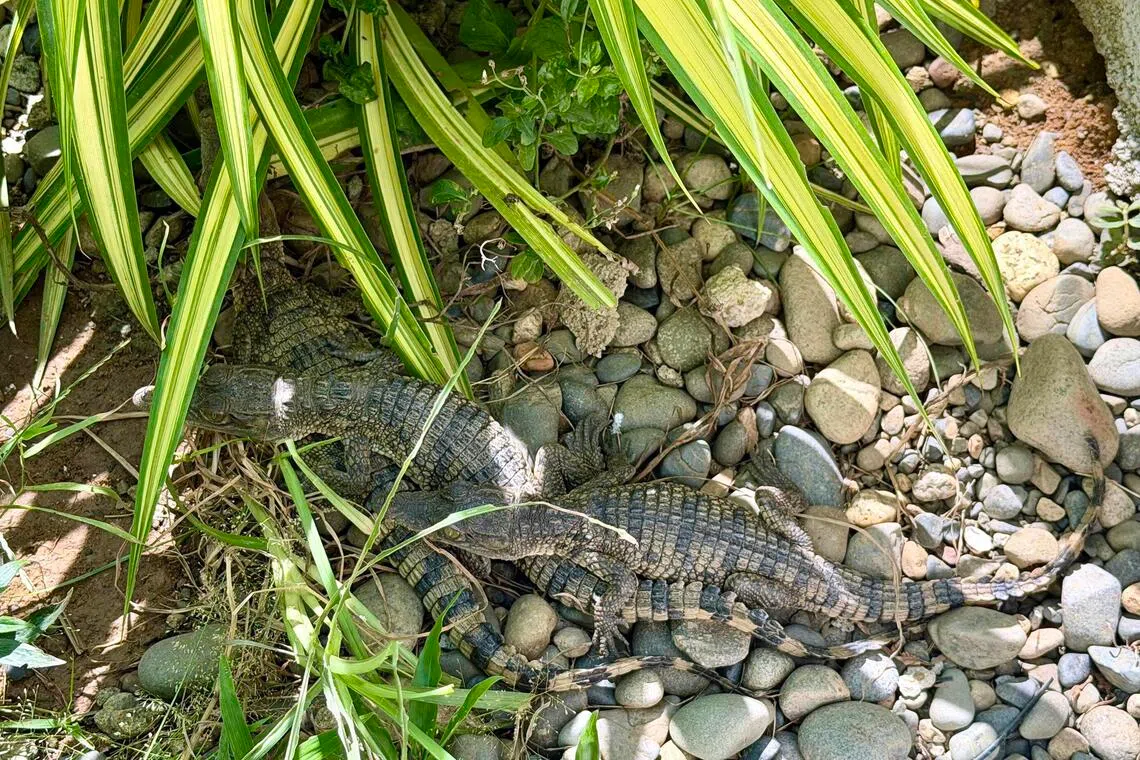
Baby crocodiles rest under the shade inside their enclosure at the Philippine Crocodile Conservation Center in San Mariano, Isabela, Philippines on July 28.
ST PHOTO: MARA CEPEDA
Volunteer wardens are paid some 10,000 pesos a year.
Another warden, Victorino Montanes, arrived in the village near Dunoy Lake in 1984 and was frightened for years, but soon realised he had nothing to fear.
“I would see them out at my rice field, and when they saw me, they would run,” he said. “That is how I learnt that it’s the crocodile that is afraid of people.”
He let on that a crocodile did once eat his dog, but he does not hold it against the animal. A crocodile is a predator, and a dog loose by the water is prey, he said.
Now the village calls first
What has changed most is the involvement of residents in San Mariano. For years, it was Mabuwaya doing the looking. Now it is mostly residents who find a crocodile or a nest first.
On July 13, 10-year-old Giselle Rabago was playing when she found an egg and took it for a duck’s. Finding it too tough to crack, she showed it to her father, who immediately knew what it was and alerted their village warden. The nest, dug underneath corn cobs a few strides from their backyard, was reburied and fenced with twigs to keep the carabao and chickens out.
“I’m excited to see the crocodiles hatch out of their eggs,” a smiling Giselle said.
Her find, which made the local papers, was the reason I came to San Mariano. Mabuwaya logged it as the seventh Philippine crocodile nest recorded in the town this nesting season.
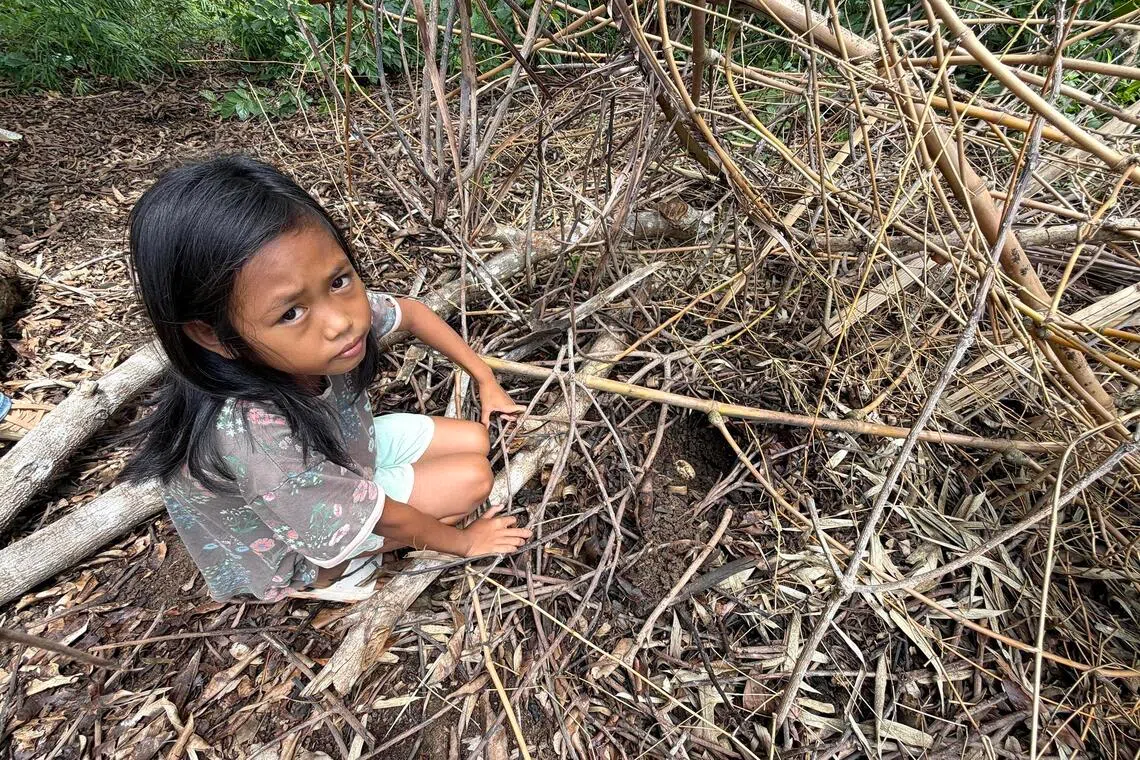
Ten-year-old Giselle Rabago next to the crocodile nest she discovered at her backyard in Dinang village, San Mariano, Isabela, Philippines.
ST PHOTO: MARA CEPEDA
A female Philippine crocodile lays anywhere between seven and 30 eggs, and only a fraction ever make it to adulthood, as a result of habitat destruction and predation by snakes, lizards and birds.
That is why the foundation watches every nest it finds. The clutch Giselle found is due to hatch in September, about 2½ months after it was laid, and the hatchlings will be collected and taken to the conservation centre to be reared for roughly two years before they are released back into the wild.
But the work is far from finished.
Many residents still cut the required bamboo buffer, either for firewood or easier access to the water.
Mabuwaya also runs mostly on grant money, and conservationists warn that without steadier funding, the recovery efforts for the Philippine crocodile are one lean decade from unravelling.
For now, however, it is an integral part of the landscape.
Olalia Almonte, an elderly Agta woman and Montanes’ neighbour, has lived alongside these animals her whole life. “We’re used to them. The crocodiles are kind.” And if you see one?, I asked her. “We just leave it, and it goes away.”
It was at Dinang, in full sun, that I finally saw an adult Philippine crocodile fully: about 10m from where I stood, warming itself on a bank near the village school and the laundry stones, while the village went about its morning.
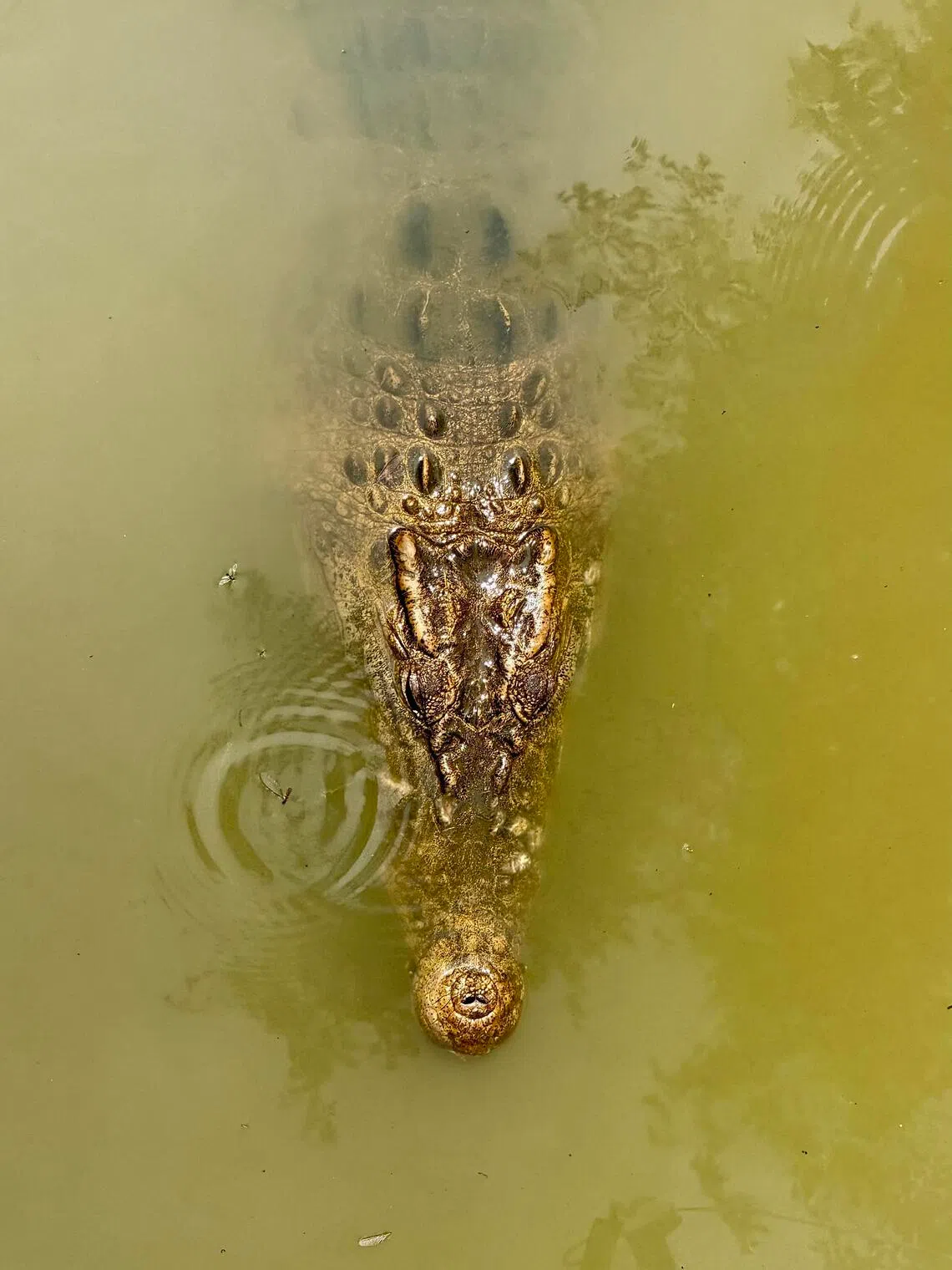
Fernando, a 24-year-old Philippine crocodile, is the only adult male being cared for inside the Philippine Crocodile Conservation Centre of the Mabuwaya Foundation in Isabela State University at San Mariano, Isabela, Philippines.
ST PHOTO: MARA CEPEDA
A neighbourhood girl spotted Yog-yog and me and ran over. The crocodile heard her coming and slid into the creek. She had missed it by seconds.
I recalled Montanes saying that his grandchildren would go with him to watch juvenile crocodiles being released back into the wild by the foundation.
“It’s important that we tell the next generation how gentle the Philippine crocodile is, how timid,” he said. “So that when these children grow up, they won’t be afraid of it. They’ll be the ones to protect it in the years to come”.
It took over two decades to move a small town from killing crocodiles to leaving them alone. Getting from there to standing guard over them is the work of young children who place twigs around nests so more of the crocodiles’ young survive their predators.
Which is worth remembering the next time a crocodile image is carried through the streets of Manila. In San Mariano, the animal is not the greedy one in the story.