By The Straits Times | Created at 2026-06-18 21:26:41 | Updated at 2026-06-21 12:20:14
2 days ago
By The Straits Times | Created at 2026-06-18 21:26:41 | Updated at 2026-06-21 12:20:14
2 days ago
SEOUL – The turnaround began in March, when two tourists from Japan commissioned a pair of hanbok, the traditional Korean clothing dating back centuries.
They were going to BTS concerts in South Korea and the US and wanted to attend wearing hanbok in the group’s signature colour.
“To be honest, I didn’t think purple was the most beautiful colour for a hanbok,” 77-year-old hanbok vendor Kim Ok-ja said with a laugh. “But they loved them so much that they ordered a third set.”
They turned out not to be the only ones. From selling two or three handmade hanbok sets a day in Seoul’s Gwangjang Market, Kim began selling as many as 10 a day in the run-up to the K-pop supergroup’s concerts in Goyang in April and Busan on June 12 and 13.
It was an unexpected boost. Like other hanbok vendors in the bustling market, Kim's business, which she has run for half a century, catering at first to stage performers, had been slumping ever since the Covid-19 pandemic.
But, “I’ve been doing this for so long, and I have nothing else to do if I stop,” she said. “So I just kept going.”
And she doesn’t plan to stop. At the suggestion of a Japanese media outlet that interviewed her earlier in 2026, she now pins a sign reading “BTS wear them” on one of the hanboks on display.
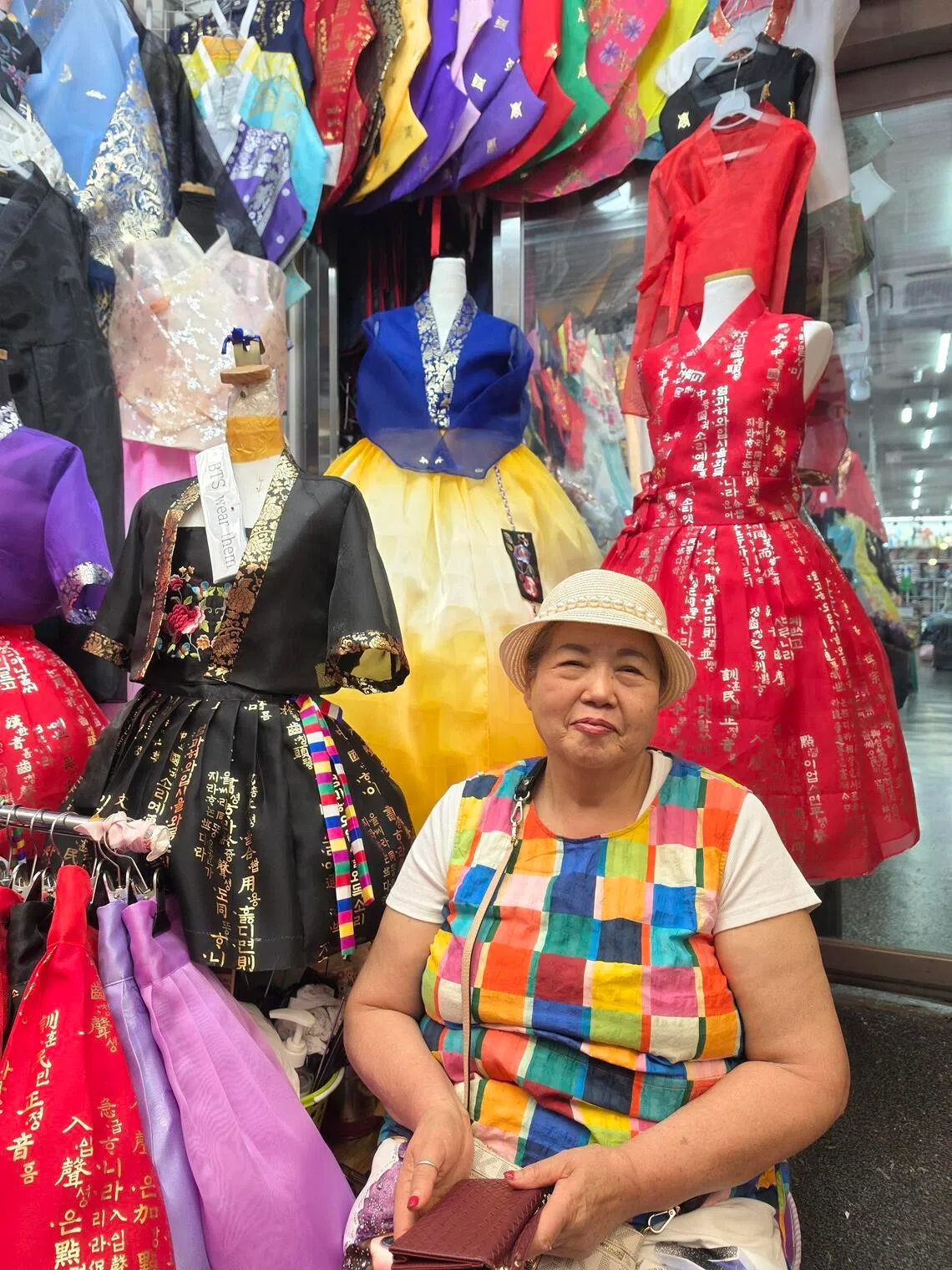
Kim Ok-ja, who has run a hanbok shop in Seoul’s Gwangjang Market for 50 years, said overseas customers have surged following BTS’ comeback concert in March.
ST PHOTO: WENDY TEO
In May, she even upgraded to a smartphone equipped with AI-powered real-time translation to better communicate with the growing number of customers “from all over the world”.
Even more popular – thanks to social media – is Lee Hyeon-ae’s vintage hanbok shop, tucked away in a hard-to-find narrow aisle in the same market.
The tiny space, roughly the size of an HDB void deck mamak shop, is a riot of colour, packed to the brim with hanbok jackets and skirts of every style and hue hanging from makeshift racks.
Lee, 57, has run Unhyeon Judan for 35 years and watched the hanbok go out of favour.
“It used to be common for people around my age to wear hanbok to weddings and other important events, but these days that happens far less often,” said Lee.
When the pandemic dealt them a blow, many of her long-time clients, mainly owners of hanbok rentals, decided to close their businesses.
“They were going to throw away all their old hanbok, and I thought it was such a waste,” Lee said. “So we bought their inventories at low prices, repaired the garments, and sold them at affordable prices to people who still wanted them.”
Lee herself was struggling to keep afloat. But her desire to keep old hanbok from being discarded threw her an unexpected lifeline.
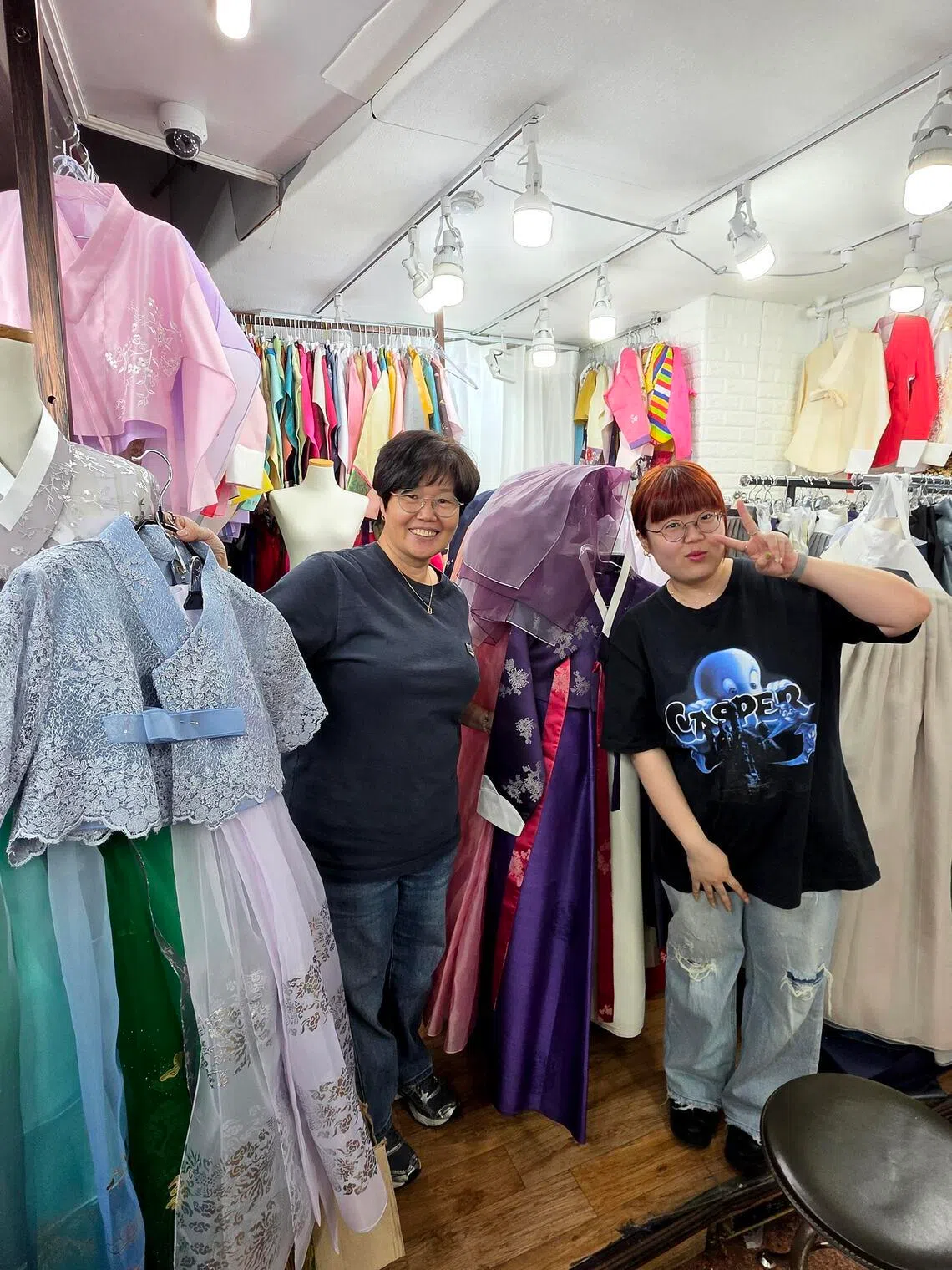
Lee Hyeon-ae (left) and her daughter Kim Ji-won, at their stall, Unhyeon Judan, in Gwangjang Market.
ST PHOTO: WENDY TEO
Her garments have gained a following online among both young South Koreans and foreigners, who flock to her stall despite its obscure location.
At Unhyeon Judan, the second-hand hanbok jackets, known as jeogori, are priced at around 50,000 won (S$42), while the vintage skirts, or chima, average around 100,000 won.
New sets of custom-made hanbok can start at about 300,000 won for one made from polyester fabric to as much as one million won for one crafted from silk.
Lee says many young South Koreans are drawn to her shop because the lower prices make hanbok more accessible and allow them to experiment with changing fashion trends without breaking the bank.
K-pop is the surprising impetus behind the resurgence of interest in hanbok, especially among younger consumers and overseas fans.
Local media, citing government data, has reported that the number of visitors wearing hanbok to Seoul’s four major palaces jumped more than 13-fold, from nearly 150,000 in 2020 to 2.07 million in 2025.
But it has not completely revived the domestic hanbok industry, long in decline. The number of hanbok businesses nationwide more than halved, from 3,737 in 2010 to 1,668 in 2024. The decline was attributed to not just the pandemic but also to competition from cheaper imported hanbok from China and Vietnam, which have priced the more expensive handmade domestic hanbok out of the market.
In response, the South Korean government has stepped up efforts to preserve and promote hanbok culture.
It designated hanbok as a national intangible cultural heritage in 2022 and, in March 2026, passed the Hanbok Cultural Industry Promotion Act after 13 years of legislative limbo. The law provides a framework to support both traditional and modern hanbok industries and designates Oct 21 as Hanbok Day.
As part of its efforts to promote hanbok through the Korean Wave, or hallyu, phenomenon, which has seen Korean food and culture accepted and enjoyed around the world, South Korea’s Hanbok Wave Project was launched in 2020. It named K-pop band Stray Kids member Felix as its 2026 ambassador on June 17. He joins a roster of high-profile representatives that has included singer-actress Suzy (2023), actress Kim Tae-ri (2024) and actor Park Bo-gum (2025).
But it is the unofficial ambassadors who are fuelling hanbok fever through what they are wearing.
Gwangjang Market’s Lee says the biggest boost to her business came after BTS completed their mandatory military service and reunited in March, she said, drawing a fresh wave of overseas fans eager to experience Korean culture first-hand.
After an absence of nearly four years, the group returned in March with a new album titled Arirang, and celebrated the release with a comeback concert at Seoul’s historic Gwanghwamun Square on March 21.
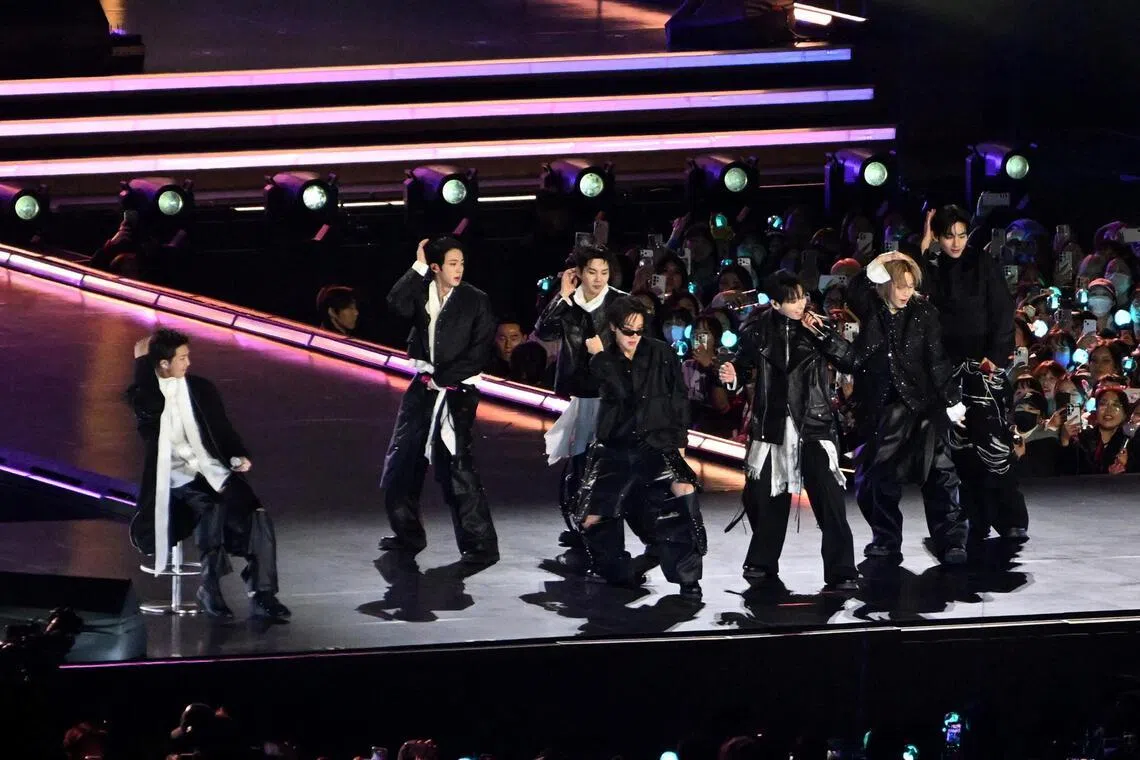
K-pop boy band BTS performing onstage during a comeback concert at Gwanghwamun Square in Seoul on March 21.
PHOTO: REUTERS
Named after Korea’s best-known folk song and unofficial national anthem, the album sparked a fan-driven movement to don hanbok to the concert in tribute to the cultural heritage embodied by Arirang. The septet also wore hanbok-inspired outfits for their performance.
Lee estimates that her business has nearly doubled since the start of 2026 due to what she calls the BTS effect.
BTS’ Arirang world tour began in South Korea’s Goyang city on April 9 and will take the group to more than 30 cities including Singapore in December.
Kim now stocks more red and black hanboks to cater to fans, reflecting the colour scheme of the group’s Arirang album.
Fans – known as BTS Army – told ST before the recent concerts in Busan that they specifically purchased their first hanbok to wear to the concert.
Dutch patissier Elisa Deward, 24, bought hers in Seoul for about €100 (S$149), and says that the hanbok makes her feel pretty, and that several Korean grandmothers approached her on the street to ask for photographs together.
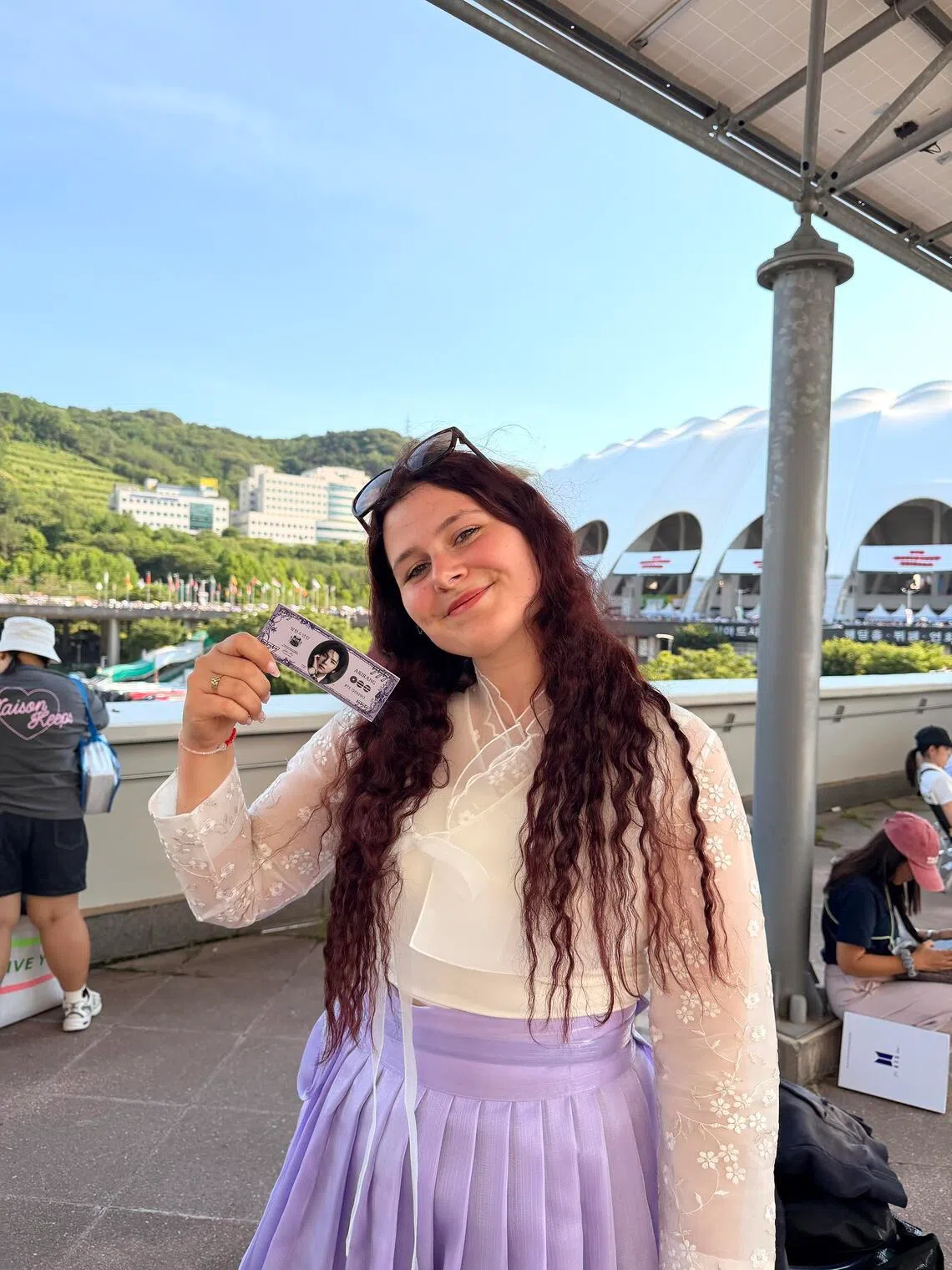
Dutch patissier Elisa Deward bought a hanbok in Seoul for about €100 (S$149) for BTS’ concert in Busan on June 13, saying she wanted to fully embrace the experience.
ST PHOTO: WENDY TEO
Katherine Wei, a 35-year-old Taiwanese BTS fan living in Singapore, purchased a purple hanbok for US$150 (S$192) through a shopping concierge service, which delivered it directly to her hotel in Ulsan, near Busan. She plans to wear it again in December when BTS goes to Singapore.
“I specifically asked for the hanbok to be made shorter, and picked purple over red or black (the Arirang album colours), because I thought it would be more suitable for Singapore’s hot weather,” said Wei.
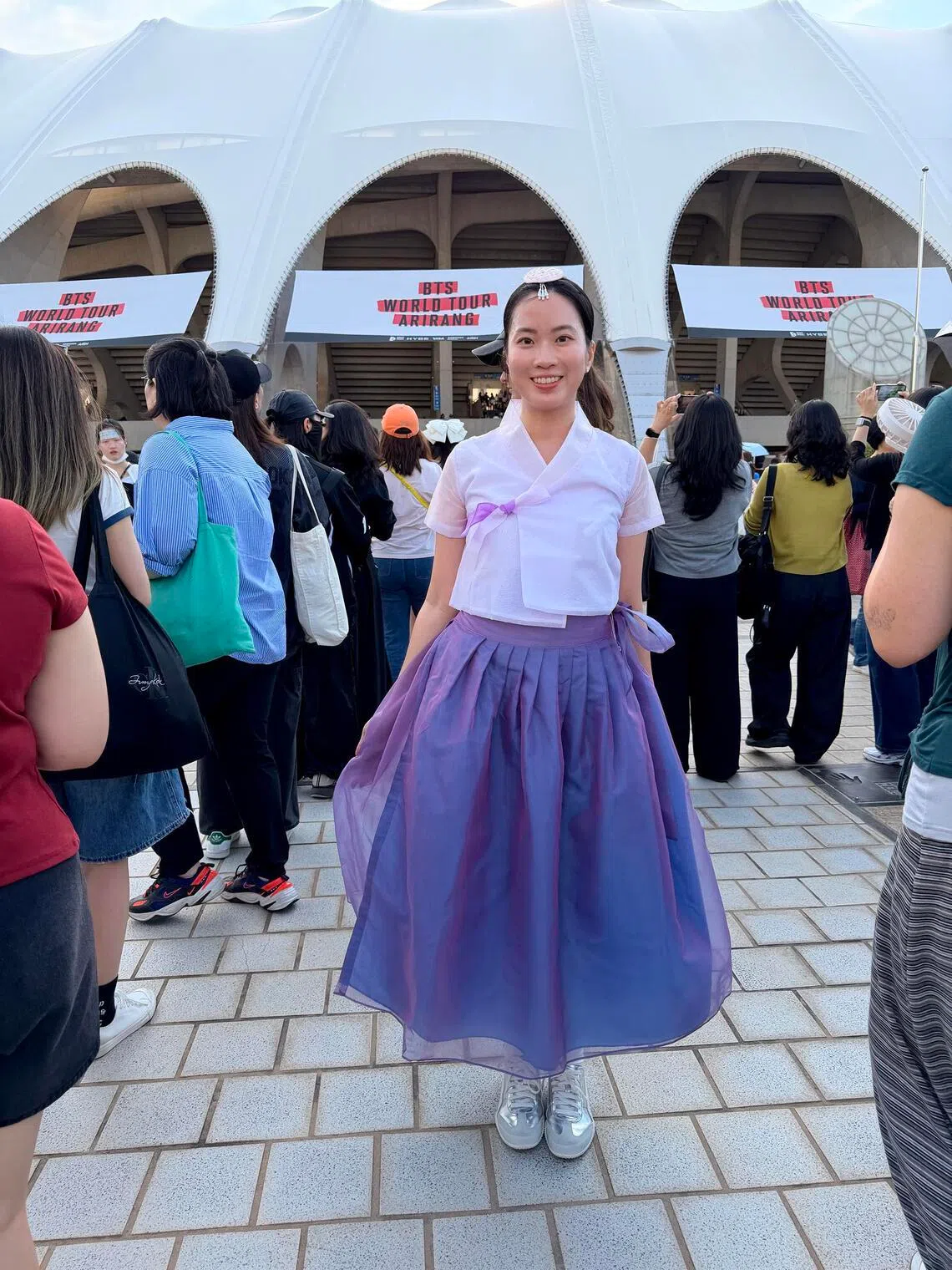
Katherine Wei attended her first BTS concert in Busan on June 13 wearing a hanbok she had ordered through a shopping concierge service.
ST PHOTO: WENDY TEO
K-culture content creator Shin Chae-min, 43, a former traditional Korean dancer, said she received a flood of messages from overseas fans following Arirang’s release, seeking advice on styling a hanbok for concerts and tying the goreum, the ribbon on the hanbok jacket.
Shin creates hanbok-focused content on YouTube and Instagram.
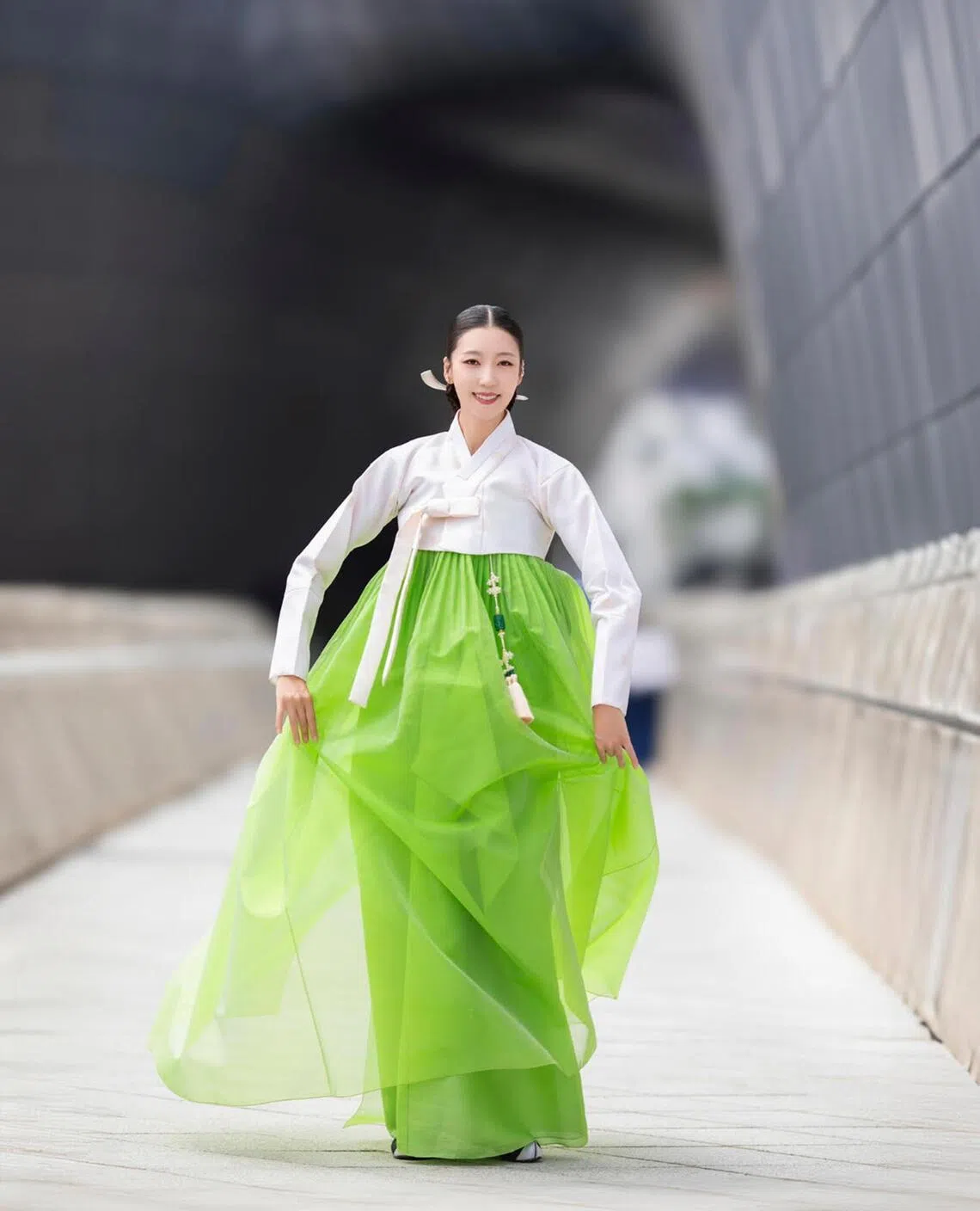
K-culture content creator Shin Chae-min said she often draws curious stares when in full traditional dress, “as though someone from the Joseon dynasty has suddenly appeared in the middle of a modern city”.
PHOTO: COURTESY OF SHIN CHAE-MIN
While more than 90 per cent of her followers were once South Korean, overseas followers now make up about half of her following.
Together with a business associate who crafts hanbok accessories, she prepares hair scrunchies and daenggi, traditional ribbon ties made from hanbok fabric, to hand out to fellow BTS fans before the concerts.
“The BTS Army has a culture of exchanging handmade gifts at concerts, and we wanted to contribute to that,” she said. “Even if people weren’t wearing full hanbok, wearing a daenggi in their hair would look lovely and fit in perfectly with the concept of the Arirang album, thus making the concert experience more special.”
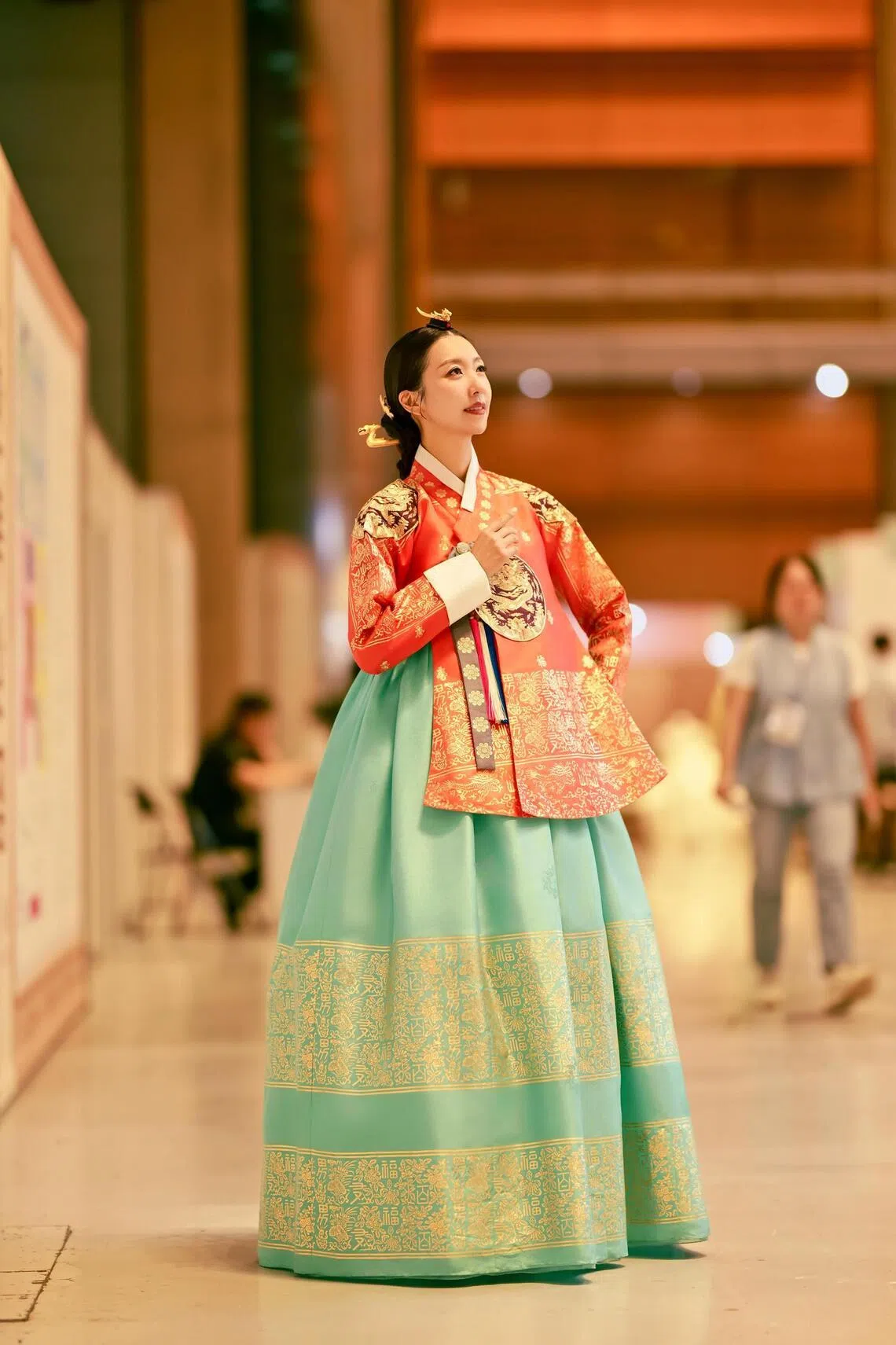
K-culture content creator Shin Chae-min first fell in love with hanbok while training as a traditional Korean dancer and now wears the traditional attire almost every day.
PHOTO: COURTESY OF SHIN CHAE-MIN
Modern hanbok designer Hwang Yi-seul’s label Leesle gained international recognition after its designs were worn by BTS, SHINee and Mamamoo.
Most recently, the 39-year-old’s norigae, or ornamental tassels, were worn by BTS during promotional appearances in New York, triggering a surge in demand for the accessories. Her online shop has since received orders from more than 50 countries.
Hwang believes that the key to preserving the hanbok culture lies in evolving the style to suit modern lifestyles so that it can be worn frequently.
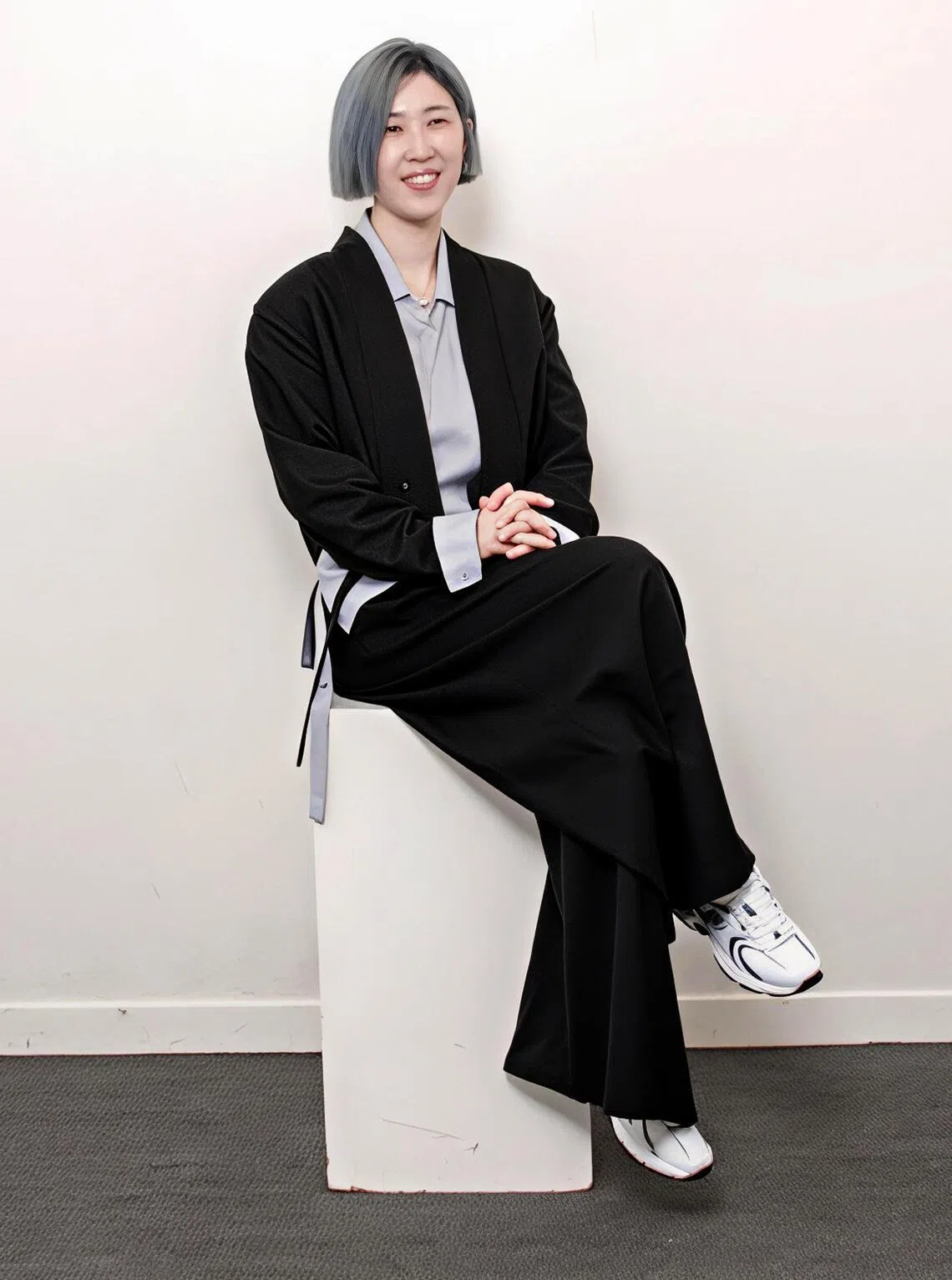
Modern hanbok designer Hwang Yi-seul's label, Leesle, has been worn by members of K-pop powerhouse BTS.
PHOTO: COURTESY OF HWANG YI-SEUL
“The younger generation does not dislike tradition. Rather, they often feel a sense of distance from traditions that are not connected to their lives,” said Hwang, adding that the hanbok should be seen as a “fashion statement to express one’s individuality and values, and not clothing worn out of a sense of obligation”.
Lee Jin-hee, a professor at the Korea National University of Arts, sees the rise in K-culture interest as serving as an important channel bridging the gap between traditional culture and the younger generations, and the wider global audience.
She welcomes the role South Korean celebrities have played in raising awareness of the hanbok and encouraging its adoption around the world.
“This signals that the global fashion industry has begun to embrace the visual language of traditional Korean culture as a new source of creative inspiration,” she said.
The renowned hanbok designer, whose creations were showcased at a hanbok fashion show held on the sidelines of the Asia-Pacific Economic Cooperation meetings in Gyeongju in 2025, added: “Hanbok is both a legacy of the past and a cultural asset for the future. As Korean culture continues to expand globally, this is the most important moment yet for its creative evolution.”