By Better Living | Created at 2026-08-08 20:21:11 | Updated at 2026-08-08 21:05:46
2 hours ago
By Better Living | Created at 2026-08-08 20:21:11 | Updated at 2026-08-08 21:05:46
2 hours ago
Last week I spilled an entire glass of pinot noir on my white shirt during movie night. Not a splash. Not a dribble. The entire glass, right down the front, like some kind of dramatic movie scene except I was the only one watching and there was nothing romantic about it.
I’ll be honest – my first reaction was to panic. My second reaction was to grab my phone and frantically Google “how to get red wine out of clothes emergency.” My third reaction? Actually trying four different methods to see what really works.
Spoiler: Some methods are absolute magic. Others are complete myths. Here’s what I learned from turning my laundry room into a wine stain laboratory.
Quick Answer: How to Get Red Wine Out of Clothes
The fastest way to get red wine out of clothes is to blot immediately (never rub), then apply hydrogen peroxide mixed with dish soap for white fabrics or club soda with white vinegar for colored clothes. Let sit 20-30 minutes, rinse with cold water, and launder normally. Time is critical – treat stains within 5 minutes for best results.
Dealing with a different stain? Our complete guide to removing every type of stain from clothes covers everything from ketchup to candle wax.
Why Red Wine Stains Are So Stubborn
Before we get into solutions, let me tell you why red wine is such a nightmare for clothing. Wine contains natural pigment compounds called chromogens that act like permanent dyes once they bond with fabric fibers. Add in tannins (the same compounds that stain your teeth and are used in commercial inks, and the culprit behind stubborn coffee, chocolate, and berry stains), and you’ve got a staining powerhouse that’s designed to stick around.
The sweeter the wine, the worse the stain. So that cheap sweet red you bought for sangria? Yeah, that’s going to be harder to remove than a dry cabernet. And the longer you wait, the deeper these compounds sink into the fabric. Time is absolutely not on your side here.
The Golden Rule: Act Fast
Every single method I tried worked better when I caught the stain immediately. I actually tested this by intentionally staining multiple white cotton shirts (yes, I sacrificed four perfectly good shirts for this experiment) and treating them at different time intervals.
The shirt I treated within 5 minutes? Almost perfect. The one I left overnight? Still faintly pink even after my best efforts.
So whatever you do, don’t let that stain sit while you finish the movie. I know it’s tempting, but trust me – future you will regret it.
1
Method 1: The Salt Treatment (Overrated But Still Useful)
This is the method everyone talks about. You’ve probably heard someone swear by it at a dinner party.
The idea is simple: salt is dry and absorbent, so it should pull the liquid wine out of the fabric.
Here’s how it works: Blot the stain immediately with a clean cloth or paper towel. Don’t rub – that just pushes the wine deeper into the fibers. Just blot, blot, blot until you’re not picking up any more liquid.
Then completely cover the stain with table salt. Like, really pile it on until you can’t see the red anymore. Let it sit for a few minutes while the salt absorbs the wine.
Some people recommend pouring club soda over the salt after it’s been sitting, then letting the whole thing work for an hour before brushing it off. I tried this variation too.
My results: The salt alone worked okay as immediate damage control, but it definitely didn’t remove the stain completely. Maybe 30-40% of the stain lifted. The salt + club soda combo did slightly better – I’d say it got about half the stain out – but it still wasn’t a complete solution.
Verdict: Good for damage control if you’re out at a restaurant or party and can’t do a full treatment right away. Not a complete solution on its own. By the way, this same approach works for white wine stains too, though they’re generally easier to remove since they don’t have the same dark pigments.
2
Method 2: Club Soda and White Vinegar (Surprisingly Effective)
I was skeptical about this one because it sounds like something your grandma would suggest. But it actually worked better than I expected.
After blotting up the excess wine, I poured club soda directly onto the stain. The carbonation creates a gentle fizzing action that helps loosen the wine from the fabric fibers – it’s not just folklore.
Then I applied white vinegar to the stain and gently worked it in with my fingers. The acidity in vinegar works against the red pigments. I actually watched the stain get noticeably lighter as I applied it.
I let the vinegar sit for about 10 minutes, then rinsed everything under cold water and threw the shirt in the wash with regular detergent.
My results: The fresh stain was about 85% gone. You had to look pretty hard to see any remaining discoloration. The overnight stain was more stubborn – maybe 60% improved.
Verdict: Solid method if you have these items on hand. The vinegar smell was strong but washed out completely. I’d use this again.
3
Method 3: Hydrogen Peroxide and Dish Soap (The Winner)
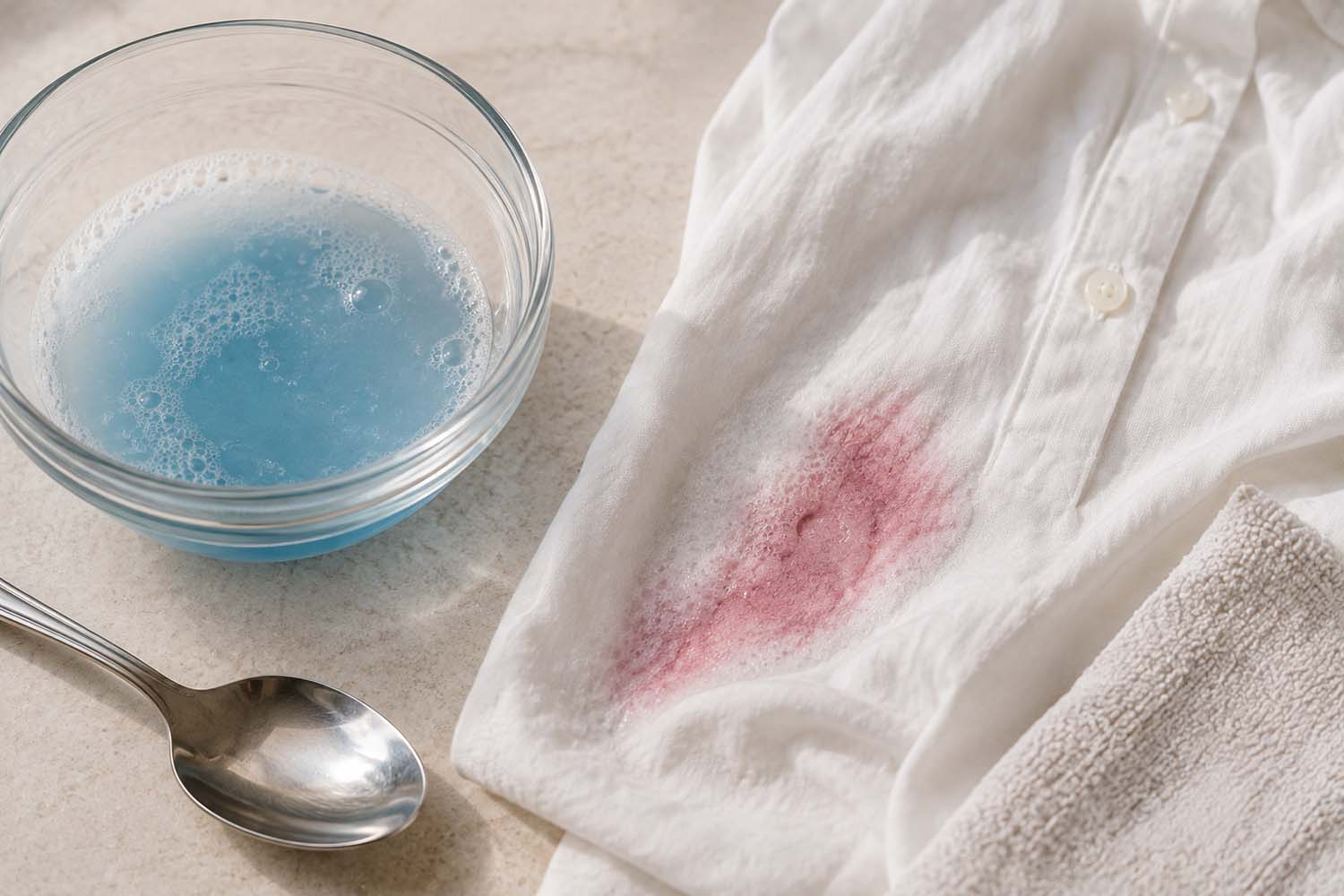
This is the method that actually saved my white shirt. Fair warning: only use this on white or very light-colored fabrics because hydrogen peroxide can have a bleaching effect.
I mixed about 3 parts hydrogen peroxide (the regular 3% kind from the drugstore) to 1 part blue Dawn dish soap. (I’ve seen some people use a 2:1 ratio or even equal parts – they all seem to work, so don’t stress about being exact.) Then I poured this mixture directly onto the wine stain, making sure to completely saturate it.
The reaction was almost immediate. I watched the stain start to lighten within seconds. I let it sit for about 20 minutes to an hour, occasionally checking on it and adding a bit more solution if needed.
Then I rinsed it thoroughly with cold water and threw it in the washing machine with my regular detergent.
My results: The fresh stain? Completely gone. I cannot find where it was even when I’m actively looking for it. The overnight stain took two treatments, but it also came out completely clean.
Verdict: This is now my go-to method. It’s cheap, it uses stuff I already have under my sink, and it actually works. Just remember – white fabrics only.
Pro Tip for Tough Stains
If you have an enzyme-based stain remover, these can be really effective on wine stains. I didn’t have any during my testing, but enzyme cleaners are designed to break down organic compounds like the ones in wine. Use it after your initial treatment and give it time to work before washing. For particularly stubborn stains on white fabrics, oxygen bleach powder is another strong option – it’s much gentler on fabric than chlorine bleach while still being effective at lifting tough stains.
4
Method 4: Boiling Water (Works But Scary)
This is an old-school technique that involves some precision and nerve. You stretch your stained fabric tightly over a bowl or pot, then carefully pour boiling water through the stain from about 8-10 inches above it.
The idea is that the force and heat of the water literally push the wine through and out of the fabric, rather than letting it set into the fibers.
My results: It worked reasonably well – I’d say about 70% of the stain came out. But honestly? Pouring boiling water on your clothes feels slightly insane. I was worried the whole time about burning myself or somehow damaging the fabric with the extreme temperature.
Verdict: It works, but there are safer methods that work just as well or better. I wouldn’t recommend this unless you’re really desperate and have nothing else available.
What About Commercial Stain Removers?
I also tested a Tide stain remover pen because I keep one in my purse. Here’s the thing: it helped lighten the stain when I used it immediately at the beginning of movie night, but it didn’t remove it completely.
These pens are great for emergencies when you’re out and about – they can prevent the stain from setting until you get home and can treat it properly. But don’t expect miracles from them alone.
If you want something built specifically for this exact problem, Wine Away is formulated just for red wine (and other red stains like tomato sauce and berries). I didn’t have a bottle during my original testing, but it’s made for exactly this emergency, and it’s compact enough to keep in a kitchen drawer or toss in a bag before a dinner party.
For serious wine stains at home, the hydrogen peroxide method beat every commercial product I tried.
Fabric Matters More Than You Think
All my testing was on 100% cotton shirts because that’s what I ruined. But I did some research on other fabrics, and the approach really does need to change:
Silk and delicate fabrics: Skip the hydrogen peroxide entirely. Use the club soda and vinegar method, but test it on an inconspicuous area first. Better yet, take it to a dry cleaner. And here’s a pro tip I learned: if it’s a dry-clean only piece, don’t even rinse it yourself – just blot as much as you can and get it to the cleaner ASAP.
Rayon and acrylic: These need a gentler touch. Fill a sink with cool water and a bit of mild detergent, then soak the garment and gently work the soapy water through the fabric with your hands. Wash in the warmest water the care tag allows, but check before drying.
Polyester blends: These actually handle wine stains better than pure cotton because the synthetic fibers don’t absorb liquid as readily. The hydrogen peroxide method still works great here.
Wool and cashmere: Cold water and a tiny bit of gentle detergent, then professional cleaning. Don’t experiment with wool – it’s too easy to damage.
My Step-by-Step Emergency Protocol
Based on everything I learned, here’s exactly what I do now when wine meets clothing:
Step 1 – Immediate response (first 60 seconds): Blot frantically with anything absorbent. Don’t rub. If possible, hold the fabric taut (pull it tight) and blot from the back of the stain – this helps push the wine out rather than deeper into the fibers. If I’m out somewhere, I’ll use club soda or even regular water to dilute and blot some more.
Step 2 – Quick treatment (first 5 minutes): If I have salt available and I’m not at home, I’ll pile it on to prevent spreading while I figure out my next move.
Step 3 – Real treatment (as soon as I get home): For white clothes, straight to hydrogen peroxide and dish soap. For colored clothes, club soda and vinegar. Apply the solution and let it sit for at least 20-30 minutes (up to an hour for stubborn stains).
Step 4 – Rinse thoroughly with cold water – pour it through the back of the stain if you can to help flush it out. Never hot water – that can set the stain permanently.
Step 5 – Launder normally but check the stain before putting it in the dryer. The heat from the dryer will set any remaining stain forever.
Step 6 – If there’s still a stain: Repeat the treatment. Sometimes it takes two rounds for older or larger stains.
Warning: Never Do These Things
According to the American Cleaning Institute, these common “solutions” can actually make wine stains worse or permanent:
- Don’t use hot water – wine is a tannin stain, and heat makes those tannins oxidize and bond permanently to fabric (the one exception is the single boiling-water flush in Method 4, which works through force and speed, not a soak)
- Don’t rub or scrub – This pushes the stain deeper into fibers
- Don’t put it in the dryer until the stain is completely gone
- Don’t use white wine to neutralize red wine – this is a myth that wastes good wine
What Definitely Doesn’t Work
While I was researching, I came across some methods that are pure myth:
White wine on red wine: This is supposed to neutralize the stain. It doesn’t. It just makes you smell like a winery and waste good white wine.
Rubbing alcohol: Some people swear by it. I found it didn’t do much beyond spreading the stain around.
Hot water for soaking or washing: Once you’re past the initial boiling-water flush in Method 4, never go back to hot water on a wine stain – it lets the tannins oxidize and set permanently. Stick to cold water for rinsing and laundering.
Baking soda alone: While baking soda paste can work (mix it with a bit of water, apply to the stain, let it dry completely, then vacuum or brush it off), I found the hydrogen peroxide method worked faster and better for clothes.
The One Thing I Wish I’d Known Sooner
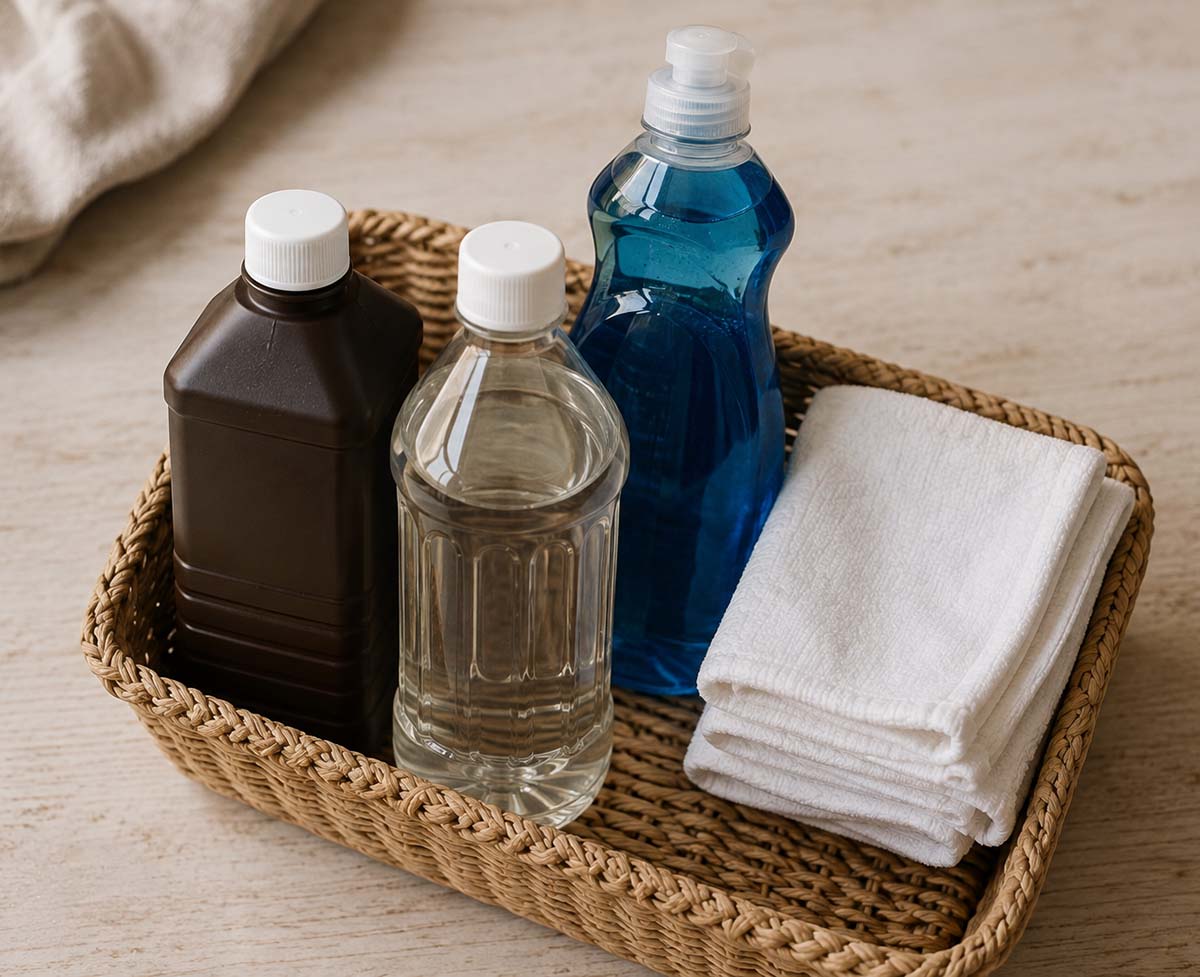
The biggest lesson from my wine stain adventure? Keep a simple stain-fighting kit ready to go. After this experience, I now keep a small container in my laundry room with:
- A bottle of hydrogen peroxide
- A bottle of white vinegar
- Blue Dawn dish soap
- Clean white cloths for blotting
Having everything in one place means I can tackle spills immediately instead of running around looking for supplies while the stain sets in. If you’re serious about keeping your home clean with natural, non-toxic solutions, this kit is a great start.
Beyond Clothes: Other Wine Stain Scenarios
While this article focuses on clothing, wine spills happen on other surfaces too. The same hydrogen peroxide method works on white tablecloths and linens. Got wine on a rug or carpet? We’ve got a full guide to getting red wine out of carpet with methods built for that surface specifically. For everything else, these natural spring cleaning tips cover more surfaces broadly.
And if you’re someone who entertains frequently (which probably means more wine stain opportunities), you might find our guide on summer entertaining tips helpful for preventing spills in the first place.
Red Wine Stain FAQ
Does salt actually get red wine out of clothes?
Salt helps as immediate damage control – it absorbs excess liquid before it sets – but in our testing it only lifted 30-40% of the stain on its own. Treat it as a stopgap until you can get to hydrogen peroxide and dish soap (whites) or club soda and vinegar (colors).
Is hydrogen peroxide safe on colored clothes?
No. Hydrogen peroxide can bleach and lighten colored fabric, so it’s for white and very light-colored clothing only. For colors, club soda and white vinegar is the safer, still-effective option.
Can you get red wine out of clothes after it’s already dried?
Yes, but it’s harder and may take two treatment rounds instead of one. Re-wet the stain, apply hydrogen peroxide and dish soap (whites) or a vinegar soak (colors), and let it sit longer – up to an hour – before rinsing and washing.
Does club soda actually work on wine stains, or is that a myth?
It’s not a myth, but it’s not a complete fix either. The carbonation helps loosen wine from the fibers, which is why it works best combined with white vinegar. On its own, treat it as a fast, portable fix until you can treat the stain properly at home.
Final Thoughts
Look, accidents happen. Wine spills. Shirts get stained. It’s part of enjoying life (and wine). But it doesn’t mean your favorite clothes are doomed.
The key takeaways: act immediately, use cold water, and for white fabrics, hydrogen peroxide and dish soap is your best friend. For everything else, club soda and vinegar will get you pretty far.
And maybe, just maybe, consider drinking your wine a little more carefully during movie night. Or at least switch to white wine. Or beer. Or water.
But probably not. Because where’s the fun in that?
Have you dealt with wine stains? What methods worked for you? I’d love to hear what’s worked in your experience – drop a comment below and let me know if you’ve found any miracle solutions I haven’t tried yet.
Better Living may earn commissions through affiliate links and may occasionally feature sponsored or partner content. If you make a purchase through our links, we may receive a small commission at no cost to you.