 By The Epoch Times | Created at 2026-08-05 09:35:12 | Updated at 2026-08-05 10:37:38
1 hour ago
By The Epoch Times | Created at 2026-08-05 09:35:12 | Updated at 2026-08-05 10:37:38
1 hour ago
As small towns across the United States reckon with power-hungry data centers springing up, the Chinese Communist Party is muddying the waters and sowing division.
By tapping into the tensions around water usage, power demands, and environmental costs, the regime is trying to widen the wedge using an old playbook: influence peddling and propaganda.
There’s no discounting the groundswell of anger in American towns about data centers in their neighborhoods. Local resistance has blocked or delayed at least 75 data center projects, worth some $130 billion, in the first quarter of 2026, according to Data Center Watch.
But while analysts caution against categorically dismissing all opposition against data centers as Beijing’s work, they say the potential risk of the regime meddling behind the scenes is nonetheless serious—and growing.
Whether it’s energy or water, each is “definitely a real issue,” Cleo Paskal, a senior fellow at the Foundation for Defense of Democracies, told The Epoch Times.
“But it’s also a real issue that the Chinese Communist Party is perfectly happy to exacerbate to create even more division with the goal not of leading to any solution, but of paralyzing the United States,” she said.

An aerial view highlights the proximity of an Amazon Web Services data center to single-family homes in Stone Ridge, Va., on July 17, 2024. As opposition against data centers grows in the United States, analysts said the potential risk of Beijing meddling behind the scenes is serious. Nathan Howard/Getty Images
‘Data Center Bandwagon’
Part of the regime’s effort is about harnessing U.S. artificial intelligence against itself.
Using virtual private networks, or VPNs, Chinese operators tapped into ChatGPT, which is not accessible in China. They instructed the chatbot to create English-language comic strips and comments that suggested AI center construction was hiking up electricity costs for average American households.
One comic features a family of three saying “This is unfair!” while glaring at a man in a suit puffing a cigar and clutching bags full of cash, a June OpenAI report found. A set of likely fake accounts then amplified such materials on social media.
OpenAI dubbed the effort the “Data Center Bandwagon campaign.”
Chinese influence operators are “testing narratives against AI infrastructure—a foundation of U.S. technological leadership, economic growth, and the broader democratic AI ecosystem,” the company said in its report.

Screenshots of an English-language comic strip generated by ChatGPT suggesting that AI data center construction is driving up electricity costs for average U.S. households, posted on X by a network of likely inauthentic accounts. OpenAI/Screenshot via The Epoch Times
Keeping an edge on AI has been imperative for the Chinese regime. Its 15th five-year plan, adopted in March, pushes to integrate AI in all sectors of the economy. In a speech on July 17, Chinese leader Xi Jinping laid out another global AI order, in which China will take the lead in training and collaborating on the technology for developing countries.

Retired U.S. Marine Col. Grant Newsham at the 2022 Conservative Political Action Conference in Orlando on Feb. 25, 2022. Tal Atzmon/The Epoch Times
The Chinese authorities see AI as a “battle,” said retired U.S. Marine Col. Grant Newsham, who authored the book “When China Attacks” to warn about the Chinese regime’s gray zone tactics.
“They want to win it, and they want to defeat us,” Newsham told The Epoch Times. And defeating means ensuring the United States falls behind them, and ideally, is dependent on them, he said.
Newsham pointed to green energy as a case study.
The world’s shift to clean energy has led to heavy dependence on China, which produces around 80 percent of the world’s solar modules and batteries and 70 percent of wind turbine equipment. The refining process for several key electric vehicle batteries largely takes place in China.
Now, the Chinese regime wants to achieve the same thing with AI, Newsham said.

A person walks past a display of an Atlas 900 AI cluster at the Huawei stand during the World Artificial Intelligence Conference in Shanghai on July 28, 2025. Newsham said Chinese authorities see AI as a “battle,” in which they want to ensure America falls behind them and, ideally, becomes dependent on them. Hector Retamal/AFP via Getty Images
Chinese actors appear to still be experimenting at the moment with their fake social media accounts, but analysts and OpenAI warn that they are getting better.

Beijing is not looking for quick results, said Scott McGregor, a former intelligence adviser to Canadian federal law enforcement.
“It’s very incremental,” he told The Epoch Times.
Volume matters, and AI is enabling Chinese influence campaigns at scale, said Nicolas Chaillan, a cybersecurity expert and former Air Force chief software officer.
“If you become the noise and you have the volume with you, then you can control the narrative, and then you can really push your thoughts into people’s minds,” he told The Epoch Times. “The more volume it has, the more it’s repeated, the more people are going to believe it.”
Sowing Discord
Running alongside the covert cyber operations is a more overt propaganda push.
In recent months, Chinese state media have carried dozens of articles—in English and Chinese—taunting U.S. buildout roadblocks while boasting China’s successful AI expansion. Many of them echo the same talking points as the fake social media accounts.
This pattern appears to have caught the attention of Washington. Interior Secretary Doug Burgum, at a May policy event, suggested that some of the activism against data centers is driven by “foreign source dark money coming in.”
“It’s not organic or local,” he said.
Several Republican lawmakers have pointed to a network funded by Neville Roy Singham, an American businessman living in Shanghai who has parroted Beijing’s talking points. Singham is now under federal grand jury investigation over potential unlawful money funneling.
The groups linked to him have gained congressional scrutiny previously for fueling protests in the country. Several have openly defended Beijing’s strategic interests, denouncing the United States on Chinese state media and organizing courses that praise Chinese socialism.
Their role in mobilizing anti-data center protests is a chief focus of Rep. Jason Smith (R-Mo.).

Neville Roy Singham (R), founder of ThoughtWorks, attends an event at Carnegie Hall in New York City on Feb. 14, 2018. Singham, who lives in Shanghai and has parroted Beijing’s talking points, is now under federal grand jury investigation over alleged unlawful money funneling. Dave Kotinsky/Getty Images for V-Day
“China would like to dominate the future of artificial intelligence, and it is clear that they are actively seeking to exploit Americans’ legitimate concerns and sow discord in our own backyard for one purpose, and that is to seize this technological advantage for themselves,” Smith, who chairs the House Ways and Means Committee, said in a June congressional hearing on Chinese influence.
He vowed to “follow the money and get to the bottom of the dark web of funding sources.”
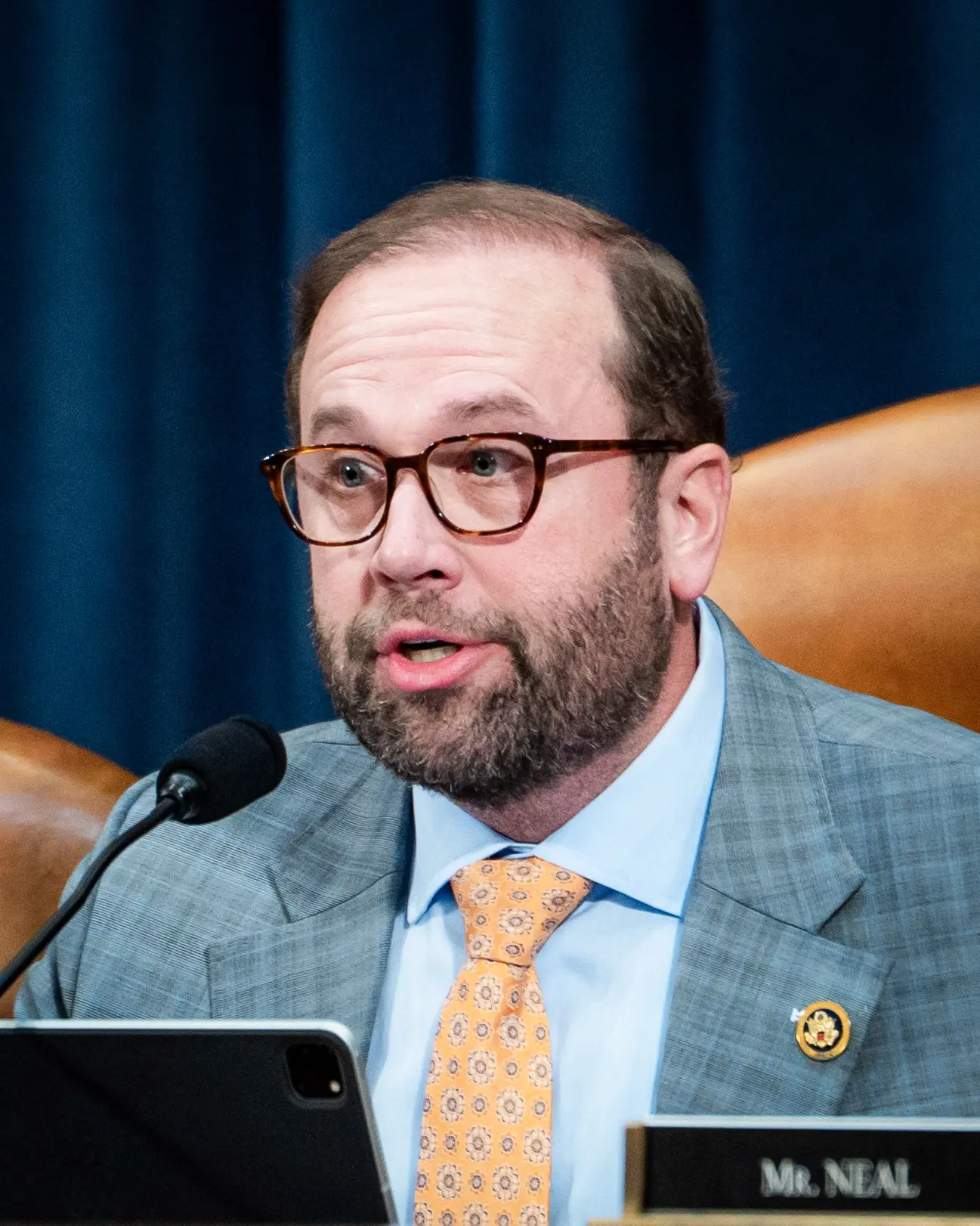
Rep. Jason Smith (R-Mo.) speaks during a hearing on Capitol Hill in Washington on Feb. 10, 2026. Madalina Kilroy/The Epoch Times
In late July, Smith subpoenaed three Singham-associated nonprofits, citing tens of millions of dollars funneled through Singham.
Some of the opposition voices said their core issue is a lack of transparency from the government.
Residents “want to feel heard in decisions that will impact their lives for decades to come,” Elizabeth Hutchings, communications manager of Alliance for a Better Utah, told The Epoch Times. The group has fought a major data center project in the state and denies any foreign hand in its work.
Lawmakers and experts say true community-led opposition and the Chinese influence campaigns are two distinct issues.
“There’s a place for legitimate concerns about data centers and AI, but let’s have that debate separate from the malign influence by the Chinese Communist Party,” David Shedd, former acting director of the Defense Intelligence Agency, told The Epoch Times.
The Chinese regime, he said, has “every vested interest” in sowing discord.
McGregor agreed, saying the regime is trying to catch up on AI, and it will want to slow the United States down in any way it can.
Singham couldn’t be reached for comment.

Demonstrators wave signs during a nationwide protest against AI data center expansion, in Imperial, Calif., on July 18, 2026. Some of the opposition voices said their core issue is a lack of transparency from the government. Sandy Huffak/AFP via Getty Images
‘Tell Half a Story’
Exploiting friction points in open societies is a familiar tactic for the Chinese regime.
When the United States grappled with anti-Asian hate crimes in 2021, Beijing saw an opportunity to divert attention away from human rights abuses in its own country. Its diplomats and state media accused the United States of hypocrisy and boasted that the Chinese version of governance was better.
“They tell half a story, or they change the story enough so that it corrodes the truth,” Stephen Nagy, a professor of politics and international studies at Tokyo’s International Christian University, told The Epoch Times. “These are patterns that are only accentuated and put on steroids with AI.”
Ethan Tu’s Taiwan AI Labs has used AI to track coordinated influence operations. In most cases, he said, the operators aim to wear down public trust and push both sides to the extreme until there’s no room for objective conversation.
When democratic functions become paralyzed, people might think, “democracy is really chaos, it’s no better than China,” he told The Epoch Times.
In the case of AI, the regime is running the campaign on top of a litany of efforts to gain the coveted AI edge. Where the technology has fallen short, it makes up the difference by stealing American tradecraft, smuggling chips through third countries, and leveraging supply chain dependencies to impede U.S. AI infrastructure growth.

Ethan Tu, founder of Taiwan AI Labs, speaks during the AI+ Expo Special Competitive Studies Project in Washington on June 3, 2025. Tu said operators of coordinated influence campaigns often seek to erode public trust and drive both sides toward the extremes, leaving little room for objective conversation. Madalina Vasiliu/The Epoch Times
Beijing—by far the most capable competitor in this space—is running a “multifaceted, national-level strategy” to displace the United States as the world’s most influential AI power, the Office of the Director of National Intelligence said in a 2025 report.
A number of lawmakers said they were concerned.

Sen. Jim Banks (R-Ind.) in Washington on April 21, 2026. Paul Morigi/Getty Images for Puck
Rep. Brian Mast (R-Fla.), chairman of the House Foreign Affairs Committee, said the United States is “absolutely dealing with Chinese influence” on the AI front.
“At a local level in the United States of America, we’re not run by Washington, D.C. Each community gets to go out there and make their own decision about what they see as fits well within their communities,” he told The Epoch Times. “That’s our system of governance at the lowest possible level. But yes, we are absolutely dealing with Chinese influence on that front, because it benefits them for us to not have compute.”
Sen. Jim Banks (R-Ind.), like Smith, backed the grand jury investigation of Singham. He said the regime doesn’t “belong anywhere in our American political debates.”
These are “important local political debates that often involve local and state laws and policies, and the Chinese shouldn’t meddle in those debates,” he told The Epoch Times. “So we should crack down on them for it, and be fully aware of their motivations.”
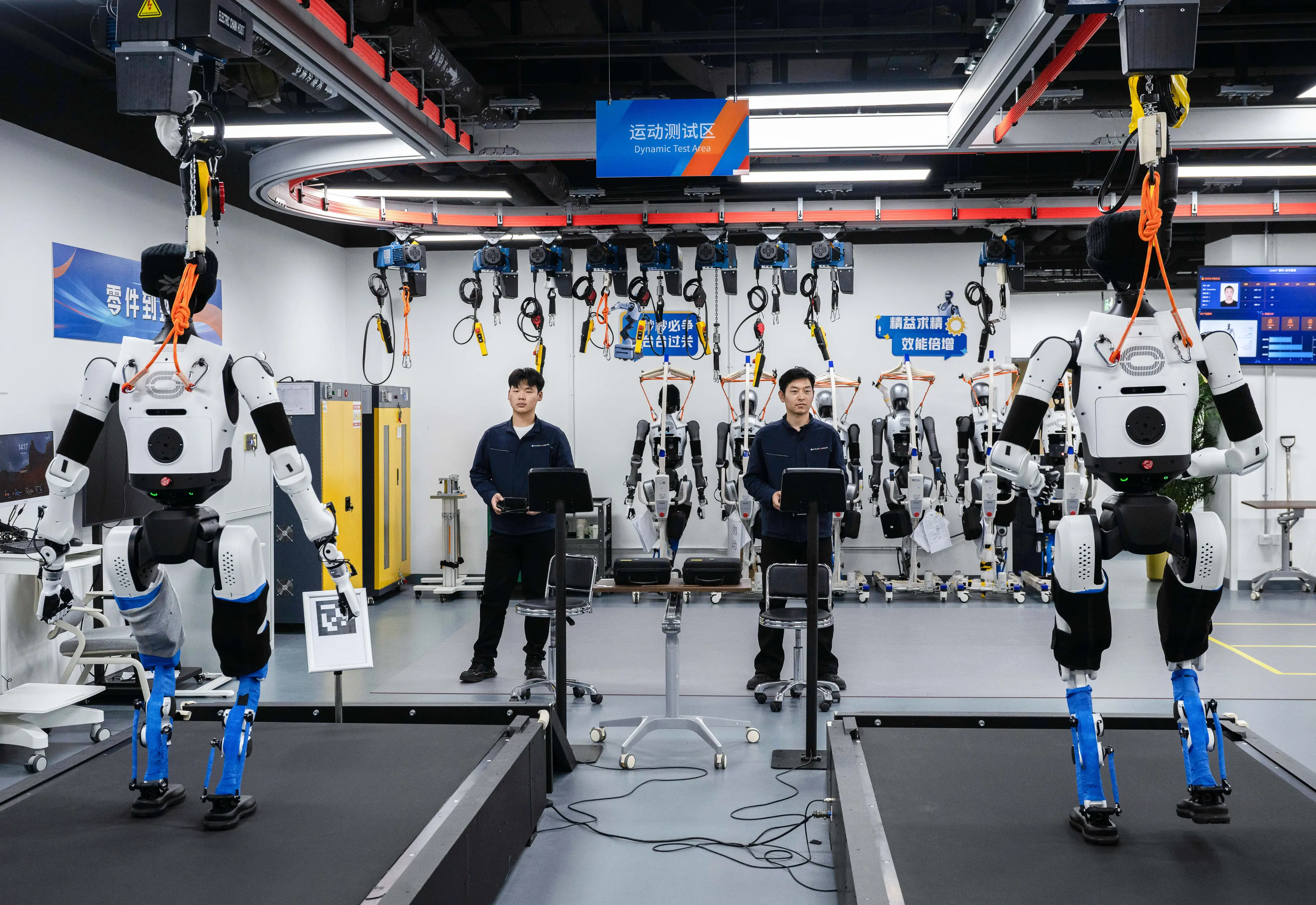
Engineers carry out testing on humanoid robots in the production facility of X-Humanoid at the Beijing Innovation Center of Humanoid Robotics in Beijing on March 20, 2026. Kevin Frayer/Getty Images
If China achieves its goal, the threat to the United States and other democracies will be “existential,” said Kerry Gershaneck, a National Chengchi University professor who has closely studied Chinese political warfare operations.
The Chinese communist rulers are “already far ahead of any other country in weaponizing AI,” he told The Epoch Times. Combine that with a “massive global data-collection ecosystem,” he said, and the regime would have the ultimate tool to export its totalitarian model and “destroy us from within.”
Sean Tseng contributed to this report.