 By The Epoch Times | Created at 2026-07-29 03:05:16 | Updated at 2026-07-29 05:23:42
2 hours ago
By The Epoch Times | Created at 2026-07-29 03:05:16 | Updated at 2026-07-29 05:23:42
2 hours ago
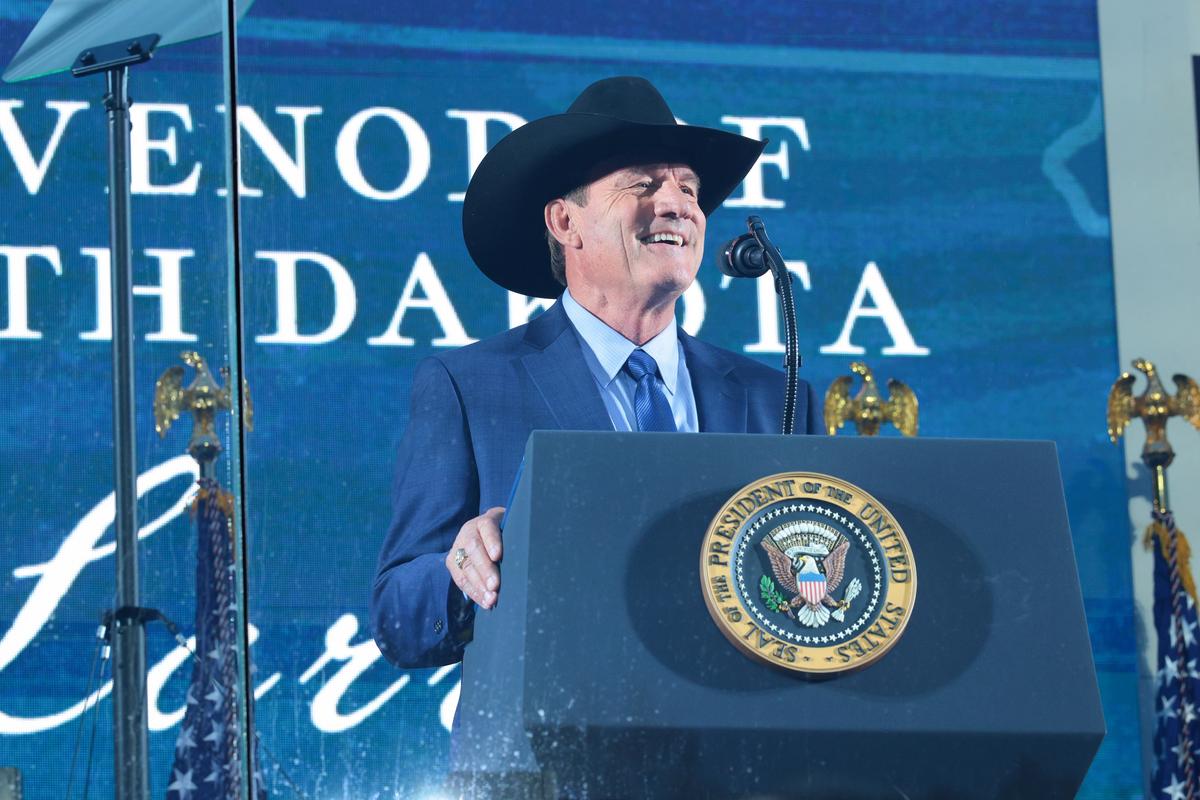
South Dakota Gov. Larry Rhoden speaks during a rally at Mount Rushmore National Memorial in Keystone, S.D., on July 3, 2026. Chip Somodevilla/Getty Images
South Dakota Republicans on Tuesday opted to nominate incumbent Gov. Larry Rhoden over challenger Toby Doeden, a businessman, in the gubernatorial runoff.
The Associated Press declared Rhoden the winner shortly after polls closed; the candidate leads by double digits. As of 10:30 p.m. ET, Rhoden had over 71 percent of the vote.
The race between the two candidates represents the first time South Dakota has ever held a gubernatorial primary runoff, which state law mandates if no candidate achieves at least 35 percent in the primary.
In the June 2 Republican gubernatorial primary, Doeden received 31 percent of the vote while Rhoden received 25 percent.
Rhoden will go on to face former state Sen. Dan Ahlers, the Democratic nominee, in November.
It’s a race Rhoden is widely expected to win in the Republican stronghold state, which last sent a Democrat to the governor’s mansion in the 1974 election.
Then-Lt. Gov. Rhoden succeeded Kristi Noem as governor when Noem stepped down mid-term to head the Department of Homeland Security under President Donald Trump.
U.S. Rep. Dusty Johnson (R-S.D.) and South Dakota House Speaker Jon Hansen, who received 23 percent and 21 percent support respectively, failed to qualify for the runoff.
Despite Doeden’s lead in the first round, it was widely expected that Rhoden would win the runoff by consolidating much of the establishment-leaning support that had previously gone to Johnson and Hansen.
A single poll in advance of the runoff, taken by Emerson College, found that Rhoden led with 62 percent to Doeden’s 32 percent.
Trump did not issue an endorsement in the race, in which both candidates sought to emphasize their credentials as pro-MAGA and pro-Trump.
Rhoden pitched himself as a traditional South Dakotan conservative and rancher, pledging continuity of the Noem–Rhoden administration.
Doeden campaigned as a self-described business outsider, vowing to oppose property taxes and shake up the state establishment.