By The Straits Times | Created at 2026-09-28 10:35:11 | Updated at 2026-09-28 11:17:34
47 minutes ago
By The Straits Times | Created at 2026-09-28 10:35:11 | Updated at 2026-09-28 11:17:34
47 minutes ago
JAKARTA - Five senior prison officials have been suspended after Indonesia’s national ombudsman found suspected special accommodation for selected inmates at a prison outside Jakarta, including villa-like residences, luxury cars, a gym and a golf simulator under construction.
The discovery was made during an unannounced inspection of a Class 2A facility at Cibinong prison in Bogor, West Java, on Sept 23. This is a high-security correctional facility housing a mix of notorious white-collar criminals, violent offenders and general inmates.
The Ministry of Immigration and Corrections on Sept 26 suspended the prison warden, the head of prison security, the head of the guidance and education section, the head of the security and order section, and the head of general affairs.
“We have suspended five structural officials who are suspected of being responsible for the incident uncovered by the Ombudsman,” ministry Inspector-General Rudi Setiawan told reporters on Sept 26.
The suspensions came after inspectors found inmates apparently living outside the prison blocks in a cluster of residential units.
Independent investigation
The country’s Ombudsman is an independent state institution that oversees public services and investigates alleged maladministration by government agencies and officials.
Ombudsman member Syafrida Rachmawati Rasahan said at a press conference on Sept 24 that its inspectors had initially sought to enter the prison’s cell blocks but were refused entry despite presenting an official assignment letter.
After leaving the reception area, the team noticed a fenced-off area about 100m away and went to investigate. Inside were more than 10 residential units, some resembling homestays, terraced houses and villas.
In one residence, investigators found a sofa, refrigerator, television and dining table, as well as bottles of alcohol in the refrigerator. They also encountered an occupant who told them he was an inmate.
“When they realised that this was the Ombudsman, they immediately ran into the bedrooms,” Syafrida said.
“So, in our view, there are strong indications that there are special facilities for certain inmates at Cibinong Prison,” she added.
‘Assimilation houses’?
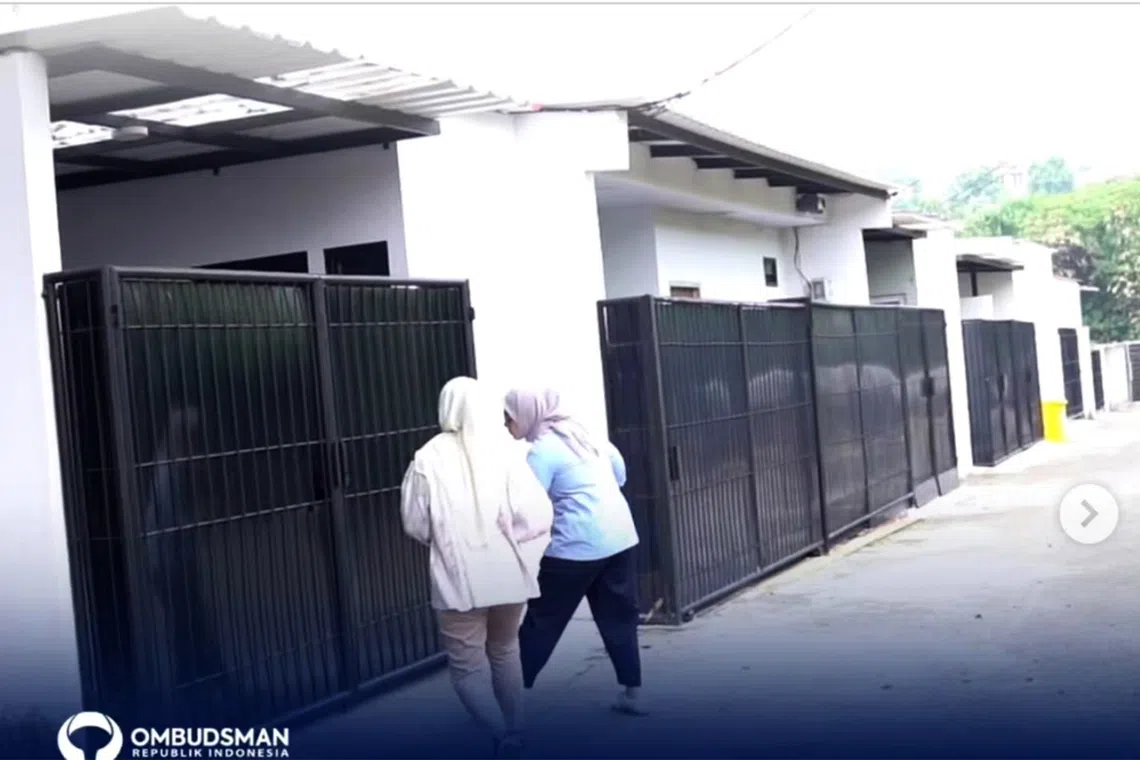
Prison officers told the inspectors that the buildings were “assimilation houses”, referring to facilities associated with a programme to reintegrate prisoners into society.
PHOTO: OMBUDSMANRI137/INSTAGRAM
Prison officers told the inspectors that the buildings were “assimilation houses”, referring to facilities associated with a programme to reintegrate prisoners into society.
But Ombudsman member Fikri Yasin said some residences appeared to house several inmates, while others were occupied by just one person.
“There was one house occupied by just one person, while another house had four people inside. That means there was indeed some form of classification there,” Fikri said at the same press conference.
The watchdog also said one inmate acknowledged paying to stay in one of the residences, although investigators have yet to establish how much was paid or to whom.
“Based on our interviews with those occupying the houses, they did pay a certain amount. It is clearly being commercialised, and this is something we will investigate further,” Syafrida said.
It also received a report from a visitor that her husband, an inmate, was being asked by the head of his room to pay 150,000 rupiah (S$10.69) a week.
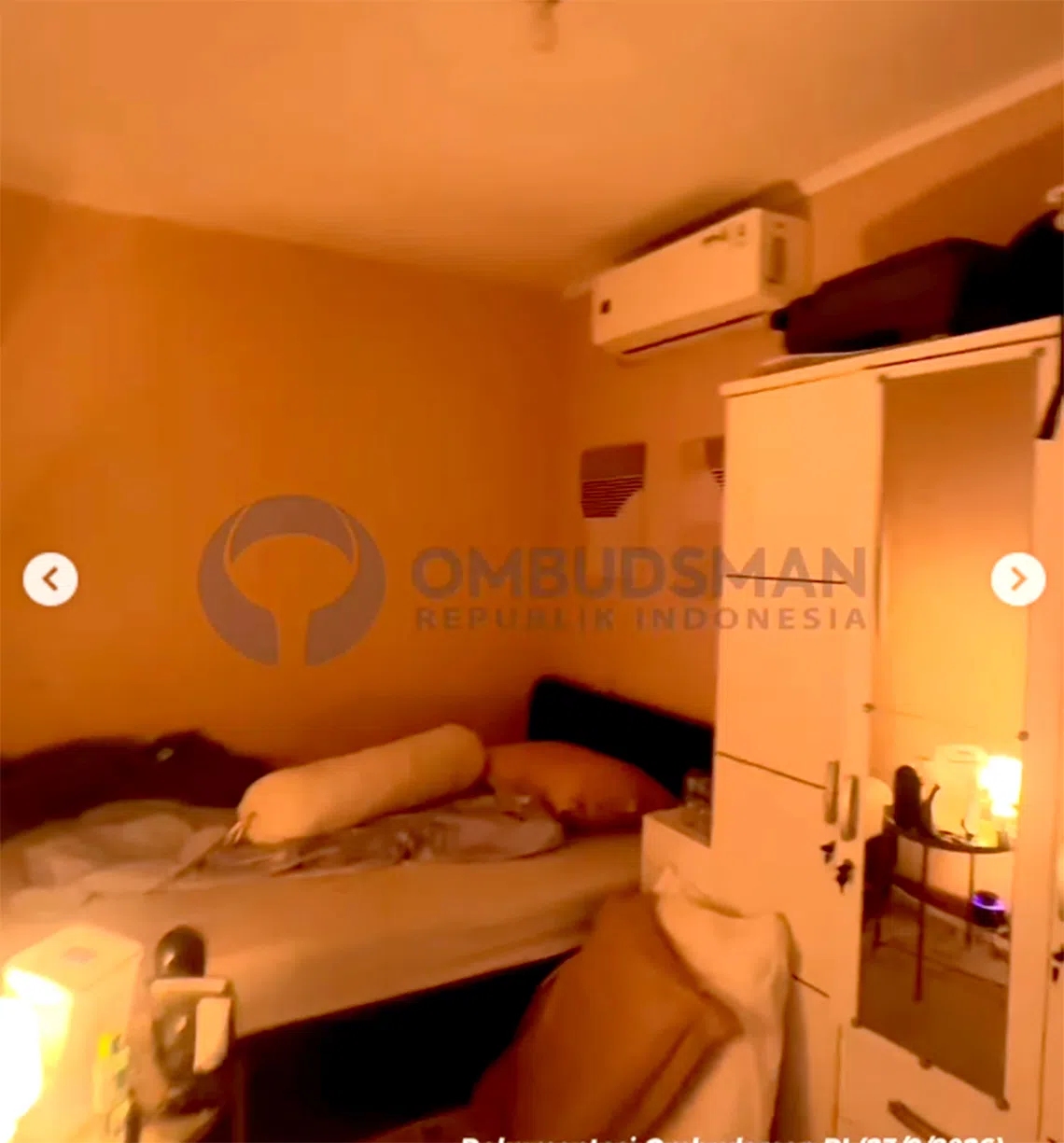
The watchdog is investigating who occupied the residences and how long the buildings had existed.
PHOTO: OMBUDSMANRI137/INSTAGRAM
Nearby, the inspectors found luxury vehicles, including a Toyota Alphard and Toyota Fortuner, as well as a gym and a golf simulator that was still under construction.
They also discovered an unsecured route near a rubbish disposal area that they said could potentially allow people and vehicles to enter or leave without passing through the prison’s designated entrance.
“One thing that is already clear is that there were inmates who should have been inside the prison blocks but were instead outside those blocks,” Syafrida said.
The watchdog is investigating who occupied the residences and how long the buildings had existed. It also called for inmates found outside their designated blocks to be sent back and for action to be taken against prison officers involved.
Furnishings removed
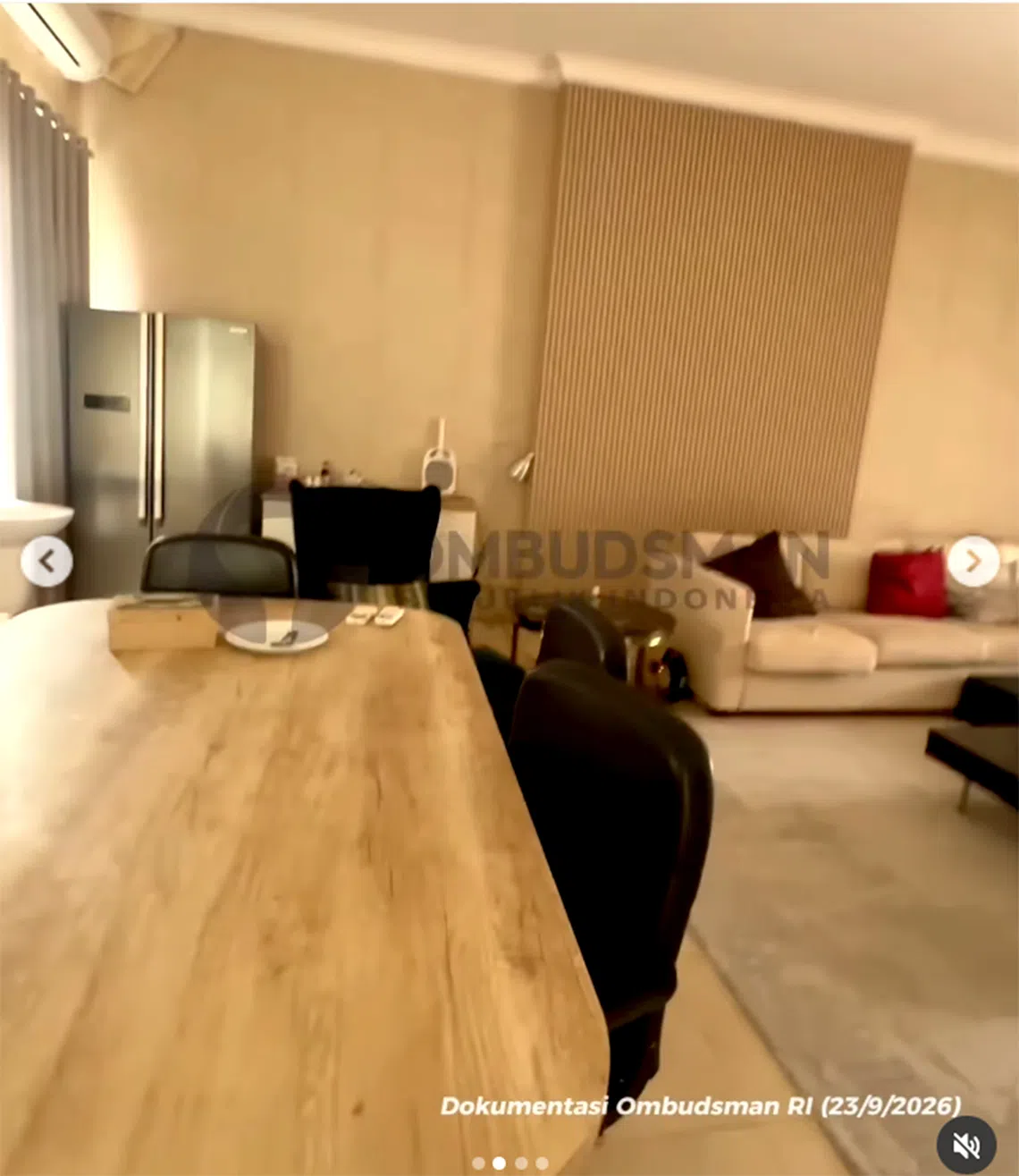
The watchdog is investigating who occupied the residences and how long the buildings had existed.
PHOTO: OMBUDSMANRI137/INSTAGRAM
Following the inspection, Agus Andrianto, Immigration and Corrections Minister, and Aris Marsudiyanto, head of the Development Control and Special Investigation Agency (Bappisus), visited the cluster on Sept 25 and found that some furnishings seen in the inspectors’ earlier footage were no longer present.
Agus said the ministry would investigate whether there had been any improper transactions involving the facilities. “There must not be any hidden interests involved. It is our job to put things in order so that there are no transactions of any kind inside prisons,” he said.
Local reports said one house still contained a sofa, table, television, mattress and water dispenser, but its air-conditioner had been removed.
The case also drew concern from People’s Consultative Assembly Speaker Ahmad Muzani, who said on Sept 27 that inmates appeared to have received facilities they should not have been entitled to.
“I am concerned about the situation because what happened involved facilities that they should not have received,” Muzani said.
At a parliamentary hearing called on Sept 28 to clarify the alleged special facilities and determine how the residences were being used, Corrections director-general Mashudi maintained that the buildings were official residences for prison staff.
However, he said 13 of the 16 residences were not registered in the government’s state asset system, and that investigators were still examining their administrative and asset status, as well as how they were actually being used.
Suspended prison warden Wisnu Hani Putranto acknowledged that he had ordered some furnishings removed after the Ombudsman inspection.
“I was the one who gave the order,” Wisnu said. Asked why, he replied: “Because those items were not state-owned property.”
Lawmaker Yanuar Arif Wibowo challenged his explanation, asking why the items had been removed only after the inspection. Wisnu replied that he had never previously entered his subordinate’s residence.
“Don’t lie,” Yanuar responded, accusing Wisnu of misleading both the minister and the public. “You didn’t just lie to the minister. You lied to all the Indonesian people.”
The allegations echo a 2018 scandal at West Java’s Sukamiskin prison, where Indonesia’s anti-graft agency found that inmates could pay between 200 million rupiah and 500 million rupiah for upgraded cells equipped with amenities including air-conditioning, televisions and refrigerators. The prison warden was arrested over alleged bribes linked to the provision of special facilities.
Indonesia Corruption Watch, an anti-graft non-governmental organisation, has also urged the Corruption Eradication Commission (KPK) to investigate possible corruption behind the alleged special facilities.
“The KPK needs to trace whether there were transactions, flows of money or abuse of authority by prison officials or officers,” its researcher Wana Alamsyah said in a statement on Sept 24. “The experience of the Sukamiskin prison case shows that paying for special facilities and permission to leave prison is not merely a disciplinary violation, but can develop into bribery.”