Argentina’s inflation rate accelerated in July, rising 2.1 percent after three consecutive monthly declines, the INDEC national statistics bureau reported Thursday.
The news brings to an end a disinflationary run that has stretched back to May. Inflation over the last 12 months now stands at 33.8 percent, with prices up 19.3 percent since the turn of the year.
Recreation and culture recorded the largest monthly hike at five percent, significantly higher than restaurants and hotels, which rose 2.8 percent. Healthcare (2.4 percent), goods and services (2.2 percent) and housing and utilities (also 2.2 percent) were also higher than the general average.
At the other end of the scale, clothing and footwear prices improved, dropping 1.3 percent.
The worst regional impact was seen in Greater Buenos Aires Aires, where prices rose 0.2 points above the national average.
While no cause for panic, July’s figure is a setback for the government, which had celebrated the fact that monthly price hikes slowed below the psychocailly important two-percent mark in June. That 1.9 percent reading was the lowest monthly figure for 10 months, an achievement now eradicated by July’s reading.
Prices rose by 3.4 percent in May, by 2.6 percent in April and by 2.1 percent in May.
President Javier Milei has previously promised that Argentina’s monthly inflation rate would start with “a zero” by August 2026. Even the most optimistic projections suggest such levels will not be reached until well into 2027, though the data shows prices are rising at a consistent level.
Expectations
Market analysts had generally expected a monthly increase of around two percent, predicting a moderate rebound influenced by seasonal factors linked to the winter holidays, a rise in utilities and other services.
That forecast was echoed by the Central Bank’s most recent REM market expectations survey, which predicted a round two percent for July.
Among the leading consultancy firms, the Fundación Libertad y Progreso predicted that July’s inflation rate stood at 2.1 percent, a forecast echoed by Eco Go.
By contrast, Equilibra put the figure at 1.8 per cent, with Analytica settling on 2.2 percent. The highest estimate comes from LCG, which puts it at 2.8 percent.
Hinting at a bigger rise, the Buenos Aires City government’s data institute earlier this week reported a 2.9 percent figure for the month – up from the 1.8 percent recorded in June in the nation’s capital.
Prices in the City were propelled by a 3.8-percent hike in services, with goods rising 1.4 percent. In line with notes from analysts, seasonal prices soared 10.9 percent.
Services and consumption
In conversation with the +Perfil television news channel, economist Fabián Quintá said the overall average inflation figure masked very different trends across the items that make up the basket.
“There is a variation, but it’s not as bad as it’s made out to be. If it comes in at two [percent], it might come in at 2.5,” he said.
One of the main problems lies in expenses that families cannot avoid, such as electricity, gas, water and transport. “The services we cannot put off are rising faster than the average rate of inflation,” Quintá warned.
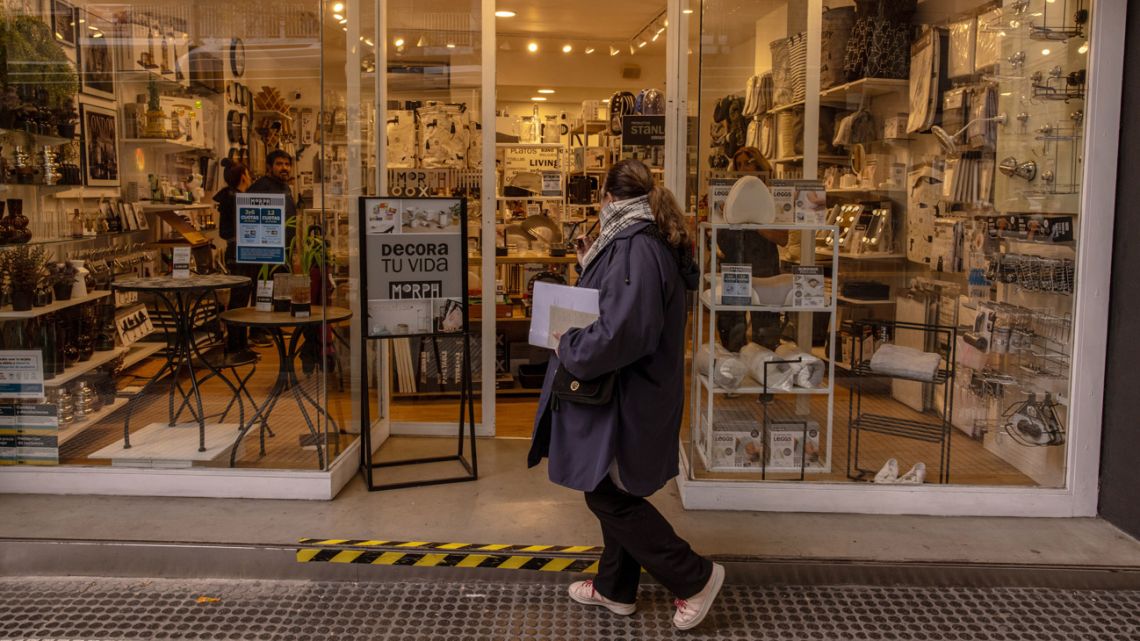
He said this could explain why consumers’ perception of inflation may be higher than the general index. Faced with a loss of purchasing power, households end up cutting back on less essential spending. “What you do is stop buying certain things or stop doing certain things,” the economist explained.
Quintá also warned that rises in business costs eventually get passed on. “Their electricity bills go up, their fuel costs go up, their toll charges go up, and sooner or later, that all comes back to us,” he said.
Analysts are sounding the alarm in particular over consumer spending, particularly among small and medium-sized businesses.
– TIMES/AFP/NA/PERFIL