 By The War Zone | Created at 2026-06-22 22:11:07 | Updated at 2026-06-22 23:51:03
1 hour ago
By The War Zone | Created at 2026-06-22 22:11:07 | Updated at 2026-06-22 23:51:03
1 hour ago
The TWZ Newsletter
Weekly insights and analysis on the latest developments in military technology, strategy, and foreign policy.
Last week, President Donald Trump held a press conference at Joint Base Andrews in Maryland to introduce the new Air Force VC-25B Bridge jet that officially arrived at the Presidential Airlift Group. As we have reported in the past, this modified, Qatari-gifted 747-8i is set to serve as an interim Air Force One aircraft ahead of the much-delayed arrival of two fully outfitted VC-25Bs from Boeing.
To get a better sense of how this project came together so quickly, the challenges it faced and the tradeoffs that had to be made, we spoke with Jason Lambert, President of Intelligence, Surveillance and Reconnaissance (ISR) at L3Harris, the company that performed the conversion. During the interview, he gave us some unique insights into this highly visible and often controversial effort.
 Jason Lambert (L3Harris)
 Some of the questions and answers have been edited for clarity.
Q: Can you give us an overview of L3Harris’s role in this program?
A: It’s an honor to talk about this monumental and generational event. L3Harris worked in conjunction with the Air Force to deliver the first VC-25B — a 747-8I that the U.S. government received as a gift from Qatar. We had the opportunity to work on that aircraft for a 10-month period, with pre-staged employees operating on a 24/7, three-shift structure to convert it into what was unveiled on Friday: the new Air Force One.
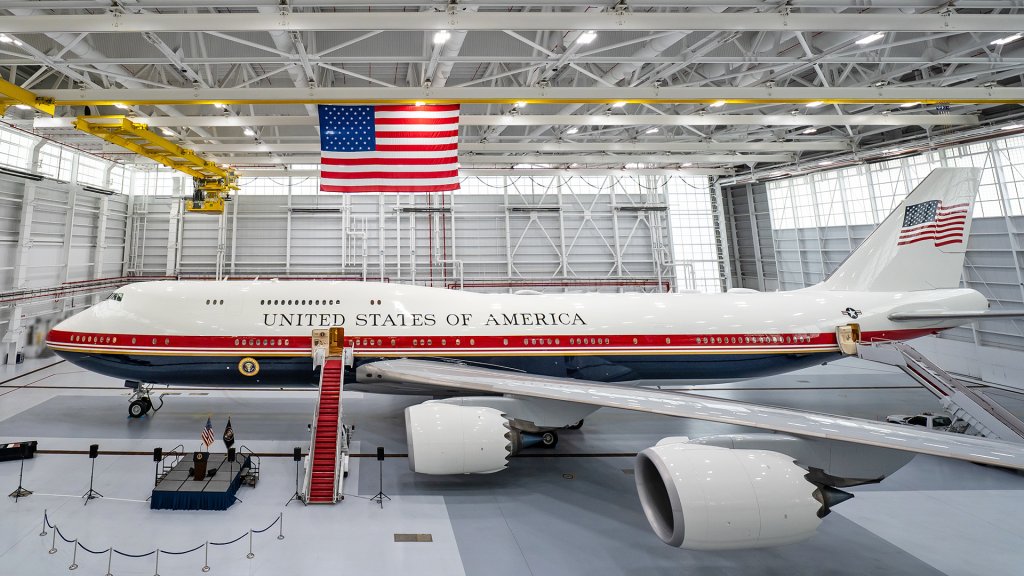 The new VC-25B bridge jet. (USAF) USAF
L3Harris, in the [intelligence, surveillance and reconnaissance] ISR business, is uniquely positioned for this type of project. We’re the world’s largest non-OEM [Original Equipment Manufacturer] integrator of aircraft. We don’t make planes from scratch — we’re not a type certificate holder like Boeing, Airbus, or Gulfstream. We take existing planes, whether commercial or military, and missionize and outfit them for specific uses. We operate the world’s largest intelligence, surveillance and reconnaissance fleet — the RC-135 Rivet Joint.
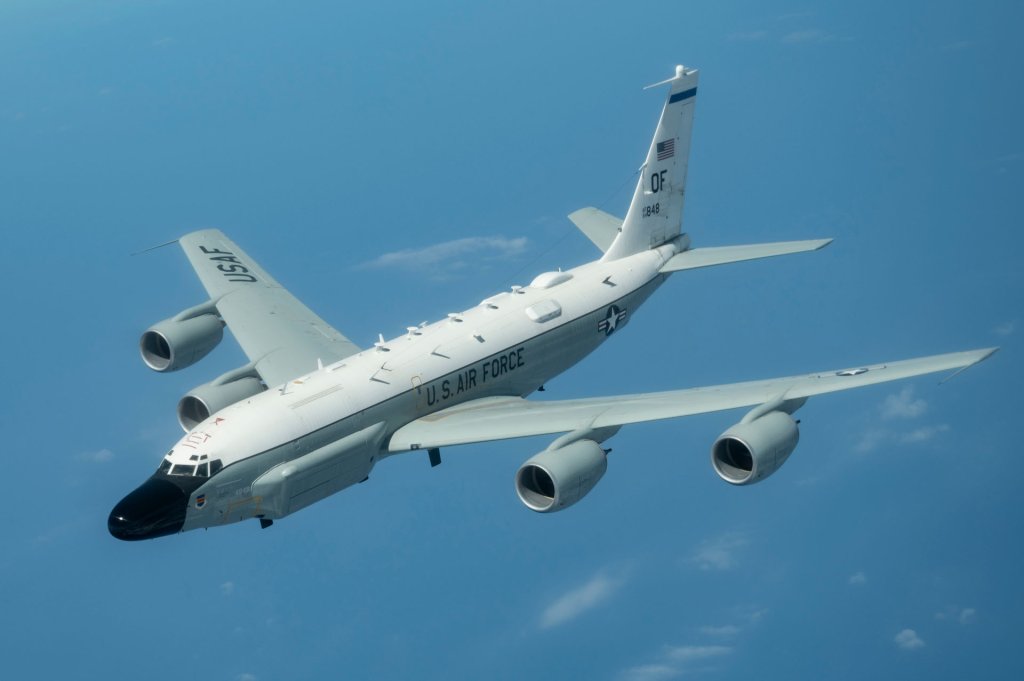 RC-135 Rivet Joint. (USAF/Staff Sgt. William Rosado)
 We missionize business jets for electronic attack, ISR, and airborne early warning and control missions, including a series of special mission aircraft, some of which are classified. And then, of course, the head-of-state mission, which we’ve been proud to be part of for many years.
We’re also the prime contractor for the Senior Leader Communication System. Any time the president is on board Air Force One, the communications system he uses to talk to his staff and to world leaders — voice, video, all content going on and off the plane — has to be secure, so state actors cannot intercept it, and it has to have the right bandwidth and latency, which is evolving as new satellite providers come online.
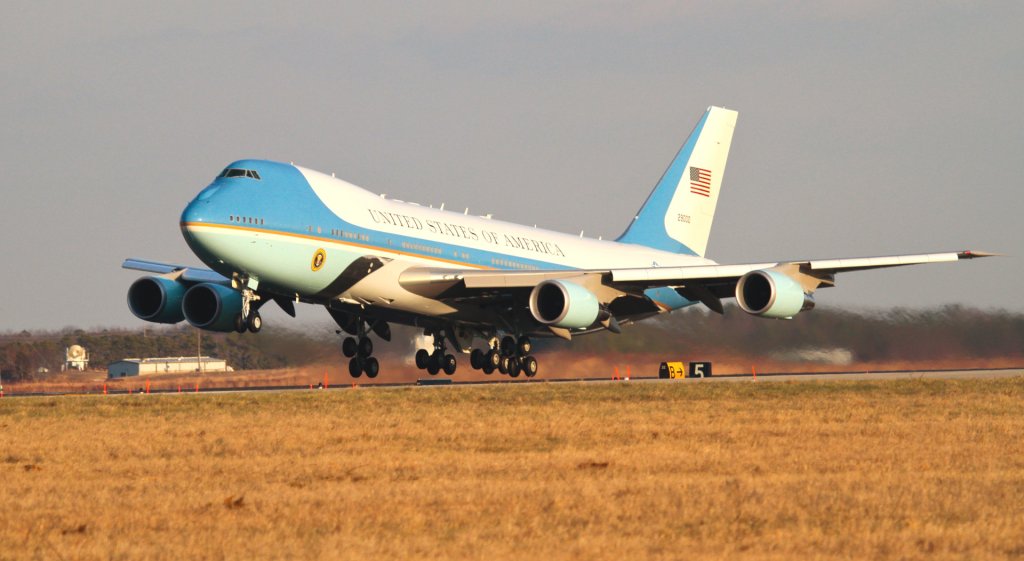 VC-25A. (USAF)
 We have the ability to broker and work with multiple providers to ensure that the system is 24/7 ready whenever the president needs it. And when he’s on that plane, he’s not just the commander-in-chief — he’s the head of state, representing the country internationally. The president spoke to that directly when he talked about the livery and how this plane looks. Our team is just very, very excited to have converted this aircraft into what is now the first VC-25B.
In conjunction with the modification work, we were also asked to help build out a training program and a sustainment program — not just for this specific aircraft, but for the VC-25B fleet overall. On the training side, the Presidential Airlift Group had been flying the legacy 747. The 747-8I is a very different aircraft — it’s much larger — so we worked with two companies to address that. We leased an aircraft from Atlas Air for a period of time, and we purchased a plane from Lufthansa out of their commercial fleet to serve as a dedicated flight trainer, so the Presidential Airlift Group could learn how to fly the platform.
You can see video of one of those Lufthansa 747-8is below:
Lufthansa Boeing 747-8i D-ABYG, one of two aircraft slated to be sold to the U.S. Air Force, visited LAX during the Airline Videos Live broadcast from the H Hotel on December 14th, 2025. Lufthansa plans to sell both 747-8i aircraft in 2026. pic.twitter.com/IxsB55Kz8h
— AIRLINE VIDEOS (@airlinevideos) December 15, 2025We also built a one-to-one scale mockup of the aircraft interior and placed it on the hangar floor at Joint Base Andrews. It was an exact replica of the layout — monuments like bulkheads, walls, doors, tables, and chairs in full-scale configuration, along with the galleys — so the flight crew supporting the president could practice and learn how to operate this aircraft before ever flying it. There were multiple training touchpoints built around that, and then, of course, the sustainment portion: spare parts, engineering support, everything needed to keep that aircraft ready whenever the president needs it. All of that infrastructure was built out in advance — not just for this plane, but to support the entire VC-25B fleet, which will include more aircraft to follow.
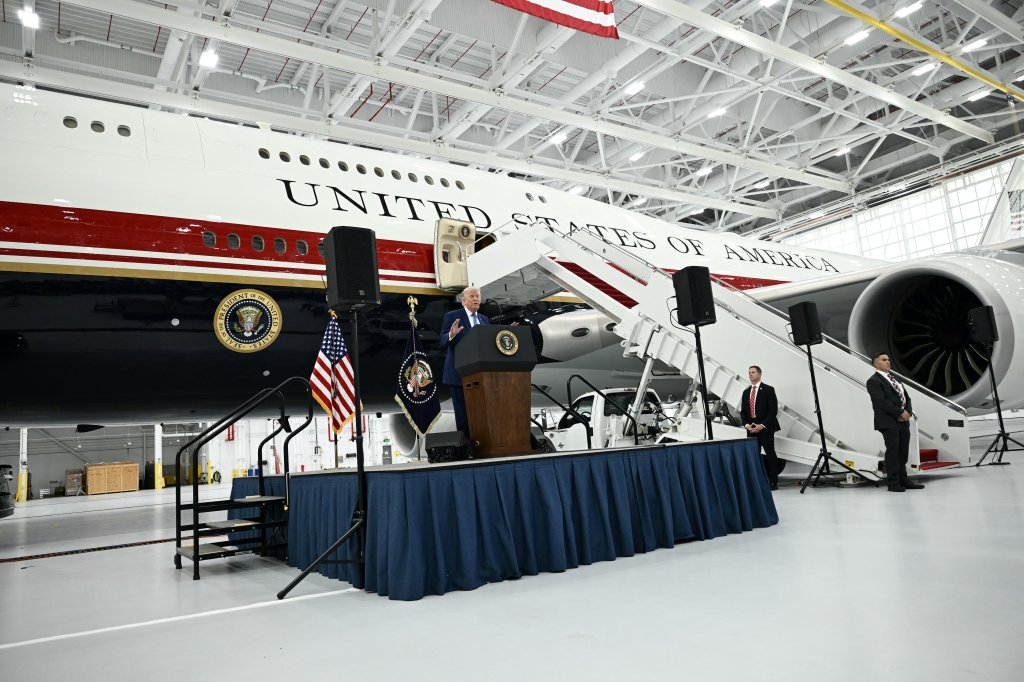 US President Donald Trump speaks in front of the new Air Force One, gifted to him by Qatar, in a hangar at Joint Base Andrews in Maryland on June 19, 2026. (Photo by Brendan SMIALOWSKI / AFP) BRENDAN SMIALOWSKI
Q: How did this all come about? Was there a requirement for a bridge Air Force One aircraft prior to the Trump administration’s second round? How did it all come into being and why?
A: In the first administration, a deal was signed with the Air Force and Boeing to build the VC-25B. That program has been delayed significantly by years, and its budget overrun by billions. You have that event taking place. The aircraft weren’t ready for the president’s use coupled with the fact that the VC-25A — the legacy aircraft — are 35 years old. They’re starting to have – there’s not a safety risk, there’s an operational risk in terms of what happens on planes, given their, I’ll just say, their usage. And so the president and the Air Force wanted to have a solution… given that the VC-25Bs are delayed further and the VC-25As are starting to – I’ll say show some age in terms of their availability. Again, there’s only two of those VC-25As and so one is usually in for depot-level maintenance. In fact, at present, I have one of them in my facility.
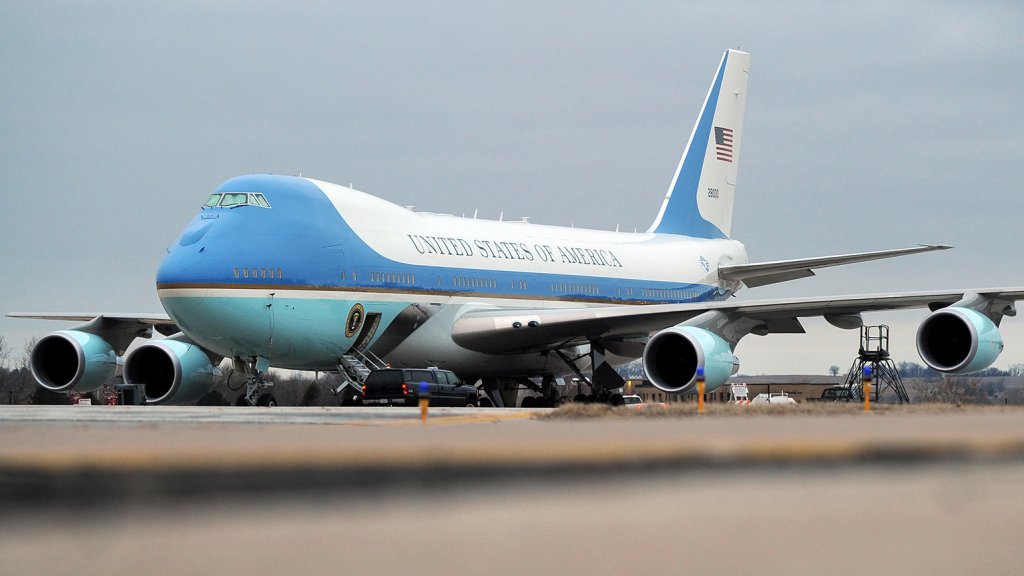 VC-25A. (USAF/Josh Plueger) USAF/Josh Plueger
The other one came back from the G7 summit recently, the president flew on that. And then of course the second one is in for maintenance. It was at Boeing’s facility at San Antonio for several months, getting upgraded, and then it’s in our facility right now for paint. That leaves the president with one VC-25A asset that, from an operational availability perspective, is not probably what it should be, given the age of the plane. So the Air Force approached us with a solution potential on how we could potentially go find a bridge to create when the VC-25Bs that are under contract with Boeing would be ready, and this was the solution.
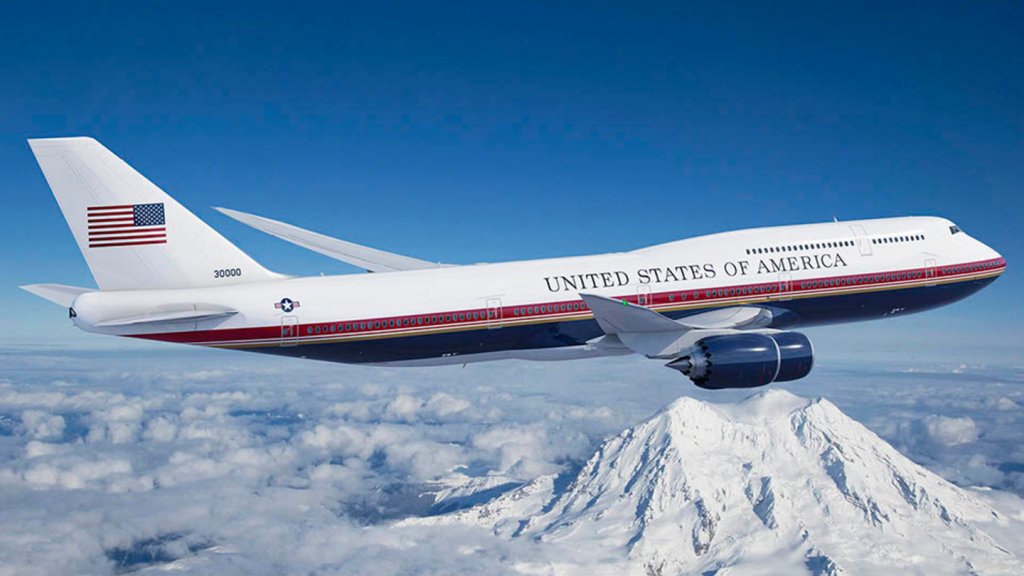 A rendering of a future US Air Force VC-25B Air Force One jet. (Boeing) Boeing
Q: Can you provide any insights into what it took to get the work on the VC-25B done in just 10 months? Can you tell the story of how it all came together and why L3Harris was tasked with the job?
A: I’ll start with the L3Harris piece. Our core competency and what our uniqueness is, is taking existing platforms — military or commercial — and modifying them based on whatever the customer’s mission set might be. For example, we take tankers and convert them into the RC-135 Rivet Joint, the country’s premier intelligence, surveillance and reconnaissance platform. We take a legacy G550 business jet and convert it to the EA-37B Compass Call electronic attack plane. We take a Global 6500 from Bombardier and are converting it to ARES X, an airborne early warning and control offering for the Republic of Korea.
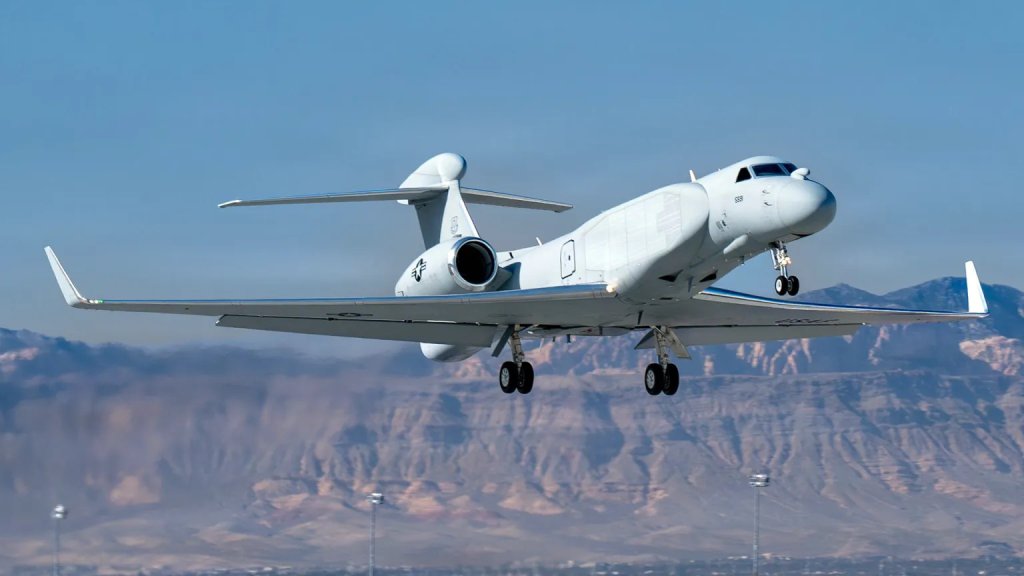 An EA-37B Compass Call. (USAF)
 We do that because we’ve got an engineering team of 2,600 people on our total workforce of 7,600. Within the ISR business, 5,600 are cleared, so we have the ability at scale and size to do classified things very quickly and detect classified things with a large group of people that can do things in our facilities. So there is a lot of technical talent, but with that we also have around 100 people in our ODA. The ODA is essentially the delegated organization from the FAA, where we in our business can do work on behalf of the FAA for certification work.
So, the way we operate it, we’ll take an existing platform or an existing plane, and rather than have to certify it from scratch, we have to just certify the modifications that we’re doing for it. So you’re always starting with this baseline, and then you’re doing a modification on top of that baseline that enables us to go far quicker than if we were to start with a brand new aircraft from scratch.
So all that aircraft missionization competency is one of the reasons I think of why we were asked. The second reason is we’re the prime contractor for what’s called the Senior Leader Communication System, and so that communication system is used for every aircraft that’s utilized for Air Force One. So, in the 747s that the president flies – when he’s flying on a 757 – those are known as the C-32s. We have the hardware and the software on that aircraft, as well as the services that connect from satellite links, ground links, and be able to manage the communications content that the president and his staff are using in flight anywhere in the world.
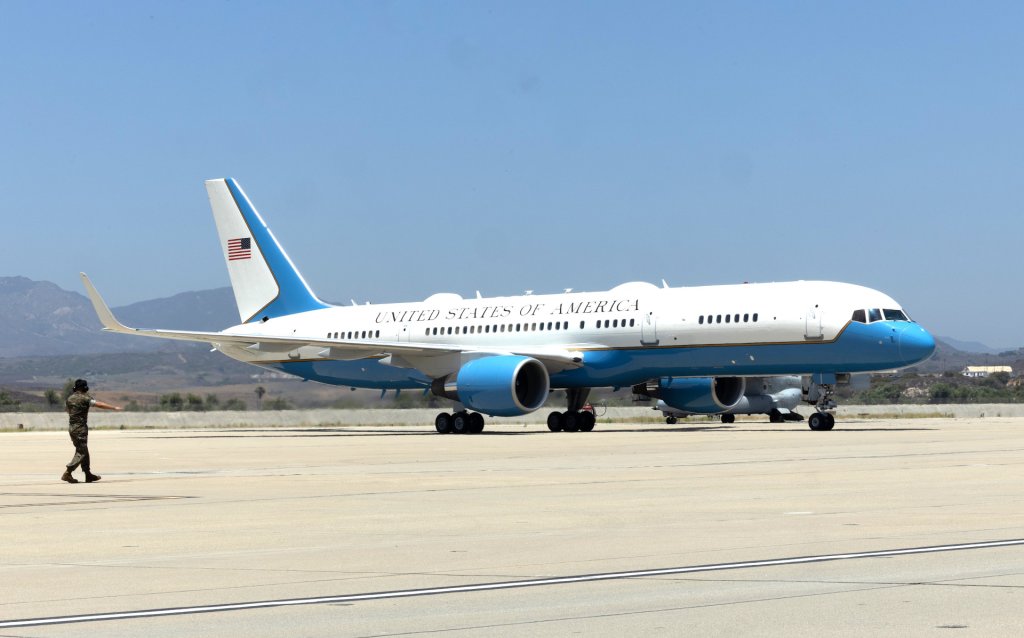 A stock picture of a C-32A wearing the blue-over-white livery. (USMC)
 Think of it like a help desk always online when the president or his staff are flying to ensure that the connections are live and working. If there’s an issue, we have redundancies within the system that we can ensure that it’s working, and most importantly, in addition to it being resilient, it’s also secure when that phone call gets made, or that video feed gets made from POTUS to a world leader, we’ve got to make sure that adversaries aren’t listening in. And so it’s fully secure, and that’s the core competency of what L3Harris does. So, combining those two pieces together, along with our legacy of supporting the Air Force One fleet, and we’re a logical choice to be asked to go take on this work and we are really uniquely positioned to do that because of the nature of the things that we do.
Q: What is the difference between this aircraft and Boeing’s VC-25Bs that are still in modification?
A: They both started as a 747-8i so from a platform perspective, they are the same. I can’t talk too much about the VC-25B program. What I can say for this one is, while this is an 8i, it had a very nice interior that came in from the Qataris. So we had a place to start from.
One of the first things we have to do on this aircraft, in conjunction with the U.S. government, is ensure it is safe. There was a lot of content and buzz on blogs and whatnot about is the aircraft secure? Is there anything that we wouldn’t want coming in on the aircraft? Somebody could listen in, something like that. And I can assure you that was very effectively managed to the highest degree. Experts from the U.S. government, experts from L3Harris, experts in cyber security, electronic warfare, ensured that every square inch of that plane was clean, not only on the exterior but interior of the plane and all systems within. So I’ll say, there’s just electronic scrubbing, is how I would describe it, to ensure that it was safe and secure. Frankly, that work took place even before we were able to do any real work on the plane.
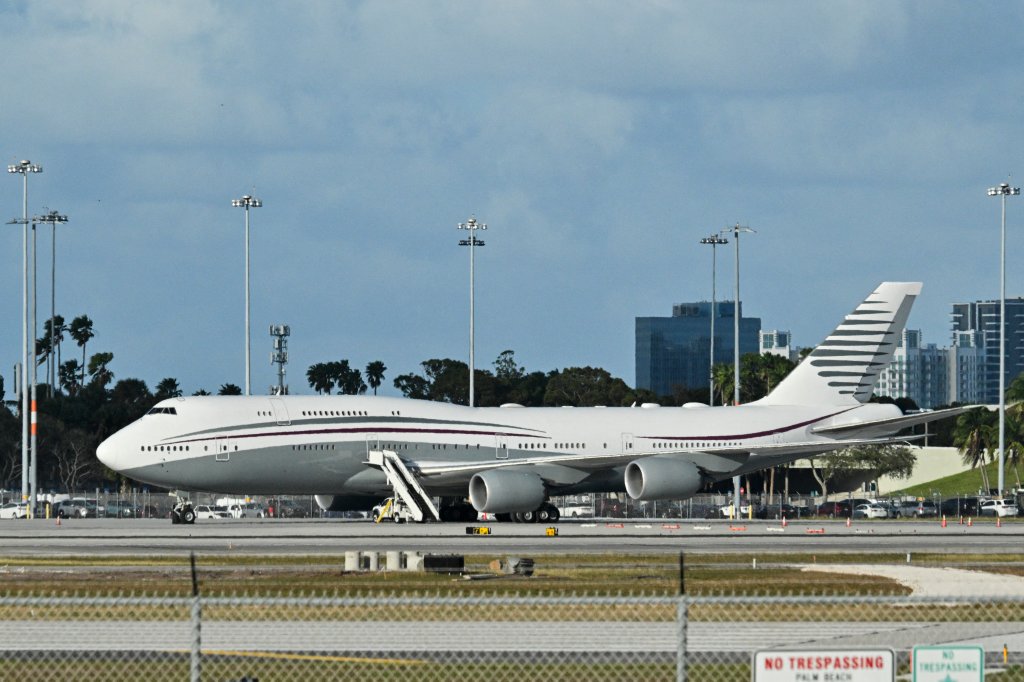 In this February 15, 2025 photograph, a Qatari Boeing 747 sits on the tarmac of Palm Beach International airport after US President Donald Trump toured the aircraft on February 15, 2025. (Photo by ROBERTO SCHMIDT / AFP) ROBERTO SCHMIDT
Once we started work on the plane, it had an existing interior, much of which we kept and maintained. One of the things that we had to do for the speed of this program – because the goal was to get it done before the country’s Independence Day.
We were excited that we delivered early to that commitment. There are things that would have driven the schedule, so for example, changing the room structure, changing the hard walls, or any of the bulkheads, things like that, that would drive a significant amount of schedule risk associated. So those were some of the big rules that said, ‘okay, we’re not going to change any of what I call monuments,’ but there’s things within those that we did have some flexibility to change.
For example, there’s some things that came in on the interior that, while they look very nice, they weren’t really representative of what would be fitting for the U.S. president, and so we did make some modifications into some of the fit and finish in terms of the leather and wood and other aspects of what the aircraft looks like to really be fitting for the president’s mission.
✈️🇺🇸 The ultra-luxurious Boeing 747-8, which former U.S. President Donald Trump is set to receive as a gift from the Qatari emir’s family, is poised to become the most valuable present ever given to the United States by a foreign government.
Aviation experts estimate the… pic.twitter.com/GMXJWtZdCF
Q: When the original VC-25B contract was put forward, we were told the USAF, the White House and Secret Service carefully picked the exact requirements needed to execute the mission, and they would come at great cost. Some were even dropped to save money, like aerial refueling. Clearly, those standards had to change drastically to make this Bridge aircraft happen. What requirements were relaxed and what features were omitted in order to meet its aggressive budget and timeline requirements?
A: That’s classified, so I won’t be able to take that one, but I’d prefer that you direct that question back to the US Air Force.
Q: The one thing we get asked about the most is if this aircraft is hardened against electromagnetic pulse and has the command and control capabilities of the full-up VC-25B? Can you speak about that?
A: I think that’s one I’ll also have to defer back to the Air Force.
Q: What about survivability? The VC-25As are covered with infrared countermeasures and missile detection systems, and there are clearly capabilities that are less obvious. This aircraft doesn’t appear to have a similar outfit. How was survivability factored into its abbreviated modifications?
A: Survivability of the aircraft was something that was absolutely thought of, but I can’t comment on the specific systems on the aircraft yet. That’s one I’ll have to direct you back to the Air Force.

Common Infrared Countermeasures (CIRCM)
Q: If this aircraft is good enough to carry the commander-in-chief in the Air Force One role, why does the USAF need to spend over $4 billion on the other two aircraft? Why can’t the USAF just procure two aircraft in this configuration?
A: It’s an interesting question. Good question for the Air Force, but that’s an interesting question.
Q: Will this aircraft be able to fly all missions that the current VC-25As can? What about trips overseas to less peaceful regions?
A: I can comment about [the recent speech Trump gave at Andrews Air Force Base]. I know he’s intending to use this aircraft for international travel. I think he mentioned that there’d be an upcoming flight to Turkey coming up in the future. So specific locations, that’s always done through the White House planning group and White House Presidential Airlift Group. But the intent is this aircraft would be used overseas very much. The president talked about it in his speech about how it really is comparative to some of the other head-of-state aircraft.
It’s 18 feet longer for one so it really is a large aircraft. In fact, the hangar at [Joint Base Andrews] JBA that we were in on Friday for the ceremony was actually custom-built for the VC-25B because of the size of these planes.
In addition, of course, when you see the livery up close, it’s just amazing in terms of what it looks like. So I think the intention is for the president to use this overseas. He definitely signaled that directly on Friday.

Trump unveils new Air Force One, a $400 million jet gifted by Qatar | full video
Q: But are there any preclusions about where it can go at all? To a less peaceful region? Is there any place that it can’t go that the other aircraft can?
A: That’s probably a question for the Air Force.
Q: The aircraft belonged to another country’s government. What had to happen in order to make sure a foreign aircraft like this is free from potential nefarious tampering, bugs and other potential threats? Did every single component have to be examined?
A: What I can say is that a team of experts from the US government, in terms of cyber security, did an immense amount of work on this aircraft, in conjunction with the L3Harris team, to ensure that this aircraft was fully safe from that environment, that threat, and that threat has been fully mitigated. I can say that. How they do it is classified.
Q: The interior in this thing cost massive amounts of money when the Qataris outfitted it. It was one of, if not the most incredible VIP aircraft on earth before becoming a VC-25B. What unique elements of its interior and other VIP features were kept and what was changed?
A: The majority of the wall structure was all kept so any movements of monuments was maintained. That aircraft has 10 restrooms, and those were all kept and maintained. The fit and finish, in terms of some of the materials that were selected, those in some cases were upgraded in certain areas of the aircraft, and that’s both in terms of some of the leather and some of the wood grain veneers and things to be able to not only be esthetically pleasing, but fitting for the U.S. president.
You can imagine that the president is on the aircraft and could be doing interviews with the media. The presidential seal was of course incorporated in a few areas.
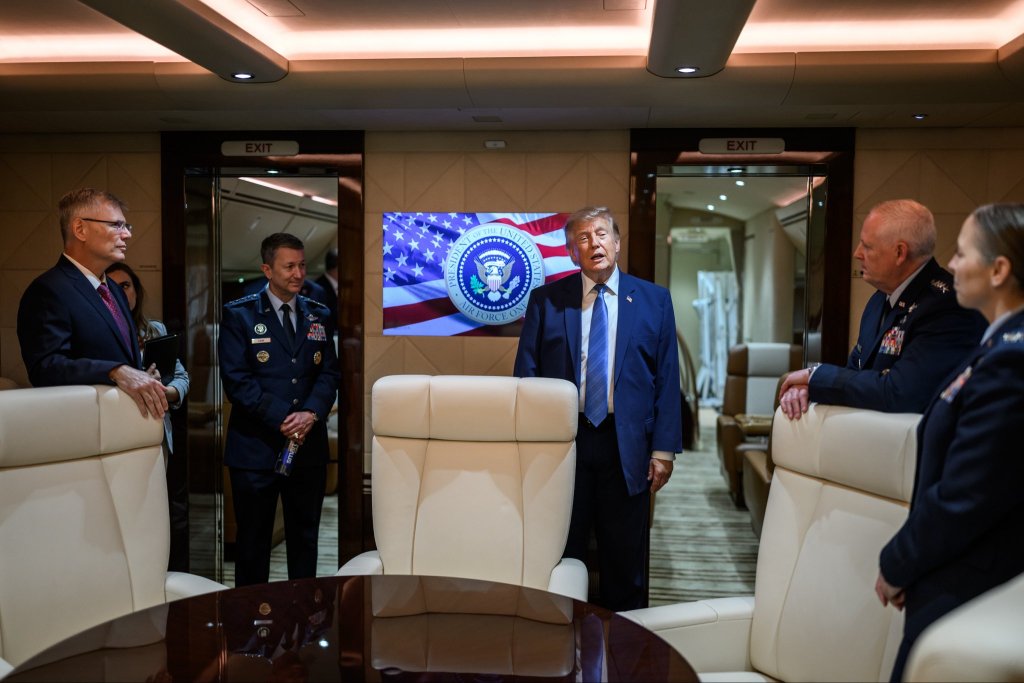 Inside the new VC-25B Bridge jet. (Via X)
 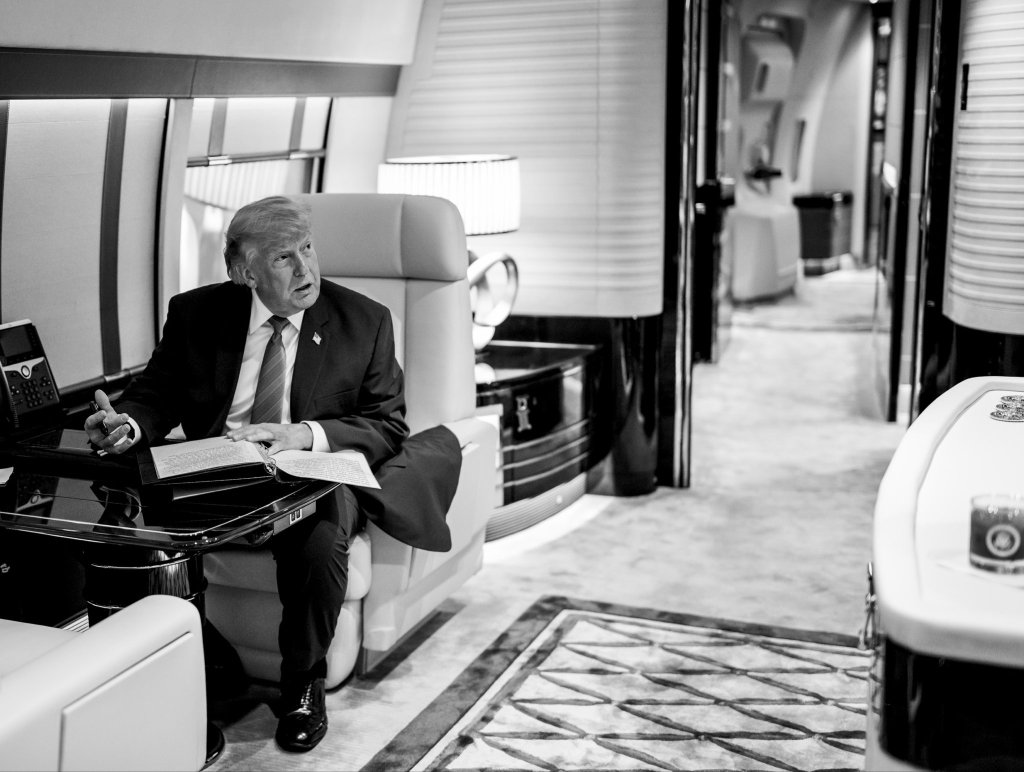 President Donald Trump inside the new VC-25B Bridge jet. (Via X)
 We had to put in an air stair, which is for when the aircraft is landing in a remote location, it doesn’t have to – like on Friday – there’s the trucks that come up with the stairs to be able to get on and off the plane. This has one that can self deploy, so that was a fairly sizable structural mod to be able to integrate that into the aircraft and go through the certification process with it, but it works flawlessly. It’s actually a phenomenal piece of mechanical engineering. So yes, there were a couple of minor things that had to happen in conjunction with the other systems we had to incorporate.
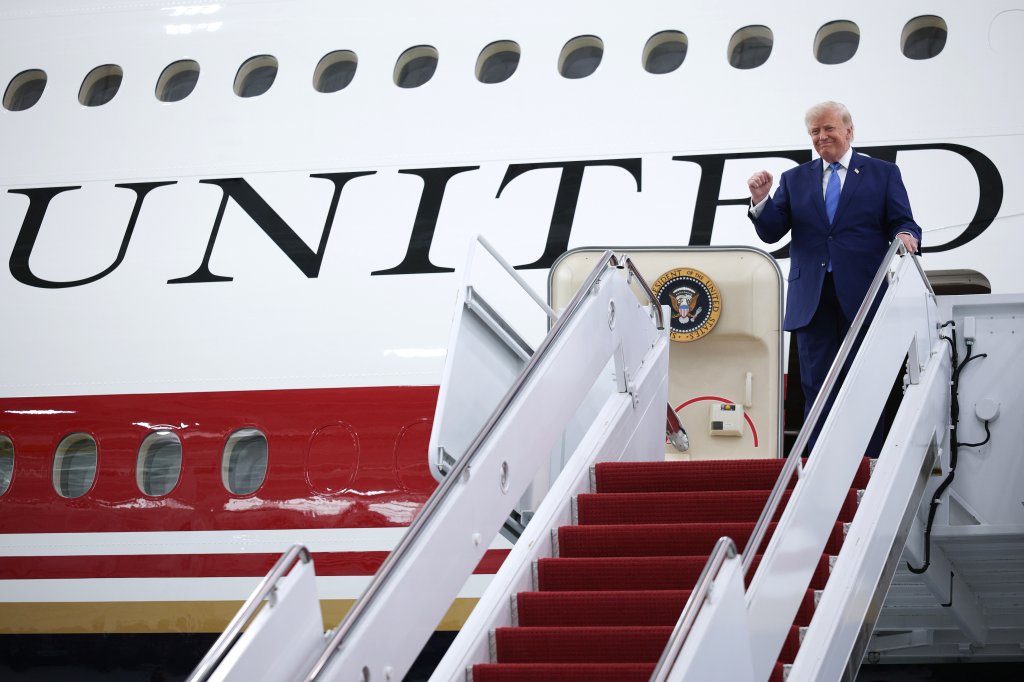 U.S. President Donald Trump pumps his fist after touring the inside of the newest aircraft in the presidential fleet at Andrews Air Force Base on June 19, 2026 at Joint Base Andrews, Maryland. (Photo by Alex Wong/Getty Images) Alex Wong
Q: Were these requests from the president himself?
A: I’ll say that the president didn’t see the aircraft personally until last Friday, but his staff was directly engaged in the project throughout the entire project. Air Force leadership engaged throughout the entire project. We had senior Air Force visitors, including the Secretary and Chief of Staff of the Air Force, Gen. [Dale R.] White [The Pentagon’s Director of Critical Major Weapon Systems] and representatives from the White House military office visit us on several occasions to check on the progress of the aircraft, and then also to make design decisions.
I think about even one like the paint scheme, and the president had to sign off on the paint scheme, had to sign off on – if you look at the back of the tail – the wavy flag versus the fixed rectangular flag. The president personally had to approve all those items.
And one of the things the Air Force did an amazing job of helping us with is getting those decisions made as early as possible on the program, and then once the decisions were made, keeping the configuration frozen. In any type of aircraft development program, regardless of the customer, being able to make those design decisions and have them skit locked in the front end allows the team to actually go do the procurement and engineering and work on the aircraft without having to do a lot of change.
In this example, we had an objective, along with our Air Force customer, to get this plane delivered before the 4th of July, 2026 for the country’s 250th birthday. And the team rallied behind that mission set to do that. And we could never have done it without the level of collaboration we had with the Air Force, working the requirements back with the president.
You can see the VC-25B bridge jet practicing touch-and-goes at Andrews in the following video:
Q: What new features does this aircraft’s interior have that the VC-25As don’t?
A: Well, the upgrades. So the comm suite is all the latest content gear, so that’s an upgrade. The aircraft is larger than the 25A, again about 18 feet larger, and so I’ll just say the size and just the finish of the aircraft.
Also, VC-25A’s were commissioned under President Reagan, and then first used under President Bush, and so while they are nice planes, they’re 35 years old, and so you can imagine just how those will wear a bit over time.
And yes, they’ve been kept upgraded, but this is a modern, beautiful aircraft, and I can say, when I saw it for the first time, it was the most beautiful aircraft I’ve ever seen. It’s – and if you have the chance someday to walk on the inside – or as things will start being released, you’ll see that on the interior also. It’s just absolutely gorgeous. And we had a great plane, a great point to start from, but again, we did have to do some things to make it fitting for the US president.
Q: The paint job has gotten more press than anything else. What was the process of painting the highest profile aircraft on earth?
A: That’s a great question. So the first was the color selection, and as the president said on Friday, he was asked what color would he like. ‘So I like the American flag,’ and so trying to incorporate the American flag into the color scheme, we did a couple of things.
One, we took a legacy fuselage of a business jet. We do a lot of work on missionized planes to use it as essentially a test to be able to get the white and the red and the blue and the gold. How we apply those, took a lot of practice. We essentially painted a scrap airframe to be able to do the testing. The second thing we did is our team actually painted a C-32 – which is actually the first aircraft that was ever released with this paint scheme – a 757 called C-32A.
So we painted that and released that and actually got to show it live to the senior leaders of the Air Force before it was delivered, and it came out great as well.
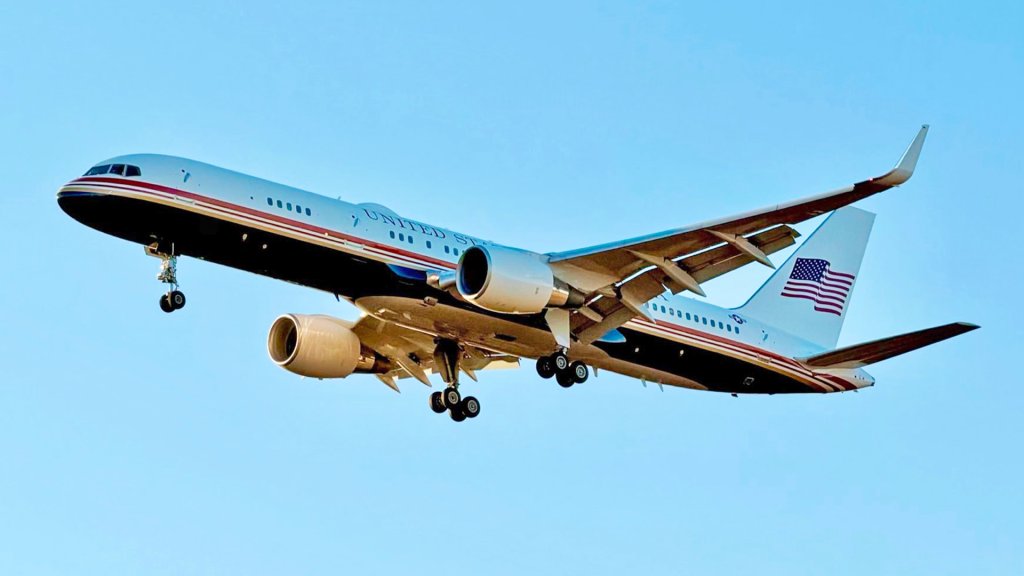 One of the U.S. Air Force’s C-32A VIP aircraft wearing the new red, white, and blue paint scheme, spotted in Greenville, Texas (@tt_33_operator) @tt_33_operator
But what we learned from that plane was the sequencing. So the plane’s got essentially the white on top, the red, the gold stripe, and the navy on the bottom. We actually learned through that process of painting the 757 of how to optimize the sequence, and essentially the navy coming last.
That’s navy that’s on the undercarriage of the fuselage, when you see it up close, you can actually see your reflection in it. It’s just so beautiful. But we did learn that because it’s on the lower end of the aircraft, and we’re doing continual maintenance and masking of the aircraft, it was optimal to do that in the last part of the sequence, and so that’s something that we took forward when we painted the 747.
Q: What will happen to the original VC-25As? What about this new aircraft once the full VC-25Bs enter service in a couple of years?
A: Great question. The aircraft are still flying, they’re not decommissioned, per se. You know, there were some announcements made when the aircraft flew a mission coming back from the G7 summit and landed at Andrews last week, but those aircraft are still available for use.
But in terms of the operational availability of what you expect, there’s two aircraft that are again, 35 years old, and so they’re not going to have that same uptime as what you’d expect out of the new planes. But in terms of a plan for usage, that’s probably good question for the Air Force.
Q: What happens with this aircraft once the full VC-25Bs enter service in a couple years?
A: I think that’s also probably a good question for the Air Force. They’ll have the better purview for that. In terms of L3Harris’s role with this right now, our role is to sustain it and make sure that this aircraft is always ready to fly whenever the president needs it. And then I think what we just demonstrated again with this plane is we have the capability from both a scale with our size of what we have from our workforce, our classified workforce, the speed in which we can operate, and the unique expertise to do very high-demanding aircraft modernization and integration roles. We’re ready to step up whenever the Air Force asks us to.
There’s many things we do for them on a regular basis. This one gets a lot of press. It is actually interesting because it was – up until this past week – essentially an unacknowledged special access program, meaning we couldn’t talk about it. So all this was happening essentially in the dark, and you go home and talk to your family at night, and they ask, ‘why are you stressed out,’ or ‘why do you look so tired,’ and you can’t say. And that’s just the nature of what we do in the classified world.
We’re doing this in several other examples across other customers we work with. This one just finally was able to come into the light, and we’re just thankful to be able to talk about it, but we want to do more.
Q: What lessons can L3Harris and the USAF learn from this program?
A: What we learned from this program is when the U.S. government has an immediate or incredibly urgent need, when the Department of War and industry work together as a partnership and team with leadership alignment all the way to the top, you can do anything. And it totally changes the game in terms of what’s been thought of as – I’ll say a historically slow and sluggish defense acquisition process. We at L3Harris and the Air Force just proved that that entire paradigm can shatter if you put the right leaders together to be able to do an impossible mission, and you do it as one team.
Contact the author: [email protected]