By The Rio Times | Created at 2026-08-19 17:06:37 | Updated at 2026-08-19 17:20:18
34 minutes ago
By The Rio Times | Created at 2026-08-19 17:06:37 | Updated at 2026-08-19 17:20:18
34 minutes ago
Mexico · TRAVEL
Key Facts
- The claim One travel site called La Paz the safest undiscovered Mexican destination.
- The evidence A safety score of 90 from an index the same site owns.
- The method Crowdsourced traveller votes mixed with government baselines.
- The problem The same index scores Los Cabos at 89, effectively a tie.
- The advisory Baja California Sur is Level 2, not Level 1.
- The actual answer Yucatán and Campeche are Mexico’s only Level 1 states.
A headline doing the rounds names one Mexican beach town as the safest undiscovered destination. We followed the claim back to its source.
The safest undiscovered Mexico destination, according to a headline circulating this week, is La Paz. The claim does not survive a look at where it comes from.

One-stop reference
Company Intelligence
Every listed company in Latin America — financials, ownership and structure for 1,450+ companies across 26 exchanges, in one place.
Where the claim comes from
A travel site published a piece on 18 August calling La Paz the safest undiscovered Mexico destination. It promised pristine beaches and zero mega-resorts.
The article’s safety evidence is a single sentence. La Paz has a Traveler Safety Index score of 90.
That index belongs to the same website. It is their product, marked as powered by them.
So the sourcing is circular. A publication citing its own index is not evidence, it is a claim repeated twice.
What the index actually measures
The index describes its own method as combining anonymous crowdsourced voting from travellers with official government baselines.
In plain terms, most of the signal is a poll of people who liked their holiday. That is a sentiment measure rather than a crime measure.
The index carries its own disclaimer, saying the ratings are for information only and do not constitute official travel advice.
When a source disclaims itself, a news desk should not upgrade it.
The number does not single La Paz out
The same index scores Los Cabos at 89 to 90. A rival publication used that to headline Cabo as the safest beach destination for Americans.
One point of difference on a hundred-point crowdsourced scale is noise, not a ranking.
So the index does not identify La Paz as exceptional. It puts it level with the resort town the article contrasts it against.
That is the clearest sign the superlative was written first and the number found afterwards.
What the US government says instead
The State Department reissued its Mexico travel advisory on 29 May 2026. It rates states, not towns.
Baja California Sur, where La Paz sits, is Level 2, Exercise Increased Caution. That is the middle of four bands.
Only two Mexican states are at Level 1, Exercise Normal Precautions. They are Yucatán and Campeche.
By the only official measure available, the safest undiscovered Mexico destination is not in Baja California Sur at all.
The honest answer to the question
If you want a Level 1 state with a coast, you want Yucatán. Progreso is its beach town, half an hour north of Mérida.
Campeche, the other Level 1 state, has a long Gulf coastline and almost no international tourism infrastructure.
Neither has a mega-resort strip. Both are genuinely less visited than the Pacific and Caribbean corridors.
That is a defensible version of the same recommendation, and it rests on a government advisory rather than a poll.
None of which makes La Paz a bad idea
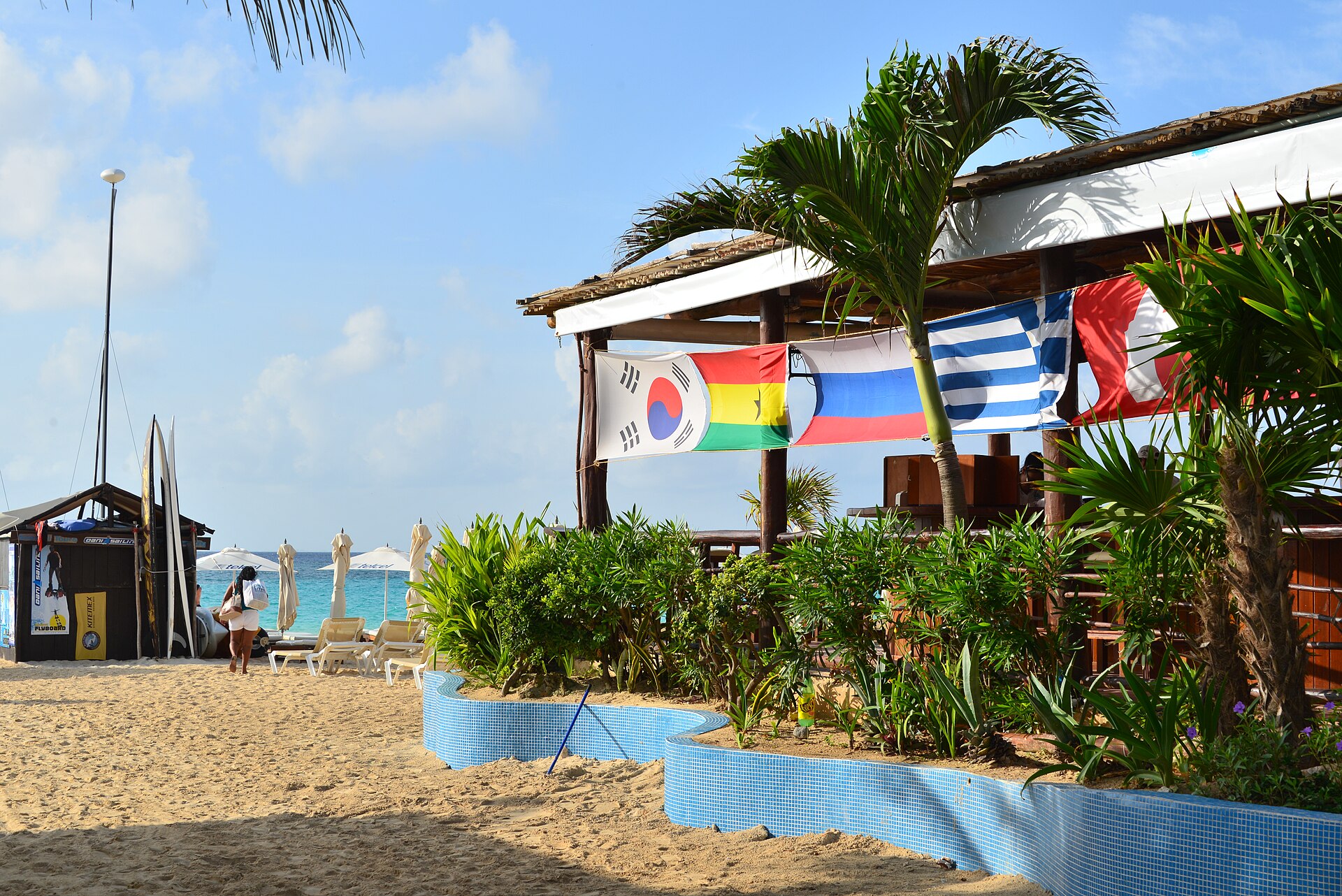
La Paz is a real recommendation for a real reason. It sits on the Sea of Cortez, two hours from Los Cabos, and has not been developed the same way.
Official occupancy data put its hotels at 67.2 percent in the first half of 2026. It is busy without being saturated.
It has one direct US route, Alaska Airlines from Los Angeles, plus domestic flights from Tijuana, Mexico City and Guadalajara.
The whale sharks, Espíritu Santo island and the malecón are the draws. None of that needs a safety superlative attached.
One detail that undercuts the headline
The phrase zero mega-resorts sits awkwardly with the article’s own itinerary, which stays at a hotel inside a marina resort development.
We could not verify either way how much resort development La Paz now has. That is precisely why we are not repeating the phrase.
The pattern matters more than this one article. Travel superlatives are increasingly generated by indexes owned by the publishers quoting them.
How to check a claim like this yourself
Ask who produced the number, not who printed it. If the answer is the same organisation, stop there.
Then check the State Department advisory for the state, and note the date it was reissued. Advisories change without notice.
Finally, look for a second, unrelated measure that agrees. A single index is a single opinion, however many decimal places it carries.
None of this takes more than five minutes, and it is the difference between a recommendation and an advertisement.
Frequently Asked Questions
What is the safest undiscovered Mexico destination?
By the only official measure, the US travel advisory, Yucatán and Campeche are Mexico’s only Level 1 states. Progreso in Yucatán is the obvious beach answer.
Is La Paz safe?
Baja California Sur is at Level 2, Exercise Increased Caution, the same as Quintana Roo and Oaxaca. That is the middle band of four.
Where did the La Paz claim come from?
A travel website published it on 18 August 2026. It cited a safety score from an index the same website owns and describes as crowdsourced.
Is the claim wrong?
It is unsupported rather than proven false. The index it rests on scores Los Cabos almost identically, so it does not single La Paz out.