 By The War Zone | Created at 2026-06-11 17:19:14 | Updated at 2026-06-11 23:43:37
6 hours ago
By The War Zone | Created at 2026-06-11 17:19:14 | Updated at 2026-06-11 23:43:37
6 hours ago
The TWZ Newsletter
Weekly insights and analysis on the latest developments in military technology, strategy, and foreign policy.
Norwegian missile-maker Kongsberg has finalized its acquisition of a majority stake in Zone 5 Technologies, bringing under its umbrella the U.S. start-up’s Rusty Dagger low-cost cruise missile, among others. With both those weapons already moving into large-scale production, the two companies are making the case for combining Kongsberg’s stealthy Joint Strike Missile (JSM) cruise missiles in operational scenarios. Zone 5 has also now confirmed that the Rusty Dagger, which is already being supplied to Ukraine, is now cleared for use on four different types of fighter aircraft, including the F-16.
At the ILA Berlin airshow yesterday, where TWZ was in attendance, officials from the two companies announced that Kongsberg has now formally acquired a 90 percent stake in Zone 5. California-based Zone 5 will continue to operate as an independent subsidiary under the Norwegian contractor. As well as discussing the industrial acquisition, the officials provided details of how the Rusty Dagger fits into the new-look portfolio, and updates on how that program is progressing.

Zone 5 Technologies – Rusty Dagger
Founded in 2011, Zone 5 is one of an emerging class of defense companies gaining prominence for developing low-cost, rapidly deployable capabilities. In many ways, they represent the inverse of traditional defense contractors, favoring speed, scalability, and cost efficiency over highly customized, high-priced systems.
Kongsberg first announced the acquisition in December, with executives noting that buying a stake in Zone 5 offered the fastest path to offering lower-cost missiles that still deliver meaningful combat capability, especially in terms of bringing these to the European market.
“What we’re doing here is that we’re combining Kongsberg’s niche, exquisite technologies with a company very capable of designing for cost efficiency and mass production,” explained Thomas Akers, founder and CEO of Kongsberg.
As to why Kongsberg didn’t choose to develop its own equivalent to the Rusty Dagger, Harald Aarø, Kongsberg’s executive vice president for business development and strategy, provided the following answer:
“Technically, could we be capable of doing it? Yes, but we are not as capable, as we will probably spend a longer time, and perhaps not strike as smart solutions,” Aarø said. “That doesn’t mean that our engineers aren’t just as smart. Our engineers are just as smart, but on a different sports field, so to speak.”
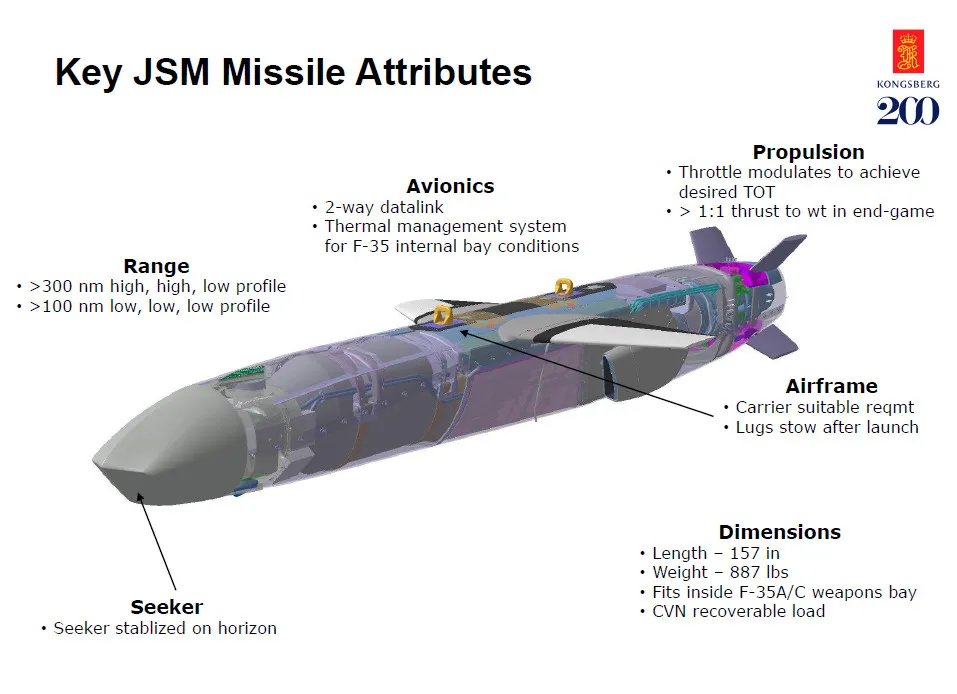 A briefing slide with various details about the JSM’s capabilities. Kongsberg
 Aarø also described how the specific combination of the Rusty Dagger and the JSM makes for “a very effective future strike solution.” Namely, the Rusty Dagger provides cost-effective but still highly capable standoff strike, while the more exquisite JSM comes with a heftier price tag but offers a greater chance of making it through to even heavily defended targets, on account of its sophisticated guidance and low-observable characteristics.
As well as being launched from a pylon on a fighter, the Rusty Dagger can be configured for palletized employment from a cargo aircraft, reflecting growing interest in this type of munition employment. It can also be surface-launched both on land and at sea.
According to Tom Kanewske, Zone 5’s chief strategy officer: “What’s interesting about our missile is that the same base, light cruise missile is field retrofittable for all employment modes, and that puts us in a very unique space, in that a country and their [armed] services are able to purchase the same munition and field retrofit for that to be surface launched, whether from land or the deck of a ship, or pylon launched from a fighter aircraft, or palletized.”
Since larger numbers of Rusty Daggers can be launched in any given scenario, they can overwhelm enemy air defenses and improve the chances of success.
According to Kanewske, Rusty Dagger and JSM “offer a weapon pairing that truly no other missiles in the world do.”
While the JSM can be carried internally in the F-35, the same is not currently the case for the Rusty Dagger, although Kanewske said that this is “something that is of keen interest to the [U.S. military] services and several of our international partners.”
 A mock-up of a JSM in one of the internal weapons bays of an F-35. Kongsberg
 When it comes to utilizing the Rusty Dagger and JSM together in a combat scenario, Kanewske noted the possibility of integrating capabilities that would allow the Rusty Dagger to offer “cooperative behaviors” with the JSM. This reflects a growing trend toward leveraging artificial intelligence to help make all munitions more effective and survivable, something that has been demonstrated via Golden Horde and follow-on programs.
Both missiles fly at high-subsonic speeds, the Rusty Dagger being able to strike targets at a range of 250 miles, according to Zone 5, while the JSM has a range of more than 215 miles.
In one highlighted scenario, F-35s could penetrate closer to the target, with their JSMs carried internally to preserve their low-observable features. Meanwhile, much larger numbers of Rusty Daggers could be pylon-launched from fighters, and dropped in palletized form out of the cargo holds of transports, from outside of the range of hostile air defenses.
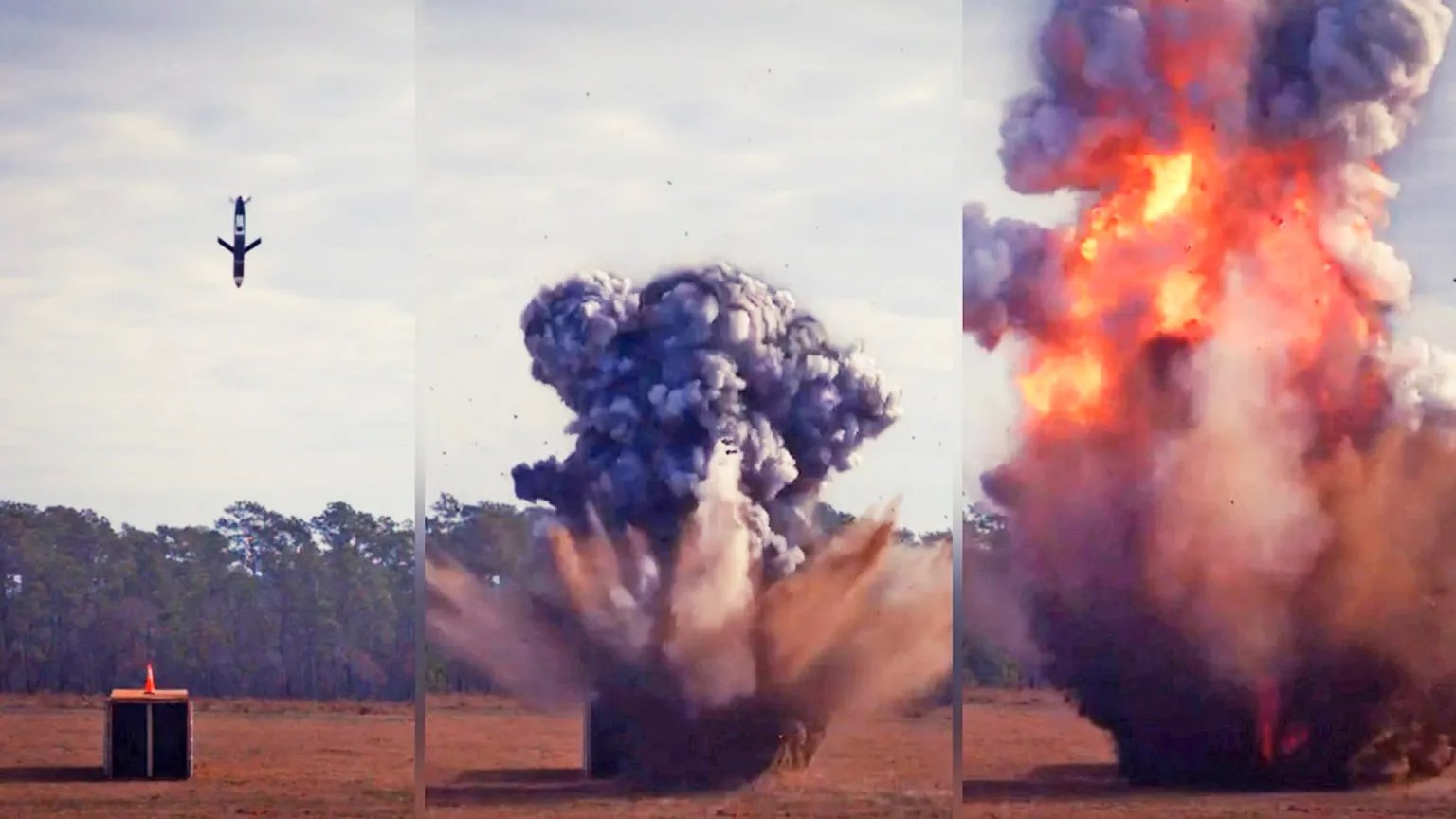 Three views of a Rusty Dagger live-fire test on January 22, 2025, at Eglin Air Force Base, Florida. via U.S. Air Force
 Kanewske confirmed that, this year, its first year of production, “well above 1,000 units for Rusty Dagger” will be completed, including for the U.S. Air Force, as the AGM-188, under the Family of Affordable Mass Missiles (FAMM) program. The Air Force’s proposed budget for the 2027 Fiscal Year laid out plans to buy nearly 28,000 FAMM munitions over the next five years.
Last month, the Pentagon laid out plans to acquire at least 10,000 lower-cost cruise missiles over the next three years, as part of a broader strategy to dramatically bolster its stockpiles of standoff strike munitions and prepare the industrial base to sustain those inventories going forward. This is seen as especially critical for supporting the demands of future high-end fights, such as one in the Pacific against China, and doing so in a cost-effective manner.
The Rusty Dagger has so far been cleared for use from four different types of fighter aircraft, Kanewske said. One of these is the F-16, which used the weapon in end-to-end live-fire trials at the Eglin Test and Training Range in Florida earlier this year. Another platform may be the A-4, with a contractor-operated example of the attack jet having been used in company trials. Then there is the Ukrainian Air Force, which is using the Rusty Dagger, under the Extended Range Attack Munition (ERAM) program, although the specific platforms have not been disclosed. Any of the MiG-29 Fulcrum, Su-25 Frogfoot, and Su-27 Flanker are likely candidates — as well as its own F-16s.
A series of unverified photos, first published by Russian sources, showing purported parts of Rusty Dagger missiles retrieved after being used by Ukraine:
It appears that the AGM-188A “Rusty Dagger” cruise missile has undergone field testing in Ukraine.
Russian sources are publishing photos of an unknown 8-element CRPA antenna. On the back side of the unit there is a circuit board with a large heatsink, which carries the CAGE code… pic.twitter.com/phZeOJfHJ0
In the case of the F-16, Kanewske said that only 72 hours were required to integrate the Rusty Dagger on the jet during the trials at Eglin.
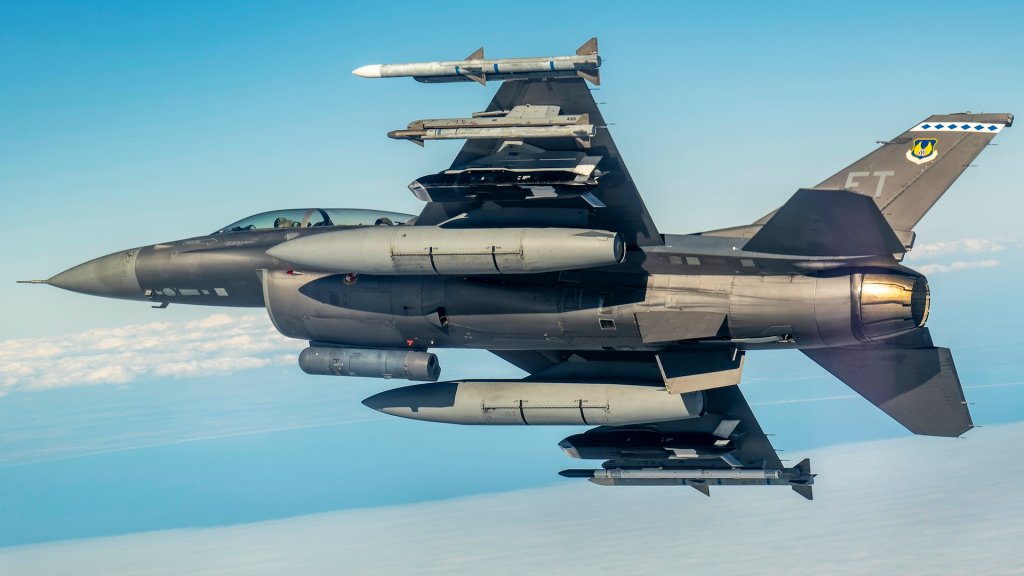 A U.S. Air Force F-16 flies over the Gulf of America carrying a pair of Rusty Dagger Family of Affordable Mass Munitions (FAMM) weapons. U.S. Air Force U.S. Air Force photo by Staff Sgt. Blake Wiles
“We’re the only affordable mass munition that is currently on contract with an export international customer, and we are actively involved with them at this time,” Kanewske said, clearly referring to Ukraine.
Zone 5 is currently under U.S. Air Force contract for both FAMM and ERAM, and is also under contract with the U.S. Army for its Low-Cost Containerized Missile (LCCM) program, and for the U.S. Navy as part of its Coalition Heterogeneous Affordable Offensive Strike (CHAOS) program, which seeks a low-cost anti-ship cruise missile to provide to partner countries. Both LCCM and CHAOS involve surface-launched missiles.
As well as the ability to rapidly scale up production and a relatively low unit cost, the Rusty Dagger brings with it an open-architecture concept, applying to both software and hardware. This means new, sovereign features and capabilities can be introduced at short notice by customers. In the past, an operator might have to wait up to five years for unique subcomponents to be integrated in a similar weapon, Kanewske contended. With the Rusty Dagger, Zone 5 has demonstrated that this can be achieved in under 12 months.
Then, when it comes to producing the missile at mass, rather than having to “make that factory bigger and bigger,” Kanewske explained that the company offers a franchise model “that allows us to roughly parachute in the design, the equipment, the tooling, the fixtures, the quality control, so that countries can drop in their own subsystem capabilities, and we can achieve manufacturing at pace and at scale.”
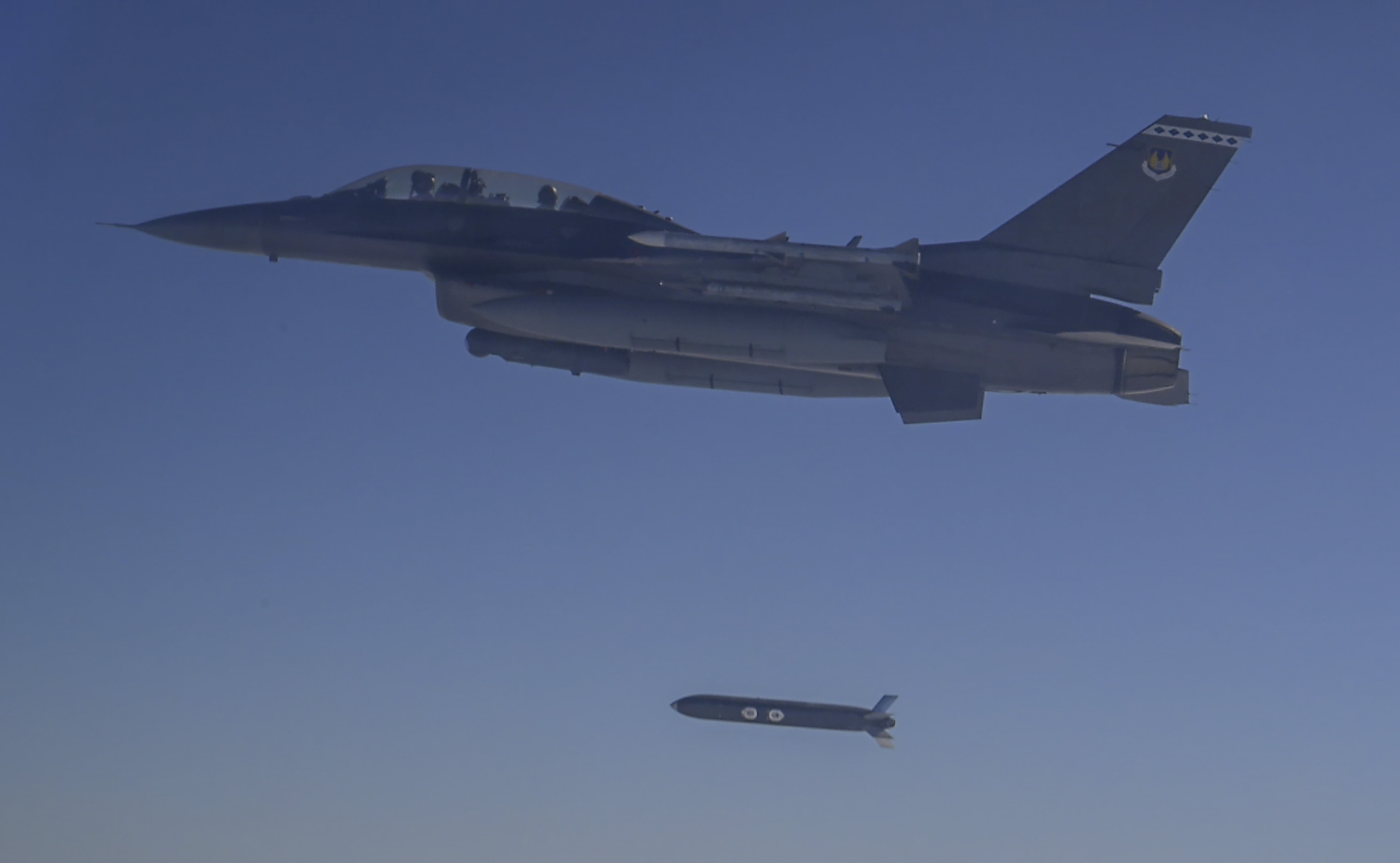 A U.S. Air Force F-16 releases a Rusty Dagger over the Gulf of America. U.S. Air Force photo by Staff Sgt. Blake Wiles
 Speaking in Berlin yesterday, Kongsberg’s Harald Aarø confirmed that Germany is a particular target for this franchise model, including for the Rusty Dagger. He identified Germany as having “probably the best manufacturing capabilities on this planet,” making it an obvious choice for a European manufacturing footprint.
Reflecting on the changing security situation on the continent since Russia’s full-scale invasion of Ukraine, Aarø said that now is “a natural time to start looking at a production site in Europe,” providing nations there with national sovereign capabilities based on the Kongsberg/Zone 5 joint portfolio.
Kongsberg’s acquisition of a majority stake in Zone 5 evidences a broader shift in Western defense planning toward affordable, mass-produced precision weapons that can be fielded at scale alongside more sophisticated strike systems.
The war in Ukraine has exposed the harsh reality that Europe needs far more standoff weapons than it currently possesses, and it needs them at a price point that allows stockpiles to be measured in the thousands rather than the dozens. Rusty Dagger is very much indicative of a new generation of systems designed around that requirement, prioritizing low-cost mass production over the exquisite but scarce munitions that have traditionally dominated Western arsenals.
As conflicts in Ukraine and the Middle East continue to highlight the operational value of low-cost, long-range munitions, demand for capabilities such as the Rusty Dagger is likely to grow. In an increasingly crowded marketplace, Kongsberg and Zone will hope that they will be able to leverage their partnership, the Rusty Dagger’s combat use in Ukraine, and the potential to harness its capabilities in combination with the JSM, to build on the missile’s success.
At the same time, Kongsberg’s interest in establishing European production reflects a wider recognition across the continent that long-range strike capacity, industrial resilience, and the ability to sustain missile inventories are becoming increasingly important elements of national and collective defense.
Contact the author: [email protected]