 By Foreign Affairs Magazine | Created at 2026-08-28 04:21:02 | Updated at 2026-09-18 13:48:44
3 weeks ago
By Foreign Affairs Magazine | Created at 2026-08-28 04:21:02 | Updated at 2026-09-18 13:48:44
3 weeks ago
In a 1987 New York Times advertisement, long before he became president, Donald Trump insisted that “America should stop paying to defend countries that can afford to defend themselves.” This has been a consistent theme of his foreign policy rhetoric since he first moved into the White House, and he has been especially focused on applying it to Europe.
During his first term, Trump jolted European allies by threatening to withdraw the United States from NATO, arguing that its members were not spending enough on their own defense and were free-riding on American taxpayers. Ultimately, he did not make good on the threat. All his administration mustered was a late, failed effort in the summer of 2020 to remove 12,000 troops from Germany.
This time around, his administration has adopted burden shifting as a rallying cry and seems poised to act on it. Almost immediately after taking office, Secretary of Defense Pete Hegseth traveled to Brussels to inform his counterparts that the United States would have to focus on priorities other than Europe’s defense. Europe itself, he said, needed to “take ownership of conventional security on the continent.” Last month, to turn this vision into reality, the Pentagon launched its Europe Posture Review, which is intended to be a critical assessment of U.S. troop deployments and basing commitments on the continent. Announcing it at the NATO defense ministerial, Hegseth was clear: “Europe can and must take primary responsibility for its conventional defense.” Such an outcome would amount to a transformation in the transatlantic alliance.
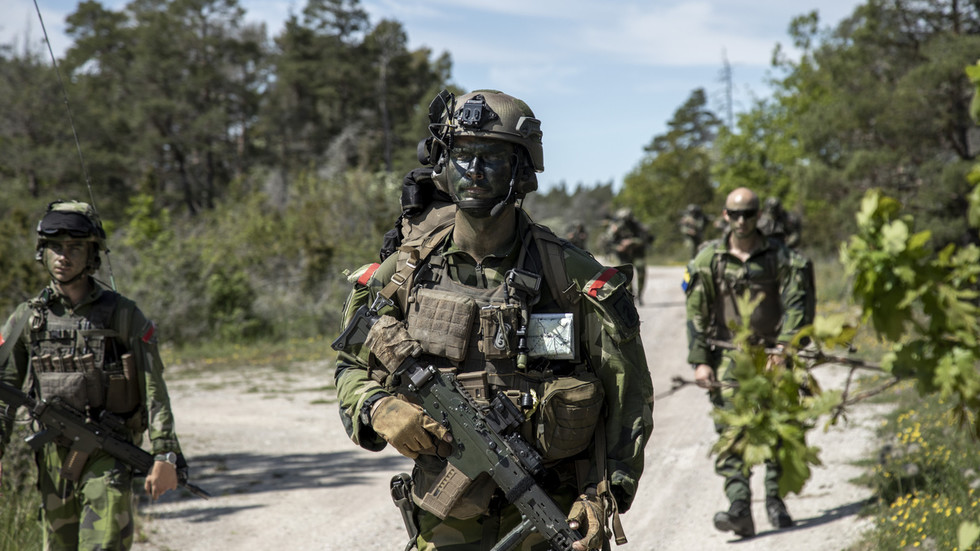
Since the founding of NATO after World War II, the United States has underwritten Europe’s defense and held the top military command position in the alliance. More than 75 years later, it still accounts for about 60 percent of NATO members’ military expenditures and stations some 80,000 troops on the continent and in the United Kingdom. Decades of American dominance have left Europe reliant on U.S. leadership, technology, and spending.
If the Trump administration is serious about shifting defense responsibilities to Europe, then the posture review offers a rare opportunity. A substantial reduction in the U.S. military presence in Europe over the next two years would force the continent to build forces it has so far left to the United States, while also putting Washington on sounder defense footing. The United States is $40 trillion in debt and adding roughly $2 trillion per year, with no prospect of major fiscal reforms. Despite this dire fiscal picture, it spends about $100 billion on Europe’s defense each year.
The problem is not new. Although U.S. administrations since Dwight Eisenhower have urged Europe to do more for its own defense, Europeans have consistently shirked their obligations. Even today, some European leaders hold out hope that if they can wait out Trump’s second term, NATO will return to “normal.” Only the withdrawal of U.S. forces will convince allies that the United States truly intends to turn over responsibility for the region’s conventional defense. Nothing else will force them to plan for a future in which Washington is no longer in the lead. Such a move will draw resistance from European leaders and the U.S. Congress. But a smaller footprint is vital to relieve U.S. overextension, and it can be done without harming American interests.
A TEMPORARY SHIELD
The presence of U.S. military personnel in Europe in the late 1940s and early 1950s was supposed to be a temporary shield as Western European states rebuilt economies devastated by war. But the troops stayed long after that rebuilding was complete. At the height of the Cold War, the United States had more than 400,000 troops on the continent. When the Soviet Union collapsed, NATO lost its formal justification.
For Washington, the alliance became primarily about institutionalizing U.S. power and influence, and although the total number of U.S. forces stationed in Europe declined over time, it has never dropped below 60,000. With the Soviet threat gone, European governments were happy to capitalize on the “peace dividend” and expanded their social programs while gutting military spending. At the same time, the alliance took on new commitments, offering Moscow’s tiny, vulnerable neighbors promises of protection with little thought of what their defense would require. By 2014, when Russia annexed Crimea, Europe was deeply dependent for its security on the United States, which was already tied up in the Middle East and increasingly focused on China’s rising military power. That situation persists today.
The Pentagon last conducted a formal review of global U.S. military posture in 2021, in the first year of the Biden administration. It made a few modest recommendations, but its general conclusion was that the existing arrangement was just about right. In Asia, it advised seeking more places to operate from and pledged to harden U.S. bases there. But it did little to increase U.S. presence in the Pacific, instead assigning new capabilities to an already substantial force in Europe. For instance, it formalized President Joe Biden’s decision to keep bases across Germany and Belgium open—a reversal of Trump’s plan to consolidate them. And it announced that a newly formed U.S. Army unit equipped with ground-based long-range missiles and advanced electronic warfare capabilities (known as a multidomain task force) would deploy to Germany by 2026.
Europe can afford to lead on its own defense.After Russia’s full-scale invasion of Ukraine, in early 2022, the U.S. presence in Europe grew. Biden raised troop levels there to about 100,000, backed by seven fighter squadrons, six destroyers, and roughly 100 nuclear gravity bombs. He also described U.S. obligations to NATO in maximalist terms, promising to “defend every inch of NATO territory.” His words went far beyond the language of the alliance’s Article 5 mutual defense clause, which commits members only to take whatever action each “deems necessary” after an attack.
Rhetorically, Trump’s approach to Europe since returning to the White House has been a sharp departure from Biden’s. But so far, he has made only marginal changes in the U.S. military footprint. Last year, the Pentagon pulled roughly 800 of 1,700 U.S.troops stationed in Romania. This spring, it announced a further cut of 5,000 from the continent, although confusion persists about the status and source of that reduction. The administration also cut U.S. contributions to the NATO force model, which governs how many and what kinds of assets members would send in a conflict. And it canceled the long-range missile deployment to Germany that Biden had planned.
These changes have not been enough to convince allies that the United States is serious about handing over responsibility for conventional deterrence. The number of personnel in Europe has fallen only to about 80,000, roughly what Trump inherited in his first term. Despite severe shocks to the alliance, such as the president’s threats against Greenland, some Europeans still believe that if they can just keep Trump happy, the transatlantic relationship will revert to the status quo ante once he leaves office. At the same time, they fear doing too much too fast, lest they trigger the very U.S. withdrawals that they are trying to forestall. The result is stasis—the opposite of what the administration says it wants.
BUDGETS ARE NOT BRIGADES
Although the Trump administration came into office wanting to pull back from Europe, it has instead settled for pushing allies to raise their defense budgets. But a bigger European budget is not the same as a smaller U.S. role. The whole point of Europe doing more is so that the United States can do less.
Trump’s pressure (along with Russia’s invasion of Ukraine) has delivered higher defense budgets from many European nations. But counting the number of states spending a given percentage of GDP on defense is a poor measure of Europe’s capabilities. By the administration’s metrics, the top performers include the Baltic states—tiny countries with tiny economies. The denominator matters: a large share of a small economy is not much money or military power. By contrast, consider the five largest European economies: Germany, the United Kingdom, France, Italy, and Spain. If they spent enough, and spent it well, American interests in the region would be secure without much U.S. involvement, and Washington could finally close bases and reallocate its service members and assets.
European countries have held back for several reasons. Historically, the United States has sent mixed messages to Europeans, encouraging them to step up but then scolding them for seeking autonomy. For example, in the late 1990s, when the European Union began taking first steps toward cooperating on security outside NATO, Secretary of State Madeleine Albright moved to kill the effort, denouncing anything that would diminish, duplicate, or discriminate against what NATO already did. The Trump administration has been similarly contradictory in its approach, pushing allies to do more but often demanding that they continue to spend their defense budgets on U.S.-made weapons.
European leaders also know that any effort by this administration to change U.S. posture will run into resistance in the United States itself. The U.S. Congress, for instance, has already tried to block the Trump administration from cutting forces in Europe by writing minimum troop levels into the 2026 National Defense Authorization Act. Europeans have noticed. If waiting Washington out might preserve the U.S. defense subsidy, they would be foolish not to try.
The Europe Posture Review is Washington’s chance to signal its intentions plainly and give allies a managed transition rather than an abrupt one. A clear, written plan for substantial withdrawals would show Europeans that the Trump administration is serious about burden shifting. History suggests that anxious allies who are not reassured by their more powerful patron will invest in their own defense. In the 1980s, for example, Japan’s economy was booming, and Tokyo grew increasingly concerned about the Soviet Pacific Fleet, which was expanding faster than allied naval capacity in the region. When Washington declined to send more ships, Japan acted on its own: defense spending as a share of GDP nearly doubled over the next 15 years.
HOW TO LEAVE
The Pentagon should use its review to state the obvious: Europe will not take responsibility for its own conventional defense unless the United States withdraws troops. For maximum effect, the review should mandate deep cuts in 2027 and 2028 and lay out a schedule for more reductions beyond Trump’s second term. A future president might try to change course, but withdrawals already underway are difficult to undo, since closed bases are hard to reopen and rotational deployments take time to restore. Moreover, Europe’s growing self-sufficiency will make each subsequent cut easier than the last.
The most obvious place to start is with a reduction in ground forces, which are expensive for the United States and the easiest for Europe to replace. Before the end of Trump’s term, the administration should permanently retire the rotational combat brigade deployment in Poland, which consists of roughly 4,000 soldiers. It should also withdraw the 2nd Cavalry Regiment, a similarly sized unit based in Germany. One light brigade would stay in Italy, mobile enough to respond to crises, along with some U.S. combat support personnel. There is a further reason to cut heavy forces first: they are precisely what Europe lacks, so their departure would force Europe to build them.
Pulling the brigade out of Poland—which would also end U.S. contributions to NATO deployments in the Baltic states—would be controversial. Warsaw takes a dire view of the Russian threat and has increased its defense spending by almost 300 percent since 2016. But U.S. forces stationed that far east would likely die in the opening days of a conflict, robbing Washington of choices at the moment it most needs them. Moving these forces back from the likely front would keep its options open and discourage risk-taking by eastern NATO members.
The Trump administration should also reduce the number of U.S. fighter squadrons permanently stationed in Europe from seven to four and cut supporting units. (European NATO members already field roughly 1,700 fighter planes, more than Russia’s entire fleet.) And the United States should recall three of the destroyers based at Rota Naval Station in Spain, either returning them to U.S. ports or reassigning them to the Pacific. That would still leave three destroyers and their Aegis systems to support Europe’s air defenses. U.S. satellites and other intelligence, surveillance, and reconnaissance resources would stay available to allies, as they are relatively easy to move and can cover multiple missions. The remaining U.S. units on European territory—closer to 40,000 service members than to the 80,000 there today—would handle mainly combat support, air defenses, and nuclear weapons.
UNLEARNING HELPLESSNESS
Critics will object that pulling forces out is a mistake while the war in Ukraine grinds on and the continent remains vulnerable to spillover or escalation. But the war has actually made conditions for withdrawal more favorable. The invasion has raised European willingness to spend more on defense, and the fighting has badly degraded Russia’s armed forces. Even after the war ends, the Russian military and economy will need years to recover, which gives Europe time to build up its own forces. With a combined GDP between five and ten times that of Russia, Europe can manage a future conventional challenge on its own.
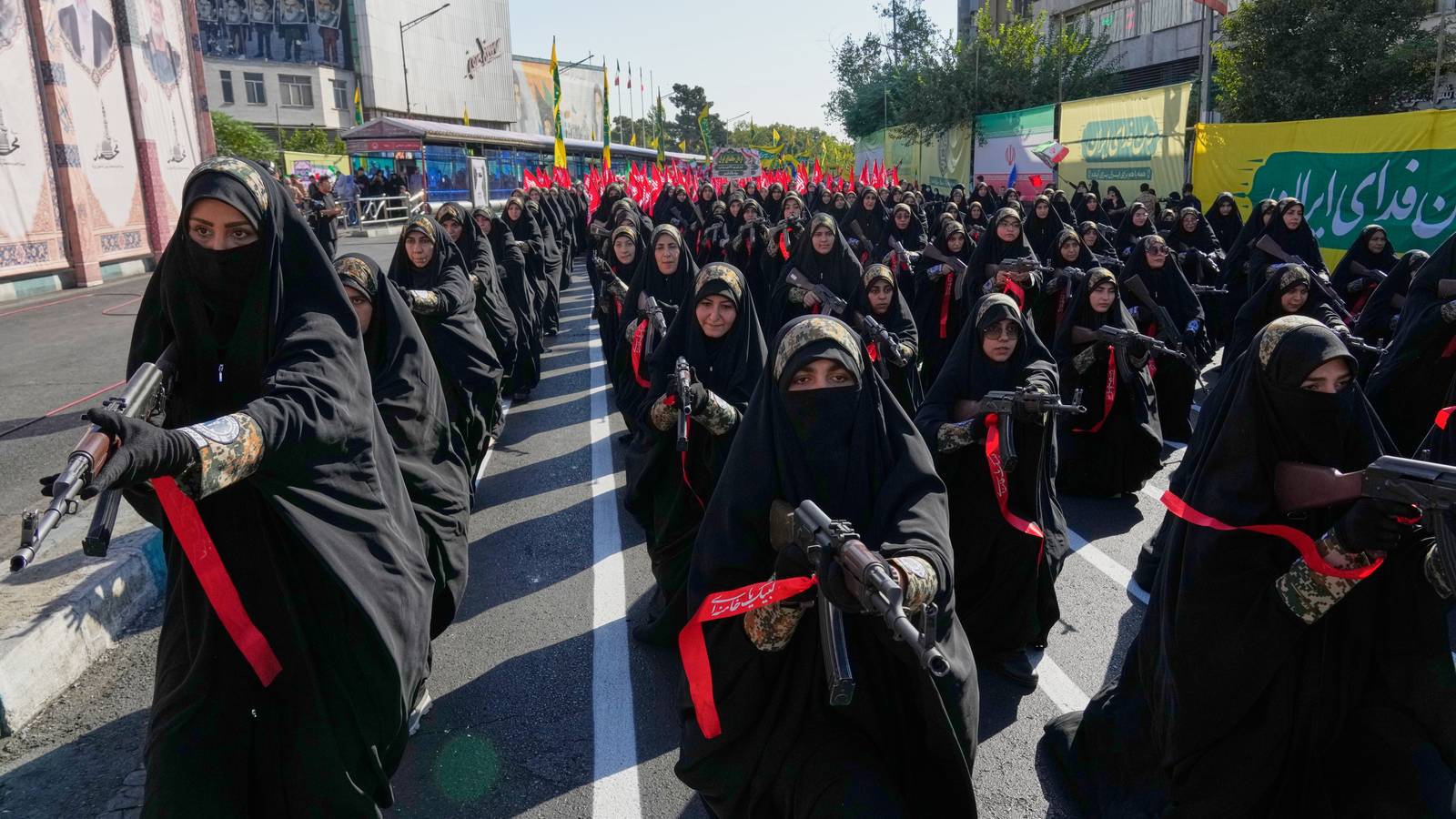
Others will argue that Europe provides a crucial launch pad for U.S. wars in the Middle East. If Washington withdraws, European governments may be less willing to let it operate from their territory in conflicts like the current war in Iran. That is true, but making costly and unnecessary wars harder to start belongs in the credit column, not the debit one. Indeed, the war in Iran has exposed not only the limits of U.S. military power but also the gap between commitments and resources. Since the United States attacked Iran in late February, it has burned through much of its stock of interceptors and long-range missiles. These shortfalls leave Washington facing an uncomfortable fact: it might not be able to meet all of its global obligations, and it may be unprepared for a war against a major power. The Pentagon’s $1.5 trillion budget request is a partial acknowledgment of these new constraints, but more money alone cannot fix the imbalance. Washington must also shed responsibilities.
The frustration animating the Trump administration’s rhetoric on NATO stems from an unfair division of labor: Europe can afford to lead on its own defense, yet the United States is still asked to carry the load. Europe has learned helplessness, but it can also unlearn it. The Europe Posture Review is Trump’s opening to follow through on his vision of burden shifting. But he will have to bring U.S. troops home to do it.
Loading...