By The Diplomat | Created at 2026-09-28 16:47:07 | Updated at 2026-09-28 22:44:04
9 hours ago
By The Diplomat | Created at 2026-09-28 16:47:07 | Updated at 2026-09-28 22:44:04
9 hours ago
South Korean President Lee Jae-myung asked U.S. President Donald Trump to help restart talks between the United States and North Korea in an unannounced meeting on the sidelines of the United Nations General Assembly on September 22, according to the Blue House, the presidential office of South Korea. The Blue House also said that Trump reaffirmed his willingness to engage with North Korean leader Kim Jong Un.
The talks were arranged at the last minute. In the 30-minute meeting. Lee asked Trump to create a breakthrough amid almost no direct contact between the two Koreas. The two leaders also agreed to communicate closely as “peacemakers and pacemakers,” according to the Blue House.
Trump has been courting Kim since August, when he scaled back a major joint military exercise with South Korea. A day later, he said Kim had responded to his request for dialogue, calling the exchange very positive without offering details. Trump has since signaled he hopes to meet Kim before the end of the year – possibly during the Asia-Pacific Economic Cooperation (APEC) summit in Shenzhen, China, this November.
Yet North Korea denied any direct contact in a statement by Kim Yo Jong, the powerful sister of Kim Jong Un. She described the relationship between the two leaders as “excellent” while insisting that Washington had not changed its hostile policy. She also said North Korea was not impressed by the reduction in scale of the South Korea-U.S. joint exercises, calling it “unworthy of comment.”
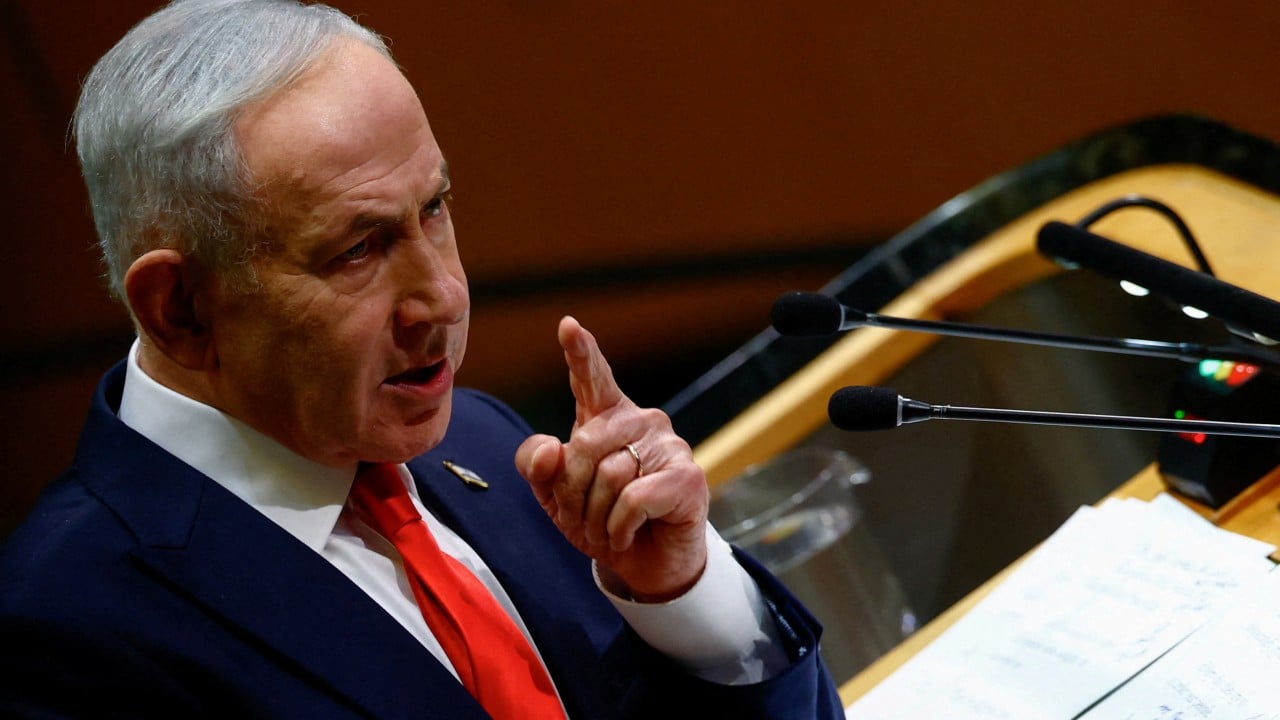
Lee had made the case for reopening dialogue earlier on September 22 in an address to the General Assembly. In the speech, Lee said he hoped to see the long-suspended dialogue between North Korea and the United States resume without delay. He also added that his administration would lay the groundwork for talks among the parties aimed at formally ending the Korean War.
On North Korean weapons, Lee outlined a sequence that would begin with a halt to further advances in North Korean nuclear and missile capabilities. Then reductions would follow over the medium term, with the ultimate goal of a Korean Peninsula free of nuclear weapons. Lee credited Trump with creating a hard-won opportunity for change and pledged to act as a “pacemaker” for peace.
The speech came a day after the foreign ministers of South Korea, the U.S., and Japan reaffirmed their commitment to the complete denuclearization of North Korea in a joint statement issued on the sidelines of the same General Assembly session. The statement also urged Pyongyang to return to talks.
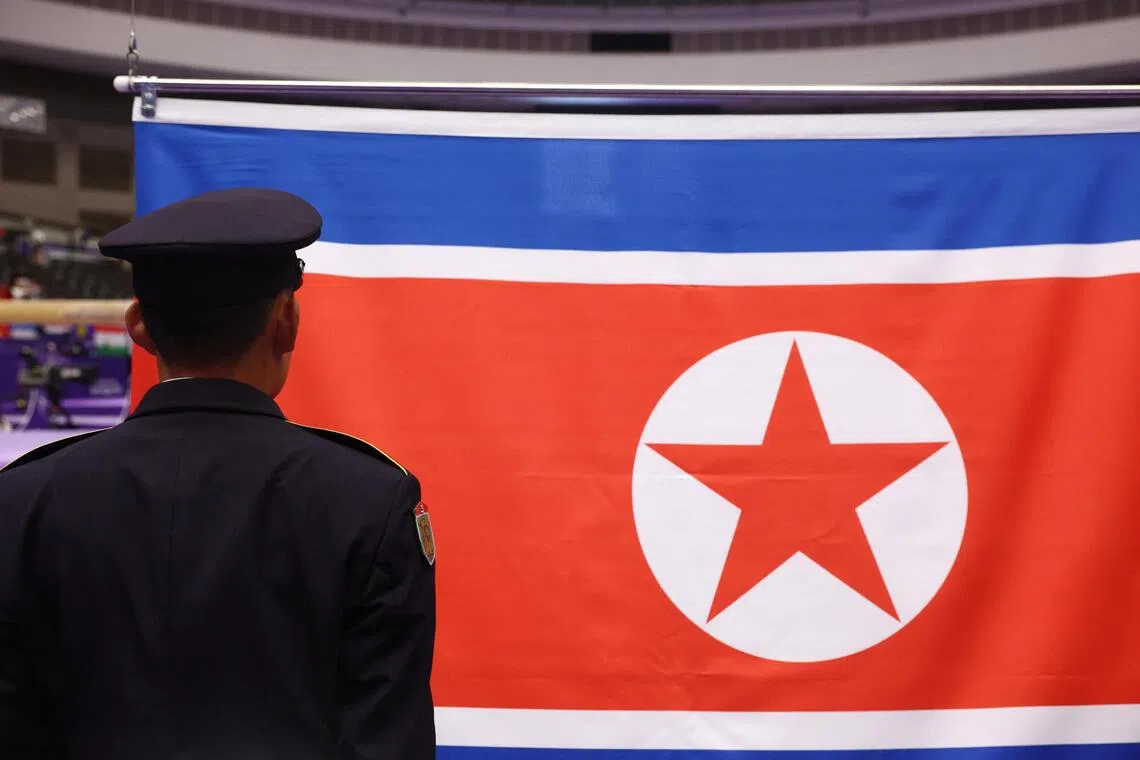
North Korean Foreign Minister Choe Son Hui denounced the joint statement on September 24, declaring in a message carried by state media that the will of her country to keep nuclear weapons through all ages was “irreversible.”
Beyond North Korea, in their brief meeting Lee and Trump took up alliance issues such as nuclear-powered submarines and the transfer of wartime operational control of South Korean forces from the U.S. Rights to enrich uranium and reprocess spent nuclear fuel, along with shipbuilding cooperation, also came up. Both leaders also welcomed progress on investment projects between the two countries. The Industry Ministry had briefed lawmakers on a $22.3 billion gas-fired power plant in Texas, which Seoul confirmed as the first project under a $200 billion strategic investment package. Under the trade deal, South Korea has pledged to invest $350 billion in the United States, including $150 billion set aside for shipbuilding.
While in New York, Lee also met U.N. Secretary-General Antonio Guterres to review Korean Peninsula issues and cooperation between South Korea and the United Nations. In a separate meeting, he held talks with Australian Prime Minister Anthony Albanese on energy cooperation amid disruptions linked to the Strait of Hormuz.
On September 23, Lee addressed the Korea Investment Summit in New York. He pledged to double semiconductor production capacity within five years and pointed to the shipbuilding cooperation covered in his meeting with Trump the day before.
Meanwhile, North Korea has said it tested a new weapon on September 20. That day, the South Korean military detected two short-range ballistic missile launches and assessed their flight distances at about 450 and 600 kilometers. Photos released by North Korea, however, showed a flight distance of 908.2 kilometers.
The North Korean delegation skipped the General Assembly address delivered by Lee. Two North Korean diplomats had attended the speech given by Trump earlier that day.
The U.N. General Assembly also overlapped with a summit between Trump and Chinese leader Xi Jinping in Washington, during the first visit to the U.S. capital by Xi in more than a decade. U.S. Treasury Secretary Scott Bessent said the two sides agreed to extend their trade truce by two months, to January 10. The White House later said China and the United States had reached consensus on recommendations for more favorable tariff treatment for $30 billion of non-sensitive goods in each direction.
Each side also referred to the Korean Peninsula in its account of the talks. According to Washington, the two leaders discussed global concerns including Russia, North Korea, and Iran. Chinese state media reported that the leaders exchanged views on the Korean Peninsula, the Middle East, and the war in Ukraine. Neither side gave details of what was said about North Korea.
After his trip to New York, Lee paid a state visit to Mexico. Lee and Mexican President Claudia Sheinbaum adopted a joint action plan for 2026 to 2030 and signed 17 cooperation documents covering areas from trade and critical minerals to aerospace and defense.