 By GB News (World News) | Created at 2026-07-25 09:11:11 | Updated at 2026-07-25 10:50:26
1 hour ago
By GB News (World News) | Created at 2026-07-25 09:11:11 | Updated at 2026-07-25 10:50:26
1 hour ago
A little-known inheritance tax relief could save British families tens of thousands of pounds as more estates are pulled into the tax net.
Quick succession relief allows beneficiaries to reduce or even eliminate an inheritance tax bill where the same assets are taxed following two deaths within five years.
The relief, set out in Section 141 of the Inheritance Tax Act 1984, is designed to prevent the same assets from being taxed at 40 per cent twice in quick succession.
Chris Etherington, of accountancy firm RSM, said the relief is relatively uncommon but can be valuable for families who qualify.
Mr Etherington described quick succession relief as "niche" but potentially "highly valuable" if people know when and how to use it.
He said: "As the relief is dependent on two deaths occurring within five years and both estates being large enough to incur inheritance tax, it is not very well known."
The amount of relief available depends on the length of time between the two deaths.
Where both deaths occur within the same year, beneficiaries can receive 100 per cent relief.
That falls to 80 per cent where the second death occurs between one and two years later, before tapering further until no relief is available after five years.
For example, if Person A leaves £100,000 to Person B after all available inheritance tax allowances have already been used, the estate would face an inheritance tax bill of £40,000.
Person B would therefore inherit £60,000 after tax.
If Person B then died within two years, their beneficiaries could face another inheritance tax bill on the same assets above any available allowances.
However, because the £60,000 had already been subject to inheritance tax, the family could claim quick succession relief worth £19,200.
Little-known quick succession relief could save families thousands
That represents 80 per cent of the £24,000 inheritance tax attributable to the previously taxed assets.
Families wishing to claim the relief must do so through the IHT400 form, which executors use to calculate an estate's inheritance tax liability.
The form requires details of the first estate, including its value, the inheritance tax paid, the amount inherited by the second person to die, together with their inheritance tax reference, full name and date of death.
Anyone without those details should contact the executor of the earlier estate.
Professional advice may also be appropriate where the calculations are more complex.
The relief cannot be claimed if the original transfer of assets was exempt from inheritance tax.
For example, transfers between spouses or civil partners are generally exempt from inheritance tax, meaning beneficiaries cannot later claim quick succession relief on those assets.
Mr Etherington said: "As the relief can be significant, it is worthwhile for executors and advisers to check whether quick succession relief may apply."
The standard inheritance tax threshold remains £325,000, with estates above that level generally taxed at 40 per cent.
An additional £175,000 residence nil-rate band is available when a main home is left to direct descendants.
Married couples and civil partners can combine their allowances, enabling them to pass on up to £1million before inheritance tax becomes payable.
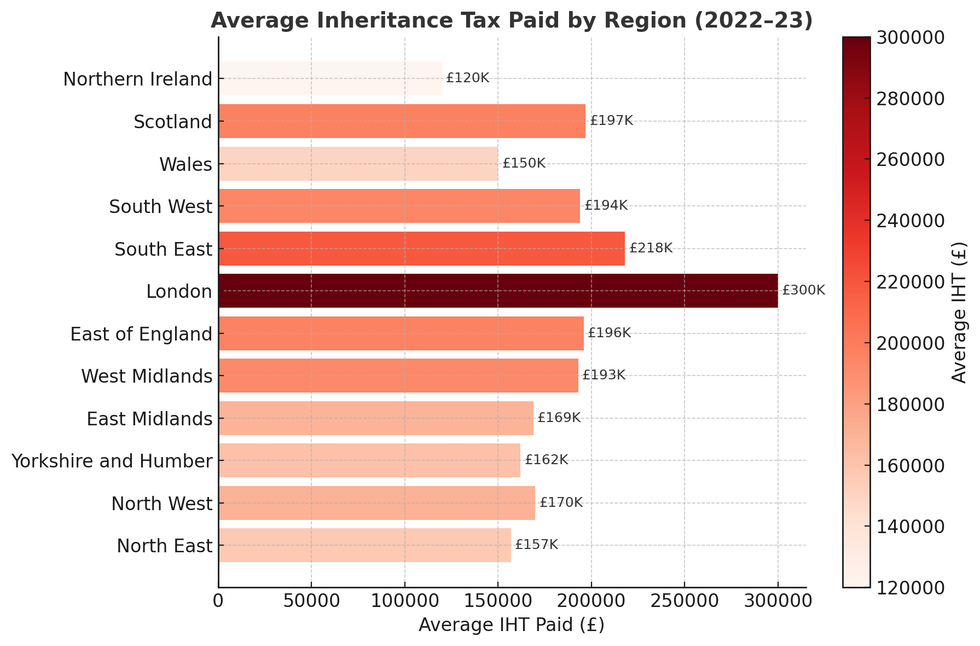
Despite these allowances, the number of estates paying inheritance tax continues to rise.
Around 32,000 estates, or almost one in 20, currently pay inheritance tax each year.
That figure is forecast to increase to around 63,000 by the 2029-30 tax year as frozen thresholds, rising property values and planned changes to pension taxation bring more families within the scope of the tax.
From April next year, unused pension pots will also fall within the scope of inheritance tax, further increasing the number of estates expected to face a charge.
As more families become liable for inheritance tax, reliefs such as quick succession relief could become increasingly important for eligible beneficiaries.