By The Straits Times | Created at 2026-08-02 13:11:39 | Updated at 2026-08-03 10:36:59
21 hours ago
By The Straits Times | Created at 2026-08-02 13:11:39 | Updated at 2026-08-03 10:36:59
21 hours ago
KUALA LUMPUR – Prime Minister Anwar Ibrahim’s Pakatan Harapan (PH) is running out of excuses and noses to bloody.
First, November’s near total defeat in Sabah was blamed on the anti-federal sentiment in Malaysia’s easternmost state.
Next, its surrender of a whopping 48 of Johor’s 56 state seats to Barisan Nasional (BN) in July was dismissed as inevitable since the southern state is UMNO’s birthplace and stronghold.
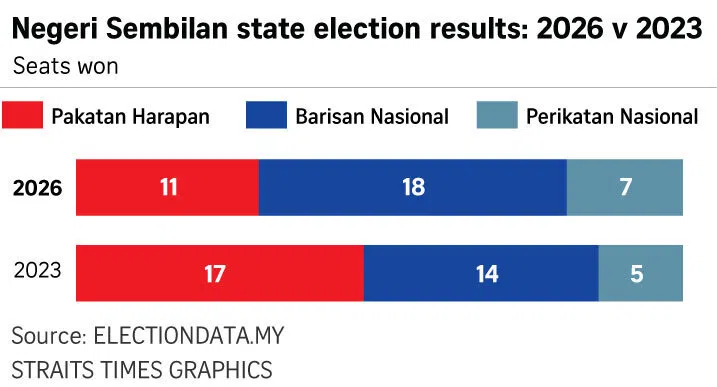
But losing Negeri Sembilan on Aug 1 after two terms in power offers a straightforward and emphatic answer to the question of whether the ruling coalition is bleeding support.
“They can’t hit the snooze button a third time,” advisory firm Viewfinder Global Affairs’ managing director Adib Zalkapli told The Straits Times. “PH needs to seriously change their campaign and perhaps some of the leaders.”
A reckoning is in store. In a fortnight, both his Parti Keadilan Rakyat (PKR) and PH partner Democratic Action Party (DAP) - which supplies more MPs than any other ruling party - go into what might be the most crucial national assemblies in their existence so far.
DAP is set to hold a referendum on whether to remain in the Anwar Cabinet. Having won just four out of 49 seats contested across the three states, PKR is facing the prospect of ousting Anwar, its founding father, after holding power for just a single term -- having spent most of its three-decade existence struggling to get him in power.
The irony is unmissable. PH won the last two national votes in 2018 and 2022 on the back of the reform-focused agendas of these two parties.
Fast-forward to 2026, analysts say the desire for change still remains among Malaysians -- except PH are no longer the agents of change and it is Anwar that is now the face of the establishment and a growing liability.
For so long, DAP and PKR had existed as the opposition. Now, these rookies in federal government are running out of time to right the ship as a general election must be held within 18 months.
Desperate measures
Under pressure as certain defeat loomed in Negeri Sembilan, PH responded with the sudden release of the royal inquiry report into the mismanagement of Muslim pilgrimage fund Tabung Haji in the final years before UMNO’s six-decade uninterrupted rule ended in 2018.
Despite Anwar and Co. insisting that the move was not political, it was an obvious attempt to dredge up the corruption of UMNO from yesteryear, believing it would dampen support for their opponents.
Instead, the Anwar administration was accused of failing to declassify the revelation for four years to protect UMNO in the first place and was only weaponising the report now that PH and BN were back to being foes at the ballot box.
BN had backed the Anwar, the PKR president for prime minister of a so-called unity government after the 2022 general election produced a hung Parliament.
The final days of the campaign also saw Malay PH candidates roll out video clips professing their commitment to Malay and Islamic interests. Yet, all of them lost.
The Malay wave
Internally, there has at least been some contrition from DAP leaders.
Transport Minister Anthony Loke apologised after losing his state seat of Chennah, while leaving his leadership of the party in the hands of its central executive committee which meets on Aug 3. His loss helped BN and Perikatan Nasional (PN) take a two-thirds supermajority in the Negeri Sembilan state assembly.
DAP Selangor assistant treasurer Rajiv Rishyakaran, a three-term assemblyman, conceded PH is “losing the battle of narratives”.
“Our opponents... operate on a simple, crystal-clear—albeit terrible and deeply divisive—narrative: Malay unity. What is PH’s narrative in response? Right now, we have none. We offer voters no compelling reason to choose us beyond merely existing in office,” he said.
The Malay unity pact has seen nearly total vote transferability between the UMNO-led BN and Parti Islam SeMalaysia’s (PAS) PN, helping UMNO win a stunning 52 of 53 wards it contested between Johor and Negeri Sembilan.
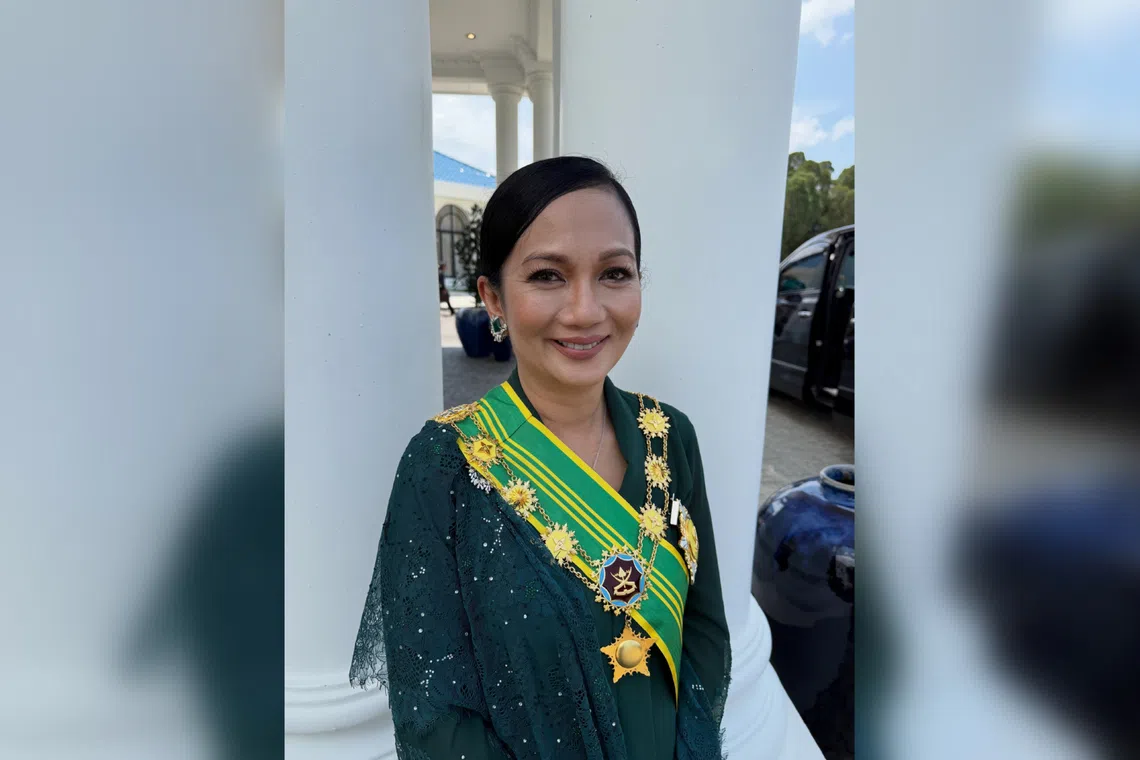
This saw Onn Hafiz Ghani returning as Johor Menteri Besar for a second term in July while veteran Ismail Lasim, who has been an UMNO assemblyman since 1999, was sworn in as Negeri Sembilan chief minister on Aug 2.
On the other hand, there has yet to be the same level of penitence from PKR. Vice president Amirudin Shari, in his role as PH election director, attributed the defeat to “extraordinary racial campaigning”.
“Identity politics dominated especially in Malay majority areas,” claimed the Selangor chief minister. “If you ask about the performance of (outgoing chief minister) Aminuddin and his Negeri Sembilan government, it was marvelous.”
Vice youth chief Taufiq Johari was also reported as saying in an Utusan Melayu interview on Aug 2 that the exodus of members, including former deputy president Rafizi Ramli, to form a new party has little impact on PKR.
“If we look at the numbers, the votes staying with PH are still solid,” added the Youth and Sports Minister. It was unclear which set of numbers he was talking about. PH won 33 per cent of the vote in Johor and 40 per cent in Negeri Sembilan.
More of the same?
Analysts including the likes of former DAP deputy minister Ong Kian Ming beg to differ. Ong had predicted the extent of losses for PH in Johor and Negeri Sembilan.
In an ideal world, “Anwar will declare he is no longer PH’s PM candidate for the 16th general election, but he will only do so after a disastrous showing at GE16,” the adjunct professor at Taylor’s University told The Straits Times.
“DAP should leave PH and strike out on its own. Spend time in opposition to rebuild itself as a multi-racial party,” he added, referring to how it has been demonised as anti-Malay and Islam.
This sentiment is resonating in some segments of the ethnic Chinese community that makes up the bulk of DAP’s votebank. The influential Chinese-language daily Sin Chew ran an editorial on Aug 1 questioning what the party stands to gain from remaining in PH and compromising for the sake of stability and thereby thinning its support base.
From the slow pace of reforms and the perceived erosion of non-Malay interests to the growing allegations of abuses - especially in institutions such as the anti-graft agency and the public prosecutor - and the belief that the nation’s wealth is captured by the elites, the disappointment with PH and Anwar’s leadership is rife and undeniable.
If this sounds familiar, these were the very same failures that PH leaders had levelled at BN when UMNO was still the dominant force in Malaysian politics.
Now in power, they are finding it is not so easy resolving endemic issues.
“PKR must confront its failure to build a durable Malay and Indian voter base, while DAP must address voter fatigue and the disengagement of its traditional supporters. These structural issues need to be fixed,” risk consultancy KRA Group’s strategy director Amir Fareed Rahim told ST.
“Both need stronger local leadership for its machinery, fresher candidates and an economic message voters can actually relate with. Otherwise, these party congresses in a fortnight will simply rearrange the furniture while the house continues to burn.”
Sign up for our weekly Asian Insider Malaysia Edition newsletter to make sense of the big stories in Malaysia