 By GB News (World News) | Created at 2026-10-20 00:25:40 | Updated at 2026-10-20 01:31:00
2 hours ago
A protest that began in a high school on the southeastern fringes of Paris has rocked France and it looks set to continue spreading, gripping the continent.
According to the World Bank, Albania, Belgium, Greece, Italy, Spain and Portugal have all experienced similar protests, which are expected to continue over the course of the next week.
The riots have been driven by frustrations ranging from soaring living costs and unaffordable housing to deteriorating school conditions and dangerous workplaces.
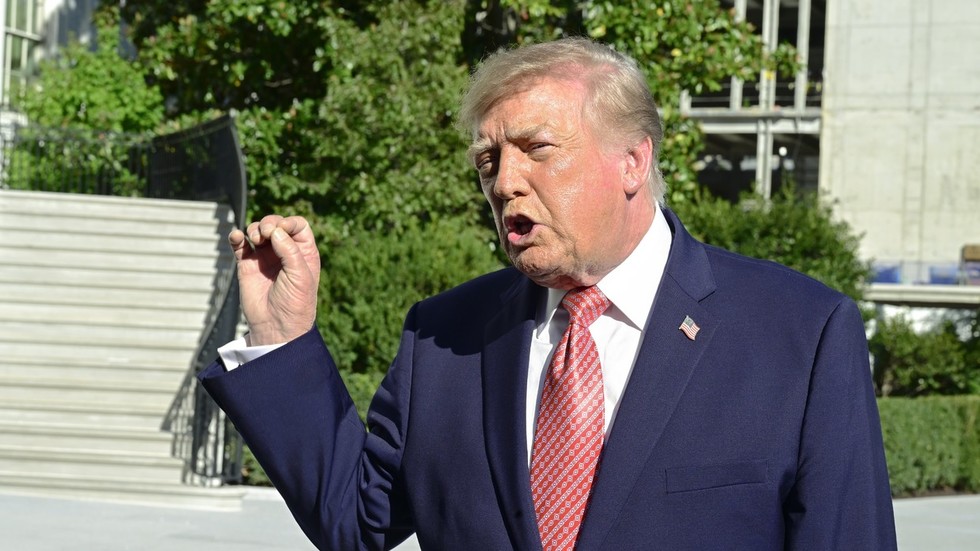
The unrest has drawn commentary from the United States, with United States President Donald Trump declaring "France is burning" on Sunday.
"The immigration of people from an entirely different world, people with hatred in their hearts, has shattered that once great country," he wrote on Truth Social.
The scale of the disruption varies considerably between countries, from mass marches numbering in the hundreds of thousands to targeted industrial action by refinery workers, yet the collective picture suggests a continent grappling with significant economic frustration.
In France, the unrest shows no signs of slowing down. French Prime Minister Sebastien Lecornu today revealed he has asked local municipalities to impose partial curfews after a violent weekend.
France would, he confirmed, declare a state of emergency if it is deemed necessary.
It is estimated 3,000 businesses have been damaged or looted in the riots.
More than 2,400 people have now been arrested, and almost 1,000 emergency workers have been injured in the devastation.
Saturday's demonstrations drew at least 550,000 participants across the country, Interior Minister Laurent Nunez confirmed.
A poignant but eerie image of the Limoges Town Hall illuminating the night sky spread across the world, as the iconic tower was set ablaze by looters and rioters.
The historic 143-year-old town hall was "largely lost". The tower, located in southwest-central France, was built in 1883 and made a historic landmark in 1975.
President Emmanuel Macron issued a public address yesterday, saying "we all feel both anger and shame" at the scenes of disorder, adding: "To see the cities, the streets of our cities, ransacked like this is unbearable."
He asked: "Looking at these images, we have all asked ourselves: What was going through their minds? How can French people do this to France?"
"Nothing justifies it, nothing explains it, nothing excuses it. Tonight, we all feel anger and shame."
Mr Nunez then offered his resignation – although this was rejected by the President, who instead kept his minister in his position to maintain the chain of command within the police and security forces.
Albania's anti-government turmoil has entered its fifth day this week, with university and secondary school students swelling the ranks of a broader movement demanding that Socialist Prime Minister Edi Rama step down.
The unrest follows months of demonstrations in Tirana organised by the "Flamingo" movement, which emerged in opposition to a large-scale luxury tourism project on the country's southern coastline connected to an investment vehicle established by Jared Kushner, Mr Trump's son-in-law.
Saturday saw some of the fiercest confrontations, as demonstrators launched rocks, petrol bombs, flares and fireworks at security forces, who retaliated with tear gas, water cannon and baton charges. Authorities reported 167 arrests and 132 police injuries.
Mr Rama, who has governed Albania since 2013 and is now in his fourth term, has flatly refused to stand down. He laid responsibility for the violence at the feet of his conservative political rivals, accusing them of deliberately provoking the clashes.
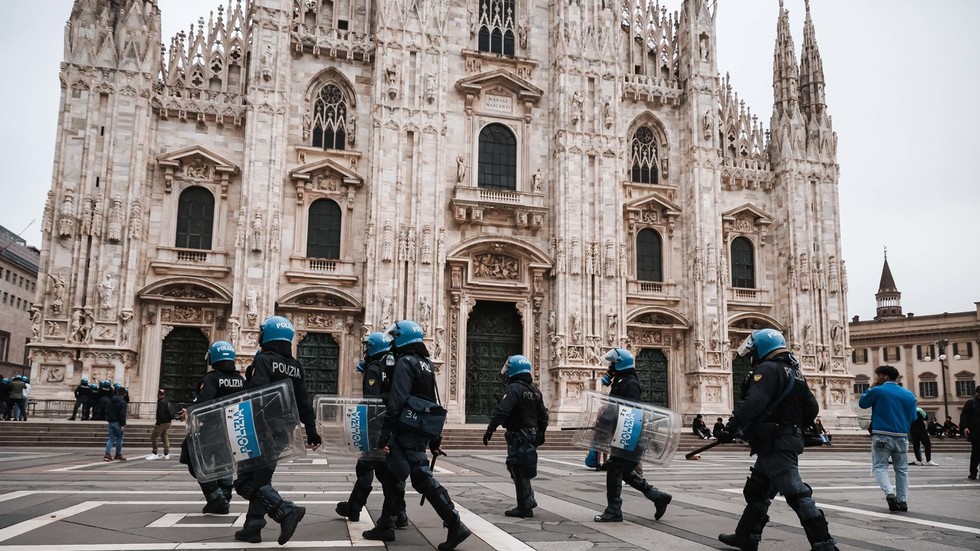
Milan witnessed its own eruption of disorder on Saturday as a demonstration against wars and the rising cost of living spiralled into violence.
Masked individuals pelted riot police with stones and paving slabs before constructing barricades from cafe furniture and setting them ablaze.
Officers deployed water cannon and tear gas in response. The LaPresse agency reported at least two police officers sustained injuries and roughly 50 protesters, many of them minors, were taken into custody.
The city's centre-left mayor, Giuseppe Sala, acknowledged "the reasons for the protests were understandable" whilst insisting "the violence against law enforcement and serious damage to the city are not justifiable".
In Lisbon, tens of thousands marched through the capital on Saturday to protest housing costs and the broader squeeze on household finances, according to Portugal's largest trade union, CGTP.
Property prices in the country have soared 130 per cent since 2013, with the European Commission's Joint Research Centre classifying Portugal as "one of the least affordable" EU member states.
Teacher Pedro Penilo said Portugal's political class is "out of touch with reality", while Prime Minister Luis Montenegro warned against "importing climates of instability and protest to Portugal, which have no basis in Portuguese society".
In Madrid, demonstrators have now occupied the iconic Puerta del Sol square for a third consecutive week, galvanised by the eviction and subsequent death of 87-year-old Maria del Carmen Abascal, a wheelchair user removed on a stretcher from the home she had occupied for seven decades.
Her cause of death remains undisclosed. Regional authorities have pursued legal action to clear the encampment.
Greek refinery workers, meanwhile, gathered outside Motor Oil's facilities on Wednesday following an explosion during maintenance that killed two employees, demanding stricter safety enforcement.