By The Rio Times | Created at 2026-08-08 08:46:53 | Updated at 2026-08-08 09:02:32
25 minutes ago
By The Rio Times | Created at 2026-08-08 08:46:53 | Updated at 2026-08-08 09:02:32
25 minutes ago
Key Facts
- Mexico’s S&P/BMV IPC rose 0.82% to 66,938.64 points, a gain of 542.49 points that ended a run of four losses in five sessions
- The peso closed at about 17.13 per dollar, its strongest level since 18 February, after a weak United States jobs report knocked the dollar lower
- Mining names led the advance, with Peñoles and Grupo México riding a precious-metals rally that took gold 2.32% higher
- Mexico’s central bank held its rate at 6.50% on Thursday, a unanimous second consecutive pause, and pushed its inflation target date out to late 2027
- The single session wiped out August’s losses, leaving the index roughly flat for the month after being down 0.81% a day earlier
Today’s Focus
Mexican shares had their best day in weeks on Friday, and the reason came from Washington. American employers shed jobs in July instead of adding them, and a market that trades in step with the United States took that as good news.
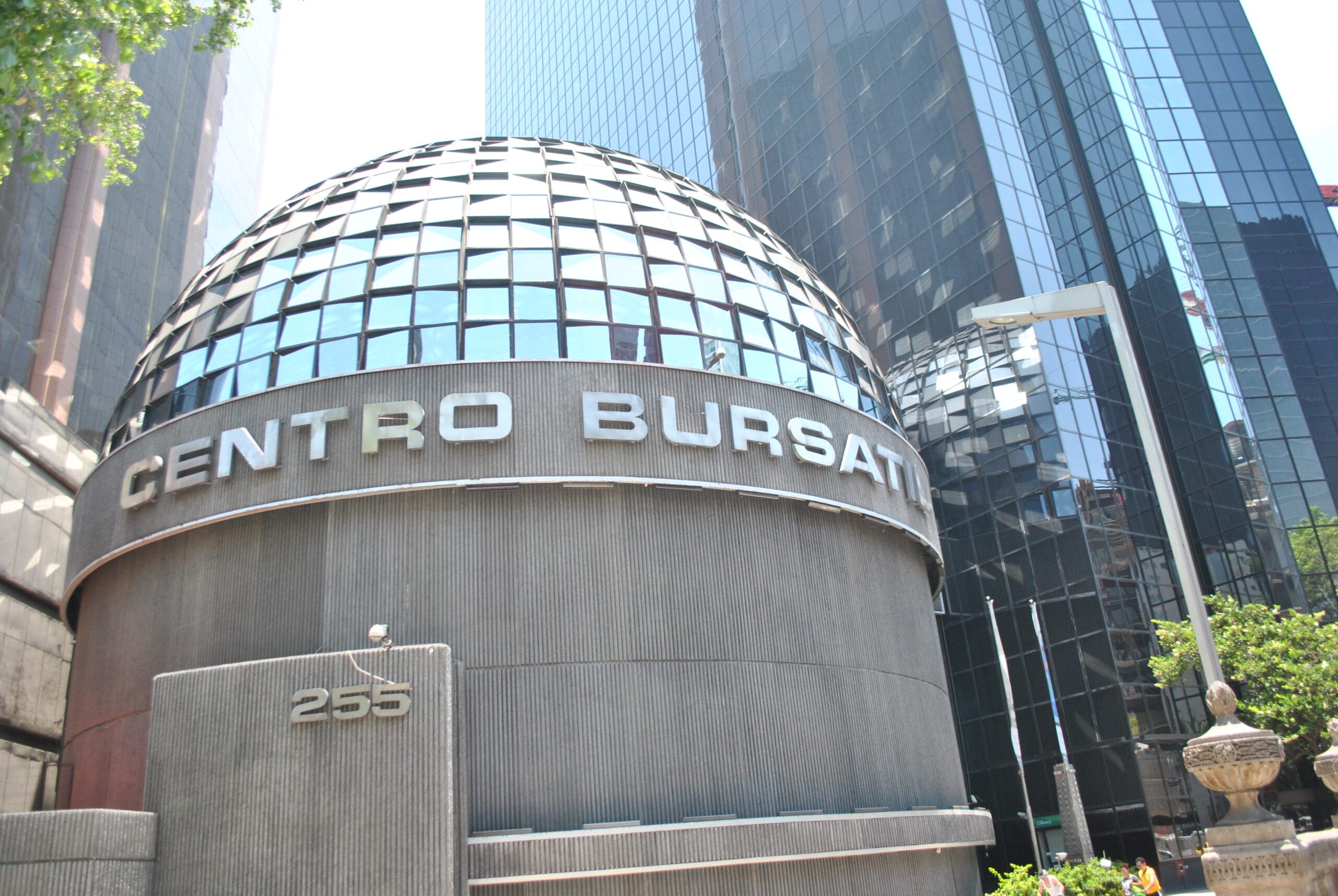
The S&P/BMV IPC climbed 0.82% to 66,938.64 points, adding 542.49 points and breaking a run of four falls in five sessions. The peso went with it, reaching its strongest level since February.
The gains were concentrated where the dollar’s weakness bites hardest. Precious metals rallied, and Mexico’s big miners carried the index.
What matters today. The same American jobs number that pushed money out of Brazil pushed it into Mexico, which is the clearest illustration this year of how differently the region’s two largest markets are wired.
01 The session in one read
The IPC finished Friday at 66,938.64 points, up 542.49 or 0.82%, on volume of 113,357,974. It was the index’s first convincing session in a week that had otherwise been a slow drift lower.
The shape of the day was one-directional. The index opened at 66,394.89, which was also its low, ran to 67,185.88 at the top and gave back only part of that into the close.
The turn was imported. United States employers cut 23,000 jobs in July against forecasts of an 80,000 gain, and June was revised down to just 20,000, which pushed expectations of a Federal Reserve rate rise from September into October.
Wall Street rose on that reading and Mexico followed, with the Dow up 0.28%, the S&P 500 up 0.62% and the Nasdaq up 1.30%. Brazil, wired differently, fell 1.73% on the same news.
Assessment — The right side of a weak American number MEDIUM
Mexico benefits twice from a soft United States labour report: the dollar falls, which lifts the peso and the metals its miners dig, and the rate outlook softens, which lifts everything else. That is why Friday’s gain was led by Peñoles and Grupo México rather than by anything domestic. The caution is that none of this originated in Mexico, so the durability of the move depends on American data rather than on the local economy, and the index is still 0.8% below where it sat in late July.
02 The day’s numbers
| S&P/BMV IPC | 66,938.64 | +0.82% | +542.49 points; best session in weeks |
| Session range | 66,394.89 — 67,185.88 | — | Opened at the low and held the gain |
| USD/MXN | 17.13 | −0.5% | Peso at its strongest since 18 February |
| Central bank rate | 6.50% | — | Held Thursday; second consecutive pause |
| Mexican 10-year yield | 9.15% | — | Against 4.65% on the US 10-year |
| July inflation | 3.12% | −0.25 pp | Down from 3.37%, in line with forecasts |
The month had been going badly until Friday. Mexican shares were down 0.81% for August as of Thursday, according to Actinver, and the 0.82% gain almost exactly cancels that—leaving August essentially flat, by The Rio Times’ calculation.
For the year the index remains modestly ahead. It was up 3.25% for 2026 through Thursday, a return that Friday’s session improves but does not transform.
Live Market IntelligenceMexico — Live Market BoardInside: market breadth, the sector heatmap, currencies & rates, the Latin America scoreboard and the full instrument board.
Rio Times · Live Market Intelligence
Mexico — Live Market Board
BMV · Mexico City
Aug 8, 2026 · 05:41
S&P/BMV IPC · benchmark
66,938.64 +0.82%
L 66,395day rangeH 67,186
+14.89% over 12 months
Market breadth · 15 names
60% advancing
9 ▲ advancing6 declining ▼
Currencies, rates & key inputs
Sector heatmap · average move today
Consumer Staples
+0.66%
WALMEX, FEMSA, BIMBO, KOF
Financials
+0.28%
GFNORTE
Industrials
-0.30%
GAP, ASUR, OMA
Telecom
-0.44%
TELEVISA, AMX
Latin America scoreboard
IndexLastTodayStrength
IbovespaBrazil 172,513.42 -1.73%
S&P/BMV IPCMexico 66,938.64 +0.82%
S&P IPSAChile 11,256.28 -0.17%
S&P MERVALArgentina 3,086,785 -0.45%
MSCI COLCAPColombia 2,350.44 +0.00%
BVL S&P PerúPeru 59,143.04 +0.74%
Full instrument board
| IPC MEX | 66,938.64 | +0.82% | +14.89% | 66,396.15 | 67,186 | 66,395 | 113,357,974 |
| USD/MXN | 17.12 | -0.62% | -7.99% | 17.22 | 17.22 | 17.09 | — |
| WALMEX | 49.60 | +1.25% | -13.10% | 48.99 | 50.18 | 48.85 | 8,466,103 |
| GMEXICO | 225.45 | +2.56% | +84.30% | 219.82 | 227.88 | 221.98 | 3,016,503 |
| FEMSA | 209.34 | -0.19% | +27.16% | 209.73 | 211.85 | 209.00 | 870,382 |
| CEMEX | 19.48 | -0.20% | +22.13% | 19.52 | 19.62 | 19.12 | 25,230,046 |
| GFNORTE | 199.41 | +0.28% | +19.26% | 198.86 | 200.19 | 198.42 | 2,278,316 |
| BIMBO | 61.21 | +0.67% | +10.80% | 60.80 | 61.26 | 60.66 | 753,097 |
| TELEVISA | 9.77 | +0.10% | +7.35% | 9.76 | 9.93 | 9.73 | 1,270,419 |
| AMX | 20.41 | -0.97% | +15.75% | 20.61 | 20.65 | 20.38 | 34,055,861 |
| GAP | 382.39 | +0.06% | -15.35% | 382.15 | 385.90 | 379.91 | 291,546 |
| ASUR | 276.68 | -0.34% | -11.03% | 277.63 | 280.97 | 276.00 | 41,137 |
| OMA | 236.74 | -0.63% | -6.94% | 238.24 | 242.00 | 235.47 | 232,010 |
| KOF | 189.00 | +0.55% | +18.35% | 187.96 | 191.11 | 188.54 | 566,704 |
| GRUMA | 254.51 | +0.38% | -21.32% | 253.55 | 256.13 | 250.83 | 378,020 |
| KIMBER | 40.73 | +1.29% | +10.85% | 40.21 | 40.85 | 40.06 | 1,374,871 |
| AMX ADR | 23.75 | -0.71% | +24.67% | 23.92 | 24.07 | 23.73 | 2,751,149 |
Largest moves today
GMEXICO 225.45 +2.56%
KIMBER 40.73 +1.29%
WALMEX 49.60 +1.25%
AMX 20.41 -0.97%
IPC MEX 66,938.64 +0.82%
AMX ADR 23.75 -0.71%
BIMBO 61.21 +0.67%
OMA 236.74 -0.63%
The session read
The S&P/BMV IPC rose 0.82%, with breadth positive — 9 of 15 names higher. Mining led, while Other lagged.
03 Why it moved — a weak American jobs report cut in Mexico’s favour
Mexico’s market is tied more tightly to the United States than any other in Latin America, and on Friday that paid. The employment report was genuinely poor, and poor American data currently means a lower chance of higher American interest rates.
The dollar fell across the board on that reading. A broad index measuring the dollar against six developed-market currencies dropped 0.33%, and emerging-market currencies rallied with the South African rand, the South Korean won and the Russian rouble all gaining more than 0.9%.
For Mexico the effect compounds. A weaker dollar lifts precious metals, and precious metals are a large part of what the Mexican index actually contains.
Local conditions helped rather than hindered. Mexico’s central bank had held its rate at 6.50% the day before in a unanimous decision, its second straight pause since June, and July inflation came in at 3.12% against 3.37% previously.
That combination—steady local rates, easing local inflation, falling American rate expectations—is close to ideal for Mexican assets. The gap between the Mexican ten-year yield at 9.15% and the American equivalent at 4.65% does the rest of the work in pulling money in.
The one discordant note came from oil, which fell on Friday as talk resurfaced of a deal between Gulf states and Iran to reopen the Strait of Hormuz. That matters less for Mexico than for its oil-exporting neighbours.
04 The day’s movers
| Industrias Peñoles (PE&OLES) | — | +6.15% | Session’s sharpest move; silver and gold miner |
| Grupo México (GMEXICO) | — | +2.87% | Copper and metals; rode the same rally |
| Becle (CUERVO) | — | +1.92% | Consumer name lifted by broader risk appetite |
| GCC (GCC) | — | +1.80% | Cement maker with heavy US exposure |
| Cemex (CEMEX) | — | −0.72% | One of the few decliners; fell 2.2% on Thursday too |
| América Móvil (AMX) | — | −0.44% | Heavyweight that sat out the advance |
The leaderboard was a metals story from top to bottom. Peñoles, which mines silver and gold, was the sharpest riser in the index, and Grupo México followed it up—both tracking a precious-metals rally that carried gold 2.32% higher on the day.
Away from mining the gains were broader but thinner. Becle, the tequila producer, and the cement maker GCC each added close to 2%, while the Bolsa Mexicana de Valores itself rose 1.78%.
The decliners were few and familiar. Cemex slipped 0.72% after a 2.2% fall on Thursday, and América Móvil eased 0.44%, leaving the two heavyweights out of step with the rest of the market.
Thursday had been the mirror image. The index lost 0.19% to close at its lowest since 24 July, dragged by Volaris down 3.99%, Cemex down 2.2%, Femsa down 2.17% and Gruma down 1.37%.
05 The peso and the rate gap
The peso closed at roughly 17.13 per dollar, having touched 17.08 during the morning, its strongest reading since 18 February. Against Thursday’s 17.22 that is a gain of about half a per cent.
The mechanism is not complicated. Mexico’s central bank is holding at 6.50% while the United States has been cutting, and money moves toward the higher return as long as the currency looks stable.
Thursday’s decision reinforced that. The board voted unanimously to hold for a second consecutive meeting, and it delayed to the final quarter of 2027 the point at which it expects inflation to settle back at the 3% target—which markets read as a promise to keep rates high for longer.
The peso has been on this path for a while. The dollar has now fallen for four consecutive sessions against it and is down more than 8% over the past twelve months, having traded above 17.60 as recently as late July.
Analysts are not calling it a verdict on the economy. As one Mexican outlet put it this week, the peso’s advance reflects the yield gap and global dollar weakness rather than any improvement in domestic growth.
Forecasts for the end of 2026 still sit above Friday’s level, which means the consensus expects at least some of this strength to unwind before the year is out.
06 The regional scoreboard
| IPC | Mexico | +0.82% |
| IPSA | Chile | −0.16% |
| Merval | Argentina | −0.45% |
| Ibovespa | Brazil | −1.73% |
| COLCAP | Colombia | closed |
Mexico was the region’s only clear winner on Friday, and the contrast with Brazil is the point. The Ibovespa fell 1.73% as global investors rotated out of emerging markets and into American technology shares, while Mexico benefited from being read as an extension of the American cycle rather than an alternative to it.
Elsewhere the moves were small. Chile’s IPSA eased 0.16% after a week that still finished 2.18% higher, Argentina’s Merval fell 0.45% in a sixth consecutive decline, and Colombia did not trade at all—Friday was the Battle of Boyacá holiday, which is also when the country swore in its new president.
07 The technical picture
Friday’s close of 66,938.64 puts the index back above the 66,400 area that had capped it for most of the week, but it stops short of 67,000. That round number has turned the market away more than once since June.
The longer view is less encouraging. The index has been drifting sideways to lower since its highs in February, and the rising line that supported it through 2025 now sits just underneath the current level rather than comfortably below it. One strong session does not undo that pattern, particularly when the impetus came from a foreign data release.
08 What to watch
- The next American data: Friday’s move was imported, so the follow-through depends on what United States figures say next about the rate path.
- Precious metals: Peñoles and Grupo México did most of the lifting, and both live or die by the gold and silver price.
- The 67,000 mark: The index closed just below it; clearing it on volume would be the first real technical signal in weeks.
- The peso at 17.10: Analysts flagged 17.20 as the level to break, and it broke; the next tests sit at 17.10 and 17.05.
- Core inflation: Headline inflation eased to 3.12%, but the central bank’s caution rests on the underlying measure, which has been stickier.
Background: Mexico Markets: IPC & the Peso — August 7, 2026.
Background: Latin America Stock Markets 2026: Ibovespa, Merval, COLCAP, IPSA and IPC Guide.
Frequently Asked Questions
What is the S&P/BMV IPC?
It is Mexico’s main stock index, tracking the largest and most-traded companies listed on the Bolsa Mexicana de Valores in Mexico City.
Why did Mexican shares rise when Brazilian shares fell?
Mexico’s market moves closely with the United States, so a weak American jobs report that lifted Wall Street lifted Mexico City too. Brazil suffered instead from investors pulling money out of emerging markets.
Why is the peso so strong?
Mexico’s central bank has held its rate at 6.50% while the United States has been easing, and that gap keeps drawing foreign money into Mexican assets. A weaker dollar worldwide has done the rest.
What did the central bank decide this week?
It left its rate unchanged at 6.50% on Thursday, a unanimous decision and the second consecutive pause since June. It also pushed back to the final quarter of 2027 its forecast for inflation returning to the 3% target.
Why did mining shares lead the market?
Precious metals rallied hard as the dollar weakened, with gold closing 2.32% higher. That flows straight through to Mexican miners such as Peñoles and Grupo México, which are among the heaviest names in the index.
Daily series
← Previous session: August 7, 2026
This article was produced by The Rio Times’ automated newsroom system. How we use AI · Report an error
LatAm Markets: Live Signals → — real-time movers, turnover leaders and FX across Latin America.
The Rio Times · Power Map
See who really holds power in Latin America
Click to open the Power Map →