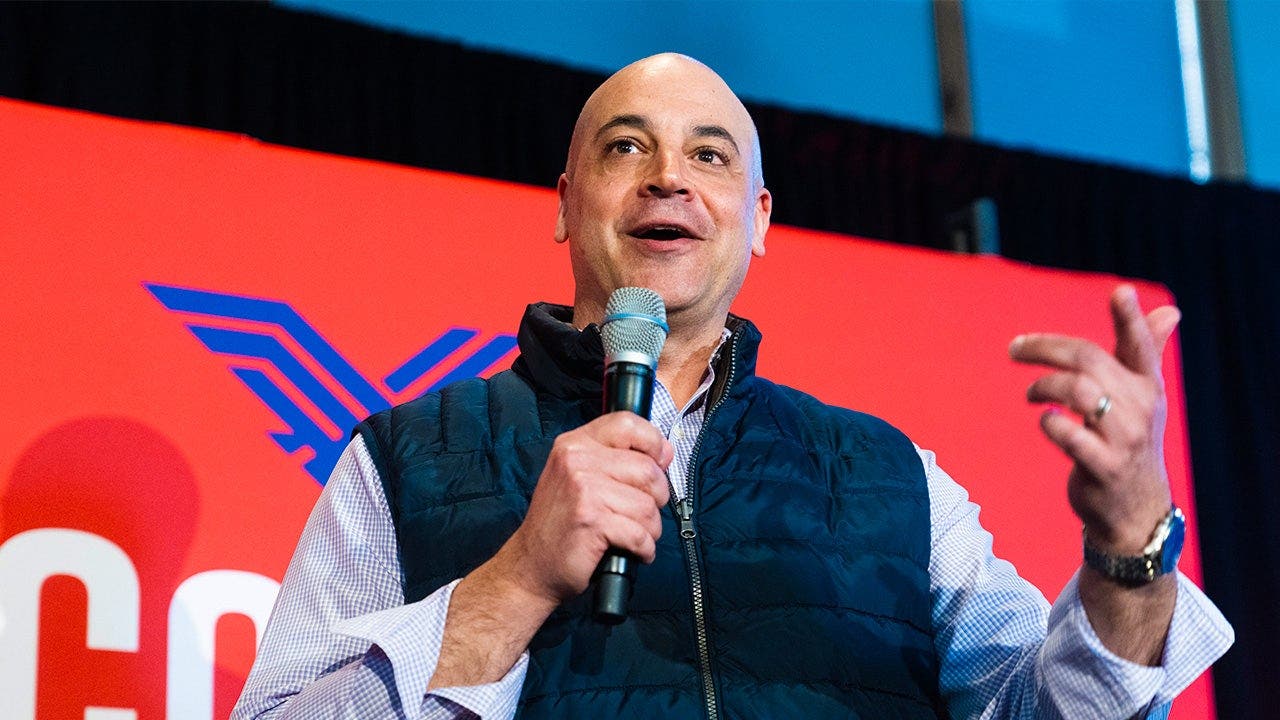
A lawyer and veteran politician, Miguel Ángel Pichetto is currently a national deputy in Argentina’s Congress chairing the Encuentro Federal caucus. He was a Partido Justicialista senator representing Río Negro Province from 2001 to 2019, heading the Peronist caucus in the Senate for 17 years. He later stood as ex-president Mauricio Macri’s running-mate in the 2019 election.
In an interview with Modo Fontevecchia, broadcast on Net TV and Radio Perfil (AM 1190), Pichetto analysed the dissolution of the Juntos por el Cambio colaition, PRO’s loss of identity against the centralisation of President Javier Milei and the rearrangement and reordering of Peronism.
Faced with this scenario, the Encuentro Federal caucus chief assures that "Peronism has a historic opportunity" in the next elections, while explaining that it will come via the construction of a broad front to compete in the run-off
"The context of Peronism is in the centre where it always was," he says, projecting that the times call for "a middle-of-the road government based on productive capitalism."
What do you feel is happening in Peronism? Could what happened, for example, at [rock star] Indio Solari’s funeral be a sign, a symptom of something which can connect with or be analysed by Peronism?
This event of Solari’s death makes for really very interesting analysis, independently of my having no interest in politicising it. But there is an undercurrent in Argentine society which appears and spontaneously manifests itself with the death of a popular idol who had also recently shown a clear adhesion to or every appearance of being committed to Peronism. And the march of the people yesterday [June 7] in the pouring rain was fraught with symbology. Even the venue of his wake has a Peronist history with the figure of such an extraordinarily popular sportsman as [boxer] José María Gatica.
It seems to me that there are also situations and feelings being experienced by society where the government is not making a full and careful reading of just how deep are the social wounds inflicted by its policies. The job losses, the loss of purchasing power – there is now an intention to summon collective wage bargaining negotiations but in reality, behind that, there is no aim of improving pay in a more responsible discussion with the trade unions.
The crisis is deepening. Not 25,000 but 30,000 companies have now closed down. The crisis in the sector PyME of the small and medium-sized companies is devastating. Emergency legislation is required. Everything is starting to boil up.
There is logically pain over the loss of a popular singer. Perhaps the sectors with a more intellectual outlook have not understood this phenomenon – that’s what happens.
Do you think there were also many Milei voters there who wouldn’t vote for him now?
I think there might have been among the youth sectors in the 2023 election, because of the failure. Because the period prior to that also needs to be analysed self-critically – that situation coming out of pandemic lockdown, about which we have spoken at length, is, I think, the main cause of a defeat and social fatigue manifesting itself in taking this pro-Milei way out. But this model is cruel in terms of the decisions it takes. They even believe that governance consists of sending bills – every day they are inventing something.
There is one fact that I’d like to underline because it is very dangerous for Argentine life – they are in the process of reforming company law. And there they are changing the logic, altering a law arising out of a decree of [military president Agustín] Lanusse, before becoming Ley 19.550, a law of public order which regulates the relations between companies, looking after minority interests – it has worked perfectly in Argentina.
I can tell you that the social and commercial organisation of companies has very rarely gone to court. The government is sending a bill seeking to make company statutes prevail over laws, which now become supplementary. Our listeners should understand very clearly what is meant by statute here.
The most deplorable of this is: Watch out for that [YPF] trial still unfolding in New York lest somebody reopen it for review because that is the argument being used by the Burford fund: the prevalence of statutes over the law. What did the [Manhattan] Court of Appeal say? That laws are above statutes. So I find that irresponsible ...
They have also introduced their lobby bill for debate amid privatising and leasing a whole bunch of companies. Many of these bills go constructing a jurisprudence in important law firms linked to the business sector, which I will not name but which lie behind structuring the legislation. What we had seen in the 'Ley de Bases' and in many of the tax schemes also assembled by this government, which now wants to regulate them.
I’m in agreement with regulating lobbies but they should have sent the bill as a central element in order to afterwards analyse and evaluate all the economic contingencies already unfolding and which have been fundamentally concentrated in a group of crony capitalists.
Is there a dichotomy between the government and that deeper Argentina which Peronism can somehow represent?
Argentines have an awareness which has been transferred from generation to generation that Peronism is the party which will contemplate the rights of the humblest, neediest and most underprivileged sectors, those who lose their jobs. That sentiment is there. That understanding of the popular sectors is, it seems to me, what undoubtedly again places Peronism as a possible alternative of power in Argentina. I believe that the conditions exist to assemble a national front.
If you push me, I would tell you that you have to look at Latin America and how its electoral processes are unfolding with strong polarisation. And I believe that will happen in Argentina. The middle of the road will be in a complex situation to be able to install a discourse. Here, if we had strong leadership, we would undoubtedly resolve quickly the process of alliance with other political sectors and go looking for the national business sectors which are being damaged, affected, offended and aggrieved.
You’re saying that people should join the Peronists if they have already defined their candidate. How much is needed for that?
I believe that the model has to be a democratic model, also contemplating very important political realities which require dialogue, comprehension and the political analysis of a figure who today is jailed and disqualified and who is undoubtedly a reference, with whom there must be dialogue and contention while proposing a path of unity…
"Without Cristina impossible," Pichetto dixit?
I would not apply that old saying from the proposal of [Alberto] Fernández. I would say that she is a... figure who today, while under detention, still has a very important leadership and voting expectations. Well, in politics you cannot ignore reality, a reality which obliges you to understand her and also trigger expectations in terms of the future of that situation and how you are going to resolve it. How are you going to resolve the crisis today in Argentina’s industrial sector? I was recently listening to [Daniel] Funes de Rioja, a man I respect, but nowadays the crisis in Argentine industry is lethal and nothing can disguise that.
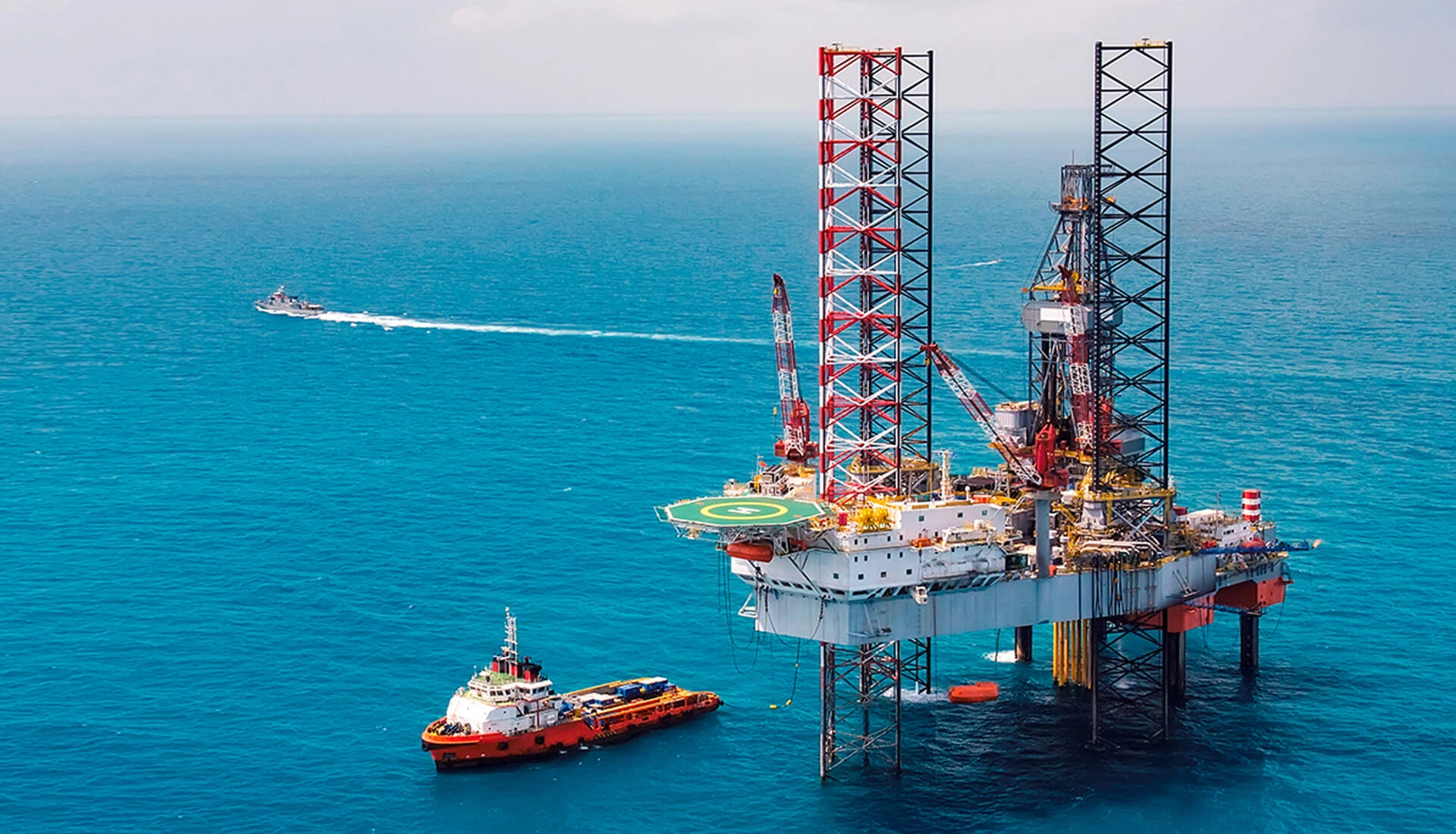
And if they say that the future lies in mining, oil and gas? I’m from Patagonia and I’ve been saying this for many years – they are export-driven sectors. In 2030-2032 we will have the capacity to export gas and oil and we’ll improve the balance of trade, no doubt. Ricardo Arriazu, always praised by the sectors of the ‘círculo rojo’ establishment, says that some day we’ll be Australia. Would that this were so. The model of which Arriazu always thus thought comes from 1978 or 1980 – an Argentina for 20 million inhabitants. It’s for the 20 percent of the oligopolistic sectors. It’s the model of Paraguay or Peru: 20 percent on the inside, 80 percent on the outside where the presidents are bounced and the Central Bank governs.
Do you see a climate of unity in Peronism?
I see it as an imperative necessity because the destiny of Argentina and the Argentine citizenry is at stake, of education, of university financing, the public hospitals. These values will feature very strongly in the debate of 2027.
Do you feel that there will be a reaction against the Milei government, with a vision leaning more centre-left than usual?
No, more to the centre. I place the context of Peronism more in the middle, where it has always been. If you ask me, I’d define it in a couple of words: to govern is to create jobs. Why buy into an ideological bias towards the left? No, because Peronism was always a national movement, first and foremost, lying in the centre.
One could say that Kirchnerism in recent years represents within this spectrum a trend more to the left.
No. I believe that it is more a progressive vision which feeds off some sectors of the intellectual left. Let’s say Carta Abierta, the phenomenon of the Madres [of Plaza de Mayo], human rights, always represented a vision of their times. What is the virtue of Peronism? Riding the wave of history, understanding it and governing from there. [Carlos] Menem understood that the Berlin Wall had fallen. The intellectual [Francis] Fukuyama spoke of the end of ideology and he [Menem] rode that wave – privatisation. It is also true that there were no public services in Argentina, no telephones, nothing. He [Menem] governed that process which was also hyperinflation and stabilised it …
So progressive Kirchnerism was also the result of its times ...
For me it was an era with many strengths.
What do you imagine the times demanding in the Argentina of 2027?
It will demand a middle-of-the-road government based on a productive capitalism, looking to national companies which contribute to the development of Argentine labour, which understands that deals must be made with China but also that there has to be limits to the entry of products undoubtedly manufactured with much cheaper labour and the financing of Chinese banking and that they may not prey on our national industry.
There are logically activities in Argentina which will have an enormous potential but you have to work parallel to the sectors of national industry, which can be vectors for urban labour.
I’ll give you an example. The oil industry uses machinery, giving work to many engineering firms in the zone. If you open up and import Chinese products, they arrive ready to go – the drills for Vaca Muerta shale and oil. The government permits second-hand machinery to enter. Why don’t we develop national technology to manufacture that type of equipment?
There is a company in Mar del Plata which dedicates itself to that, to their repair, maintenance and manufacture. But, well, if you permit old second-hand tractors ... that no. In Argentina there is expertise in the manufacture of farm machinery. Now, if you don’t look after Paolo Rocca’s Techint, the engineering companies and steel plants and the Chinese come disguised as Indians and enter a tender adjudicating private-sector bidders, that is legitimate ... but well!
Now you were saying recently that leadership is necessary, to incarnate these ideas in one body. With that classic anxiety of journalists, I try to imagine what body could incarnate that Peronist unity and at the same time have a vision of productive capitalism. Help us to think.
No, I believe that will emerge from the primaries, which will also give us the candidate emerging from those primaries so it seems to me that the first challenge is to defend that legal framework …
That will be in August next year. Can you imagine Peronism on the boil until then?
Yes. The process of organising Peronism demands a democratic debate and a democratic election to give legitimacy to the candidate emerging from the primaries. And after that comes the debate and the construction of the ideas being developed, where the productive vision will bloom among those who weren’t saying anything six months or a year ago. I’ve appeared on many programmes and we always spoke of this issue: the many people who did not even have it on their radar. Today it is beginning to be installed because reality demands.
When you go to Greater Buenos Aires or an inland town and the people remain jobless because their PYME or factory has closed down, that aspect of reality begins to appear. Economic discourse does not even require dogmatism, it requires a big dose of realism as to where to advance, what the way out is for Argentina, how to combine the factors presenting themselves as opportunities.
The factor of mining is as never before, previously resisted in an Argentina hypersensitive over the environment, while the Church also adopted a stance against a mining which polluted. Today it is relevant for gaining investments. Now there are other things which pose questions – look at the Super RIGI [scheme] with its incentives to invest in Argentina.
Nevertheless, in the Latin American map, the country receiving the least private investments is Argentina. And if you analyse what is going on at Vaca Muerta, there are a whole bunch of foreign companies on their way out while those buying in are Argentine. The same goes for the energy sector. Look at what happened to Camargo Corrêa, a Brazilian cement company – it was bought out by an Argentine businessman. That cement plant is also in crisis because there are no public works in Argentina.
I see that you do not want to anticípate the definition of Peronism and that you still assign some possibility of other important candidates emerging to compete with [Buenos Aires Province Governor] Axel Kicillof, who today is the only one installed.
Yes, he has a certain legitimacy as a governor, which is reasonable. But what seems important to me is the vision of the country and how it is transmitted, the ideas regarding the immediate future. What are Argentines being offered? Firstly, recovering the lost confidence. Secondly, laying aside the fear there might be in some sectors of the Peronist risk, that Manichaean vision which the government is constructing, especially [Economy Minister Luis] Caputo, who makes the rounds of hotels with that almost idiotic discourse. But the scaremongering also often used by dictatorial governments does not work. The issue for Peronism is constructing leadership, which must be a democratic process.
You are clearly inferring that you do not believe Kicillof to be the natural Peronist candidate.
No. I believe him to be an important candidate but I think that if he emerges from the primaries, he will be greatly empowered and, fundamentally, he will also have something in politics related to music: fusion. The fusion of ideas, thinking, the accompaniment of other sectors.
I read history a lot and the process of Menem was very interesting. Many of the men and women surrounding Menem in his presidential campaign had not been previously banished because Menem was always a man who showed great solidarity with his people but all the figures who had been on the other side accompanying [primary rival] Antonio Cafiero started to appear. What do I mean? That fusion enriched his government ... Menem’s Cabinet had class figures: Guido Di Tella, Domingo Cavallo.
What you are saying is that the primary and the process of arriving at a Peronist primary are not simply about who will incarnate the leader but to enrich that leader with a diversity which does not only represent the ideas of that leader.
And enriching the economic programme and limiting the things which must not be said or done a posteriori. Some people come up with imbecilic stuff like "the wealth tax" ... I believe that transforming ideas has to be a process. Today the line of all economists is that this is the road, austerity is the road.
‘You must suffer, you must cry because it will all come together in 2032.’ And meanwhile what? At some point there will be a voluntary migration.
I know Patagonia. In the investment [Alejandro] Bulgheroni is making in San Antonio, the shipbuilders union is training workers, especially welders, because certain skills are required to work. There is also skilled labour in mining – the miner is specialised. Can that sector create niches? The economic model needs to be seen, whether an enclave or camps or whether it expands towards important cities in the region. If you buy from local firms and generate service companies or if you put everything out to tender and buy from China. We are facing extraordinary potential.
Talk to me about what there might be on the government side. We were commenting on the increased visibility of Mauricio Macri and increasingly explicit intentions of possibly becoming a candidate himself. In parallel, his distance from Patricia Bullrich and the increased visibility of that distance. What is going on there?
What is happening is that things are becoming intolerable, including for many Radical sectors. Even when some of them are governors and it suits them to stay close to finance their provinces, it is all undoubtedly starting to appear unviable with this perception of permanent hatred in society, of the aggression towards the press...
I believe that the figure of Mauricio Macri is important and that he was fundamental in Milei’s triumph. If he had not guaranteed that bill of security and predictability that night in Acassuso, if he had not offered his support, it would have been very difficult for Milei to hold his own in the run-off campaign. But, well, he has been permanently aggrieved, hurt and offended by a government which never understood the value of unity between the sectors of the centre and the centre-right.
The same goes for Bullrich, because there was what for me was a significant and highly symbolic event last May 25, when it seems to me that the senator understood that there is no place for her in this setup, although [serving as] a minister until a few months ago. There is a protocol activity with its own symbolism: drinking chocolate in the Casa Rosada before walking to the Cathedral. They made her enter by the tradesman’s entrance. Sometimes grievances or enormous insults produce resentment.
In politics, resentment is also an element which should be analysed. It seems to me that there is no room for her because the plan of the government and the presidential sister is that Pilar Ramírez and her husband [Darío] Wasserman, eye City Hall as their property.
If you want to constitute an alternative and turn a proposal into a political proposal, you have to start differentiating yourself much more clearly because we are entering the last 18 months of this government.
[Political advisor Jaime] Durán Barba says that if it goes badly for Milei, it will go badly for Macri, and if it goes badly for La Libertad Avanza, it will go badly for PRO.
If Mauricio wants to construct a centre-right, democratic, republican, proposal, he will have to mark out differences, setting aside a vague vision or that this is the economic road because it is making many people suffer and depriving them of the possibility of surviving until mid-month so it seems to me that if he wants to be an option... It seems to me that the right does not have many alternatives either with their divisions and the fragility of that proposal.
Has Bullrich in that sense already discovered that she has no place in La Libertad Avanza? From the things you hear Macri and people near him say, it seems that she has no place in PRO either.
None have landed save for some figures who today are practically incorporated, which has to do with their personal aims, like the case of the Interior Minister [Diego Santilli] who aspires to be governor or the case of [Entre Ríos Province Governor Rogelio] Frigerio, who has to co-exist with reality.
What in your judgement would be the future of Patricia Bullrich if aware that she has no place in La Libertad Avanza.
She is working along two avenues, with the high road being a presidential candidacy – a possibility which I do not believe Patricia Bullrich to have ruled out. And otherwise she is constructing a politically correct image for the City of Buenos Aires, as in the case of the judge [Verónica] Michetti – a serious error of the government. The government has the possibility of evaluating judicial nominations with the process of selection in the Justice Ministry – you do not send one and then another. They had also made a mistake with the sworn statement of [Cabinet Chief Manuel] Adorni. All this goes down much more strongly with the electorate of the City of Buenos Aires, it has a preponderant value there. Also because the media are centred here in this City and that has a symbolic value. So she is moving along two avenues.
For which party would she run? Do you imagine a united Peronism in 2027 and at the same time a divided ruling party?
What I tell you is that Colombia demonstrates ... and this also requires, without doubt, an analysis for Radicalism. What is going on with the Radicals? They are finding it very difficult to be on the same side as the Milei Presidency because they are despised and not taken into consideration, while having highly valuable leaders. The other day I was at an event with Ernesto Sanz at the Club Político – the talk was really high level. But that kind of Radical, historic figures, have no time for rapprochement with the Milei government. Now what is the path they are taking? It would be very interesting to bring together a great national front of Peronism.
Do you want to take them into Peronism?
I would like to take them into a broad national front in the style of Lula.
Now imagine any scenario, polarisation in the first round or fragmentation with three sectors representing the government line (Milei, Bullrich and Macri), each competing with a separate party. Either way there will be a run-off unless Peronism wins in the first round, as you say you aspire.
The challenge is winning in the first round. The run-off scenario is always dangerous for Peronism.
What the candidate needs for the first round and a run-off is different.
Now you also have to have a candidate for the run-off, that’s why I say it’s different. Peronism has to construct a leadership for Argentine society in the runoff to win there in that event. But look at Colombia, it’s very interesting. Colombia is going to a run-off, as Peru did. Look at Peru. But look at what happened in Colombia, where [ex-president Alvaro] Uribe’s nephew was shot dead in the street with that party losing its main figure. And then an outsider appears, [Abelardo] de la Espriella on the extreme right, who came to Buenos Aires to see Milei but Milei did not receive him. Today he is imitating the style of [El Salvador President Nayib] Bukele. Now the Uribe candidate, perhaps the most reasonable candidate in the democratic centre more similar to Macri, polled five percent.
Imagine an outsider in the broad Peronist front. From what you are telling about Colombia, are you thinking that it could be an outsider?
The construction of an outsider in Colombia is a novelty, almost with a new party. De la Aspriella has emerged like Milei, not in a traditional party. The Uribe people polled five percent but I believe that the government will be one of the great protagonists of polarisation in Argentina. In the first round there will be a very hard core of both main sectors. The problem of Macri or Bullrich is that the scenario of the right is expressed with a much more solid identity by Milei.
So you imagine a run-off between Milei and the pan-Peronist candidate, which will define elections for the next few years.
That will define the elections. And I believe that there is a process of fatigue in society which is beginning to show itself.
Which will give that pan-Peronism an opportunity.
Yes. And I also see it walking in the street and chatting with people the perception of an extreme consolidation of poverty with no horizon for an exit nor interest in finding one. Note that the data of the economists are all the same – growth in the sector of oil, gas and mining and also financial business, which is the only thing adding value to growth in City of Buenos Aires, not real jobs in the world of labour, no.