By The Rio Times | Created at 2026-08-04 11:22:06 | Updated at 2026-08-04 19:08:44
8 hours ago
By The Rio Times | Created at 2026-08-04 11:22:06 | Updated at 2026-08-04 19:08:44
8 hours ago
Politics: Argentina
Key Facts
—Land cap deal. Facing a stalled Senate vote, Milei’s government agreed to raise the foreign rural land ownership cap from 15% to 25% per province, abandoning its original plan to scrap all limits.
—Still a bill, not a law. The measure is part of the “Private Property Inviolability Act” and needs a Senate vote set for August 6, then approval in the Chamber of Deputies, before it takes effect.
—Villarruel break. Milei and Vice President Victoria Villarruel are not on speaking terms; his Cabinet chief publicly demanded her resignation on July 31 after she questioned the president’s conduct.
—New running mate. Milei says he has already chosen his 2027 vice-presidential candidate but is withholding the name; Patricia Bullrich and Sandra Pettovello top speculation.
—Opposition pushback. Villarruel, dissident Radical senators, Patagonian Catholic bishops and indigenous groups are fighting the land bill, with polling showing 77% of Argentines want limits kept.
Argentina’s Senate heads into a decisive vote this week on loosening foreign land ownership rules, just as President Javier Milei confirms he is dumping Victoria Villarruel from his 2027 ticket after two years of open political warfare.
One-stop reference
Company Intelligence
Every listed company in Latin America — financials, ownership and structure for 1,450+ companies across 26 exchanges, in one place.
The land ownership reform
Argentina’s rural land market has operated under a 15% cap on foreign ownership since Law 26,737 was enacted in December 2011 under then-President Cristina Fernández de Kirchner, limiting how much rural land foreigners can hold at the national, provincial and municipal level, with a further 30% sub-cap for any single nationality and a 1,000-hectare ceiling per foreign owner in the country’s most productive zone. Milei’s government sent a bill to Congress on March 27, 2026 — the “Ley de Inviolabilidad de la Propiedad Privada,” or Private Property Inviolability Act, designed by Deregulation Minister Federico Sturzenegger — that originally sought to scrap those caps entirely for private foreign buyers, while keeping restrictions on foreign states and state-linked firms, according to Reuters and the Buenos Aires Herald.
The Senate has postponed a floor vote on the bill four times since July for lack of support, as the ruling La Libertad Avanza bloc struggled to secure the roughly 37 votes needed even with allied Radical (UCR) and PRO senators. Facing continued resistance — including from at least three Radical senators who provided quorum in July but refused to back the land chapter — the government agreed on August 3 to abandon its no-limits approach and instead raise the existing cap from 15% to 25% of a province’s territory, according to Bloomberg Línea, which cited two people with direct knowledge of the negotiations. Infobae reported the new draft language would bar foreign individuals or companies from acquiring rural land “above twenty-five percent (25%) in the territory of each province.”
The bill applies specifically to rural land — the government has cited oil, mining and agriculture as sectors needing large tracts for investment — and does not touch urban real estate or other foreign holdings. It also retains a “double sign-off” requirement, under which foreign buyers would need approval from both the relevant province and the national government, and it keeps an outright ban on foreign states or state-controlled companies acquiring rural land absent that same dual authorization. Senate bloc leader Patricia Bullrich said she expected “comfortable” support of 38 to 40 votes when the chamber reconvenes on Thursday, August 6, according to Clarín. If approved, the bill would still need to pass the Chamber of Deputies before becoming law — it has not yet been enacted.
Milei’s political calculation
The land fight is unfolding as Milei moves to lock down control ahead of his re-election bid. Argentina’s constitution allows one consecutive presidential term, and Milei has already confirmed he will seek a second term in the October 2027 election. The government’s strategy now centers on avoiding a repeat of the friction that has defined his relationship with Villarruel since they were elected together in 2023, according to Infobae.
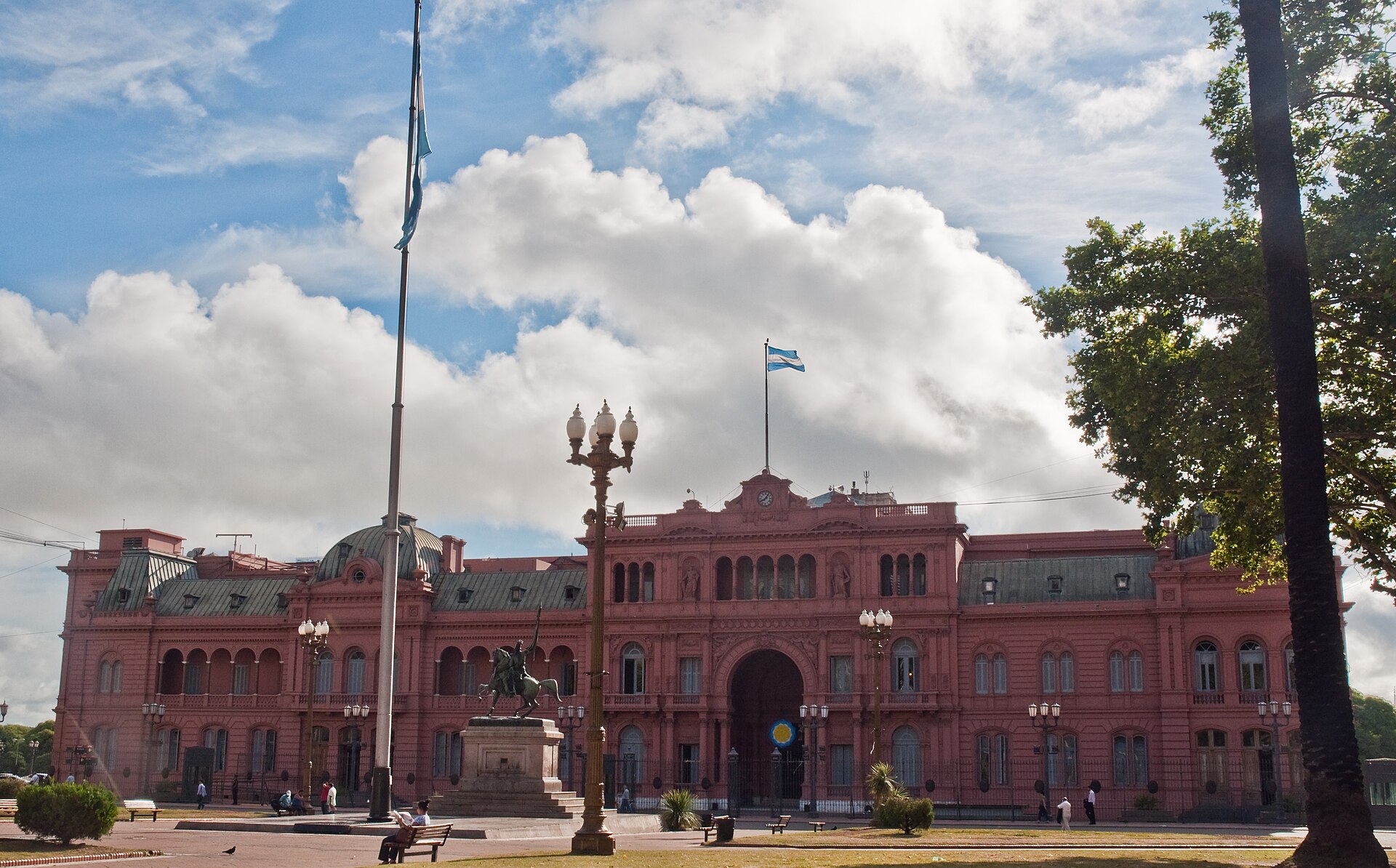
One official told Infobae the guiding principle for choosing a new running mate is blunt: “Después de lo que pasamos con Villarruel, no vamos a permitir que el vice no responda a Casa Rosada. Eso se termina” — after the experience with Villarruel, the government will not allow a vice president who doesn’t answer to the presidential palace. Another official described the search as narrowing to “alguien de su plena confianza,” someone in Milei’s full circle of trust, rather than an independent power center within the ticket.
Milei has also left the door open to a negotiated pick rather than a purely personal choice. Speaking to Radio Mitre on August 3, he said he has “un conjunto de personas que califican” — a set of qualified people — with alternatives and an order of preference, adding that a final decision “depende de los acuerdos políticos” that might be reached with allied parties, because “la política es cambiante,” politics is changeable, according to La Nación.
The Villarruel split
The rift between Milei and Villarruel began forming even before they took office together in December 2023, rooted in her push for influence over defense and security policy that Milei never granted, confining her instead to the constitutionally limited role of Senate president. By late 2024 Milei was telling local television that Villarruel “no tiene ningún tipo de injerencia en la toma de decisiones” — has no influence at all over decisions — and that she had effectively stopped attending Cabinet meetings, according to the Associated Press. The relationship deteriorated further in July 2025, when Milei branded her a “traidora,” or traitor, after she allowed a Senate vote on a pension increase his government opposed.
The land bill has become the latest and sharpest flashpoint. In mid-July, Villarruel and Bullrich clashed directly over WhatsApp after Villarruel tried to delay the Senate session where the bill was first set to be debated, telling Bullrich the ruling bloc wanted to “vender el país” — sell the country — and calling the land chapter “indignante,” according to messages confirmed to Infobae. Bullrich shot back that the government was not “selling land” but “developing the country.” As Senate president, Villarruel holds a constitutional tie-breaking vote — the same power she used in October 2025 to help pass Milei’s flagship “Ley de Bases” 37-36 — and opposition figures have been counting on her to use that same power against the land chapter this time.
Matters escalated further on July 31, when Cabinet Chief Diego Santilli publicly told Villarruel to resign if she disagreed with the government’s direction, calling her recent remarks “una barbaridad, un disparate y una falta de sentido común” — an outrage, nonsense, and a lack of common sense — according to Infobae, which reported Santilli had the tacit backing of both Javier and Karina Milei. Villarruel responded on social media without naming Santilli directly, accusing him of “casta política” trying to “conspirar contra el orden republicano,” and defending the legitimacy of the 2023 ticket she and Milei ran on. Two days later, Milei called her an “opositora del Gobierno” whose public profile was “intrascendente,” according to LM Neuquén.
The 2027 VP pick
Milei made his clearest statement yet on the ticket question in an interview published August 2 by Diario Río Negro: “Tengo definido mi compañero de fórmula para el año que viene, pero prefiero reservarme el nombre por el momento” — I have decided on my running mate for next year, but I’d rather keep the name to myself for now — as reported by El Cronista and confirmed by MercoPress. No outlet has independently confirmed the name, and Milei has not disclosed it.
Government insiders point to a short list circulating in Balcarce 50, the presidential offices, without confirmation that Milei has settled on any of them. La Nación reports Senate bloc leader Patricia Bullrich is named by most officials consulted as the “candidata natural,” though Bullrich herself told Clarín on August 2 that her real ambition is the presidency in 2031, suggesting she may not want the VP slot. Human Capital Minister Sandra Pettovello is cited by sources closer to Milei’s inner circle, while Chamber of Deputies President Martín Menem and the president’s sister and chief of staff, Karina Milei, are mentioned as lower-probability options, according to La Nación.
Villarruel, for her part, has said she intends to serve out her current term rather than resign, writing on social media in March: “Eso quieren. Mi renuncia. Pero no se les va a dar. El 10/12/27 hasta esa fecha ocupo con honestidad mi cargo” — that’s what they want, my resignation, but they won’t get it; through December 10, 2027, I will honestly hold my position — according to El País. She has held reserved meetings with opposition governors, including Formosa’s Gildo Insfrán and La Rioja’s Ricardo Quintela, fueling speculation about an independent political future beyond her current term, though no legacy outlet has reported that she has formally launched a 2027 campaign of her own.
Opposition and analyst reactions
Resistance to the land bill extends well beyond Villarruel. Córdoba senator Alejandra Vigo has confirmed she will vote against it, arguing “ningún país serio cede su territorio productivo sin restricción” — no serious country gives up its productive territory without restriction — according to Clarín. Senators from Misiones and Chubut have also signaled discomfort with the bill, and Unión por la Patria bloc leader José Mayans has been working informally alongside Villarruel to try to defeat the land chapter specifically.
The Catholic Church’s Pastoral Social de la Patagonia, representing dioceses across Viedma, Neuquén, Bariloche, Alto Valle, Río Gallegos and Rawson, has warned that land “no puede ser reducida a un objeto de apropiación exclusiva” and pledged to support any effort to block the bill’s passage, according to Bloomberg Línea. Indigenous groups have also staged protests in Buenos Aires against the measure, which they say threatens ancestral territory, according to Al Jazeera. A demonstration outside Congress was planned to coincide with Thursday’s scheduled vote.
Public opinion appears to favor keeping restrictions in place: a Zubán Córdoba poll cited by El Diario AR found 77% of Argentines support limiting foreign land purchases. Analysts note that while nationwide foreign ownership of rural land remains around 5%-6% — well below even the current 15% cap — at least 36 departments already exceed that threshold locally, including the Neuquén district of Lácar, where foreign ownership tops 54%, a discrepancy that has helped opponents frame the debate as a sovereignty issue rather than a narrow investment question.
Frequently Asked Questions
Has Argentina’s foreign land ownership cap actually been raised to 25% yet?
Not yet. The 25% cap is a concession the government proposed on August 3, 2026, to replace its original push to eliminate limits entirely. It is part of a bill still awaiting a Senate vote scheduled for August 6, and would also need approval in the Chamber of Deputies before becoming law, according to Bloomberg Línea and Infobae.
Why are Milei and Vice President Villarruel not on speaking terms?
The rift stems from disputes dating to before their 2023 election over Villarruel’s role in government, and has deepened over policy disagreements including tariffs, a pension increase Villarruel allowed through the Senate, and most recently her outspoken opposition to the land ownership bill, which she has called an effort to “sell the country,” according to Infobae and El País.
Who will replace Villarruel as Milei’s running mate in 2027?
Milei says he has decided but has not named anyone publicly. Names circulating among Argentine officials and reported by La Nación and Infobae include Senator Patricia Bullrich, Human Capital Minister Sandra Pettovello, Chamber of Deputies President Martín Menem, and the president’s sister Karina Milei — but none has been confirmed as his choice.
Sources: Bloomberg Línea, Reuters, Clarín, La Nación, Infobae, El País, MercoPress, Buenos Aires Herald.