 By Bitcoin News | Created at 2026-10-19 22:51:42 | Updated at 2026-10-19 23:34:02
43 minutes ago
- News
- Regulation & Legal
- Missouri Hits Polymarket and Kalshi With Cease-and-Desist Orders
Published:Oct 19, 2026, 6:50 PM EDT
Missouri Attorney General Catherine Hanaway stressed that prediction markets could not label sports bets as event contracts to skirt law compliance. The state sent letters to Polymarket, Kalshi, Crypto.com, Novig, Underdog, and Robinhood calling on them to stop offering these products to Missourians or face enforcement actions.
Published: Oct 19, 2026, 6:50 PM EDT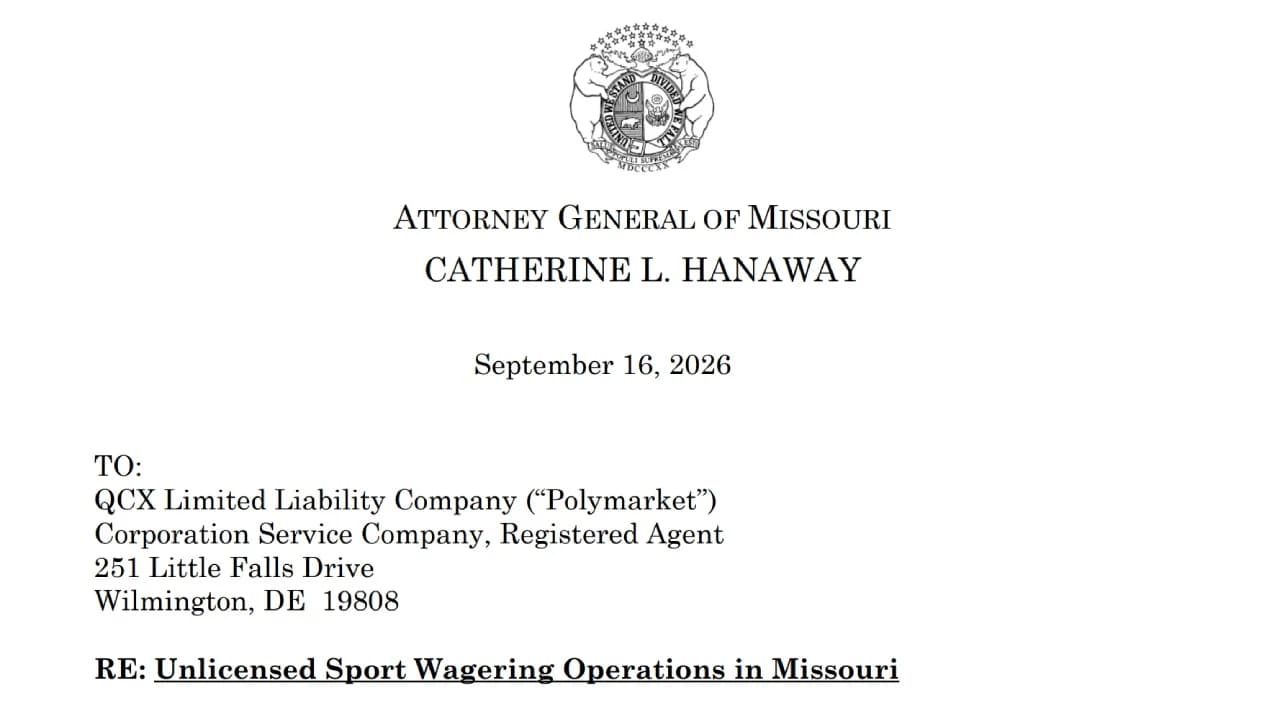
Key Takeaways
- Missouri ordered platforms like Polymarket and Kalshi to stop offering sports event markets in the state.
- The state claims these contracts dodge sports gambling rules, license fees, and a 10% tax.
- Operators face enforcement in 30 days, amplifying the legal fight between states and the CFTC.
Missouri Sends Cease-and-Desist Letters to Prediction Market Platforms
Missouri is targeting prediction market platforms that offer sports-linked event markets.
Missouri Attorney General Catherine Hanaway announced that her office sent cease-and-desist letters to several companies operating platforms that let Missourians access these sports event contracts—elements that her office considers illegal under state law.
Polymarket, Kalshi, Crypto.com, Novig, Underdog, and Robinhood have been affected by these actions, as Hanaway labeled the provision of these services as operating an unlicensed sports wagering business.
In the letters sent to these event market operators, Hanaway claims that they have sought to avoid complying with similar sports gambling laws of other states by claiming that they offer “event contracts”—or so-called “swaps”—governed by the Commodity Exchange Act (CEA) and subject to exclusive regulation by the Commodity Futures Trading Commission (CFTC).
Nonetheless, Missouri contests this assumption, supported by several federal court rulings that have decided that these bets do not qualify as “swaps” and escape CFTC oversight. The letters also stress that failing to comply with state laws has caused economic damages to Missouri, as the platforms have not paid license fees nor the 10% wagering tax that applies to adjusted gross revenue of all in-state sports wagering.
“Missourians voted for a safe, well‑regulated sports wagering market that supports public education and addresses problem gambling. Companies cannot repackage sports bets as ‘event contracts’ to avoid Missouri law. We will enforce the rules voters approved and protect consumers,” said Hanaway.
Prediction markets platforms will have 30 days to stop offering sports-based event contracts in the state, or risk facing enforcement actions.
Missouri’s action is the latest in a series of actions that have pitted states against prediction market platforms on whether sports event markets do constitute gambling products. On September 2, New Jersey directed a petition to the Supreme Court to determine whether federal law preempts states “from regulating sports bets that occur within their jurisdictions if those bets are offered on markets registered with the Commodity Futures Trading Commission.”
While states have pushed back against the CFTC on the matter, the commission has reiterated that it retains exclusive oversight over these contracts. “To any state that seeks to nullify federal law and seize authority over these markets, I say again: We will see you in court,” said Chairman Michael S. Selig in April.