By The Rio Times | Created at 2026-10-06 10:27:06 | Updated at 2026-10-06 12:13:29
2 hours ago
By The Rio Times | Created at 2026-10-06 10:27:06 | Updated at 2026-10-06 12:13:29
2 hours ago
One-stop reference
Company Intelligence
Every listed company in Latin America — financials, ownership and structure for 1,450+ companies across 26 exchanges, in one place.
GHANA · TELECOMS
Key Facts
- —The country In Ghana, a West African nation of gold, cocoa and oil, MTN had 32.8 million mobile subscribers in June.
- —What happened MTN now gets all of Ghana’s 3 GHz 5G band, on top of the 700 MHz airwaves announced in September.
- —How much MTN pays US$100.9 million for low-band and US$101.1 million for mid-band spectrum, US$202 million in all.
- —How long The licences will run for 15 years, and the rules make the fees payable upfront on award.
- —The catch As the dominant operator, MTN must cover 80% of rural Ghanaians within five years and offer rivals national roaming.
- —Still open The licences have not yet been issued, and the regulator has not published final results for every band.
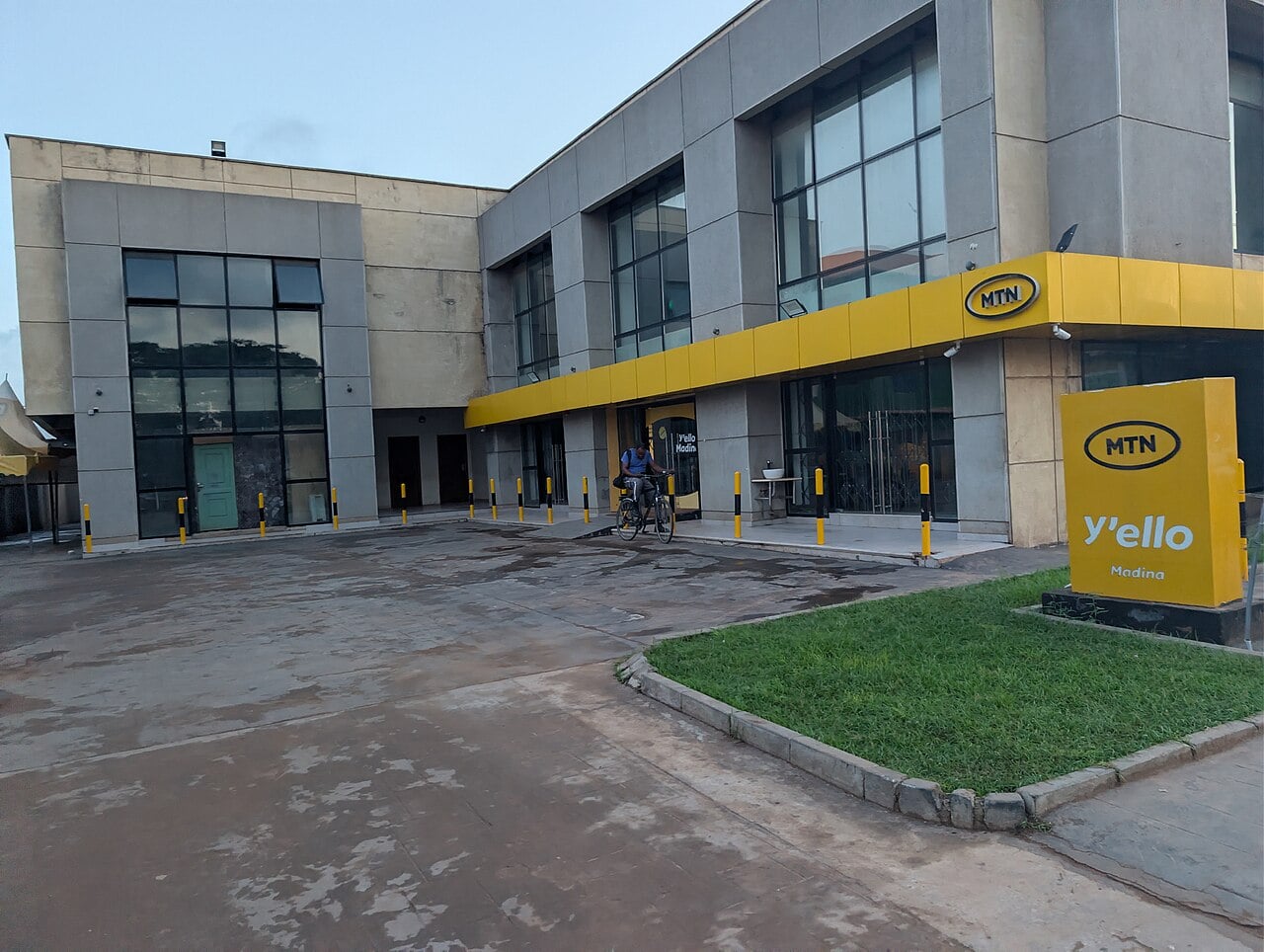
MTN Ghana has been awarded 5G airwaves in two bands for US$202 million, on 15-year licences. The company told the Ghana Stock Exchange on Friday 2 October, and Ghana’s Graphic Online reported it on Monday 5 October.
The new part is the 3 GHz band, where MTN takes all 150 MHz on offer for US$101.1 million. The National Communications Authority (NCA), Ghana’s telecoms regulator, had announced MTN’s 700 MHz win on 11 September.
What MTN Is Getting
The award covers two bands of radio spectrum, the invisible airwaves that carry mobile calls and data. Each band does a different job in a 5G network.
In the 700 MHz band, MTN Ghana gets two of three paired lots, or 2 × 20 MHz, for US$100.9 million. The regulator says this low band suits wide-area and rural coverage.
In the 3 GHz band, MTN gets all three lots of 50 MHz, or 150 MHz in total, for US$101.1 million. The regulator says mid-band spectrum provides the capacity for fast data in densely populated cities.
The 3 GHz lots sit at 3,300 to 3,400 MHz and 3,600 to 3,650 MHz. The rules let the NCA later realign the band so that each holder gets one continuous block.
The NCA announced the 700 MHz result on Friday 11 September. Our earlier report covers that step: Ghana’s Telecoms Regulator Sells Prime 5G Airwaves to MTN for US$100.9 Million.
Follow this story
Get an email when there’s news on Ghana
Free. One email a day at most, and only when there is news. This also signs you up to our weekday newsletter, Africa Intelligence. Nothing arrives until you click the confirmation link, and you can stop either with one click. Privacy policy.
Why the 3 GHz Band Took Longer
Four lots were requested in the 3 GHz band against three available, the NCA said on 11 September. Both MTN and its rival Telecel Ghana had applied.
The regulator said it would finish the remaining steps under its rules before naming the winners. MTN’s notice now covers all three lots, so the whole 150 MHz goes to one operator.
Graphic Online reported on Wednesday 16 September that Telecel Ghana won three 20 MHz lots in a third band, 2.3 GHz. “This award is an important step in our preparations for the rollout of 5G,” said Komla Buami, Telecel’s director of external affairs.
Goal Telecommunications Ltd, the third qualified bidder, applied in the 2.3 GHz band. The NCA cleared MTN, Telecel and Goal for the next stage on Wednesday 9 September and rejected a fourth applicant, Infrava Ltd.
What the Price Says
The rules set a minimum price of US$36 million per 700 MHz lot and US$24 million per 3 GHz lot. MTN is the only operator the NCA designates as holding significant market power, so its floors were 40% higher.
That put its minimum at US$50.4 million per low-band lot and US$33.6 million per mid-band lot. For the lots it won, that is US$100.8 million in each band, just below what MTN pays.
Without the premium, the floor for MTN’s five lots would have been US$144 million, by our calculation. The NCA calls the premium a competition safeguard.
For scale, MTN Ghana’s results show about GHS2.1 billion (US$179 million) of capital spending in the first half of 2026. The spectrum bill is larger than that.
MTN said the licence payments have already been built into its equity free cash flow outlook. It is finalising the formalities and payment obligations for the licences.
Dollar figures for cedi amounts here use about 11.75 cedis to the US dollar on 6 October 2026.
What the Licences Demand in Return
The licensing rules attach coverage duties to every licence and make them a material condition. Missing them can bring fines, a shorter licence, suspension or revocation.
Every licensee must cover at least 70% of Ghana’s population with outdoor mobile broadband by 6 March 2027. That includes Greater Accra, Greater Kumasi, all 16 regional capitals and all district capitals.
Minimum download speeds at the edge of each cell rise in steps. They start at 7 megabits per second, reach 25 after three years and 50 after seven.
MTN Ghana carries extra duties as the dominant operator. It must cover 40% of the rural population within two years, 60% within three and 80% within five.
It must also cover all major road and rail corridors between regional capitals within two years. All towns and villages of 5,000 people or more follow within three.
MTN must also offer national roaming to every other licensed mobile operator, at cost-based prices approved by the NCA. Roaming lets a rival’s customers use MTN’s network where their own has no signal.
Each licensee also pays the regulator 1.3% of net revenue a year. Another 1% goes to the Ghana Investment Fund for Electronic Communications, a state telecoms fund.
How Ghana Dropped Its Single 5G Network Plan
Until July, Ghana planned to run 5G through one wholesale company, Next Gen Infraco Limited (NGIC). Its licence gave it the sole right to own and operate wholesale 5G infrastructure.
The NCA removed that exclusivity from 15 July 2026, saying a competitive market better served the public interest. NGIC had objected in writing on 1 April and argued its case before the NCA board on 28 May.
NGIC keeps the rest of its licence, including its spectrum, the regulator said. On 16 July, the NCA invited applications for spectrum in the 700 MHz, 2.3 GHz and 3 GHz bands.
Four companies applied by the 27 August deadline. The NCA opened and ranked the qualified bidders’ price offers at the NCA Tower in Accra on 11 September.
What It Means for US Readers
For investors, MTN Ghana’s shares trade on the Ghana Stock Exchange under the code MTNGH. Its ultimate parent, MTN Group, is listed on the Johannesburg Stock Exchange.
The fees are set in US dollars, while the company reports its revenue in cedis. The cedi lost 8.6% against the dollar in the first half of 2026, MTN Ghana said in its results.
MTN Ghana and its mobile-money sister company together earned GHS15.0 billion (US$1.28 billion) in service revenue in that half. The spectrum bill equals about 16% of that sum, by our calculation.
For companies and business travellers in Ghana, the rules require mobile broadband across Accra, Kumasi and every regional capital by March 2027. Ghana has also swapped a single wholesale 5G network for competition between operators.
What Is Not Known
The licences have not yet been issued, and their effective date has not been announced. That date starts the clock on most coverage and roaming deadlines.
The NCA’s July timetable had foreseen fee payment and licence issue by 28 September. The process has run later than planned, with applications closing on 27 August instead of 6 August.
The NCA has not published a final statement on the 2.3 GHz and 3 GHz bands. Telecel Ghana’s licence fee and the result for Goal Telecommunications have not been made public by the regulator.
MTN Ghana has not said when or where it will switch on 5G on the new airwaves. It has promised to keep the market informed as the rollout advances.
More: Ghana news in English, every day from The Rio Times.
Frequently Asked Questions
What Did MTN Ghana Win?
Spectrum of 2 × 20 MHz in the 700 MHz band and 150 MHz in the 3 GHz band. The licences will run for 15 years and are meant for 5G and mobile broadband.
How Much Is MTN Paying?
US$100.9 million for the 700 MHz lots and US$101.1 million for the 3 GHz lots, or US$202 million in total. The licensing rules make the fees payable upfront on award.
Why Did MTN Face Higher Minimum Prices Than Rivals?
MTN is the only operator the regulator designates as having significant market power. That made its minimum prices in the 700 MHz and 3 GHz bands 40% higher, as a competition safeguard.
When Will People in Ghana Notice a Difference?
MTN has not given a launch date for the new airwaves. The licence rules require mobile broadband coverage of 70% of the population by 6 March 2027.
What Happened to Ghana’s Single 5G Network?
The regulator removed Next Gen Infraco’s exclusive wholesale 5G rights from 15 July 2026. The company keeps the rest of its licence, including its spectrum.
Sources: Scancom PLC (MTN Ghana), notice of spectrum award, Ghana Stock Exchange PR 400/2026, 2 October 2026; Graphic Online, 5 October 2026; National Communications Authority, Request for Applications, 5G spectrum, 16 July 2026; National Communications Authority, update on the 5G spectrum licensing process, 11 September 2026; National Communications Authority, qualified applicants, 9 September 2026; National Communications Authority, receipt of applications, 27 August 2026; National Communications Authority, NGIC licence amendment, 15 July 2026; Graphic Online, Telecel Ghana award, 16 September 2026; Scancom PLC (MTN Ghana), H1 2026 performance report, Ghana Stock Exchange PR 334/2026, 31 July 2026.
This article was produced by The Rio Times’ automated newsroom system. How we use AI · Report an error · Editorial responsibility: Matthias Camenzind, Editor-in-Chief
LatAm Markets: Live Signals → — real-time movers, turnover leaders and FX across Latin America.