 By The War Zone | Created at 2026-07-21 20:05:46 | Updated at 2026-08-02 23:13:31
1 week ago
By The War Zone | Created at 2026-07-21 20:05:46 | Updated at 2026-08-02 23:13:31
1 week ago
The TWZ Newsletter
Weekly insights and analysis on the latest developments in military technology, strategy, and foreign policy.
As the U.S. continues to expend offensive and defensive munitions in the fight against Iran, the Pentagon’s top leaders are testifying before the Senate today about how to pay for the war, including to replace $21 billion in strike weapons and air defense interceptors already used. The appearance of War Secretary Pete Hegseth and Joint Chiefs Chairman Dan Caine comes as resumed hostilities have entered an 11th day and President Donald Trump renewed threats to attack Iran’s deeply buried Pickaxe Mountain facility.
Hegseth and Caine are appearing before the Senate Appropriations Committee to explain why the extra money is needed. It is included in a nearly $90 billion supplemental budget request made by the White House last month. Of that, the administration is seeking $67.1 billion to address “operational costs incurred by the Department of War (DoW) during OEF [Operation Epic Fury], including funding for military personnel and readiness expenses, operational costs to rebuild stocks expended by DOW, classified programs, and other key expenses,” the White House stated.
As we noted earlier, the largest line item in the request is $21 billion for the munitions fired off during the conflict. We have frequently highlighted concerns over U.S. stocks of high-end offensive missiles and bombs and air defense interceptors and the difficulty in replacing them.
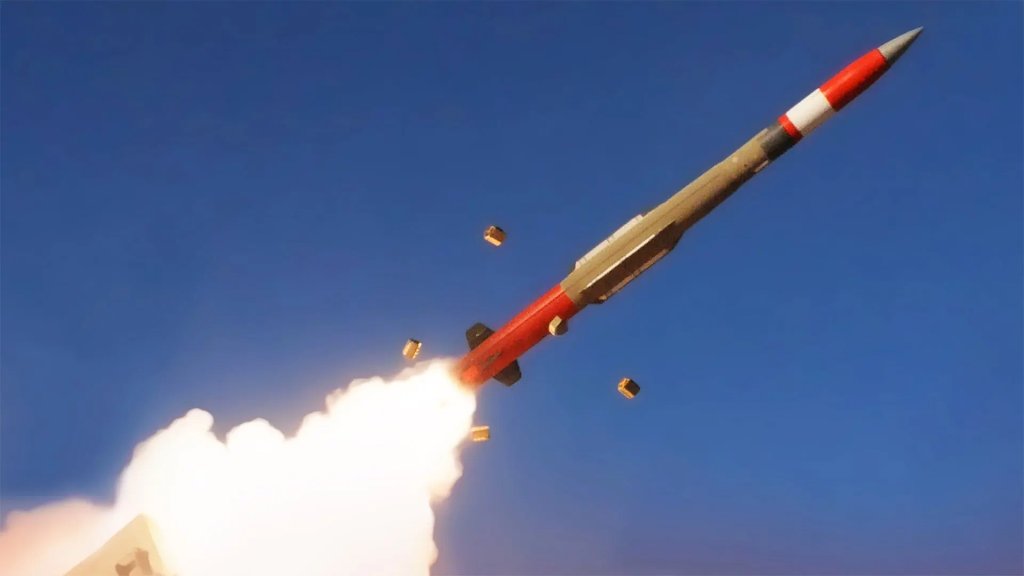 The Pentagon is seeking $21 billion in emergency funds to make up for the munitions, like Patriot air defense interceptors, expended in the war with Iran. (DoW) Department of Defense
An official told The Washington Post that “the expansion of U.S. operations will be limited by dwindling stockpiles of air defense and long-range munitions and constraints on the ability to surge more troops and aircraft into the area because of battle damage.
Meanwhile, the money being used to fund the conflict is having a cascading downstream effect on the U.S. military.
“The funding crunch is already leading the Pentagon to limit training and maintenance that help maintain military readiness,” The Washington Post reported, citing four current and former officials.
As Hegseth and Caine head to Congress, Iran is continuing to hit targets in Jordan, Kuwait and Bahrain, as well as ships transiting the Strait of Hormuz.
Jordanian air defense systems “intercepted and shot down three Iranian missiles targeting the Kingdom’s territories,” the Jordanian military stated on X. “The interception and downing operation resulted in no human injuries or material damage, and that Royal Engineering Corps teams handled the shrapnel impact sites, securing them in accordance with established procedures. The source indicated that the Jordanian Armed Forces – Arab Army continues to monitor the Kingdom’s airspace and maintains its readiness to address any threat to its security and sovereignty.”
بيان صادر عن القوات المسلحة الأردنية – الجيش العربي
صرّح مصدر عسكري مسؤول في القيادة العامة للقوات المسلحة الأردنية – الجيش العربي، بأن منظومات الدفاع الجوي اعترضت وأسقطت ظهر اليوم الثلاثاء، ثلاثة صواريخ إيرانية استهدفت أراضي المملكة.
وأكد المصدر أن عملية الاعتراض والإسقاط لم… pic.twitter.com/L6OQcprhCL
Jordan’s Muwaffaq Salti Air Base (MSAB) has been particularly hard hit of late, including an attack that killed three U.S. troops and wounded many others. 1st Lt. Tyler James Feehan, 25, of Ewa Beach, Hawaii, and Pvt. Isabella Gonzales, 19, of Carrollton, Texas, were identified while officials are waiting to identify the remains of a third servicemember.
The Pentagon this morning also announced that Sgt. Michael Emmanuel Swinton, 30, of Fayetteville, North Carolina, was killed in action during a controlled detonation of a downed One-Way Unmanned Aerial System on July 19, 2026, at Erbil Air Base, Iraq. The incident is under investigation.
Speaking to reporters at the White House on Tuesday, Trump seemingly blamed Jordan for the casualties at MSAB.
“They did slip something through in Jordan and if we had other operators, you know, it would have — would not have happened, unfortunately,” Trump said during a press conference with Lebanese President Joseph Aoun. “But we, because we have the best equipment in the world, you know, we’ve stopped almost everything. But when you let other people do your job with the United States, we let other people do the job, and sometimes it doesn’t work out so well.”
JUST IN: President Trump acknowledges that Iranian forces "did slip something through in Jordan" before announcing he will travel to Dover Air Force Base to pay his respects to fallen U.S. service members killed by the regime's recent attacks.
"They did slip something through in… pic.twitter.com/iT1Wgfs709
“Kuwaiti air defenses are currently confronting hostile missile and drone attacks, following the sinful Iranian aggression,” the Kuwaiti Army announced on X. “The General Staff of the Army notes that if explosion sounds are heard, they are the result of the air defense systems intercepting the hostile attacks.”
تتصدى حالياً الدفاعات الجوية الكويتية لهجمات صاروخية وطائرات مسيرة معادية ، إثر العدوان الإيراني الاثم.
تنوه رئاسة الأركان العامة للجيش أن أصوات الانفجارات إن سمعت فهي نتيجة اعتراض منظومات الدفاع الجوي للهجمات المعادية.
يرجى من الجميع التقيد بتعليمات الأمن والسلامة الصادرة عن… pic.twitter.com/ryRU3JNtIy
Kuwaiti officials say Iran had been specifically targeting the country’s water and power infrastructure for days.
“In light of the continued Iranian aggression against the State of Kuwait, several power and water desalination plants were attacked yesterday evening – for the fourth consecutive day – resulting in fires breaking out in a number of their facilities,” the Kuwaiti government announced on X Tuesday. “The Ministry’s emergency teams, in coordination with the General Fire Force and security authorities, immediately responded to the incidents and were able to control and extinguish the fires. The damage caused by the attacks has been assessed, and the teams are working on implementing plans to repair the damage and rehabilitate the facilities.”
As a result, “a number of generating units have been taken out of service in accordance with the precautionary operational procedures followed, and in order to ensure the safety of equipment and the stability of the electrical and water systems,” Kuwaiti officials explained.
Officials in Bahrain said that country also came under attack again on Tuesday.
“The siren has been sounded,” the Bahrain Interior Ministry announced on X. “Citizens and residents are urged to remain calm and head to the nearest safe place.”
The siren has been sounded,Citizens and residents are urged to remain calm and head to the nearest safe place.
— Ministry of Interior (@moi_bahrain) July 21, 2026The Islamic Revolutionary Guard Corps (IRGC) claimed that it struck an Amazon data center in Bahrain, according to the IRGC-connected Tasnim news agency post on X. TWZ cannot independently verify that claim.
In addition to attacks on land, Iran is continuing operations against vessels transiting the Strait of Hormuz.
July 20-21: Three tankers struck in Hormuz.
In two cases, the crew had to abandon ship.
The U.S. military cannot adequately protect tankers. Iran can continue to harass shipping indefinitely, because it is dirt cheap for them to do so.
Escalation will not solve this core… https://t.co/hIHF2jdi2U
🚨🚢37 tankers have been attacked in the Strait of Hormuz through July 20.
16 were crude oil tankers, 19 were oil products tankers, 2 were LNG carriers.
7 more ships were hit and could not even be identified.
This map only shows what could be confirmed.… pic.twitter.com/kQMyYegPJ9
Meanwhile, ships are reacting to the Houthis’ declaration of a blockade of the Bab al-Mandeb Strait (BAM). Lloyd’s List reported on X that a Cosco Shipping vehicle carrier heading toward the BAM turned around in the Gulf of Aden to avoid it.
A Cosco Shipping vehicle carrier has become the first vessel tracked making a U-turn in response to the Houthi blockade on Saudi Arabia, signalling that even China-linked ships may not be exempt from the Iran-backed group’s new maritime embargo pic.twitter.com/2Ubwzl19j2
— Lloyd's List (@LloydsList) July 21, 2026Several other ships already in the Red Sea, including Saudi oil tankers, also opted to avoid crossing the Strait.
First Red Sea diversions emerge
According to #MarineTraffic data, the first operational response to heightened security risks in the Red Sea is now visible. Two laden crude tankers, the Singapore flagged XIN LONG YANG and the Liberia flagged RODOS, have altered their planned… pic.twitter.com/TDAnltqzek
🚨 Saudi-origin tankers reverse course ahead of Bab al-Mandab amid renewed Houthi blockade threats.
→ 5 tankers heading toward Bab al-Mandab reversed course as blockade threats picked up in the Red Sea.
→ 4 of the 5 were carrying Saudi-origin cargo (crude, gasoil, naphtha),… pic.twitter.com/snwfta4EfJ
As we reported yesterday, the Houthi blockade of the BAM threatens to add further pressure on oil exports from the Middle East, already drastically affected by the Iranian closure of the Strait of Hormuz and the resumption of the U.S. blockade on Iranian ports. Saudi Arabia has diverted millions of barrels of oil per day through pipelines to its Yanbu port on the Red Sea in an effort to minimize the energy shortages due to the hostilities in the Persian Gulf. This also raised the specter of the U.S. having to get as involved as it did during the previous Houthi campaign against shipping that ended last September, which could pull resources away from Iranian-focused operations.
On Tuesday, Trump addressed the issue of the Houthi blockade.
“I want to see what happens,” he told reporters. “So far, it hasn’t happened. Might happen, but we take care of things. If something like that happens, we take care of it. You know, we’ve done that with the Houthis before, and we haven’t heard from them in a while since we did what we did originally. That was about 45 days of very powerful action we took against the Houthis, and we’ve had no problem with the Houthis. They’ve had no problem with us for a long period of time, including during this conflict. I think that if there is something like that, we’ll just have to take care of it.”
"What is your level of concern of a blockade of the Red Sea by the Houthi rebels…?"@POTUS: "So far, it hasn't happened—it might happen, but we take care of things. If something like that happens, we take care of it." pic.twitter.com/bu9RvaiQCQ
— Rapid Response 47 (@RapidResponse47) July 21, 2026Trump, as we noted earlier in this story, also repeated his threat to strike the very hardened Iranian facility known as Pickaxe Mountain.
Asked about whether he was concerned by reports that Iran was storing centrifuges there to enrich uranium – a possibility we addressed last week – Trump said “it doesn’t mean anything unless they have the material.”
“We follow the material,” the president added. “That’s where the action is, and we’ll be hitting that area very probably pretty soon. There’s not a thing they can do about it. You know, normally I wouldn’t say that. If I thought they could do something about it, I would never say that. But we’ll be hitting that area pretty soon, and very heavily.”
Reporter: Do you believe that Iran has moved nuclear centrifuges into Pickaxe Mountain?
Trump: We don't have it on record. All we do is read the fake news, you know, we see the news is so wrong so many times. So, you know, maybe, maybe this one they have right. We’ll be hitting… pic.twitter.com/upQJkN7qgi
Meanwhile, there are still attempts to find an off-ramp.
An Iranian official “began meetings with mediators in Pakistan as diplomats seek to salvage the collapsed interim deal between Iran and the United States,” the Times of Israel reported on Tuesday. “The visit by Iran’s Interior Minister Eskandar Momeni comes as Pakistan has intensified diplomatic efforts in recent days to resuscitate the deal. However, it remains unclear just what new arrangement could be reached to end the fighting.”
Speaking to reporters at the White House, Hegseth said: “Iran’s been given every opportunity to negotiate, to show that they’re reasonable on the Strait of Hormuz—but if they’re going to shoot at commercial shipping, then we’re going to hit them, as the president said, 10 times harder. Every night, we’re degrading them further and further.”
.@SecWar: "Iran's been given every opportunity to negotiate, to show that they're reasonable on the Strait of Hormuz—but if they're going to shoot at commercial shipping, then we're going to hit them, as @POTUS said, 10x harder. Every night, we're degrading them further and… pic.twitter.com/FNpUMnNZOx
— Rapid Response 47 (@RapidResponse47) July 21, 2026As we have often pointed out, there is tremendous global and domestic pressure on Trump not to expand the war. The shutdown of the Strait of Hormuz, exacerbated now over concerns about the BAM, has increased energy prices around the world. Meanwhile, the U.S. midterm elections are rapidly approaching and this conflict is extremely unpopular among voters. How much these factors will come into play over the next days and weeks remains to be seen.
Contact the author: [email protected]