 By Daily Mail (U.S.) | Created at 2026-07-23 11:40:24 | Updated at 2026-07-27 12:08:33
4 days ago
By Daily Mail (U.S.) | Created at 2026-07-23 11:40:24 | Updated at 2026-07-27 12:08:33
4 days ago
We are now 11 straight days into a relentless series of US strikes against Iran, with no end in sight and – worse yet – no discernible, achievable strategic objective.
What began as a promise of swift victory has egenerated into a classic, grinding war of attrition. But make no mistake: this lack of clear direction is exacting a staggering and dangerous toll on American national security.
Day after day, American aircraft and warships pound bridges, tunnels and civilian infrastructure across Iran. Yet, almost as fast as the bombs fall, the regime in Tehran rebuilds and reloads. America's strikes are hurting Iran, but are not threatening the regime's hold on the country, nor are they coercing Tehran into submission. It is a hollow exercise in tactical vanity masquerading as strategic resolve.
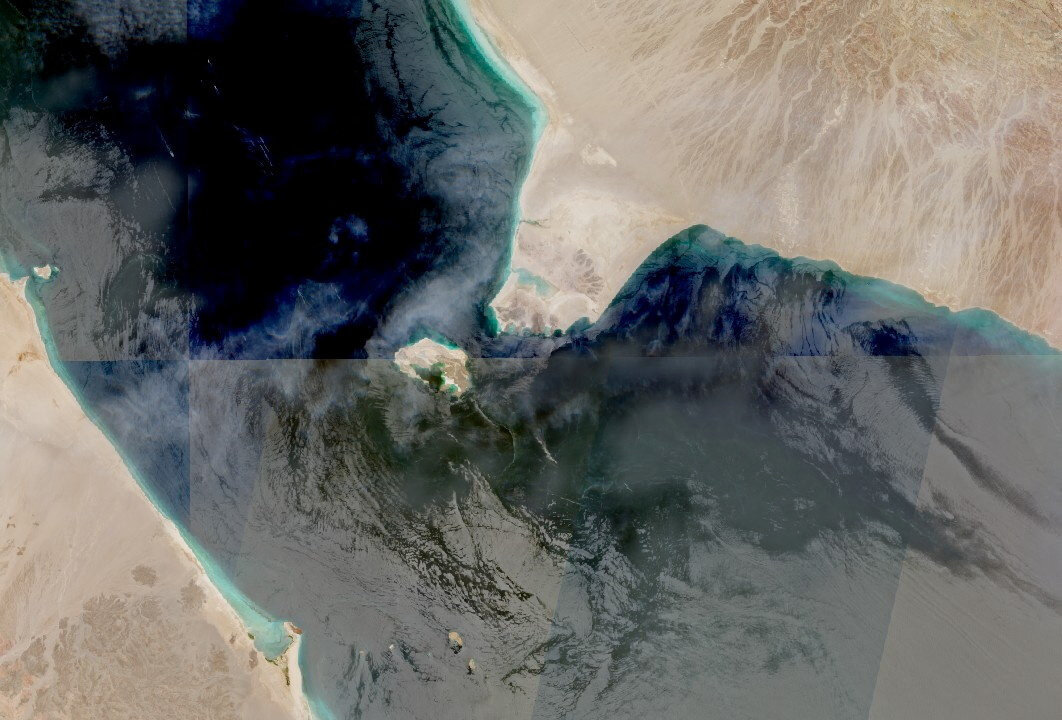
The stark reality is that we are not taking out the massive 'missile cities' scattered across the Iranian landscape. These underground complexes carved deep into solid granite mountains house the ballistic missiles and long-range drones that keep the Strait of Hormuz closed, spike world oil prices and threaten to push the global economy into a severe recession.
Why hasn't the US military destroyed them? Because they can't. American missiles cannot effectively penetrate deep enough into granite mountains to take out these heavily fortified facilities, no matter how much ordnance is dropped on them.
The White House and the Pentagon have chosen to ignore this unyielding physical reality. The United States has fundamentally run out of realistic options to defeat Iran militarily and the President is loath to engage in give-and-take diplomacy with a regime he labeled 'evil' and 'scum.' This total refusal by civilian and military leaders to accept hard facts on the ground is driving dedicated national security professionals and civil servants to panic – and to speak out.
As one official recently revealed in a sobering excerpt published by The Washington Post: 'We do not have enough (missiles) to safely sustain operations, and I don't think the White House is aware of that,' the official said.
One highly placed White House source revealed to me in a recent exchange that officials very high up the food chain believe the current policies are not just ineffective, but creating a new vulnerability few are tracking: weakening America's ability to successfully defend itself in an unexpected conflict against a near-peer competitor, like Russia or China.
One highly placed White House source revealed to me in a recent exchange that officials very high up the food chain believe the current policies are not just ineffective, but creating a new vulnerability
Day after day, American aircraft and warships pound bridges, tunnels and civilian infrastructure across Iran (Pictured: Damaged bridge in Iran's Hormozgan Province on June 17)
In April, it was reported that Vice President JD Vance was concerned that Secretary of War Pete Hegseth was misinforming the President on the actual conduct of the war. One of the specific concerns reported by VP Vance was the alarming reduction in US missile stockpiles.
In response to this reporting, White House Communications Director Steven Cheung told the Daily Mail: 'The entire National Security team always provides the President with timely and accurate information so he can make informed decisions. There is absolutely no concern about the United States' military capabilities and its ability to be lethal and effective under the President's direction.'
Chief Pentagon Spokesman Sean Parnell said: 'America's military is the most powerful in the world and has everything it needs to execute at the time and place of the President's choosing.'
I assess this concern to dangerously understate the depth of the self-imposed vulnerability.
It does not matter what political leaders want to do in time of war; it only matters what America's forces can and cannot do. Fantasy is not a strategic plan. President Trump – and apparently Secretary of War Pete Hegseth – do not appear to recognize any limits to US military power and are reportedly considering returning to full-scale war against Iran, somehow expecting a different outcome from the first 40 days.
If Washington slides back into a major, sustained campaign, we will do so by burning through our already dangerously depleted stockpiles of JASSM (offensive, joint air-to-surface standoff missiles), Tomahawk (offensive, land attack cruise missiles), THAAD (defensive, terminal high altitude area defense interceptors) and PAC-3 (defensive, patriot advanced capability-3 missile Interceptors) weapons.
Every time the US Navy's Arleigh Burke-class destroyer fires a multi-million-dollar salvo of interceptors to shoot down low-cost drones or missiles, every time a strike jet releases a standoff cruise missile against an easily repairable Iranian bridge, America's global deterrence shrinks. These specialized munitions take years, not months, to manufacture and replace.
In April, it was reported that Vice President JD Vance was concerned that Secretary of War Pete Hegseth was misinforming the President on the actual conduct of the war
Every time the US Navy's Arleigh Burke-class destroyer (above) fires a multi-million-dollar salvo of interceptors to shoot down low-cost drones or missiles, America's global deterrence shrinks
Daniel L Davis is a retired Army Lt Col with four combat deployments, senior fellow at Defense Priorities and host of the Daniel Davis Deep Dive show on YouTube
By extinguishing our stockpiles, or simply burning them down to critical red levels, we are plunging the United States into existential danger should we be forced to face a peer competitor.
If the unthinkable happens and we are dragged into a major war against Russia, China, or North Korea, we will urgently require every single offensive and defensive missile in our inventory. And given the sheer scale of a Great Power conflict, even our full baseline inventory might not be enough. Further, our defense industrial base is not able to produce new weapons at scale in anything less than multiple years as well.
Meaning, if we get into an unexpected war that isn't our choice, we may literally run out of offensive and defensive weapons in a matter of weeks and our forces would be near defenseless against a better stocked enemy. Ultimately, it matters little how many advanced fighter jets we have, cutting edge warships, or launch systems if we don't have missiles to fire.
By continuing to drain these precious reserves on a meaningless mission in the Middle East that simply cannot be accomplished, we are effectively disarming ourselves. We are leaving our forces in the Indo-Pacific and Europe exposed, inviting adversaries to test our resolve at the exact moment our magazines are running empty.
The dangers to our nation from continuing this failing campaign against Iran are grave, immediate and worsening with every passing day. We cannot bomb our way out of geographic and physical realities, nor can our defense industrial base magically produce years' worth of advanced air-defense interceptors overnight.
Washington must abandon political posturing and confront the military math. To sacrifice America's primary global strategic deterrence for a pointless, unwinnable excursion in Iran is not just poor leadership – it is to willingly plunge into an unprecedented risk to national security. It is time to halt this unsustainable drain on our nation's firepower before the damage becomes irreversible.
Daniel L Davis is a retired Army Lt Col with four combat deployments, senior fellow at Defense Priorities and host of the Daniel Davis Deep Dive show on YouTube