 By The War Zone | Created at 2026-09-28 16:45:46 | Updated at 2026-09-28 17:25:30
48 minutes ago
By The War Zone | Created at 2026-09-28 16:45:46 | Updated at 2026-09-28 17:25:30
48 minutes ago
An unusual shoulder-fired air defense missile seen in Russian use may be of Chinese or Iranian origin, raising questions about the movement of foreign weapons through the increasingly interconnected military supply networks linking Moscow, Beijing, and Tehran.
The man-portable air defense system (MANPADS) appeared in Russian television footage showing a mobile air defense group operating in the Rostov region, which borders Ukraine. The weapon was shown during an exercise said to have involved one of the elements of Russia’s 51st Air Defense Division. The footage was subsequently highlighted by the X account TheDeadDistrict.
ruSSian's have developed a new “Iva” MANPADS. In the footage, it is in service with one of the mobile fire groups of the 51st Air Defense Division in Rostov Oblast.
Although, no—it is most likely the Iranian Misagh-2 MANPADS.
Imagine, they don't even have enough production… pic.twitter.com/aYrOtSmG6h
The system does not closely resemble any of the Russian-made MANPADS families otherwise used by the country’s armed forces. Russian personnel seen with the weapon reportedly referred to it as “Iva,” although that designation by itself does not establish the weapon’s origin or model. The word Iva is Russian for willow (a type of tree), of which one particular species is named Verba — also the name of the Russian-made 9K333 MANPADS. This weapon looks very different to the example shown, but the connection is unlikely to be a coincidence.
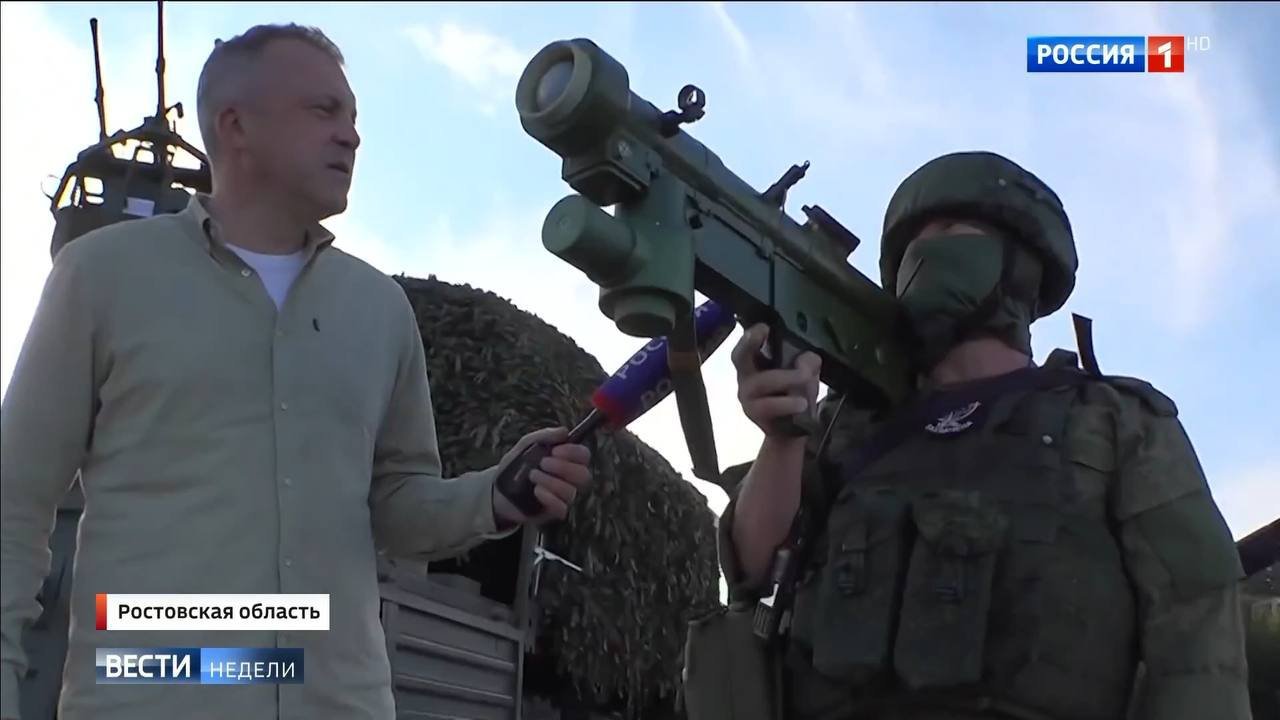 An operator of the mystery MANPADS is interviewed by the Russia-1 TV channel. Russian State Media
 A visual analysis of the newly observed launcher reveals comparisons with both the Iranian Misagh-3 and Chinese QW-series systems, particularly the QW-18/QW-18A and QW-19. In particular, a closer examination of the imagery highlights an additional box-like component toward the front of the launcher. That feature appears more consistent with photographs of Chinese QW-series systems rather than the Misagh.
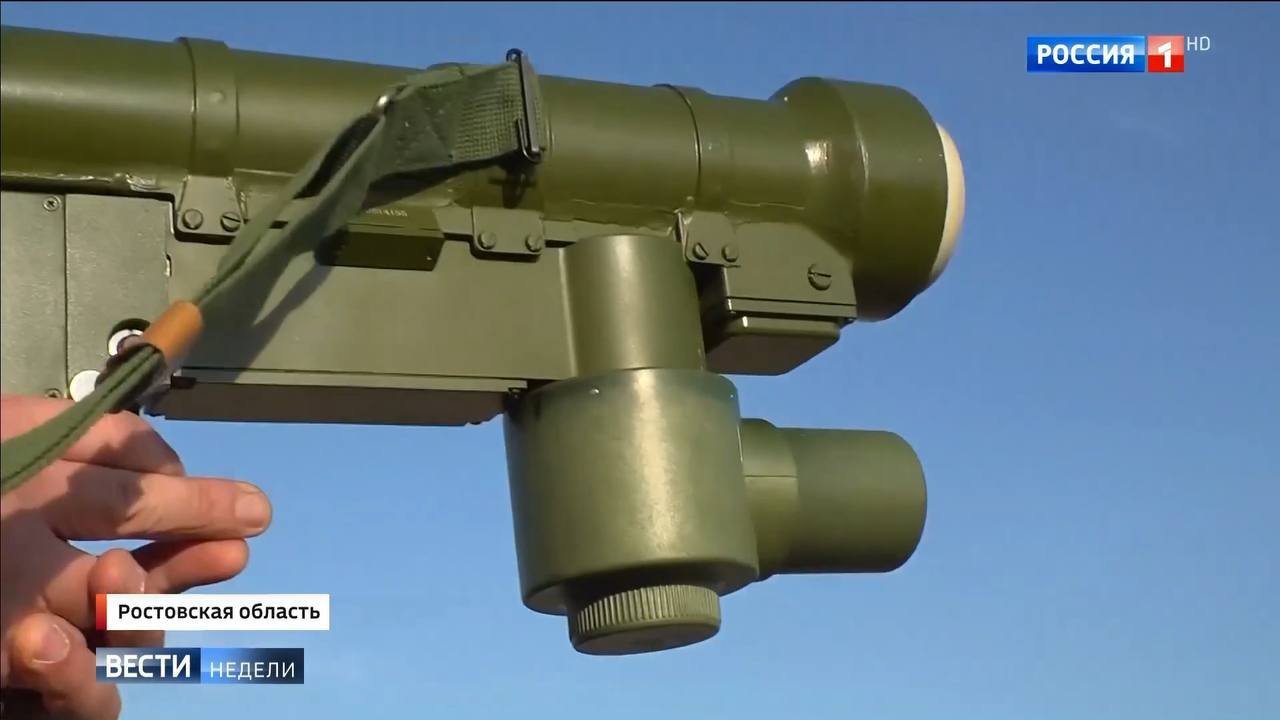 The front part of the MANPADS launcher, with the distinctive box-like component below the tub. Russian State Media
 There is also a scarcity of publicly available imagery of later Iranian variants to completely exclude an Iranian system. At the same time, the Misagh series itself is understood to be derived, or at least heavily influenced by Chinese designs.
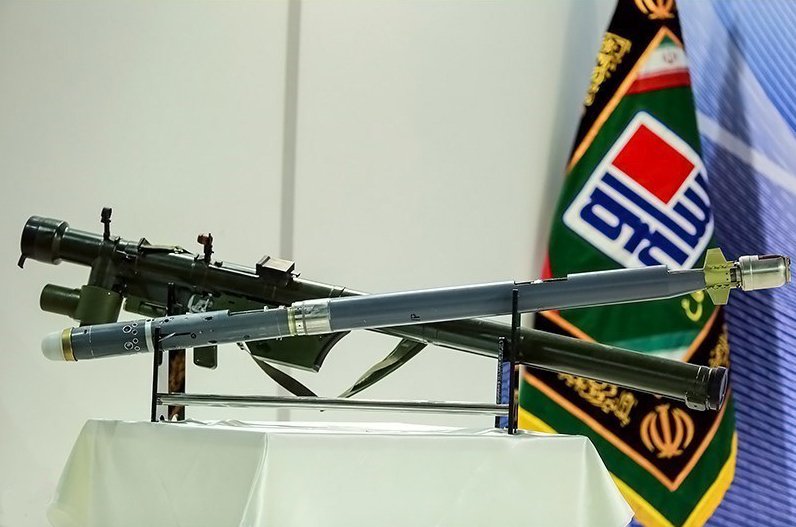 An Iranian Misagh-3 MANPADS with its missile. Tasnim News Agency
 Another possibility is that the weapon is a Russian-produced version or derivative of a Chinese or Iranian design, rather than an imported system.
The possibility of foreign-made or foreign-designed equipment appearing in Russian service has to be viewed against the much broader transformation of Moscow’s military relationships since the full-scale invasion of Ukraine in February 2022.
Russia’s relationship with China has deepened substantially since the invasion, with Beijing becoming a critical source of machinery, electronics, and other components that Russia’s defense industry can no longer obtain as readily from Western suppliers. Moscow and Beijing had already declared a “no limits” partnership shortly before the invasion, and their military relationship has subsequently included exercises and expanding military-technical cooperation. U.S. officials have accused China of supplying Russia with components used in weapons production, including microelectronics. Beijing has rejected accusations that it is providing lethal military assistance to Russia.
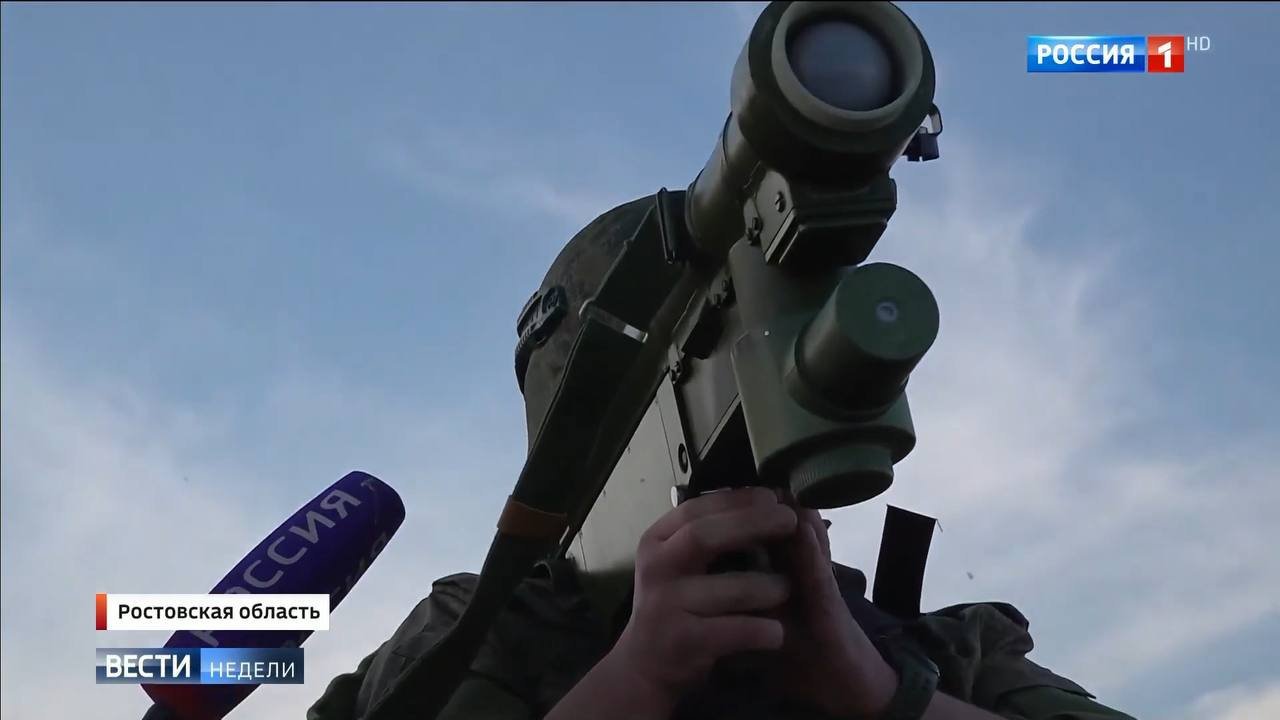 A close-up of the front end of the MANPADS. Russian State Media
 Iran has also become an important military partner. Russia has used Iranian-designed Shahed-series attack drones extensively in Ukraine and has worked with Tehran on local production and adaptation of those systems. Moscow and Tehran formalized their relationship further with a comprehensive strategic partnership treaty in January 2025, which includes provisions for military-technical cooperation and joint exercises.
In return, Russia has supplied Iran with military technology and has cooperated with Tehran on sensitive weapons programs.
The possible Chinese connection takes on additional significance in light of a major reported procurement deal between China and Iran.
In July, Reuters reported that Iran was expected to receive the first shipment of a deal covering 300 to 400 Chinese-made MANPADS, with a reported value of $60 million to $70 million. The weapons identified by sources included the Chinese QW-12 and FN-16 systems.
Chinese missiles the United States fears… an unsleeping eye against drones and low‑flying aircraft
China’s QW‑12 and FN‑16 air‑defense systems intercept low‑altitude targets — including drones — forming a rapid defensive line against close‑range aerial threats. pic.twitter.com/kJZ6mnqmHg
The reported contract was signed with a Hong Kong-based company that sources described as an intermediary between the Iranian side and the Chinese supplier. Reuters said the initial deliveries were planned from Urumqi in western China, with the weapons then transiting through Pakistan before reaching Iran. Pakistan’s military publicly denied any involvement in such transfers, while China’s Foreign Ministry called the report “groundless.”
Reuters also reported that delivery schedules and quantities could still change.
More significantly for the Russian sighting, a European security source told Reuters that authorities were aware of several contracts under discussion involving the potential sale of QW-12, QW-18, and QW-19 MANPADS to Iran. A Middle Eastern security source separately claimed that Iran had been seeking QW-18 systems.
There is currently no evidence tying the launcher seen in Russian hands to the Iranian procurement from China.
At the same time, the possibility of an Iranian connection should not be ruled out, especially since Chinese-designed MANPADS have a documented history of appearing outside conventional state inventories.
Earlier TWZ reporting, drawing on research by the Small Arms Survey monitoring group, examined the illicit proliferation of Chinese-designed MANPADS and identified dozens of cases involving armed groups in multiple countries. That research included QW-series weapons and documented cases in which investigators linked Chinese-designed MANPADS to Iranian supply networks.
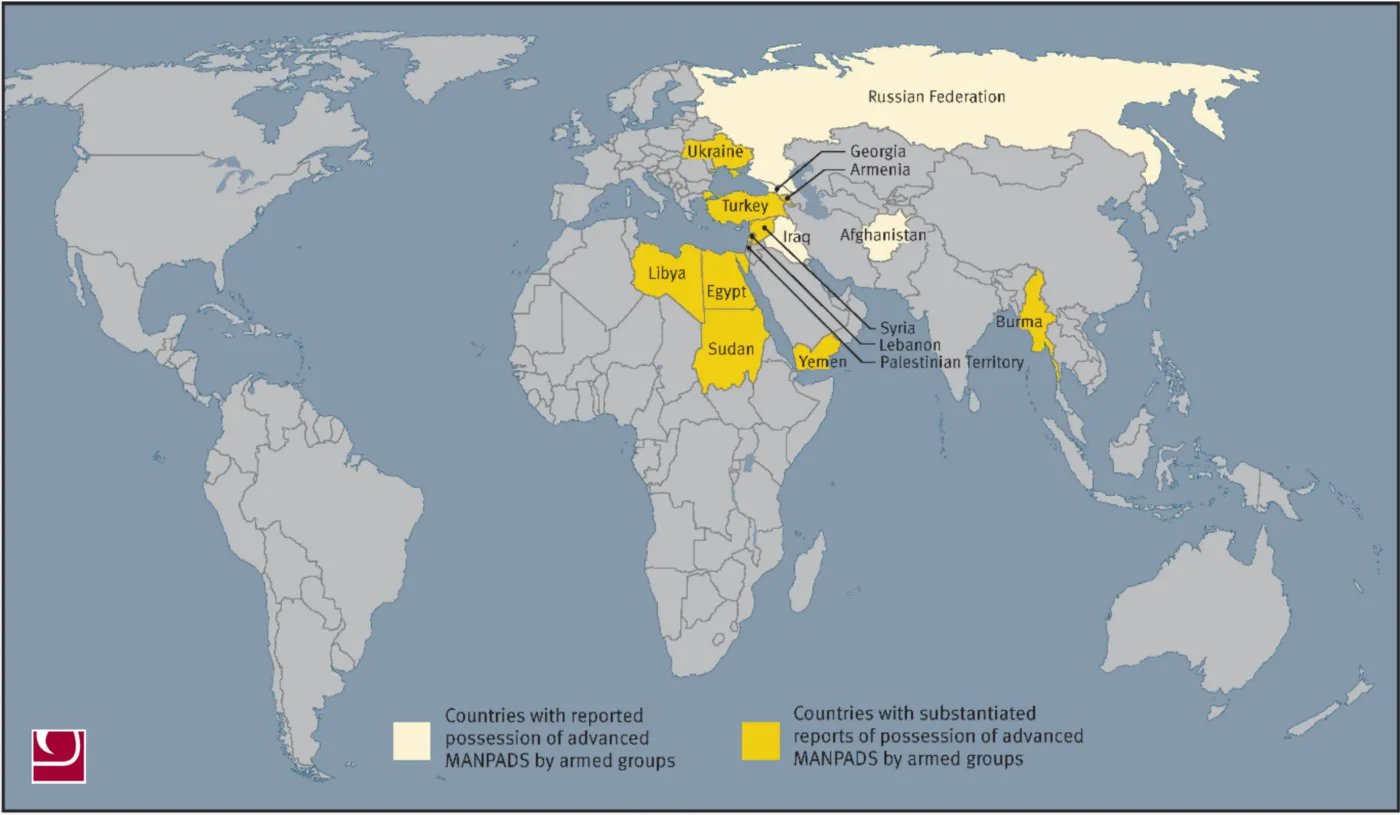 Countries with reports of illicit possession of advanced MANPADS by armed groups, 2011-21. Small Arms Survey
 One particularly notable case involved the Jihan, a vessel intercepted in 2013 carrying weapons that investigators identified as including QW-18-pattern MANPADS. UN investigators, the U.S. government, and Conflict Armament Research assessed Iran as the likely source of those weapons.
It is also worth noting that Chinese MANPADS have already appeared on the Ukrainian side of the war. In late 2025 and 2026, Ukrainian units were photographed with Chinese-made FN-6 and FN-16 systems, including an FN-6 associated with an air defense team reportedly engaging a Russian cruise missile. Exactly how the weapons reached Ukraine remains unclear, with possible third-party transfers or diverted shipments among the possible explanations.
A Chinese FN-6 MANPADS in service with the MFG of the 143rd JTC “Podillia.” It is reported that this MANPADS was used this morning to shoot down a ruSSian Kh-101 CM.
The FN-6 was developed in 2000 and supplied, among others, to Sudan, from where it likely found its way to Ukraine pic.twitter.com/9zA012ue3j
Reported as the downing of an Kh-101 cruise missile this morning using a Chinese FN-6 MANPADS. There is no public information confirming that this system has been supplied to or used by Ukraine, making this a notable development. pic.twitter.com/pUujFB81aH
— NOELREPORTS 🇪🇺 🇺🇦 (@NOELreports) November 19, 2025Incidents like these demonstrate that Chinese MANPADS can move through indirect supply networks, including networks associated with Tehran.
Regardless of how it arrived in Russia, the appearance of a foreign or foreign-derived MANPADS there is notable.
Mobile fire groups have become an increasingly visible component of Russia’s layered air defense effort, particularly as the war in Ukraine has placed enormous emphasis on countering low-altitude drones and other threats, including deep inside Russia.
MANPADS are well suited to this mission because they can be dispersed among small teams, rapidly repositioned, and deployed without the larger radar and vehicle infrastructure associated with conventional surface-to-air missile batteries. In particular, they can be deployed around military installations and other sensitive infrastructure.
A foreign system appearing in a Russian mobile fire group might be an imported weapon, an Iranian-produced derivative, a Chinese system acquired for evaluation, a captured weapon, or even a previously unidentified Russian configuration.
model, or even that it is a brand new Chinese-made variant (its possible that I just hadn't seen it, or seen it from these angles) but it is a notable new addition to Russia's MANPADS inventory.
— Matt Schroeder (@MSchroeder77) September 28, 2026Another possibility is that the MANPADS is North Korean in origin. Russia’s military relationship with Pyongyang has expanded significantly, including the provision of increasingly advanced military equipment and technology. There is no known North Korean MANPADS matching the configuration seen here, however, and the possibility remains speculative. North Korean weapons have also frequently incorporated or closely followed Chinese designs, meaning a Chinese-looking configuration would not necessarily rule out a North Korean origin.
Russia has dramatically expanded defense production since 2022, but its industry remains under heavy wartime demand and sanctions-related constraints. Western restrictions have complicated access to advanced electronics, machine tools and other components, while Russia has increasingly relied on domestic substitutes and foreign suppliers.
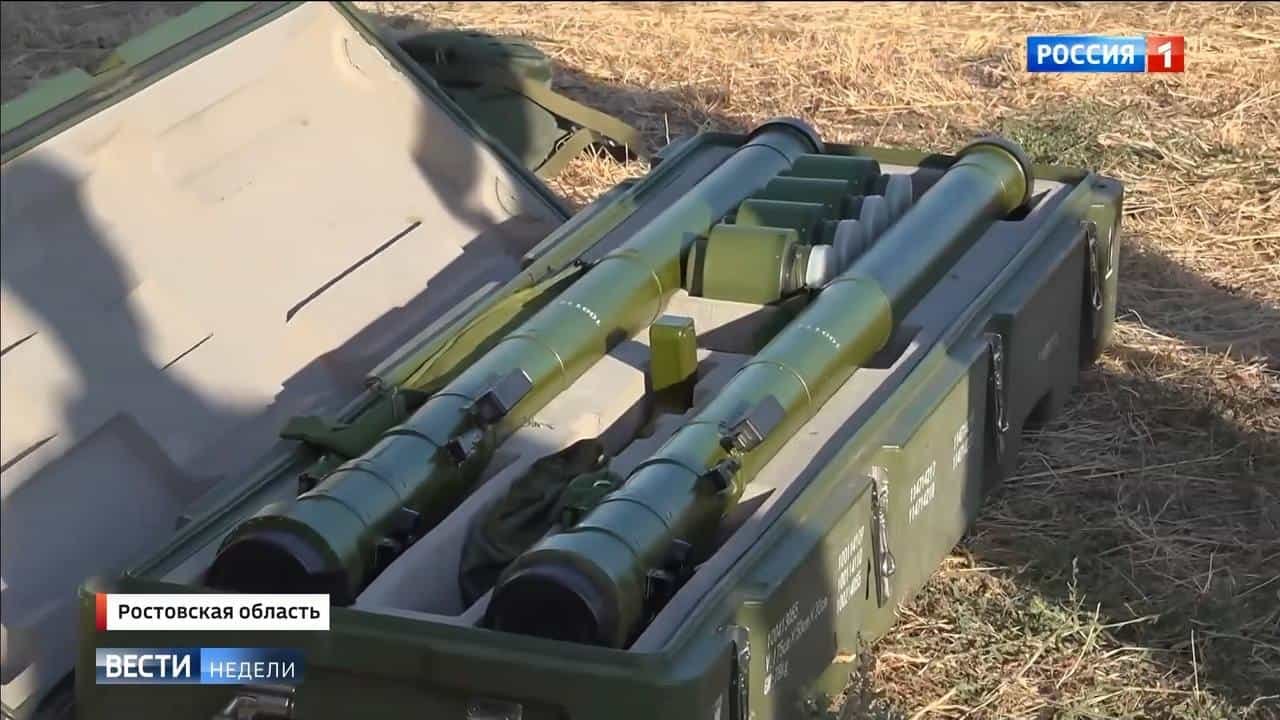 The mystery MANPADS launchers disassembled and in a container for transport. Russian State Media
 At the same time, Russia must replenish weapons consumed in Ukraine, meaning foreign supplies could supplement domestic production, fill specific gaps, or allow scarce industrial capacity to be directed elsewhere.
For Russia, even a limited number of additional shoulder-fired systems could therefore have practical value as Ukrainian long-range strike capabilities continue to expand.
For now, the exact model and provenance of the MANPADS in question remain unconfirmed, but the apparent Chinese or Iranian design characteristics are highly noteworthy. Further appearances of the system could provide the clues needed to determine what it is, where it came from, and whether this represents an isolated example or a more significant acquisition effort.
Contact the author: [email protected]