By The Straits Times | Created at 2026-09-02 04:26:46 | Updated at 2026-09-02 04:58:19
43 minutes ago
By The Straits Times | Created at 2026-09-02 04:26:46 | Updated at 2026-09-02 04:58:19
43 minutes ago
Nepal has urged international travellers not to abandon the Himalayas, declaring the country open for tourism as it continues to assess the human and economic toll from catastrophic floods that killed hundreds and left thousands missing.
“Our mountain trails, trekking routes are still waiting for you,” Tourism Minister Khadak Raj Paudel said in a video message on Facebook, using the hashtag #NepalCalling. “Your coming to Nepal this time does not mean only a holiday. It’s a big support to the country fighting this catastrophic tragedy of flash flood.”
The plea comes as harrowing images of destroyed villages, roads and bridges – and reports of deaths following last week’s floods – threaten to deter tourists even from parts of Nepal largely untouched by the disaster.
One of Asia’s poorest economies, Nepal faces a daunting reconstruction effort as higher fuel costs from the Iran war, weaker tourism and slowing growth weigh on the economy. The disaster has compounded the challenges facing the nation’s 36-year-old Prime Minister Balendra Shah, who rose to power this year on a wave of Gen Z disaffection.
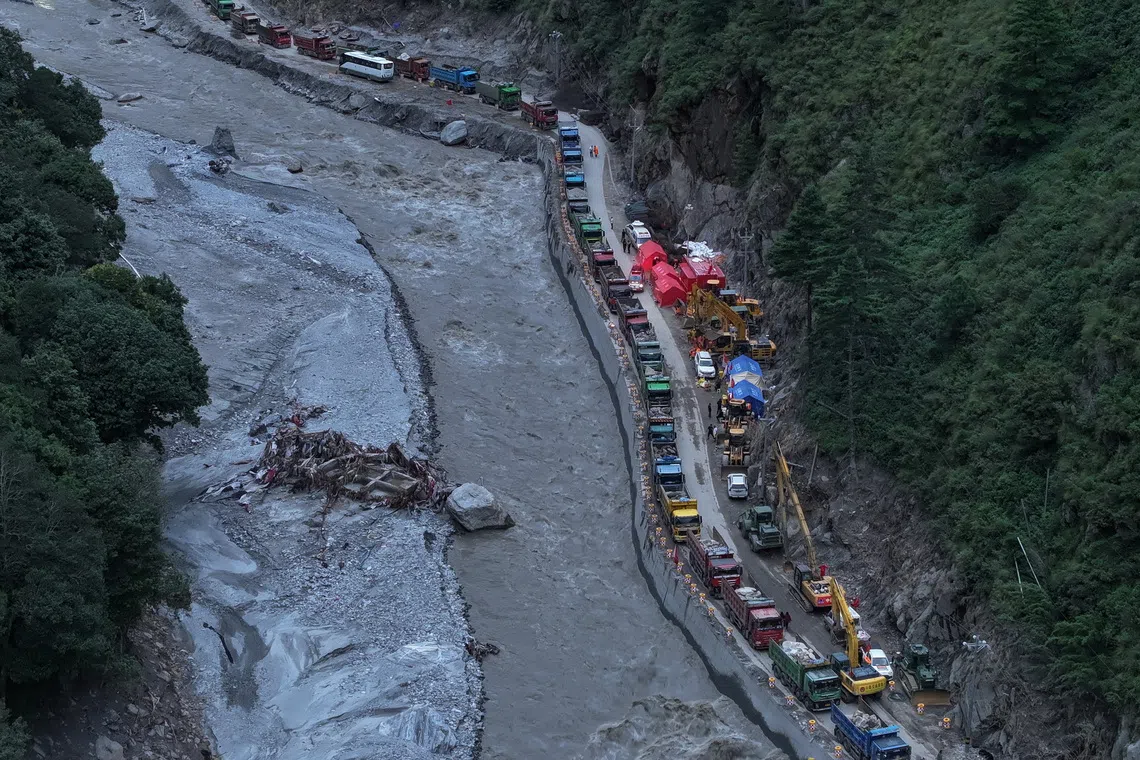
The disaster was triggered last week by a glacial collapse that sent ice, mud, rocks and water surging through a valley in Nepal, wiping out entire settlements in its path. Videos showed people running for their lives as walls of water and debris swallowed buildings, tore down bridges and power lines, and washed away trees, boulders and vehicles.
So far, about 590 foreigners from 39 countries remain missing, according to figures from Nepal’s foreign ministry.
The total death toll in Nepal has climbed to at least 1,010 as of the afternoon of Sept 1, with rescue operations continuing. Specialist teams from Nepal, India, China and South Korea are helping at affected hydropower projects where hundreds of workers remain trapped inside tunnels.
Nepal’s Home Minister Sudan Gurung said rescuers had reached the crown, or upper section, of one tunnel and were trying to dig down from above the powerhouse to gain access, adding that authorities had “not lost hope” of finding survivors.
The disaster has damaged infrastructure, including at least 12 hydropower projects in Nepal’s Nuwakot and Rasuwa districts, according to the Independent Power Producers’ Association Nepal.
“The scale and extent of the damage caused by this disaster are becoming increasingly clear as access has improved and more details are now available,” Nepal’s Ministry of Foreign Affairs said in a separate statement. “Given the magnitude of the destruction, Nepal anticipates requiring substantial international support during the rehabilitation and reconstruction phase.”
“This has been an exceptionally painful and difficult time for Nepal.”
At least 11,993 people have been rescued so far in Nepal, with emergency crews relying on helicopters and other aircraft to reach communities cut off after floods and landslides destroyed roads and bridges. BLOOMBERG