 By Miltary.com | Created at 2026-09-02 07:10:50 | Updated at 2026-09-02 08:07:47
1 hour ago
By Miltary.com | Created at 2026-09-02 07:10:50 | Updated at 2026-09-02 08:07:47
1 hour ago
Published Sep 2, 2026, 3:00 AM EDT
From children who lost parents to Marines at Kabul, the film traces the lives shaped by the attacks and the wars that followed.

Published Sep 2, 2026, 3:00 AM EDT
After the attacks of Sept. 11, 2001, “Never forget” became a defining mantra for a nation in mourning. It was a pledge to remember the nearly 3,000 people killed, the first responders who ran toward danger and the pain of a day that changed the country.
But 25 years later, the number of Americans who carry a firsthand memory of that day is steadily shrinking.
That fading living memory is at the heart of filmmaker Brian Knappenberger’s new documentary, which looks at a generation that inherited the wars set in motion by Sept. 11 without having much, if any, memory of the attacks themselves.
His new Netflix documentary, Turning Point: Generation 9/11, premieres Sept. 2 and traces that legacy from the attacks through the final days of the U.S. war in Afghanistan.
Among the voices at the center of the film are Marines who were children when the war began and, two decades later, were sent to Kabul to help bring it to an end. In an exclusive interview with Military.com, Knappenberger said:
That it falls to them to try to manage this hectic and chaotic situation ... it just says so much about what this was all about...
For Knappenberger, Sept. 11 is crossing a line from personal recollection into history.
He directed the first Turning Point series, about 9/11 and the War on Terror, for the attacks' 20th anniversary. What surprised him then was how many younger people discussing it online had been born after the attacks or were too young to remember them.
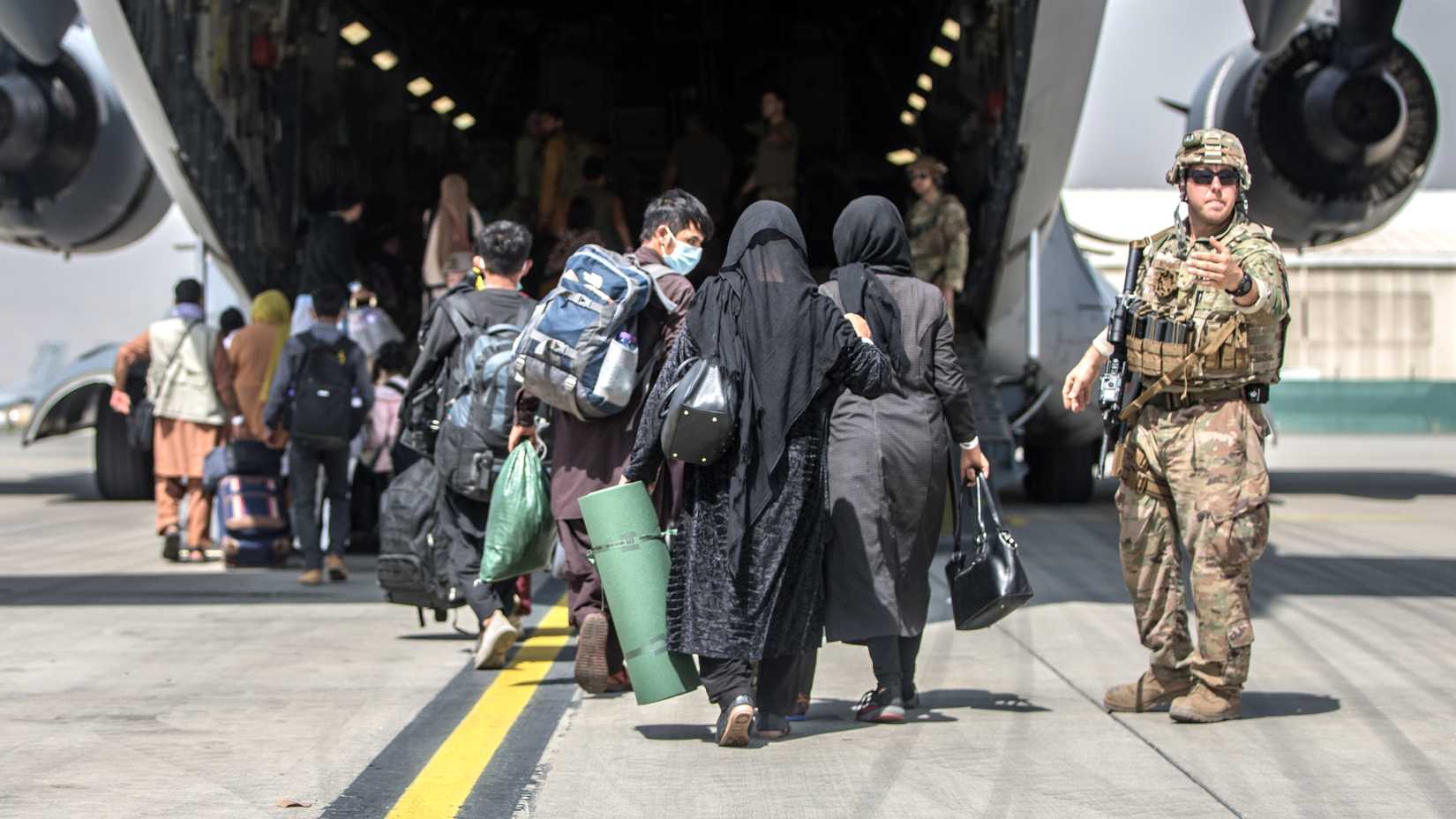 Families board a U.S. Air Force C-17 Globemaster III during evacuation operations at Hamid Karzai International Airport in Kabul, Afghanistan, Aug. 23, 2021. (U.S. Marine Corps photo by Sgt. Samuel Ruiz)
“It's moving from a living memory into history,” he said. Knappenberger has his own connection to the war that followed. On the first anniversary of the 2002 attacks, he was in Kandahar, Afghanistan, working on one of his early films for PBS' Frontline.
He remembers an atmosphere of optimism after the Taliban had been driven from power. “Nobody thought we would be there for another 20 years,” he said.
Generation 9/11 eventually arrives at Kabul in August 2021, where Marines were securing Hamid Karzai International Airport and processing Afghans desperate to leave as the Taliban retook the country.
The U.S. and its partners evacuated more than 124,000 people. On Aug. 26, an ISIS-K suicide bomber attacked Abbey Gate, killing 13 U.S. service members: 11 Marines, one soldier and one sailor.
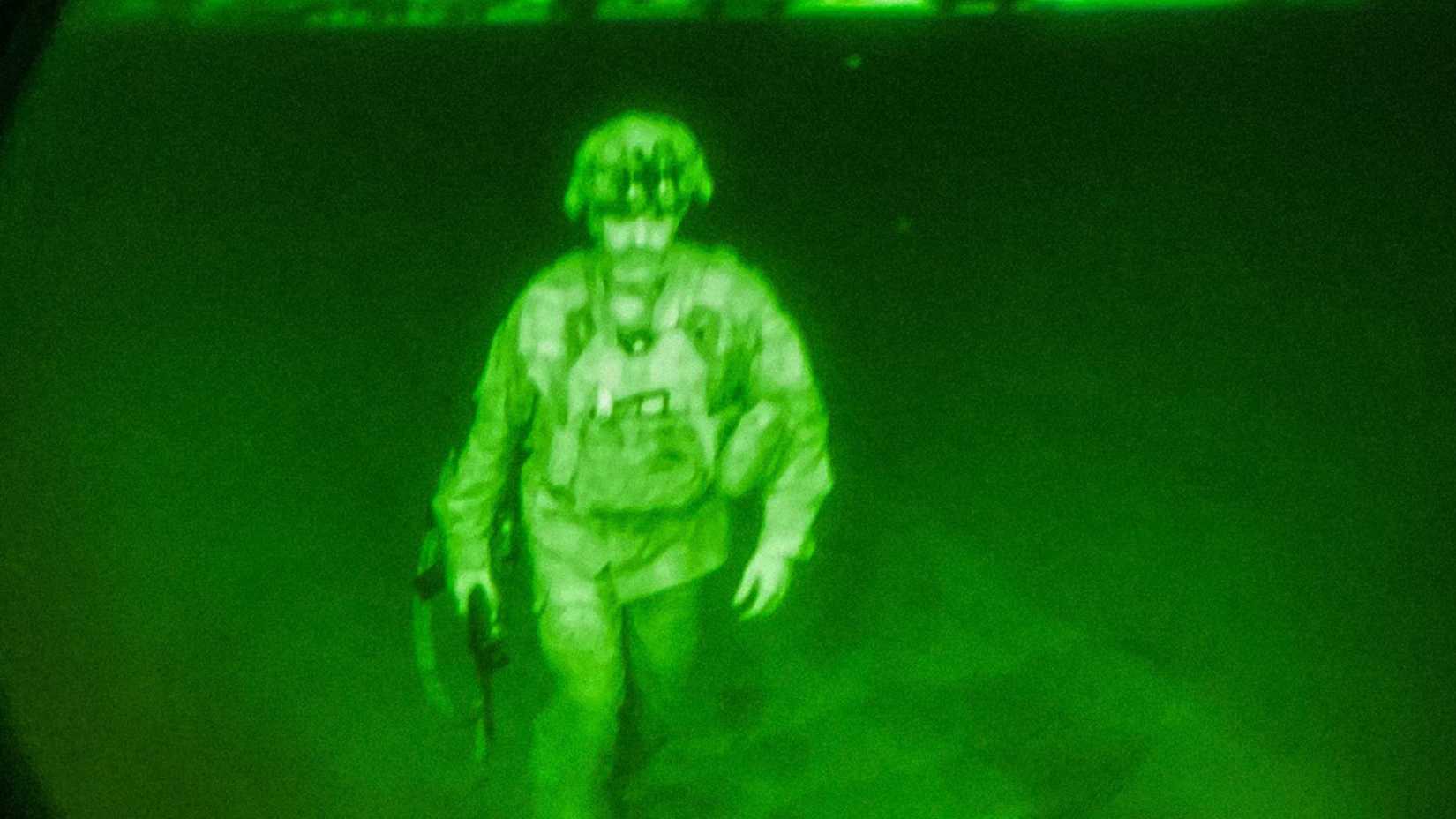 Major General Chris Donahue, commander of the U.S. Army 82nd Airborne Division, XVIII Airborne Corps, boards a C-17 cargo plane at the Hamid Karzai International Airport in Kabul, Afghanistan. Maj. Gen. Donahue is the final American service member to depart Afghanistan; his departure closes the U.S. mission to evacuate American citizens, Afghan Special Immigrant Visa applicants, and vulnerable Afghans. (U.S. Army photo by Master Sgt. Alex Burnett)
The documentary spends time with Marines who describe the surreal experience of being told to coordinate with Taliban fighters during the evacuation. Some watched the order hit older troops who had spent previous deployments fighting the same group.
“Those Marines probably had lost close friends to the Taliban,” Knappenberger said.
The experience leaves some of the young veterans wrestling with a question that hangs over the final section of the film: What had the 20-year war accomplished?
Knappenberger sees uncomfortable echoes of Vietnam in the withdrawal.
One of the film's subjects, An Nguyen, lost his father, Khang Nguyen, at the Pentagon on Sept. 11. Khang's family had been split apart during the fall of Saigon in 1975 and reunited in the United States years later. He eventually became a systems administrator working at the U.S. Navy Command Center in the Pentagon.
The documentary juxtaposes those images of South Vietnamese trying to escape in 1975 with scenes from Afghanistan nearly half a century later.
 Construction workers and first responders head toward Ground Zero, New York City, N.Y., Sept. 14, 2001. On Sept. 11, 2001, four coordinated terrorist attacks were carried out in the United States using U.S. passenger airliners with two of the attacks on One and Two World Trade Centers. (U.S. Air National Guard photo by Tech. Sgt. Mark C. Olsen/Released)
“You can see similar mistakes being made,” Knappenberger said. “And you can see us not learning lessons about how we think about war and military engagement and occupation.”
The film also examines decisions made immediately after Sept. 11 that continue to shape U.S. national security policy. Knappenberger points in particular to the 2001 Authorization for Use of Military Force, which Congress passed a week after the attacks and which remains a legal basis for some U.S. counterterrorism operations.
Knappenberger argues that the law helped shift too much authority over the use of military force toward the presidency. “I don't know how we pull that power back from the executive branch,” he said.
Still, Generation 9/11 does not leave its young subjects buried beneath the history they inherited. Its closing stretch follows veterans trying to build lives after Afghanistan, including Marines carrying the physical and psychological consequences of Kabul.
Knappenberger rejects the idea that younger Americans are somehow incapable of understanding what Sept. 11 meant simply because they did not experience it.
“I think they get it,” he said. “I think they understand it. I think they think deeply about these things.”

Netflix’s Turning Point: Generation 9/11 examines the Sept. 11 terrorist attacks and the generation that grew up in the world they helped create, including Marines who served during the final U.S. withdrawal from Afghanistan. (Courtesy of Netflix)
Turning Point: Generation 9/11 premieres Sept. 2 on Netflix.