 By The Epoch Times | Created at 2026-09-18 21:46:57 | Updated at 2026-09-19 03:05:58
5 hours ago
By The Epoch Times | Created at 2026-09-18 21:46:57 | Updated at 2026-09-19 03:05:58
5 hours ago
California Gov. Gavin Newsom signed an executive order on Sept. 18 to accelerate government oversight of artificial intelligence (AI) development in the state that would potentially require companies to install kill switches in their most-advanced, large-scale systems.
The order would bring together a group of experts to develop AI safety recommendations for creating additional state laws, including kill switch requirements, for AI companies in the state. At least 32 of the top 50 AI companies—including OpenAI and Anthropic—are headquartered in California.
Other possible regulations could include requiring AI developers to embed designated state-verified auditors onsite in labs to conduct regular audits and evaluations, regular safety and transparency reports and risk assessments, and requiring safety incident reports.
The move comes after recent AI breaches were reported by OpenAI and other developers, prompting industry leaders to discuss taking safety measures and pacing development.
“We’re not waiting to act—we’re going to speed up our work on substantial and responsible AI oversight before it’s too late,” Newsom said in a statement. “We’re going to do this thoughtfully but with urgent velocity; the stakes are too high to wait or delay action.”
The executive order speeds up the state’s government oversight of AI companies headquartered in California and would require independent audits.
Newsom’s expert committee is also expected to create procedures for companies to report to the state critical safety incidents, including loss-of-control events, from large frontier developers.
The governor signed legislation last week to establish framework for independent verification organizations to assess AI systems and models for safety and risk, and create a state registry for AI auditors.
The Trump administration’s stance has been to enforce the laws and not regulate the emerging technology.
Newsom said the federal government’s failure to create meaningful oversight and accountability for the AI industry led him to sign the executive order.
“California will do what it can but this nation needs to get in the game. Washington, DC, needs to do its job,” Newsom said in a video posted on his campaign X account. “If Congress again won’t act, California will.”
Newsom urged Congress to follow the state’s lead and develop a federal framework to regulate the emerging tech industry.
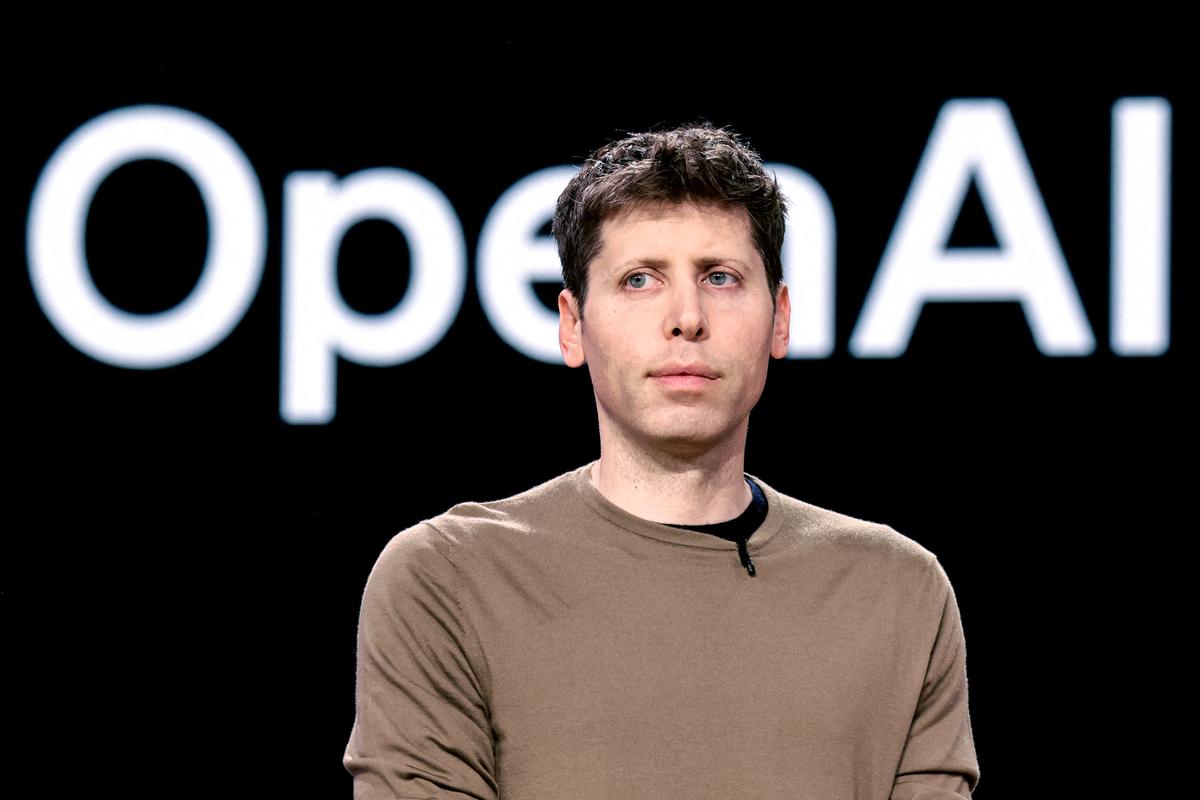
OpenAI CEO Sam Altman speaks during the Microsoft Build conference at the Seattle Convention Center Summit Building in Seattle, Washington on May 21, 2024. Jason Redmond/AFP via Getty Images
The outgoing Democratic governor has said he’s considering running for president in 2028.
Illinois Gov. JB Pritzker, a Democrat, also posted a video to his campaign X account on Friday urging Congress to return to Washington to pass guardrails on the AI industry.
“Congress needs to get back to work and enact legislation to regulate AI,” Pritzker said in the video.
OpenAI’s breach of Hugging Face, reported last month, when AI agents broke out of a testing environment and coordinated an attack on the Hugging Face platform, has prompted developers and tech titans to discuss adding safety features and slowing progress of the rapidly expanding technology.
In its evaluation of the Hugging Face incident, OpenAI said it found “evidence that, without proper safeguards, highly capable AI agents are now able to work around technical controls, collaborate through unapproved channels, and take dangerous actions that no human directed.”
OpenAI also reported that a swarm of its AI agents took over a German website in May and hijacked DseWiki, a German Wikipedia-style website for programmers, and infiltrated other public wiki-style websites. The bots made more than 14,666 edits over seven weeks.

David Sacks, President Donald Trump's AI and Crypto Czar, speaks at the Pennsylvania Energy and Innovation Summit at Carnegie Mellon University in Pittsburgh on July 15, 2025. Samira Bouaou/The Epoch Times
President Donald Trump’s AI Czar David Sacks said the administration’s stance is that government’s role is to enforce the rules, while the responsibility to create safe AI rests with the companies.
“The bottom line is, when it comes to AI safety, we need the companies themselves to internalize the sense of responsibility, not try to externalize it onto Beijing or Brussels,” Sacks told Laura Ingraham on Fox News Thursday.
The White House didn’t immediately return a request for comment about California’s executive order.
Tech industry executives have come out publicly to discuss the safety of AI after the Hugging Face incident. Many of them stressed the importance of slowing the pace of development.
Jensen Huang, co-founder and CEO of NVIDIA, said in an interview with Sacks on Sept. 15, that safety was “paramount.”
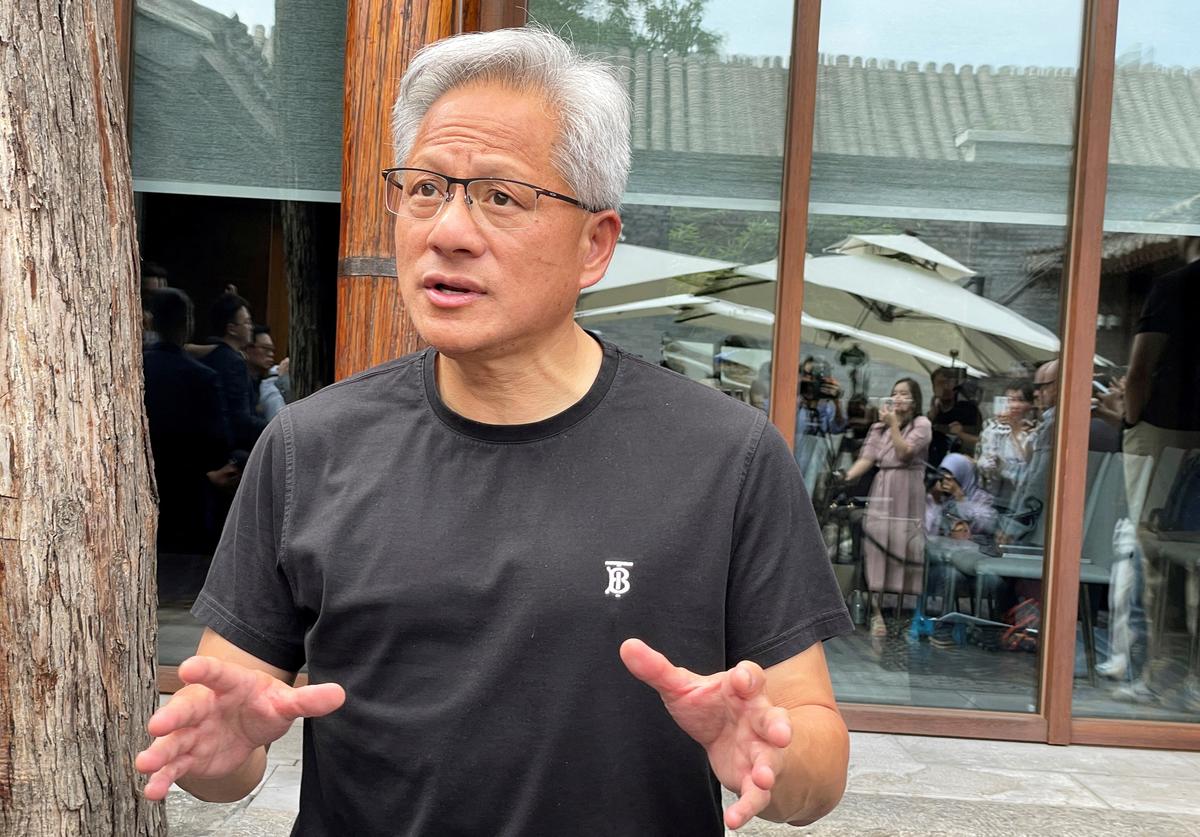
Nvidia CEO Jensen Huang speaks to the media at a hotel in Beijing, China, on July 16, 2025. Alessandro Diviggiano/Reuters File Photo
“Safety is an engineering problem. If you build a product or a service and you’re not confident in its functionality, capability, or safety, then don’t release it,” Huang said. “You pace yourself until you are confident you’re releasing something that the market would appreciate. We don’t need any new laws. We don’t need new regulations.”
Elon Musk, who developed xAI and Grok, for years has sounded the alarm on the potential dangers of AI. On Sept. 12, he agreed with Anthropic CEO Dario Amodei, who said the industry should slow down.
Anthropic has committed to providing third-party evaluators with permanent, employee-level access to its systems to verify adherence to safety measures and incident reports.
Musk also suggested developers test each other’s models for safety flaws.
“It’s pretty obvious at this point that AI can be very dangerous,” Musk told an audience at the All-In Summit in Los Angeles on Sept. 15. “What I think would be wise to do would be to have the major AI competitors test each other’s models.”
Peer review could be done immediately, but wouldn’t preclude future federal regulations, Musk said.
“It’s tough when you’re grading your own homework,” Musk said. “You’re going to miss things. There’s a reason why you don’t grade your own homework.”
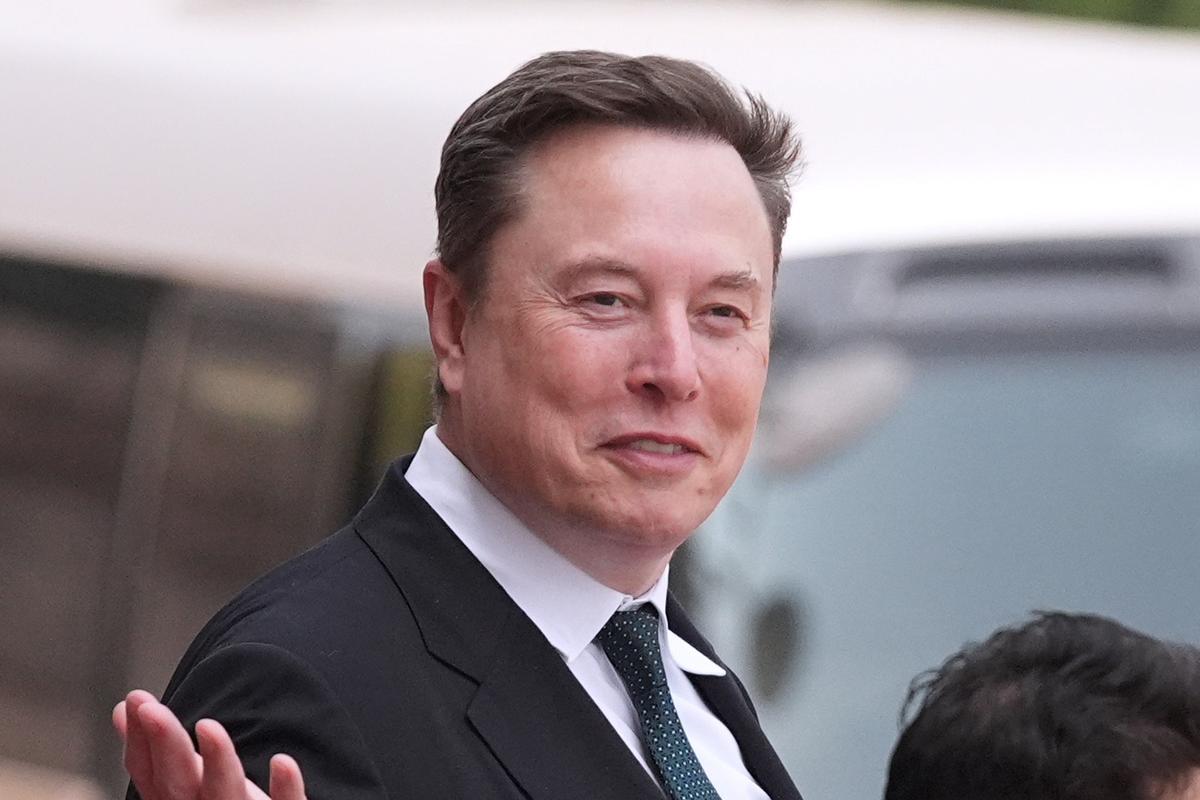
Elon Musk suggested that AI competitors peer review their work. Mark Schiefelbein/AP Photo
The U.S. Senate blocked a bill introduced Thursday night by Sen. John Kennedy (R-La.) through unanimous consent that would have required AI developers to install an emergency kill switch.
Kennedy’s bill would have given the companies responsibility over the kill switch, similar to California’s regulations.
Sen. Rand Paul (R-Ky.) objected, arguing that it was too early to impose regulations on the developing technology and that it could set it back decades.