By The Straits Times | Created at 2026-06-12 21:13:29 | Updated at 2026-06-13 17:33:48
20 hours ago
By The Straits Times | Created at 2026-06-12 21:13:29 | Updated at 2026-06-13 17:33:48
20 hours ago
MANGALURU/BENGALURU – Ten years ago, Manoj fled a life of agrarian labour in his village to become a mechanic and fuel pump attendant in Mangaluru, Karnataka, but city life threw him a curveball.
Fried food from roadside stalls and the lack of time or space to exercise – “a poor bachelor’s city lifestyle”, as he called it – added up. The 33-year-old grew to an uncomfortable 115kg.
When he went to a doctor in mid-May for his painfully inflamed ankles, he was told he was morbidly obese and could die of heart disease.
But a newly available drug offered hope that he could lose weight. Manoj’s doctor put him on Semalix, a generic semaglutide made by Torrent Pharmaceuticals, an Indian company.
Priced at 3,360 rupees (S$46) for four injectable shots, it even fit within Manoj’s monthly income of 35,000 rupees.
“At 10 per cent of my income, it is not cheap, but affordable. It will make me eat less, so instead of spending money on biryani and kebabs, I will spend it on my health,” Manoj, who wanted to give only his first name, told The Straits Times.
In March, the patent for semaglutide – the glucagon-like peptide-1 (GLP-1) drug sold worldwide as Ozempic or Wegovy for the treatment of diabetes and obesity – expired in India.
It became a game changer for millions like Manoj, who can now turn to much cheaper generic versions for an often intractable problem.
More than 180 million Indians are obese or overweight, and the country ranks second globally in Type 2 diabetes after China. Nearly one in three Indian women and more than one in four men over the age of 20 are now overweight or obese, considerably worse than in 2021, according to the latest national health survey, conducted at an interval of three to four years.
The survey attributed rising obesity in India to the consumption of calorie-rich, nutrient-poor foods, worsened by “sedentary routines, faulty sleep patterns, and elevated stress levels”.
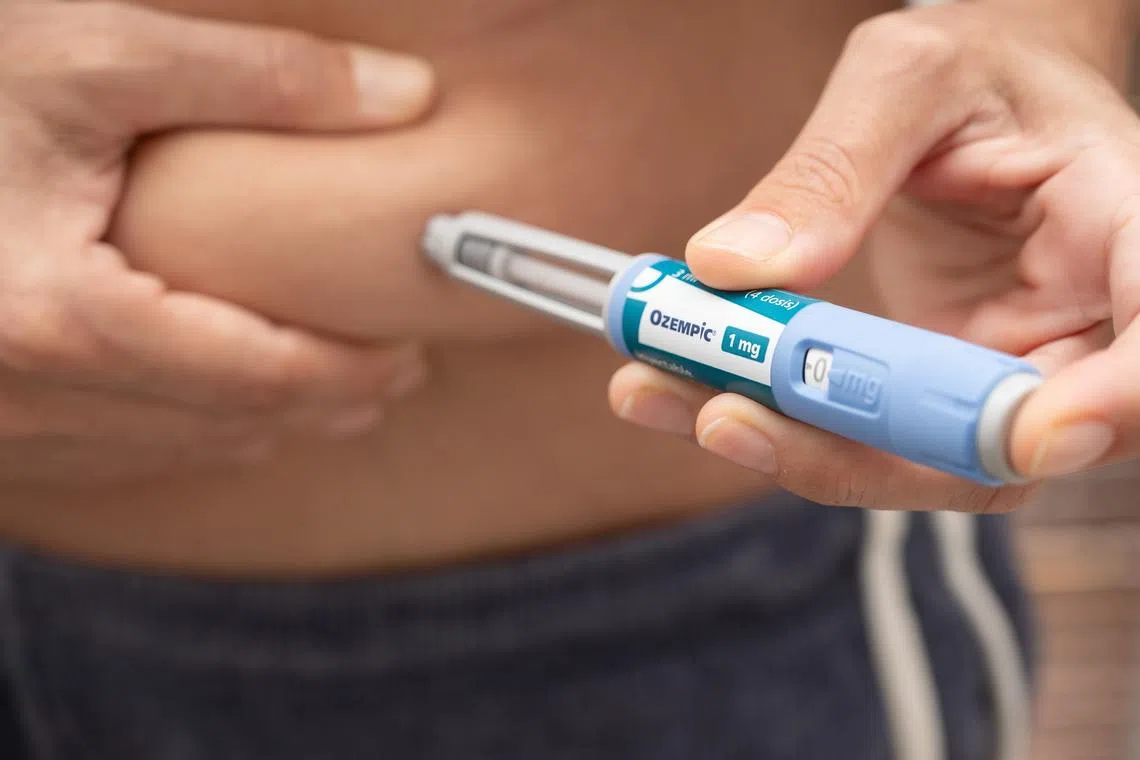
In March, the patent for semaglutide – the GLP-1 drug sold worldwide as Ozempic or Wegovy for the treatment of diabetes and obesity – expired in India.
PHOTO: ADOBE STOCK
This puts India on the same weight-gain trajectory as plenty of advanced economies, and, as in those countries, many people with deeper pockets have since 2025 been turning to GLP-1 medicines like semaglutide and tirzepatide to help them lose weight.
Known globally by their brand names Ozempic, Wegovy (both manufactured by Danish company Novo Nordisk), and Mounjaro (from US company Eli Lilly), these drugs work by mimicking the GLP-1 hormone in the human body to suppress appetite, regulate blood sugar, and burn visceral fat.
Even before the patent expiry, they were a tenth of the price in India that they were in the US, Europe, and Singapore, and they cost even less now. As soon as the patent for Ozempic and other semaglutide-based weight-loss and diabetes drugs expired in India on March 20, 2026, Indian drugmakers launched generic versions.
Today, at least 35 generic semaglutides are available at under 3,000 rupees for a month’s dosage (four shots). This is almost 20 times less than what people in the US or Singapore pay for Ozempic and 28 times less than Mounjaro’s price abroad.
The brand-name drugs have also slashed their prices in India to be competitive. Novo Nordisk has reduced Ozempic’s price in India to between 5,560 rupees and 10,000 rupees a month based on the dosage.
India is now one of the first countries where a working-class man like Manoj can access a weight-loss drug.
India’s 1.4 billion-strong, economically, biologically, and socially diverse population is often a major market for many products, including weight-loss drugs. Foreign and Indian drugmakers are innovating rapidly to capitalise on it.
In India, abdominal obesity, in which fat accumulates around the midriff, is the most common form of obesity. It creates ‘thin-fat’ people – those who are otherwise slim but have excess fat stored around the waist and vital organs.
Abdominal obesity is associated with a higher risk of metabolic diseases such as diabetes, cardiovascular disease, and a host of chronic conditions, even at lower weights.
Medical professionals and authorities are worried that untreated obesity will spike the rates of such diseases among Indians.
Belly fat is more prevalent in Indians over 30, urban residents, and the higher income quintiles, though it is increasingly afflicting middle-class Indians as well now.
Semaglutides and tirzepatides may be the “magic drugs” that can effectively treat thin-fat obesity, doctors and health experts say.
“GLP-1 drugs offer a single mechanism to directly counter obesity, keep diabetes under control, drop blood pressure by 10 per cent to 11 per cent, shrink visceral fat, liver fat, resolve sleep apnoea, and reduce chronic joint pain,” said Basavaprabhu Achappa, doctor of internal medicine at KMC Hospital in Mangaluru.
Chhavi Mehra, a Bengaluru-based diabetologist for over 20 years and founder of Sugarfit, a diabetes and lifestyle disorders clinic, has helped around 5,000 patients lose weight with these drugs in the past year alone.
“Semaglutide works on metabolism like nothing ever has before. It is especially suitable for India where exercise is not a natural habit even if eating healthy might be,” she said.
Sales of semaglutide-based drugs reached around US$9.2 million (S$11.9 million) in April, up from US$5 million in February. Morgan Stanley projects the global market for obesity drugs could reach US$150 billion in 2035.
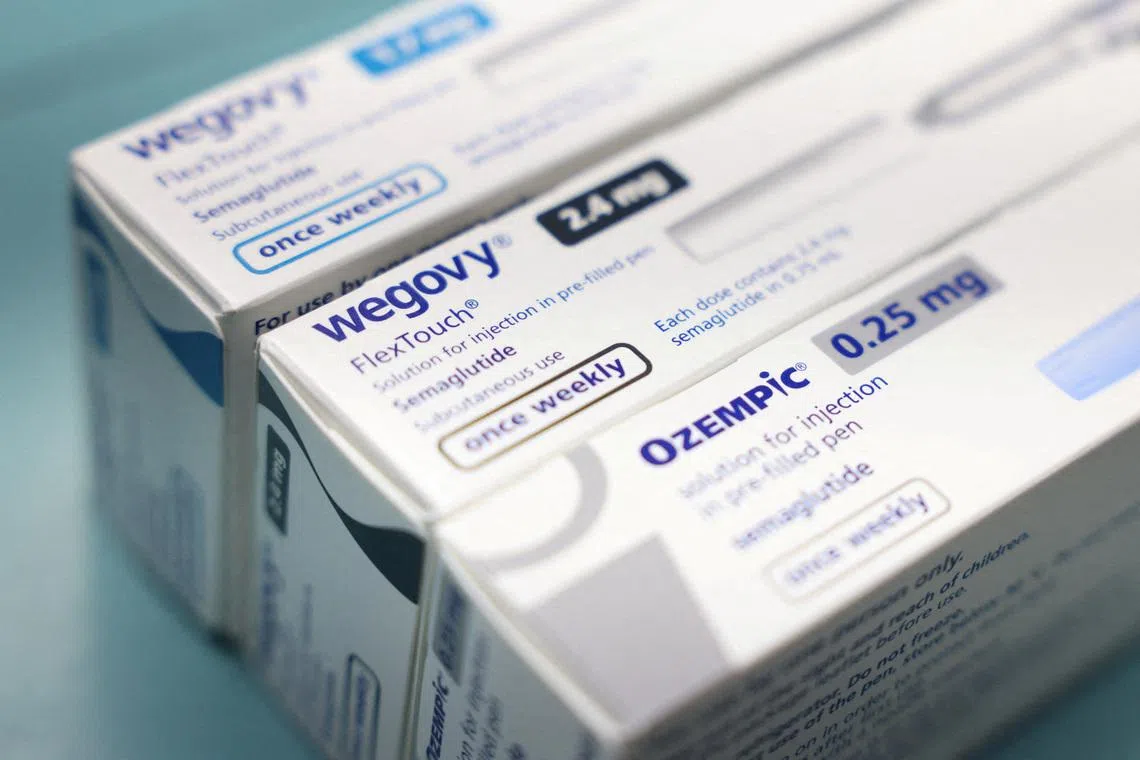
Novo Nordisk has reduced Ozempic’s price in India to as low as around 10,000 rupees (S$135) a month.
PHOTO: REUTERS
To stand out, companies are also innovating new ways of delivery.
Obeda, by Indian pharmaceutical company Dr Reddy’s, is available in 2mg and 4mg pre-filled disposable injection pens, and since May, as daily oral tablets. Sun Pharma’s Noveltreat has a pre-filled pen with a concealed needle to reduce injection anxiety. Its Sematrinity comes in a multi-dose pen format that allows flexible dosing.
The frenetic scaling up in India, with drugs getting cheaper and easier to consume, could also help the over 40 per cent of people in Singapore and 30 per cent of people in China who have abdominal obesity.
Several generic manufacturers are now working on getting approvals for export to countries where patent protections do not apply, with Dr Reddy’s already selling injectable Obeda in Canada.
“Canada remains a priority market for us, driven by strong demand and a supportive healthcare environment,” said Dr Reddy’s chief executive officer Erez Israeli. “Also, we aim to introduce this therapy across several global markets to extend its reach and impact.”
China, Brazil, and South Africa are on the export list for many firms, but Singapore might have to wait longer as the patent there for semaglutide is protected until 2031.
The concern with generic drugs is sometimes one of quality, with unevenness in potency and occasionally adverse events in common drugs such as cough syrups and analgesics.
Pharma industry analysts do not, however, expect such quality issues in generic semaglutides, where the manufacturing process is inherently costlier and more complex.
“The capital expenditure required for peptide synthesis infrastructure is enormous (isolating molecules, freeze drying, cold logistics et cetera). So only the large firms are involved at the moment,” said Dinesh Abrol, a retired scientist at the Council of Scientific and Industrial Research, who has studied the pharma industry for decades.
“They cannot easily outsource peptide production, so I don’t see challenges of the kind that emerge when many unregulated small firms are involved,” Abrol noted.
Rejeesh M. Menon, a physician in DermaVue Clinics in Kerala and Tamil Nadu, which has evaluated 7,200 patients in its weight management programme, analyses the impact of the new drugs in his blog: “An Indian generic semaglutide... is the same molecule, approved under a stricter pathway than its US counterpart, with clinical trial data behind it. What changes is the device in your hand and the price on the bill.”
However, Abrol was concerned that the inevitable shakeout in the highly competitive semaglutide market would leave only a few big firms to dominate. Already, of the 35 brands launched when the patent expired, only seven recorded positive sales growth in May compared to April 2026.
“Once the oligopolies are successful in exporting as well, the domestic market might become second priority,” he added.
Abrol recommended that the government create “industrial and research clusters with peptide chemistry infrastructure to encourage medium-scale companies” to also join in. This will retain long-term affordability and availability, he said.
Early users of semaglutide and tirzepatide say their lives have been changed by the drugs.
In the small town of Bhimavaram in the south Indian state of Andhra Pradesh, Venkatapathiraju Penmesta worked from 7am to 8pm cultivating shrimp for export on 28.3ha. For lunch and dinner, he would tuck into delicious but heavy meals of rice with vegetables, chicken, mutton and shrimp, which his mother would make.
His doctor said his diet contributed to the Type 2 diabetes that the 35-year-old was diagnosed with a year ago.
He was prescribed Mounjaro, and in six months, lost 15kg. His blood sugar has fallen to normal levels.
Venkat is eager to get slim more quickly. “I want to lose more than 4kg per month. My doctor says that it is not safe to increase the dose if I don’t exercise, but I can’t find time for it,” he said.
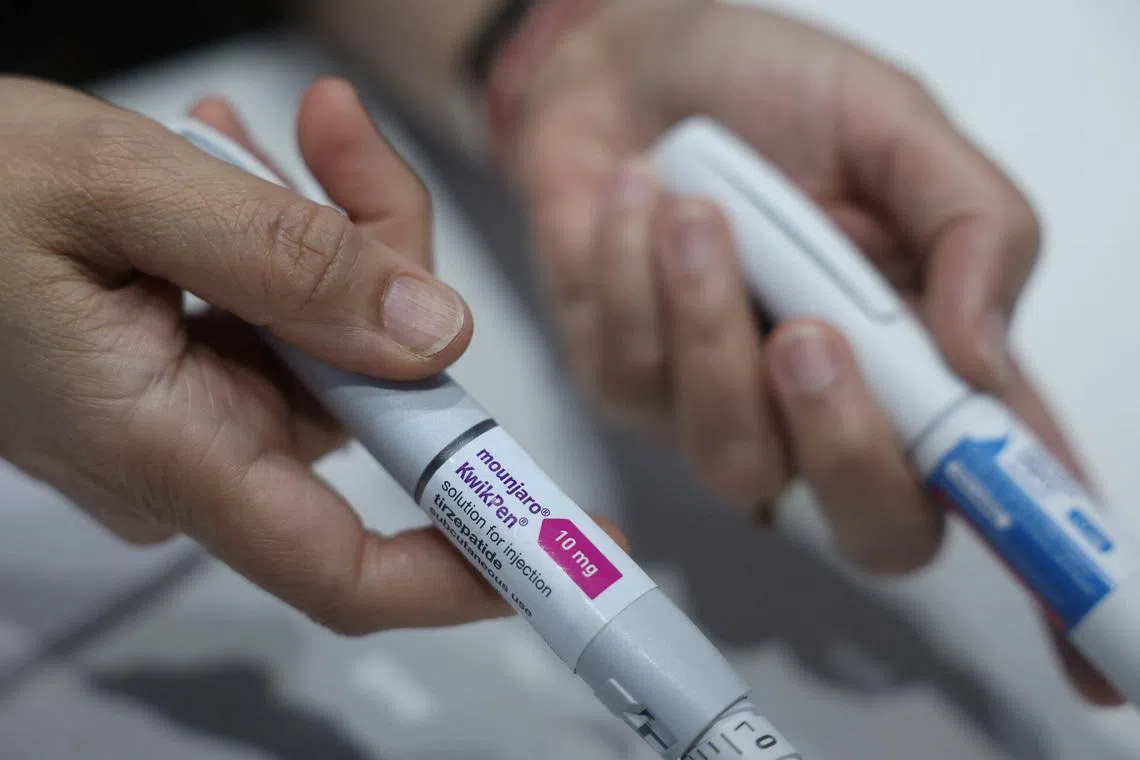
India’s 1.4 billion-strong, economically, biologically, and socially diverse population is often a major market for many products, including weight-loss drugs.
PHOTO: REUTERS
In contrast, losing weight through GLP-1 medication spurred Nazlah Salam, a mother of two who runs a mahjong salon in Bengaluru, to hit the dreaded gym for the first time in her life.
“Happily” and effortlessly thin throughout her 20s, the weight crept up on her over time with motherhood, age, and moving from London back to India, where she drove everywhere.
Her doctor prescribed Mounjaro, and the urge to eat vanished. On her goading, Nazlah also began to work out.
A year later, Nazlah has lost 20kg, and has the energy to chase after her toddler and play mah-jong for as long as she wants.

Nazlah Salam has lost 20kg after her doctor prescribed Mounjaro, and the urge to eat has vanished.
PHOTOS: COURTESY OF NAZLAH SALAM
Nazlah and Venkat are outspoken about taking weight-loss drugs.
“I lost weight, I look good, but I also feel guilty, like I took a shortcut. That is why I openly tell friends and family that I take GLP-1 drugs because I don’t want someone else trying and failing to lose weight to think that I am better than them, worked harder than them, or lost it by dieting,” Nazlah said.

After Nazlah Salam lost 20kg in a year of taking Mounjaro, she can chase after her kids and has boundless energy to play mahjong.
PHOTO: COURTESY OF NAZLAH SALAM
Venkat also tells all his friends and relatives about his choice. On his urging, five of his businessman friends and his father are also on weight-loss drugs now.
But many others still hide the fact from their families, friends and colleagues, whether from embarrassment or fear that people would not understand.
For instance, Saina, a 47-year-old public relations professional in Bengaluru, has decided to start tirzepatide after extensive research to assure herself it was safe and effective. Years of fitness training and healthy eating had not kept the weight off as she wanted.
But she has sworn never to tell her parents.
“They won’t understand. They will just tell me to eat less or exercise more,” Saina said.
After years of enduring fat shaming, many Indians hesitate to go for a solution “they assume is too good to be true,” Basavaprabhu said.
If half his energy is spent on dissuading some patients who wanted to lose weight for “purely vanity reasons”, the other half is spent persuading obese and diabetic people to stop thinking of GLP-1 drugs as a lazy way to lose weight.
Basavaprabhu, who is himself on Mounjaro, said: “I am no different from my patients. We have all tried everything else to lose weight and failed.
“Now there is an affordable, safe, mainstream drug available to treat a metabolic disorder. No shame in taking it.”
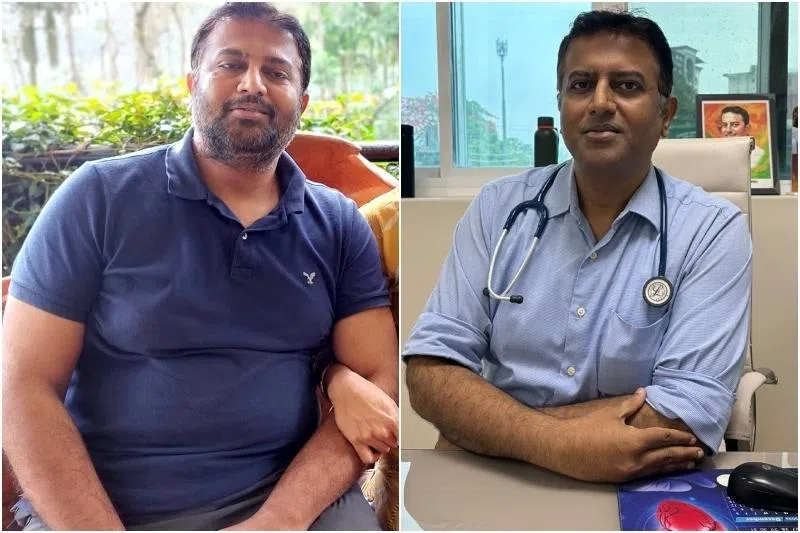
Dr Basavaprabhu Achappa tells his patients there is no shame in taking weight-loss drugs for a disorder like obesity.
PHOTOS: COURTESY OF BASAVAPRABHU ACHAPPA
And with prices having come down so much, doctors report that fewer patients who qualify for semaglutide now walk away after doing the maths.
“At 450 rupees per weekly injection (for Alkem Semasize), which is less than what most of my patients spend on a single restaurant meal, the conversation is no longer about cost. It’s about whether the patient is the right candidate and whether they are prepared for a lifelong commitment. That’s a much better conversation to be having,” Menon wrote on his blog.
Doctors, however, also warn that GLP-1 drugs should not be taken as a “magic bullet” for instant weight loss.
Mehra said that ‘Mounjaro brides’ were real: “Many Indians come and tell me, ‘doctor, I want to lose 15kg in 3 months before my wedding’. I refuse. That sort of abuse is dangerous.”
She warned that people who obtain the drugs and take them without their doctor’s supervision may not be able to manage the side effects or the overnight return of the fat from improper dosing.
“It is a medicine, not a cosmetic. You need a doctor’s monitoring,” she said.
She also advises losing weight gradually with smaller doses to give people time to build good habits around diet and exercise.
“So even if they want to wean off the drug, they won’t gain all the weight back overnight because they have built a sustainably healthy lifestyle,” she said.
Basavaprabhu said he follows up with a patient each time the dose is increased, typically every four weeks, until the maximum tolerated dose is reached, usually at 24 weeks. Thereafter, follow-ups are once a month.
For those with tighter budgets, the new generic semaglutides are a boon. But just over a month into the drugs’ availability, doctors are monitoring such patients very closely given the lack of long-term clinical data.
Doctors the world over also emphasise that GLP-1 drugs must be accompanied with regular exercise and high-protein nutrition.
Chennai-based fitness coach and nutritionist Rahul Gopal said semaglutides should not be seen as a tool simply to reduce the appetite, but to nurture healthier eating habits and an active lifestyle.
“GLP-1 drugs cut food noise, so you don’t have to put in the mental effort to avoid high-calorie food. It breaks the chain of using food as a coping mechanism, making it easier to start and stick to positive eating habits,” he said.
Shwetambari Shetty, fitness trainer and founder of Cult.fit gyms, said: “Fitness routines and weight-loss drugs cannot be in competition. The more people get on GLP-1, the more they need to work out with a trainer to preserve bone density and build muscle, especially for people over 35. You can’t just eat calcium supplements.”
With the proliferation of GLP-1 drugs, people are obtaining them without a prescription and proper guidance, or buying counterfeit versions. This poses safety and efficacy risks.
A 39-year-old coffee shop owner in Bengaluru admitted she had simply bought a GLP-1 drug online with no prescription, after seeing her friend shed a dozen kilograms.
The weight loss came instantly but so did unbearable nausea, painful gastroenteritis and constant vomiting. It was only then that she saw a doctor, who reduced her dose. She has since switched to a different India-made drug.
India’s drug regulator has issued several warnings that GLP-1 drugs can be prescribed only by endocrinologists, internal medicine specialists and cardiologists. Violations can lead to licence cancellation, financial penalties, and criminal prosecution.
Doctors say patient screening is crucial to find contraindications like pancreatitis or a family history of thyroid cancers. Doctors also cannot prescribe the drug to non-obese and non-diabetic patients.
In April, a local office of the Drug Controller General of India posted a video about how to identify fake Ozempic and Wegovy medications that were found widely in Delhi and Gurugram.
The Indian government has barred advertising of such drugs with surrogate campaigns or through the use of social media influencers. Their over-the-counter or online sale is banned.
The drug regulator has reportedly cracked down on weight-loss clinics and online pharmacies.
Still, chemist shops in Bengaluru and Mangaluru were ready to offer weight-loss drugs over the counter when ST tried to buy them without a prescription.
Abrol said the regulator must be very vigilant to curb these abuses.
In a country where “you are too thin, or too fat, and never perfect”, losing weight for many is only the beginning of the process of self-acceptance.
Bengaluru-based food consultant Monika Manchanda, 50, said the weight-loss drug offers a mental break from a years-long worry.
An intense workout regimen shaved off 10kg in the past year, but at 126kg, she still felt she needed weight-loss drugs to go the last mile. Six months later, Monika has lost weight, can lift more than she could before, has less inflammation and more energy.
In spite of all this, she was pricked by guilt. Was she betraying the idea of being body-positive?
“After all the years of teaching myself to ignore the number on the scale, am I getting obsessed with it again? I don’t know,” she mused.
“The whole point is, when I look in the mirror, I don’t want to see a fat person, or a thinner person. I should just see myself.”
GLP-1 drugs may be helping many to inch closer to that feeling.