 By GB News (World News) | Created at 2026-10-11 07:56:00 | Updated at 2026-10-11 09:38:22
1 hour ago
By GB News (World News) | Created at 2026-10-11 07:56:00 | Updated at 2026-10-11 09:38:22
1 hour ago
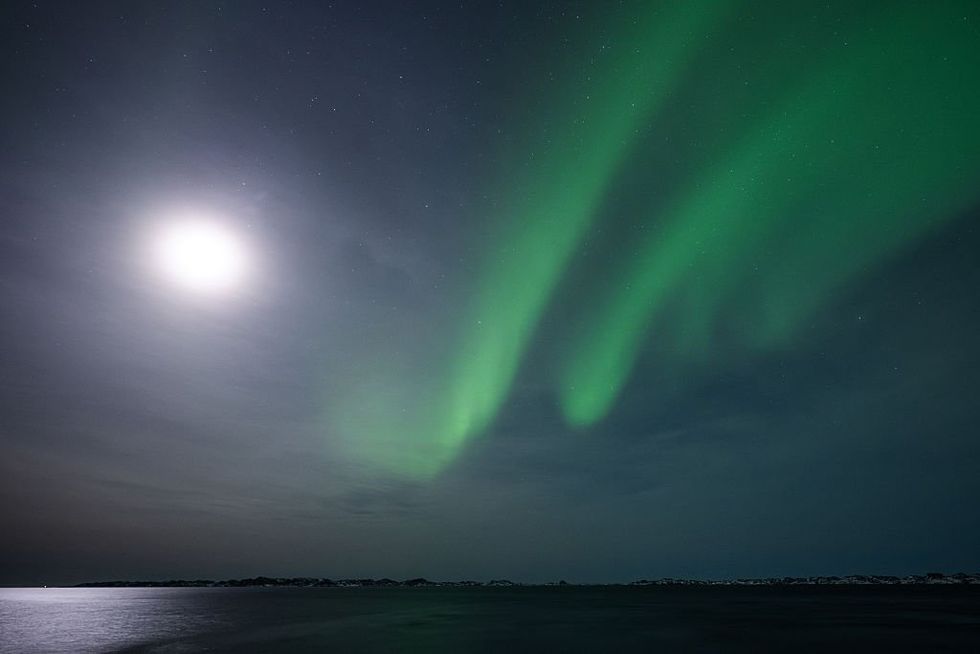
The Northern Lights are set to dazzle British skies tonight, with the celestial phenomenon visible far beyond its usual northern haunts.
Observers in Devon, Hampshire and Kent, regions that rarely see the Aurora Borealis, were among those who already enjoyed the vivid celestial show yesterday.
The Met Office has said further sightings are possible tonight and into early next week, with opportunities to spot the aurora lasting until Tuesday wherever skies are clear.
A spokesman for the forecaster explained two glancing coronal mass ejections, followed by a high-speed stream from a coronal hole on the sun, are creating a daily chance of enhanced auroral activity.
Scotland, northern England and areas at similar geomagnetic longitudes are most likely to enjoy continued displays through October 13.
The aurora borealis occurs when electrically charged particles ejected by the sun slam into gases in Earth's upper atmosphere near the magnetic poles, releasing energy as vivid bursts of light.
Oxygen produces green hues and, at higher altitudes, rarer red glows, while nitrogen creates blue and purple tones.
On Saturday night, geomagnetic activity surged to 600 nanoteslas, far above the 200nT threshold needed for visibility in northern Britain, making the display visible across the country, including its southernmost counties.
The Northern Lights are set to dazzle British skies tonight

PA
For those hoping to catch a glimpse tonight, face north and seek out locations away from streetlights and other sources of light pollution.
A mobile phone camera can be surprisingly useful, capturing colours the human eye struggles to detect in darkness.
Rod cells, which govern our night vision, cannot perceive colour, so the aurora can look washed out to some viewers even when cameras reveal its full spectrum.
The sun follows a roughly 11-year activity cycle, measured by the frequency of visible sunspots, and it is currently heading toward its peak.
A mobile phone camera can be surprisingly useful, capturing colours the human eye struggles to detect in darkness

PA
Krista Hammond, a manager at the Met Office Space Weather Operations Centre, said: “Over the coming years, as we continue towards the solar maximum, we can expect to see an increase in the frequency of space weather events, with more chances to see the Aurora Borealis over the UK.”
Last year, experts noted 2026 would be an especially promising period for aurora-spotting, given the sun's heightened activity in its current cycle.
Beyond the celestial spectacle, Andy Burnham's Government is turning its attention to more threatening weather prospects.
Ministers have established a new flood task force that will convene for the first time on Wednesday, hosted by the Department for Environment, Food and Rural Affairs.
Oxygen produces green hues and, at higher altitudes, rarer red glows, while nitrogen creates blue and purple tones
The meeting will bring together representatives from the Met Office, the Environment Agency, mayoral authorities and key sectors including farming, water, and insurance.
Defra Minister Emma Hardy said: “We're facing extreme weather, with flood and drought intertwined, but the government is taking decisive action.
“This will put communities and businesses at the heart of our work and will make sure the UK is ready for whatever the weather brings next.”
The initiative follows what the Met Office has characterised as a “heightened potential” for wet, windy and stormy conditions in the months ahead, coming on the heels of Britain's hottest summer on record.
According to the Met Office, the seasonal outlook points to a greater-than-normal chance of wetter autumn weather, driven largely by El Niño.
Forecasters warn this year's El Niño is on course to be the most powerful in living memory, with its peak expected towards the end of 2026.
The Environment Agency has cautioned roughly 6.3 million homes and businesses across England face flood risk. And while inundation is not certain, the likelihood of repeated storms, sustained rainfall and waterlogged catchments is above average this winter.
In response, the Government has pledged at least £10.5billion through to 2036 to shield properties and critical infrastructure from escalating flood threats. Households have been urged to check their flood risk, sign up for alerts, and prepare emergency plans.