By The Straits Times | Created at 2026-08-09 04:11:39 | Updated at 2026-08-09 06:30:35
2 hours ago
By The Straits Times | Created at 2026-08-09 04:11:39 | Updated at 2026-08-09 06:30:35
2 hours ago
KUALA LUMPUR - At the Aug 1 Negeri Sembilan state election, Parti Wawasan Negara (Wawasan), a new party launched just in June, won three seats.
While three may seem like a modest number, Wawasan’s wins signify a major political realignment inside Malaysia’s opposition coalition Perikatan Nasional (PN). It is also a party to watch as it may potentially be where the country’s next Prime Minister comes from.
Wawasan was launched by former Home Minister Hamzah Zainudin following his
PN, formed in 2020 after the toppling of the first Pakatan Harapan (PH) government, has relied on Bersatu to provide a more moderate Malay nationalist face while Parti Islam SeMalaysia (PAS) supplied much of its electoral strength.
Analysts say Wawasan can replace the waning Bersatu, which is left with only six MPs after 19 joined Wawasan. The new party can enable PN to broaden its appeal beyond PAS’s traditional support base, and offer a prime minister candidate acceptable to moderate Malays and non-Malays in the next General Election that must be held by early 2028.
”If PN is to form the federal government, they would not name a PAS PM because they know that would not be very popular with a lot of Malaysians,” said political analyst Syaza Shukri of the International Islamic University Malaysia.
“So they’ll stick to the same formula. If before this Bersatu president Muhyiddin (Yassin) was their PM candidate, now most likely it is Hamzah,” she said, referring to the Wawasan leader.
This was despite PAS grassroot members favouring leaders from their own party such as Terengganu Menteri Besar Ahmad Samsuri Mokhtar becoming Prime Minister, said Syaza.
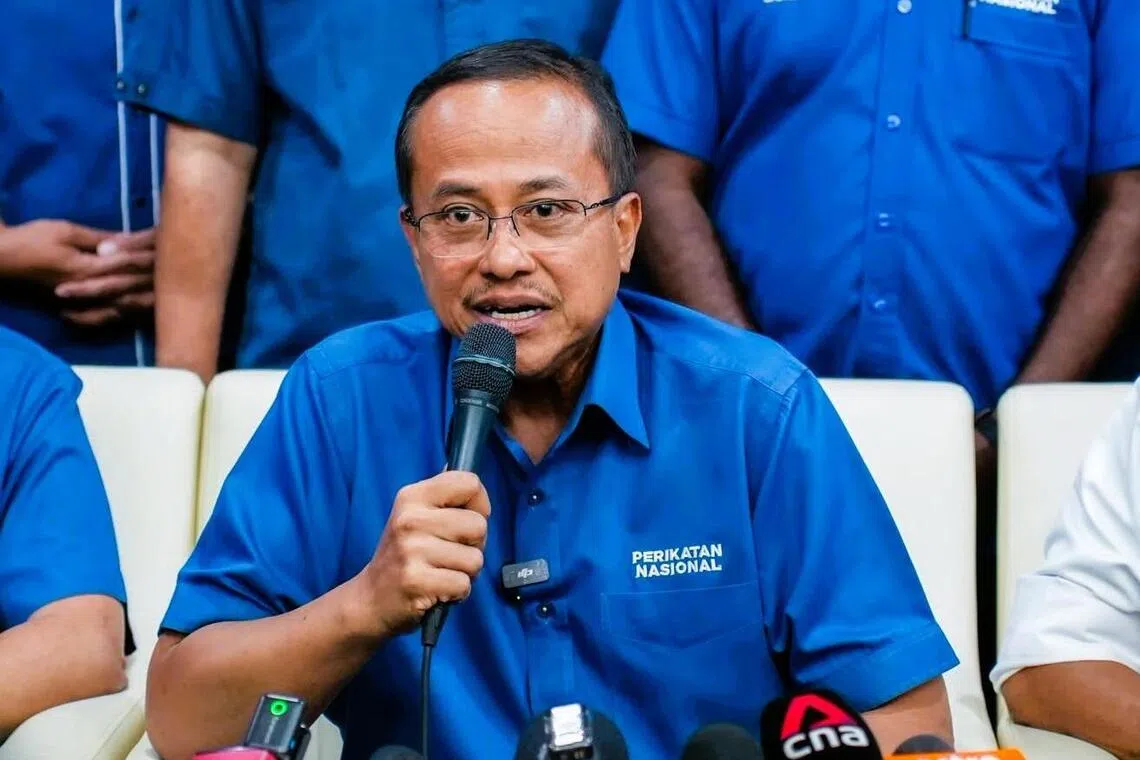
Terengganu Menteri Besar Ahmad Samsuri Mokhtar was Leader of the Opposition briefly before Hamzah Zainudin took up the role again.
PHOTO: BH
Yet PAS has signalled its willingness to work with Hamzah.
After Hamzah relinquished the Leader of the Opposition post following his expulsion from Bersatu, Ahmad Samsuri succeeded him in May. But on June 13, PAS president Hadi Awang announced that Hamzah would take up the role again, while Ahmad Samsuri would remain as PN chairman.
PAS- Wawasan axis
The rise of Wawasan coincides with deepening political friction within PN.
The rift reached a boiling point when PAS President Hadi Awang on Aug 7 declared that Bersatu had automatically removed itself from PN after Muhyiddin announced plans to form a separate political alliance.
“He has already said he wants to establish another coalition, so he is automatically out. There is no need for a formal announcement. Under our constitution, if you go elsewhere to form another coalition, you are out,” Hadi told the press in Terengganu.
Bersatu rejected the claim, insisting that it remains a legitimate component of PN while accusing PAS of sidelining them during state election talks, a rift underlined by Bersatu’s poor showing at the ballot box.
On July 17, Muhyiddin reportedly said Bersatu would form a new coalition with several other parties after the Negeri Sembilan state election.
He said the new alliance called Ikatan Prihatin Rakyat (IPR) will bring together opposition parties including the Malay-based Parti Bumiputera Perkasa Malaysia (Putra) and the Indian-based Parti Bersepakat Hak Rakyat Malaysia (Urimai).
For Syaza, the election merely accelerated a shift that had already begun, with Wawasan replacing Bersatu in PN.
She said the biggest difference between Bersatu and Wawasan is that the latter is more willing to work together with PAS as partners.
“We saw the dynamics before whereby Bersatu wants to be seen as leading PN instead of working together with PAS. While Bersatu is nominally still in PN, it’s effectively gone.”
Wawasan’s familiar faces, tactical discipline
While Wawasan presents itself as a fresh vehicle, its leadership is made up of familiar faces.
Led by 69-year-old Hamzah, the party’s core consists of seasoned figures who held senior cabinet positions in previous administrations, including Bersatu Information Chief Wan Saiful Wan Jan, 51, former Foreign Minister Saifuddin Abdullah, 65, and Rais Yatim, 84.
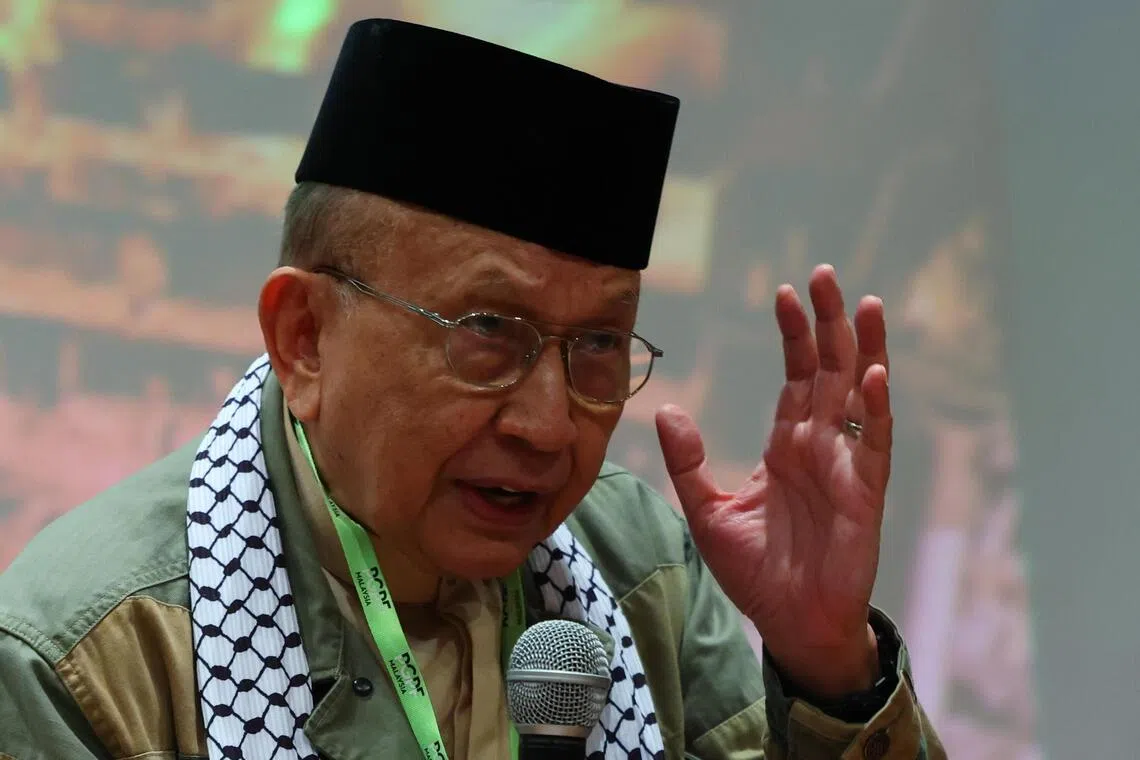
Former cabinet minister Rais Yatim, seen here in a file picture from 2024, is one of the seasoned political figures in Wawasan.
PHOTO: BERNAMA
Awang Azman Awang Pawi, a political analyst from Universiti Malaya, said that experience gives Wawasan influence beyond what its short history might suggest.
”He (Hamzah) not only brought along professionals, business people and former senior civil servants but also has several non-Malay office-holders in the party leadership to make the party more inclusive,” he said.
“He is backed by 18 MPs aligned with him that gives Wawasan more political weight despite its relatively small grassroots organisation.”
Awang Azman said Wawasan also demonstrated tactical discipline by skipping the Johor state election to contest four highly viable seats under the PN banner in Negeri Sembilan, including fielding a former top cop to appeal to members of the security forces.
Furthermore, rather than registering a new party from scratch, Hamzah’s faction took over and rebranded the existing Parti Cinta Malaysia. This gave Wawasan an instant organisational framework.
Wawasan’s challenges
However, analysts cautioned that winning state assembly seats under an established coalition banner does not automatically translate into standalone nationwide strength for Wawasan.
And despite Wawasan positioning itself as a multi-ethnic party, this does not guarantee that non-Malay voters will readily embrace the PN coalition.
Wawasan will use its positioning as a multi-ethnic party to try to broaden PN’s appeal, “but if Gerakan and MIPP cannot do it, I doubt Wawasan can”, Syaza said, referring to PN’s non-Malay component parties.
Still, Awang Azman said Hamzah has successfully altered the political balance of power.
“His achievement is not that Wawasan has already replaced Bersatu. It is that he has transformed expulsion from Bersatu into a new centre of bargaining power.”
Whether Wawasan becomes a durable national movement will depend on its ability to build grassroots institutions, get the best out of electoral negotiations with other parties and attract voters without relying on personalities and coalition arrangements, he said.
Sign up for our weekly Asian Insider Malaysia Edition newsletter to make sense of the big stories in Malaysia.