By The Rio Times | Created at 2026-08-14 07:06:57 | Updated at 2026-08-14 09:55:11
2 hours ago
By The Rio Times | Created at 2026-08-14 07:06:57 | Updated at 2026-08-14 09:55:11
2 hours ago
Mexico · Business
Key Facts
- —What the Silverstream Contract, defined by Fresnillo as a series of 12 agreements, not 12 mining concessions
- —Parties Industrias Peñoles and its majority-owned London-listed unit, Fresnillo plc
- —Trigger operational difficulties at Peñoles’ Sabinas mine, flagged on 12 November 2024
- —Deal Peñoles bought back the contract for US$40 million, with a buyback date of 31 July 2025
- —Cost Fresnillo booked a non-cash US$133 million loss after tax on the termination
The quiet unwinding of a series of 12 agreements closes an 18-year silver-streaming pact between Mexico’s two mining giants.
One-stop reference
Company Intelligence
Every listed company in Latin America — financials, ownership and structure for 1,450+ companies across 26 exchanges, in one place.
Fresnillo has ended one of Mexican mining’s longest-running silver pacts. Industrias Peñoles, its majority owner, has bought back the Silverstream Contract, a series of 12 agreements signed on 31 December 2007.
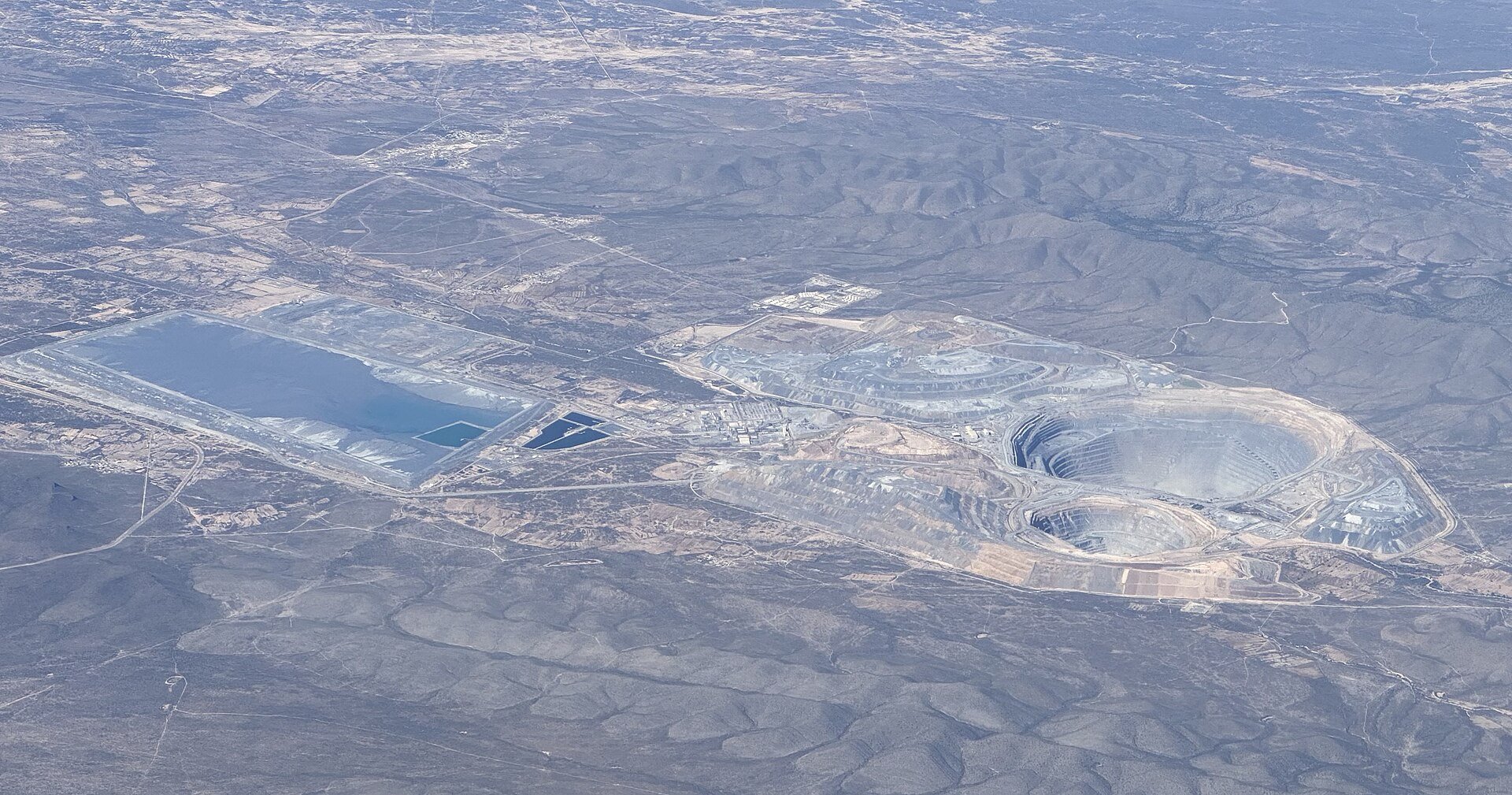
As a result, an 18-year arrangement over silver from the Sabinas mine in Coahuila is now formally closed.
What Peñoles and Fresnillo Agreed
Peñoles agreed to buy back the Silverstream Contract for US$40 million. Because the mine behind it had faltered, both sides moved to unwind the pact.
The buyback date is 31 July 2025. Fresnillo says it received the final US$40 million one-off payment on 26 August 2025.
So the deal that had linked the two companies since 2007 is now formally closed. Meanwhile, the silver from Sabinas returns fully to Peñoles.
Why This Is Not About 12 Concessions
The number 12 here does not refer to mining concessions. Instead, Fresnillo’s own glossary defines the Silverstream Contract as a series of 12 agreements.
That distinction matters because Mexico has been reshaping concession rules. However, the 12 in this story are commercial contracts, not land titles.
In short, this is a related-party silver deal between two firms. Therefore it sits apart from the wider concession debate in the country.
Live Market IntelligenceMexico — Live Market BoardInside: market breadth, the sector heatmap, currencies & rates, the Latin America scoreboard and the full instrument board.Rio Times · Live Market Intelligence
Mexico — Live Market Board
BMV · Mexico City
Aug 14, 2026 · 03:57
S&P/BMV IPC · benchmark
65,335.52
-0.64%
L 65,405day rangeH 66,121
+12.17% over 12 months
Market breadth · 15 names
67% advancing
10 ▲ advancing5 declining ▼
Currencies, rates & key inputs
Sector heatmap · average move today
Financials
+1.18%
GFNORTE
Industrials
+0.77%
GAP, ASUR, OMA
Consumer Staples
-0.07%
WALMEX, FEMSA, BIMBO, KOF
Telecom
-0.37%
TELEVISA, AMX
Latin America scoreboard
IndexLastTodayStrength
IbovespaBrazil
167,100.95
-0.23%
S&P/BMV IPCMexico
65,335.52
-0.64%
S&P IPSAChile
11,000.07
+0.16%
S&P MERVALArgentina
3,000,582
+0.04%
MSCI COLCAPColombia
2,432.10
+0.07%
BVL S&P PerúPeru
58,814.75
-1.21%
Full instrument board
| IPC MEX | 65,335.52 | -0.64% | +12.17% | 65,755.97 | 66,121 | 65,405 | 108,886,187 |
| USD/MXN | 17.06 | -0.24% | -8.58% | 17.10 | 17.08 | 17.01 | — |
| WALMEX | 48.07 | -0.62% | -14.38% | 48.37 | 48.65 | 48.02 | 10,781,446 |
| GMEXICO | 223.28 | +0.35% | +73.59% | 222.50 | 226.18 | 222.17 | 1,325,556 |
| FEMSA | 201.19 | -0.24% | +25.67% | 201.67 | 206.71 | 199.56 | 750,706 |
| CEMEX | 19.32 | +0.89% | +19.10% | 19.15 | 19.35 | 19.04 | 14,327,054 |
| GFNORTE | 193.98 | +1.18% | +14.36% | 191.71 | 195.79 | 191.83 | 1,579,115 |
| BIMBO | 60.98 | -0.96% | +11.89% | 61.57 | 61.46 | 60.29 | 1,048,115 |
| TELEVISA | 9.71 | +0.21% | +12.78% | 9.69 | 9.75 | 9.60 | 577,851 |
| AMX | 19.80 | -0.95% | +12.53% | 19.99 | 20.05 | 19.70 | 58,058,525 |
| GAP | 366.23 | +0.43% | -21.21% | 364.68 | 370.85 | 362.82 | 226,946 |
| ASUR | 275.04 | +1.25% | -15.28% | 271.64 | 275.08 | 271.31 | 15,451 |
| OMA | 233.50 | +0.62% | -6.48% | 232.06 | 235.00 | 230.62 | 555,693 |
| KOF | 188.04 | +0.86% | +18.94% | 186.44 | 188.56 | 185.52 | 425,273 |
| GRUMA | 252.90 | +0.11% | -21.85% | 252.61 | 254.74 | 250.36 | 90,048 |
| KIMBER | 39.74 | +0.43% | +8.85% | 39.57 | 40.09 | 39.33 | 490,551 |
| AMX ADR | 23.38 | -0.23% | +22.25% | 23.43 | 23.49 | 23.06 | 1,347,445 |
Largest moves today
ASUR
275.04
+1.25%
GFNORTE
193.98
+1.18%
BIMBO
60.98
-0.96%
AMX
19.80
-0.95%
CEMEX
19.32
+0.89%
KOF
188.04
+0.86%
IPC MEX
65,335.52
-0.64%
WALMEX
48.07
-0.62%
The session read
The S&P/BMV IPC eased 0.64%, with breadth positive — 10 of 15 names higher. Financials led, while Telecom lagged.
From The Rio Times
Related coverage · 14 Aug 2026
Grupo SURA Posts a Record First Half in Colombia
Read →
What the Silverstream Contract Was
The Silverstream Contract was a silver-streaming arrangement. Under it, the Fresnillo group received all proceeds for the payable silver from Peñoles’ Sabinas mine in Coahuila.
The two sides signed the deal on 31 December 2007. At that point, Fresnillo made an upfront payment of US$350 million to Peñoles.
In effect, Fresnillo paid early to lock in future silver. As a result, the arrangement tied its returns to output at a single mine.
The Money Behind the 12 Contracts
Over the life of the agreement, Peñoles paid Fresnillo about US$882 million. That covered roughly 52 million payable ounces of silver from Sabinas.
Because the price was fixed early, the economics shifted as silver markets moved. Still, the stream delivered steady ounces for almost two decades.
For example, the flow depended entirely on Sabinas keeping up production. So any disruption at the mine would ripple straight through to Fresnillo.
Why the Sabinas Mine Broke the Deal
On 12 November 2024, Fresnillo said Peñoles had flagged trouble at Sabinas. The mine was experiencing operational difficulties impacting silver production.
Because Sabinas was the sole source underpinning the stream, the problem was serious. As a result, the whole basis of the contract came into question.
Instead of patching the arrangement, the companies chose to end it. Therefore the buyback followed within months of the warning.
What Fresnillo Booked on the Termination
Fresnillo recorded a non-cash US$133 million loss after tax on the buyback. The charge landed in its 2025 half-year income statement.
Moreover, the company wrote the agreement down to US$40 million as of 30 June 2025. That matched the price Peñoles agreed to pay.
Because the loss is non-cash, it does not drain the company’s bank balance. In fact, Fresnillo still received US$40 million in cash from the deal.
How the Buyback Was Timed
The warning came first, in November 2024. After that, the two sides negotiated terms through the following months.
Peñoles then set the buyback date at 31 July 2025. Once the final payment cleared on 26 August 2025, the contract was done.
So the unwinding took less than a year from warning to close. By contrast, the original stream had run for almost 18 years.
Mexico’s Mining Reform in the Background
Mexico’s 2023 mining-law reform reshaped how concessions work. It shortened concession terms to 30 years and made new awards subject to public bidding.
Separately from the Silverstream deal, Peñoles returned 74 unused mining concessions in March 2025. Meanwhile, officials said Mexico had taken back 1,126 concessions since late 2024.
Even so, none of those figures is the 12 in this story. Instead, the reform forms the backdrop against which these Mexican miners now operate.
What It Means for Silver Investors
For Peñoles, the buyback brings Sabinas silver fully back in-house. Therefore the parent keeps any upside if the mine recovers.
For Fresnillo, the exit removes a legacy stream tied to a single, troubled asset. Although it triggered a paper loss, it also simplifies the balance sheet.
In addition, silver and gold prices have been strong through 2026. As a result, both companies have leaned on that rally rather than on old contracts.
Where Fresnillo Stands in 2026
Fresnillo remains the world’s largest primary silver producer and Mexico’s largest gold producer. It is majority-owned by Peñoles and listed in London.
On 4 August 2026, Fresnillo reported first-half results it called an exceptional financial performance. That strength came largely from high silver and gold prices.
So the Silverstream chapter closes at a strong moment for the company. Overall, the termination reads as housekeeping rather than distress.
What Happens Next Between the Two Miners
With the stream gone, Peñoles and Fresnillo keep their close corporate ties. After all, Peñoles still owns most of Fresnillo and reports its numbers.
The immediate question is whether Sabinas can recover its silver output. Because the mine is now fully with Peñoles, that recovery matters most to the parent.
For investors, the cleaner structure is easier to read. In short, any future silver upside from Sabinas will now show up directly at Peñoles rather than through a legacy streaming contract.
Frequently Asked Questions
Does the number 12 mean 12 mining concessions?
No. Fresnillo’s glossary defines the Silverstream Contract as a series of 12 agreements between its subsidiary and Peñoles. These are commercial silver contracts, not land concessions.
What was the Silverstream Contract?
It was a silver-streaming deal signed on 31 December 2007. Under it, Fresnillo received all proceeds for payable silver from Peñoles’ Sabinas mine after paying US$350 million upfront.
Why did Peñoles buy back the deal?
Peñoles flagged operational difficulties at the Sabinas mine on 12 November 2024. Because that mine underpinned the stream, the companies chose to end the contract rather than patch it.
How much did the termination cost Fresnillo?
Peñoles paid US$40 million to buy back the contract, with a buyback date of 31 July 2025. Fresnillo booked a non-cash US$133 million loss after tax on the deal.
Sources: Fresnillo plc (glossary, H1 2025 interim report and FY2025 report), Mining Weekly, mining.com, London Stock Exchange, Proactive Investors, BNamericas, Reuters and Kitco.