 By The Epoch Times | Created at 2026-08-10 16:16:50 | Updated at 2026-08-10 16:39:33
45 minutes ago
By The Epoch Times | Created at 2026-08-10 16:16:50 | Updated at 2026-08-10 16:39:33
45 minutes ago
The Pentagon is pushing ahead with rebuilding the defense industrial base by asking weapons manufacturers to share plans for how they will increase weapons production and speed up their delivery schedules.
Deputy Defense Secretary Steve Feinberg wrote to industry leaders on Aug. 5, giving them no more than 21 days to submit plans to “drive significantly faster, more aggressive delivery schedules and/or increased production for critical capabilities,” according to a memo obtained by The Washington Post.
“Years-long development cycles are not acceptable,” Feinberg wrote. “We must dramatically accelerate our program schedules and expand our production capacity now.”
In an Aug. 9 email to The Epoch Times, Pentagon spokesman Sean Parnell confirmed Feinberg’s memo seeking a rapid escalation of weapons production is real, adding that it “will inform the fiscal year 2028 budget submitted to Congress for funding, and it is entirely consistent with our ongoing push to rebuild the defense industrial base.”
Parnell said the Pentagon continues to be focused on boosting the speed, capacity, and lethality of the defense industrial base to provide “the weapons our warfighters need at the pace the threat demands.”
Feinberg is “driving the hard work of fixing our broken, antiquated, and immensely complex acquisitions system,” he added.
Parnell also said the production effort predates the five-month-old conflict in Iran, amid media reports last week claiming that the United States is running low on certain types of weapons as a result. At the time, Secretary of War Pete Hegseth called the reports fake news.
A New Era
Trump ordered reform of the defense acquisition pipeline in April 2025 after entering office, and Hegseth subsequently released the Pentagon’s Acquisition Transformation Strategy in November 2025. The strategy outlined five pillars for reinvigorating America’s defense industrial base.
In a January speech ahead of a tour of these facilities, Hegseth said the decades-old policy that the United States no longer needs to focus on defense industrial might was over.
“We recognize that we are in a new era of great power competition; a generational struggle to maintain peace through strength, and we will rise to meet that challenge,” he said, framing the reforms as necessary for the U.S. defense industry to keep pace with the threats from communist China.

Secretary of War Pete Hegseth testifies before the Senate Committee on Appropriations in Washington on July 21, 2026. Madalina Kilroy/The Epoch Times
Hegseth also testified to the Senate Armed Services Committee in April that it was Trump’s goal to speed up munitions production to replenish stocks. He said the new strategy is to stock weapons to the “tippy top,” between two to four times the current level, to ensure that this administration and “future Presidents have all the munitions they need for any level of contingencies, especially considering the dangerous world we live in.”
Hegseth told the committee the Trump administration had requested $331 billion for munitions and $120 billion to support the defense industrial base in the 2027 defense budget.
He added that the industry was working to accelerate the production of 14 critical munitions, including long range fires that cost more than $1 million per unit, stealth JASSMs (joint air-to-surface standoff missiles) that cost more than $1.5 million per unit, LRASMs (long range anti-ship missiles) that cost more than $3 million per unit, Tomahawks that cost more than $2 million per unit, and hypersonic missiles that cost at least $15 million per unit.
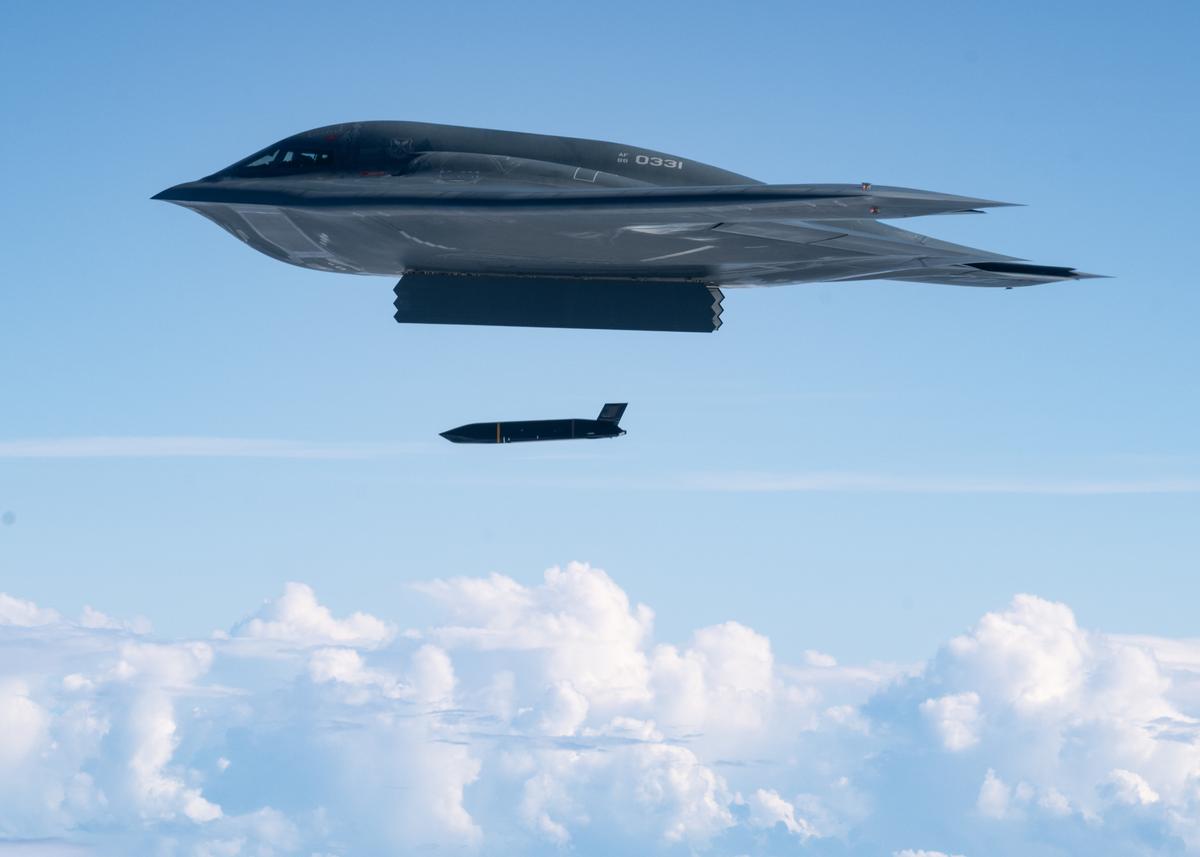
A U.S. Air Force B-2 Spirit Stealth Bomber, assigned to the 509th Bomb Wing, deploys an AGM-158C Long Range Anti-Ship Missile (LRASM) to support a live-fire sinking exercise as part of Valiant Shield 2026 over the Philippine Sea, on June 27, 2026. U.S. Air Force photo by Tech Sgt. Thomas Barley
The House passed the $1.15 trillion 2027 defense spending bill in July, which now must pass the Senate.
Ahead of Congress approving the defense budget, the Pentagon has signed numerous framework agreements with large U.S. defense contractors and emerging start-ups to signal their intent to purchase weapons and push ahead with the administration’s defense strategy.
One such agreement was signed with missile interceptor manufacturers Northrop Grumman and Lockheed Martin on Aug. 3, which the Pentagon said would triple Patriot Advanced Capability-3 (PAC-3) and quadruple THAAD production capacity. The timeline for production remains dependent on congressional funding and approval.
Media Claims of Shortage
Reuters reported on Aug. 4, citing anonymous sources, that the U.S. Army had used up much of its global stockpile of highly accurate long-range missiles. CBS and CNN similarly cited unnamed sources in a report claiming U.S. military stockpiles of key missile interceptors, such as the Patriot and Terminal High Altitude Area Defense (THAAD) missile systems, had fallen to “dangerously low” levels amid the ongoing war with Iran.
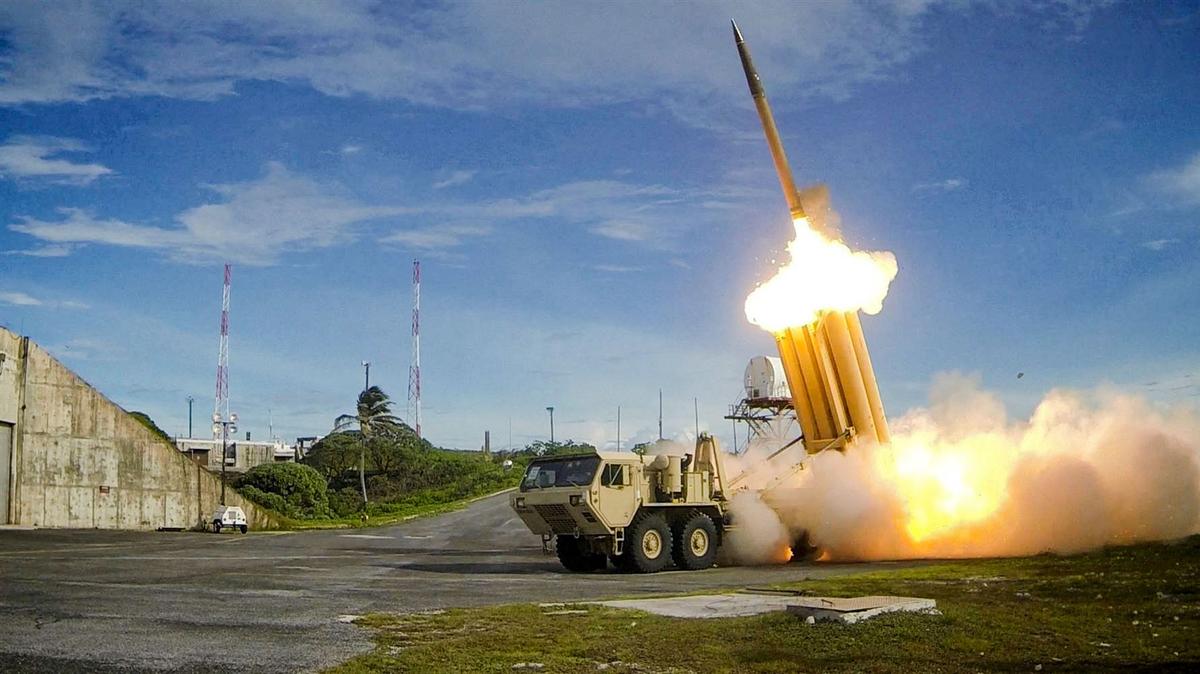
A THAAD interceptor, in an undated file photo. Missile Defense Agency/Reuters
THAAD interceptor missiles cost $12 million–$15 million each; Patriot interceptor missiles cost around $4 million each.
Trump pushed back on the characterization, telling reporters in the Oval Office on Aug. 6 that the military continues facing “a little bit tighter” stockpiles of some expensive high-grade weapons, but that the U.S. military remains in “great shape” overall.
He said that other medium and upper medium grade munitions relied on in the Iran and Venezuela conflicts remain in “virtually unlimited supply.”
The reports came as the president on Aug. 2 threatened Iran with a “tremendous attack” that would be “the biggest since World War II” if Tehran refused to reach a deal to open the Hormuz Strait and denuclearize. He warned that such major strikes could occur if Iran backed out of negotiations again.
Tom Ozimek contributed to this report.