By The Straits Times | Created at 2026-08-14 09:41:57 | Updated at 2026-08-14 10:25:10
50 minutes ago
By The Straits Times | Created at 2026-08-14 09:41:57 | Updated at 2026-08-14 10:25:10
50 minutes ago
KUALA LUMPUR/IPOH – The Hungry Ghost Festival was expected to be a peak sales period for Lee Chuan Wei, 47, who owns a Chinese prayer-materials business in Penang.
However, Lee said sales of offerings and other ceremonial items in the week leading up to the festival were just 60 per cent of those in the same period last year. “At least there were some enquiries close to the eve last year. Now, there isn’t even a single query. It saddens me,” he told The Straits Times on Aug 6.
Observed during the seventh month of the lunar calendar, the festival began on Aug 13 this year and is traditionally an important period for these goods.
He blamed the decline on the entry of Pinduoduo into Malaysia in late 2025. The Chinese e-commerce giant retails some items, such as joss sticks, for half what Lee pays his wholesale suppliers.
Pinduoduo operates under the same parent company, PDD Holdings, as Temu – a global online marketplace widely known for its rock-bottom pricing and mass-market, unbranded goods. Mirroring Temu’s high-volume, direct-from-factory strategy, Pinduoduo provides free shipping from China to Malaysian shoppers, even for a single item priced below RM2 (S$0.63).
This stands in contrast to established regional e-commerce players such as Shopee and Lazada, which require a minimum purchase to qualify for free shipping.
Such direct factory-to-consumer shipping methods, which eliminate middle layers, are increasingly popular among shoppers. In 2025, 54 per cent of Malaysian online shoppers bought from overseas retailers.
But the trend is putting pressure on Malaysia’s micro, small and medium enterprises (MSMEs), which employ nearly half of the nation’s workforce and contribute nearly 40 per cent of the country’s gross domestic product. For small retailers that rely on selling everyday goods at a margin, the influx of ultra-cheap products shipped directly from China makes it harder to compete.
Local retailers feeling the squeeze
Among retailers feeling the pressure from low-cost overseas goods is Ipoh supermarket owner Wong Yeong Jin, 50. With price-controlled essentials such as cooking oil, flour and sugar generating only single-digit profit margins, Wong relies on higher-margin products, such as towels and other household items, to sustain his business.
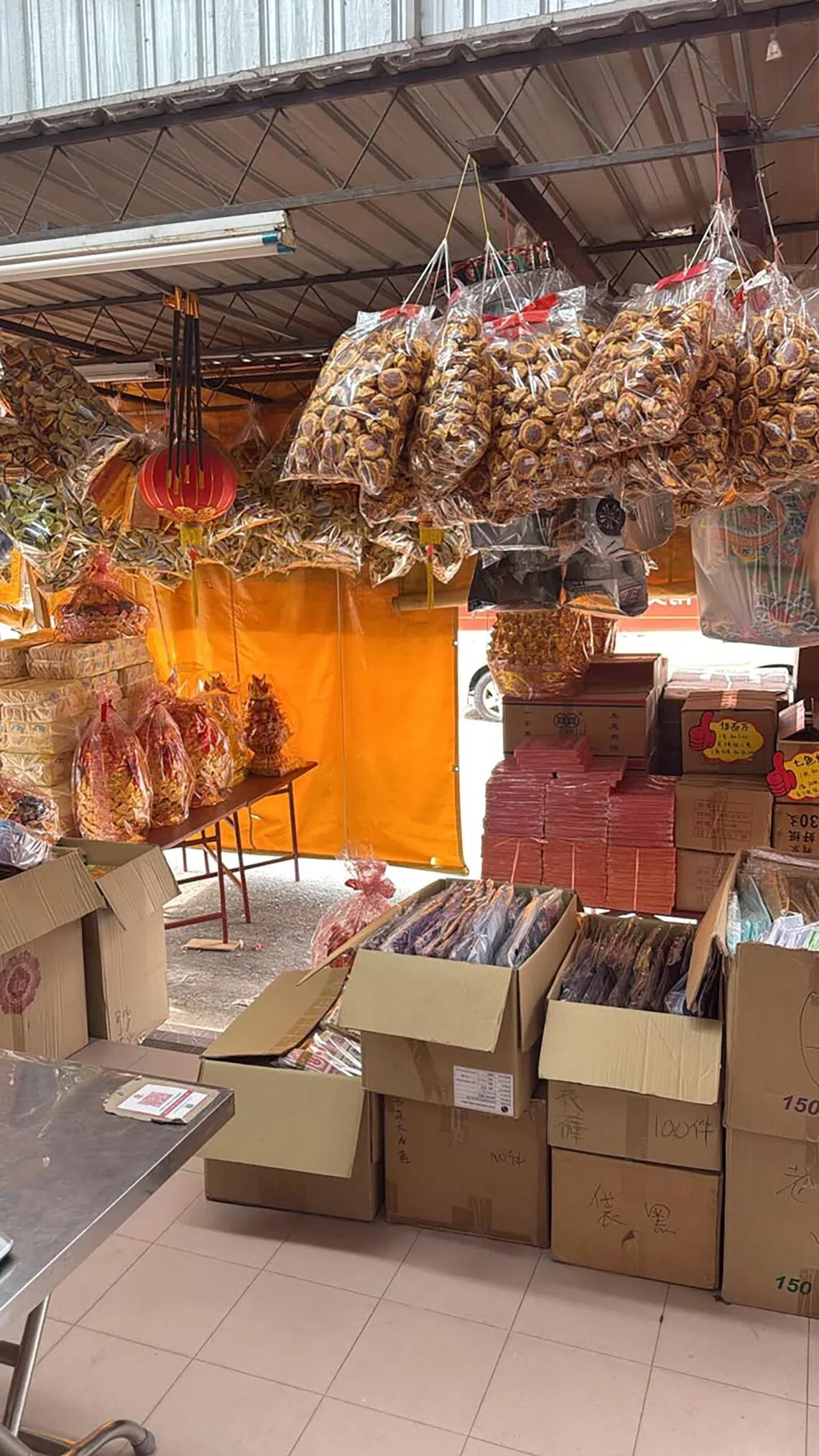
Malaysia’s Chinese prayer-materials sector is one of the industries hit by Pinduoduo’s cheap goods, especially ahead of the Hungry Ghost Festival peak.
PHOTO: LEE CHUAN WEI
“They (Pinduoduo) hurt our profits. We can barely survive if consumers can buy a nail clipper for RM1 with free shipping,” he told ST on Aug 8.
Backing his concerns, Hong Chee Meng, national president of the Federation of Sundry Goods Merchants Associations of Malaysia, said the influx is undercutting neighborhood shops. The association represents 4,000 members nationwide.
“(Anecdotal) feedback from members in Johor and Kuala Lumpur indicates that sales dropped by up to 30 per cent after Pinduoduo entered the market. Previously, (seasonal) sales would drop by 10 per cent at most before rebounding.”
“State subsidies from Beijing help Chinese e-commerce platforms keep their prices ultra-low,” an industry insider told ST. Securing government support for cross-border logistics costs remains a top priority for the platforms’ management team, said the individual, who declined to be named as he is not authorised to speak to the media.
Citing these early retail impacts, local business groups have urged the government to address what they perceive as unfair competition.
Eugene Sing, president of the Association of Praying Material Traders Malaysia, warned that without regulation, many independent retailers could face closure, threatening jobs and tax revenues in the long run.
“In Indonesia, all online shops must be registered, with local hires and warehouses required, to protect domestic businesses. Allowing ‘dumping’ will hurt Malaysian workers while benefiting mainland Chinese workers,” said Sing, whose association represents 300 members and 2,000 retail shops nationwide.
To protect its own domestic economy, Jakarta has mandated that e-commerce platforms prioritise local MSME products over imported goods in search results, among other measures aimed at shielding more than four million Indonesian online merchants.
Concerns from the business community have prompted calls for tighter regulation in Malaysia.
Member of Parliament Tan Kar Hing has called for Pinduoduo to be suspended from app stores, arguing that the e-commerce platform has no physical footprint in Malaysia, unlike established players such as Shopee, Lazada, and TikTok Shop.
“At least the trio have registered themselves in Malaysia. They have a logistics, supply chain and business ecosystem that employ locals. Pinduoduo does not,” the Perak MP told ST on Aug 7.
The government has said it is already moving to address concerns.
The Domestic Trade and Cost of Living Minister, Armizan Mohd Ali, said a new law is being drafted to regulate e-commerce platforms and better protect local MSMEs. Meanwhile, Deputy Finance Minister Liew Chin Tong met major e-commerce platforms on Aug 6 to discuss creating a “level playing field” for Malaysian and overseas sellers while ensuring the quality and safety of online goods.
Lower prices benefit some traders
Yet the platform that is squeezing some Malaysian businesses is helping others cut costs.
A Kuala Lumpur-based Chinese paper offering manufacturer, who wanted to be known only as Daniel Lee, 40, said he has reduced raw material costs by more than 20 per cent by purchasing through the platform. Previously, he sourced lanterns and paper effigies from several traders in China via phone calls, paying them in cash.
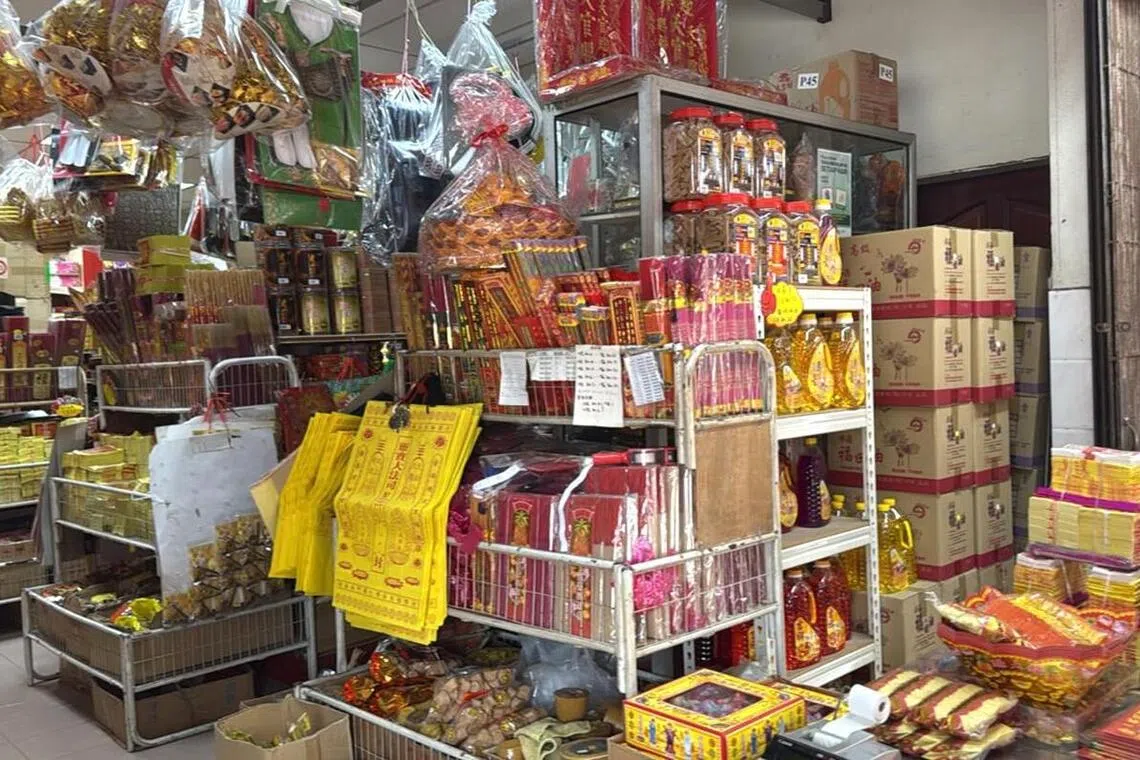
Local business groups have urged the government to address what they perceive as unfair competition.
PHOTO: LEE CHUAN WEI
“Now I can get a lamp for RM13 on Pinduoduo instead of RM22.50 through a middleman. Same quality, less cost,” he told ST on Aug 10. Nearby, workers busily stuck coloured paper onto human effigies to be burnt during the Hungry Ghost Festival.
But the trade-off for Pinduoduo’s ultra-low pricing is longer delivery times, with shipments taking at least three weeks, said regular user LW Siew, 60.
“For local products that are needed urgently, I prioritise Lazada and Shopee, which offer two-day delivery. I once ordered a steel ball for about RM10 on Pinduoduo, but it was not delivered. I did not seek a refund as it was not worth the effort,” said the Ipoh-based administrative assistant.
Facing this intense competition, Penang merchant Lee has pivoted, offering same-day delivery for Chinese prayer items on orders above RM100.
“We can’t compete with Pinduoduo on price, so we compete on delivery speed, hoping to retain as many customers as we can,” he said.
Sign up for our weekly Asian Insider Malaysia Edition newsletter to make sense of the big stories in Malaysia