 By The War Zone | Created at 2026-08-13 17:00:54 | Updated at 2026-08-13 17:56:49
1 hour ago
By The War Zone | Created at 2026-08-13 17:00:54 | Updated at 2026-08-13 17:56:49
1 hour ago
The TWZ Newsletter
Weekly insights and analysis on the latest developments in military technology, strategy, and foreign policy.
The Polish Navy launched its largest surface combatant since the interwar period, when the frigate Wicher went into the water today. The warship, built locally according to a British design, is the first of three and part of a wide-ranging modernization program for the Polish Navy as it adapts to meet a growing Russian threat in the strategic Baltic Sea region and elsewhere.
Wicher (Polish for gale) was floated off a semi-submersible heavy-lift barge in the Gulf of Gdansk today.
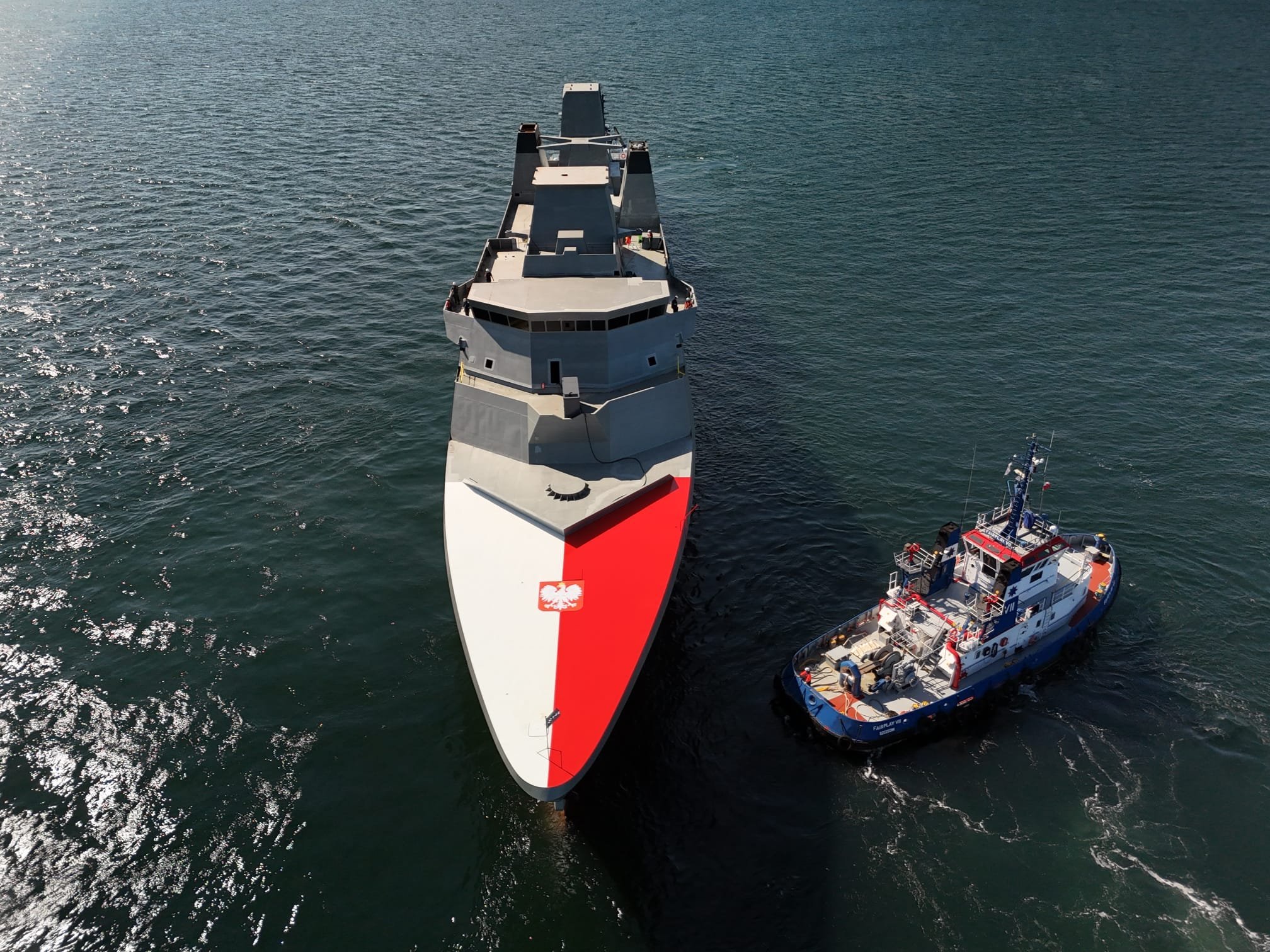 Wicher accompanied by a tugboat in the Gulf of Gdansk today. PGZ SW
 Yesterday, the frigate was still on dry land, in the dock at the PGZ Stocznia Wojenna (PGZ SW) yard in Gdynia, on the Baltic Sea, where it had been built. It was rolled out and placed on the barge there before its christening and naming ceremony attended by Polish President Karol Nawrocki.
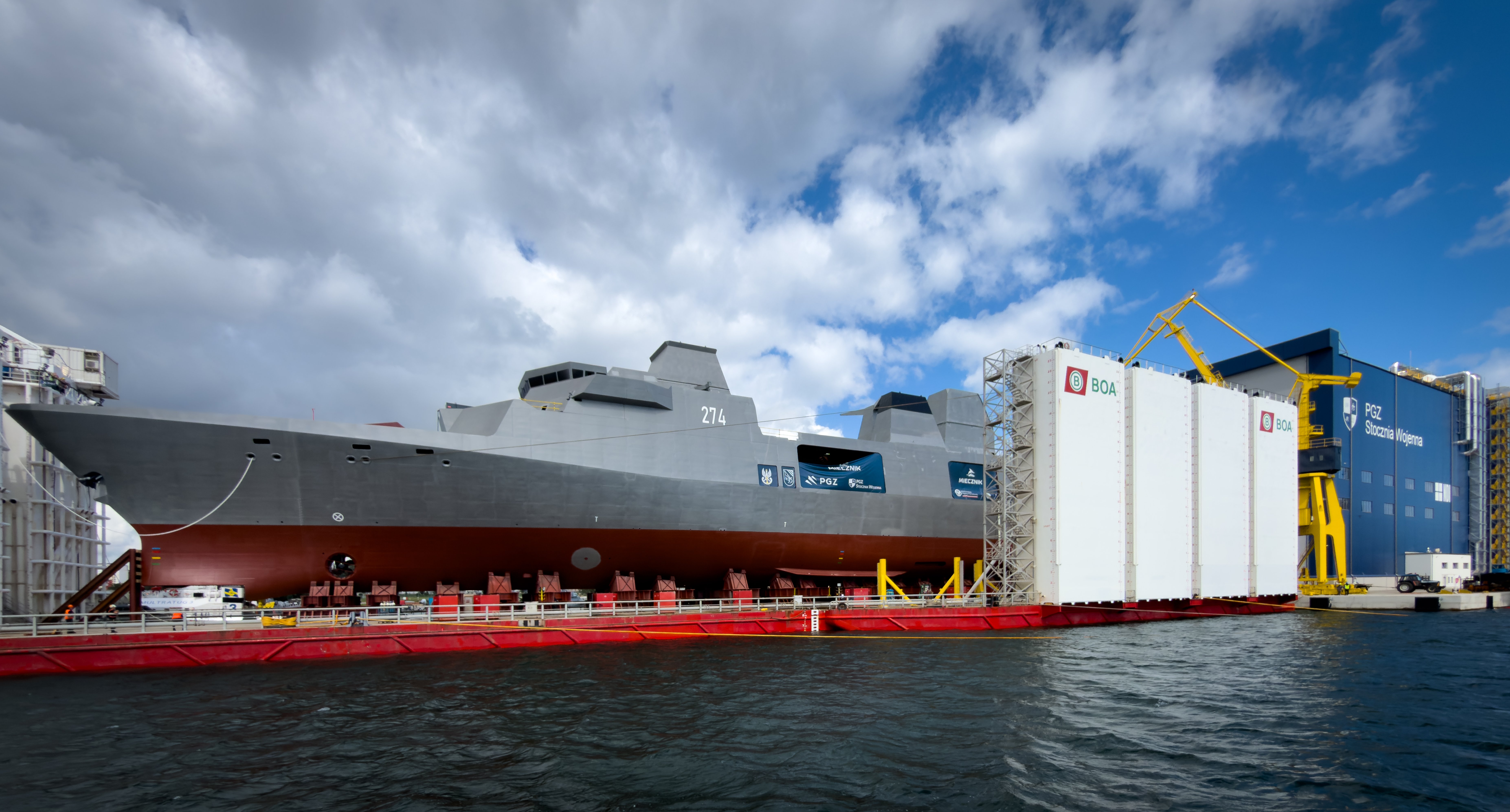 The future Polish Navy frigate Wicher, pennant number 274, aboard the semi-submersible heavy-lift barge BOABARGE 33 with the PGZ Stocznia Wojenna Hull Hall visible behind it in Gdynia, Poland, on August 11, 2026. The frigate was assembled and integrated inside the hall before being rolled out and positioned on the barge for its christening and launch. Photo by Mateusz Wlodarczyk/NurPhoto
 “Within the PGZ Group, we are implementing projects of strategic importance to national security,” said Adam Leszkiewicz, CEO of PGZ. “The christening and launch of the first frigate under the Miecznik program is one of the most important milestones in rebuilding the operational capabilities of the Polish Navy.”
W pewnym sensie Wicher odbył już swój pierwszy rejs. No, może „rejsik" 😉
Późnym wieczorem, na pokładzie barki, dotarł na miejsce dzisiejszej uroczystości chrztu i nadania imienia. Napędu jeszcze nie ma – ale pierwszy odcinek drogi po wodzie już za nim.
Do historycznejchwili… pic.twitter.com/VT1lVGacAQ
Yesterday’s ceremony was marked by the blasts from the ship horns of two of the warships that Wicher will replace. These are the Kościuszko, which accompanied Wicher during its launch today, and Pułaski, currently in dry dock at the shipyard.
These are Poland’s two Oliver Hazard Perry class frigates, dating from the late Cold War period and transferred from the U.S. Navy.
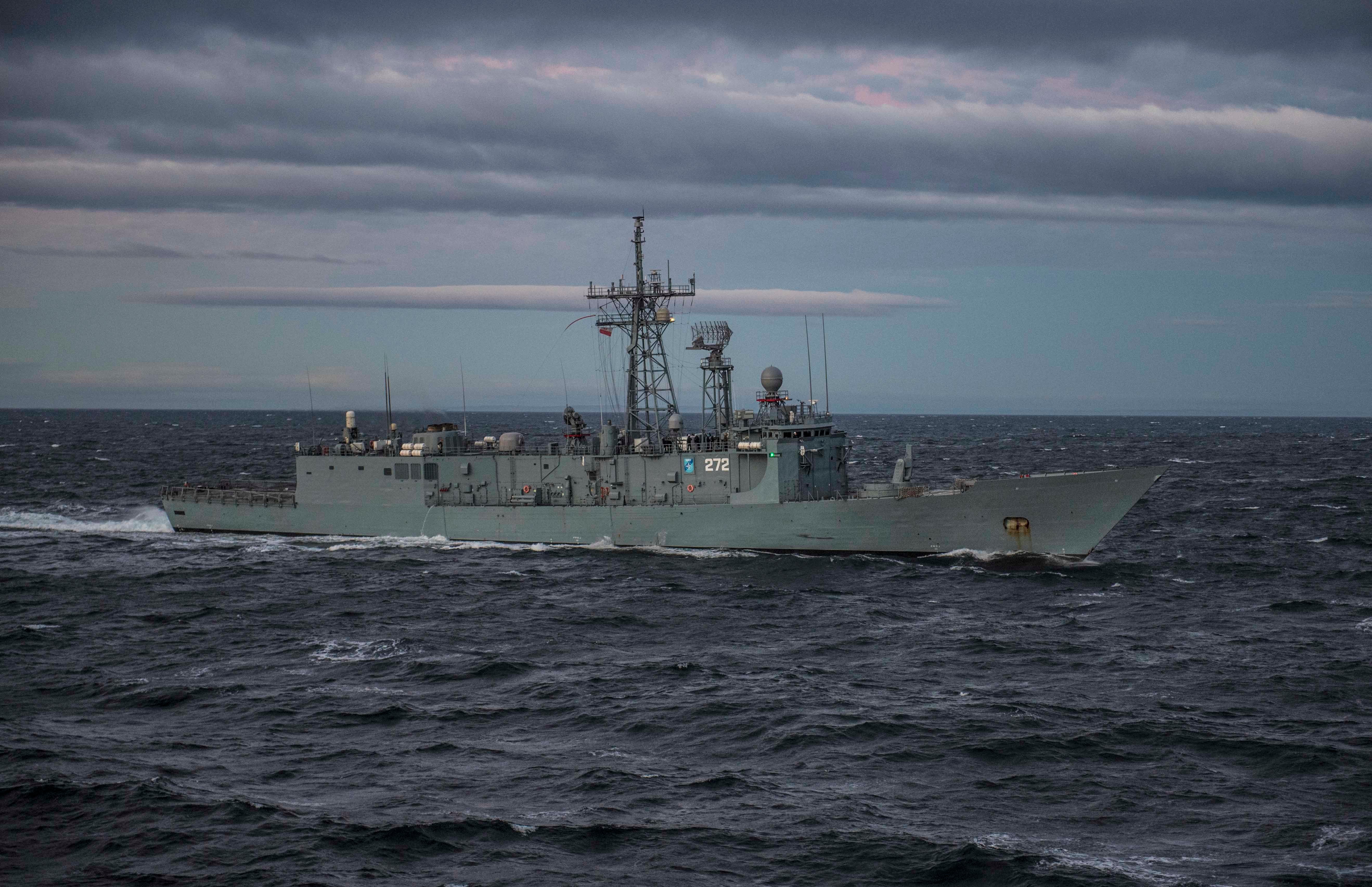 The Polish Navy Oliver Hazard Perry class frigate General Kazimimierz Pułaski transits the North Sea after an underway replenishment, in October 2018. U.S. Navy photo by Mass Communication Specialist 2nd Class James R. Turner/Released
 The three new multirole frigates being built in the Project 106 Miecznik (Swordfish) class — described as the largest program of its kind in Polish Navy history — are far more capable vessels, based on Babcock International’s Arrowhead 140 design.
The Arrowhead 140 design is derived from the innovative Iver Huitfeldt class frigate used by the Royal Danish Navy and also forms the basis of the U.K. Royal Navy Type 31 general-purpose frigate. Overall, the Arrowhead 140 has a modular structure and generous internal space, meaning it can be adapted for a variety of different systems and sub-systems, as required.
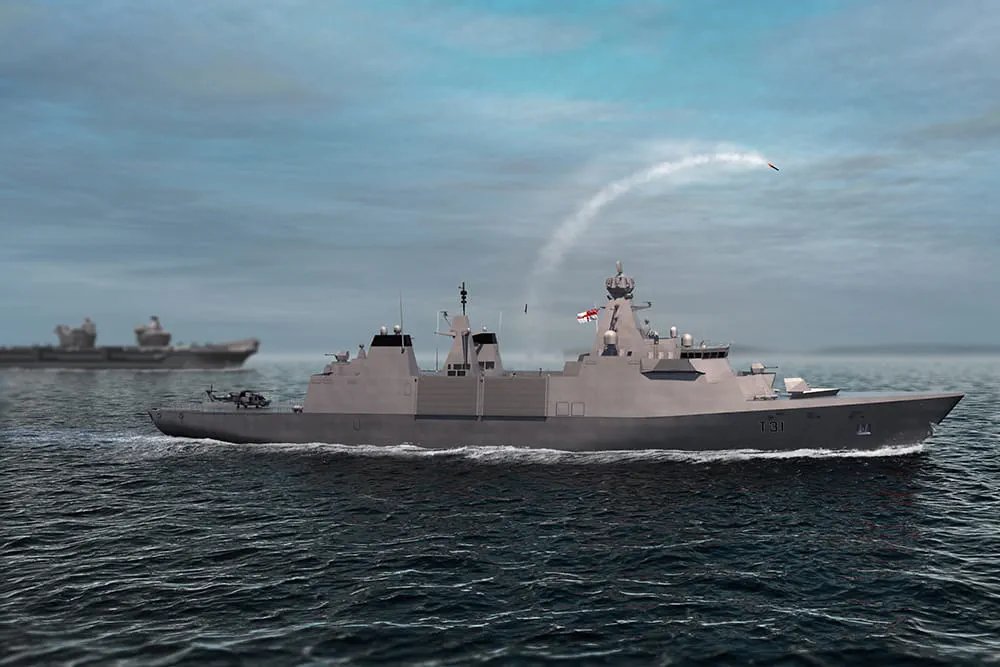 An artist’s impression of the U.K. Royal Navy Type 31 general-purpose frigate. Royal Navy
 The new Swordfish frigates have a length of 138 meters (453 feet), a beam of approximately 20 meters (66 feet), and a maximum displacement (including additional equipment and armor) of approximately 7,700 tons. They will have a maximum range of approximately 8,000 nautical miles, and a maximum speed of 28 knots, powered by four combined diesel and diesel (CODAD) diesel piston engines driving two propellers. Each will have a core crew of approximately 120, with space to embark an additional 60 personnel.
Babcock’s Arrowhead 140 design was selected by Poland in 2022, after which a keel-laying ceremony for Wicher was held in Gdynia in January 2024.
Construction of the second vessel, Burza (Storm), had begun by early 2026, which is planned to be followed by its launch in 2027 and commissioning in 2030. The keel for the third ship, Huragan (Hurricane), will be laid down in late 2026, followed by a planned launch in 2028 and commissioning in 2031.
While they are multirole vessels, the Miecznik design stresses anti-air warfare (AAW) and anti-submarine warfare (ASW).
Compared to the British Type 31, the Miecznik is more extensively equipped.
For its AAW mission, the primary weapon of the Polish warship is the MBDA CAMM, or Common Anti-air Modular Missile.
Firing trials of the CAMM (also known as Sea Ceptor) from the U.K. Royal Navy frigate HMS Argyll:
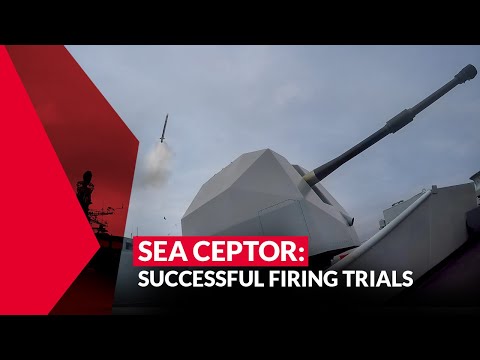
Sea Ceptor firing trials from HMS Argyll
For medium-range threats, out to beyond 62 miles, the warship will be armed with the CAMM-MR, being jointly developed by Poland and the United Kingdom under the Future Common Missile (FCM) program.
The standard CAMM, with a maximum range of around 28 miles, will also be carried to engage targets at shorter distances.
Versions of the CAMM can be quad-packed, in this case in the U.S.-made Mk 41 vertical launch system (VLS), with 32 cells. That would provide for a maximum of 128 missiles, especially significant bearing in mind current concerns about magazine depth in the face of sustained drone and missile barrages.
Depending on the exact configuration of the VLS, other kinds of missiles and ASW weapons could potentially be integrated at a later date, too.
For ASW specifically, the Miecznik class is provided with two dual-tube launchers for MU90 Impact lightweight torpedoes. The same torpedoes arm the Polish Navy’s AW101 helicopters, seen in the tweet below, which can also be embarked.
For surface strike, the frigate will be armed with eight Kongsberg Naval Strike Missiles (NSM), stealthy weapons that can be used against other ships as well as against targets on land. There is an option to install an additional eight NSM launchers if required.
Gun armament will comprise a Leonardo 76mm Strales, which is compatible with guided ammunition. While these are dual-purpose weapons also capable of striking surface and land targets, the guns are optimized for the anti-missile and anti-drone defense role, for which they fire DART projectiles that employ radio-command guidance for accuracy. The video below shows the Strales/DART combination in action during peacetime:
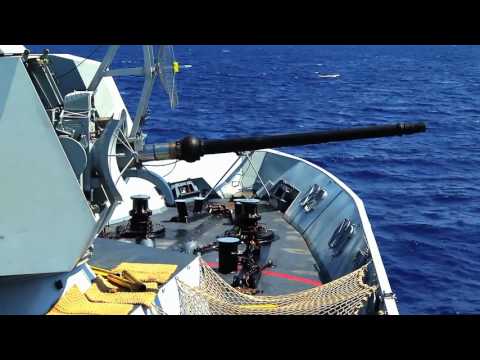
Strales system with DART ammunition
Two 35mm guns will also be able to fire programmable ammunition. These guns will likely be the locally produced OSU-35K remote weapon stations, as seen below on a Polish Navy minehunter:
Najbliższe dni upłyną nam pod znakiem Miecznika i wodowania Wichra. Równolegle pracujemy jednak przy jednostkach już będących w służbie – dziś na niszczycielu min ORP Albatros (602) zamontowaliśmy docelowy system artyleryjski OSU-35K.
Albatros to typ Kormoran II. Okręty te… pic.twitter.com/pEvF79AofY
For self-defense, the vessels will be fitted with the Terma C-Guard system, with eight fixed 130mm launchers that can dispense infrared, radar-frequency, and acoustic countermeasures.
The majority of the sensor suite on the Miecznik class is provided by Thales, integrated under its TACTICOS combat management system (CMS), already used by the Polish Navy. Thales-provided equipment also includes primary and secondary multifunction radars, a panoramic electro-optical system, and an underwater detection suite comprising a hull-mounted sonar and a towed array sonar.

TACTICOS, Thales’s Combat Management System for Warfighting and Maritime Security Operations
The electronic warfare system is from Rohde & Schwarz, based on that company’s KORA system.
Other additional systems include a laser warning system, navigation radars, and a diver detection sonar.
From the outset, the Polish Navy has schemed the Miecznik class around uncrewed systems, both in terms of operating these itself and countering hostile drones.
While it’s unclear what types of drones may be embarked, the Arrowhead 140 design includes four boat bays, which can accommodate uncrewed surface vessels (USVs) as well as traditional small, crewed boats. The large helicopter deck can also embark rotary-wing drones.
Bearing in mind the emphasis on ASW missions, USVs and rotary-wing drones equipped for this mission could become a regular fixture on the frigate, helping to extend its surveillance range and also for prosecuting targets, especially in high-risk and/or littoral environments.
Under current planning, Wicher is expected to be commissioned in 2029, following sea trials and qualification tests. Before then, the warship needs to be fully outfitted and its systems integrated, which will also be conducted at Gdynia.
The Miecznik program is scheduled for completion by the end of 2031, making it a remarkably compressed effort, reflecting the urgency behind Poland’s military modernization.

PGZ – Miecznik – Nowoczesna fregata dla Marynarki Wojennej RP
In the maritime realm, the new frigates are key to Poland’s efforts to transform its navy from a relatively small Baltic force centered on aging, second-hand warships into a more capable fleet able to make meaningful contributions to high-end NATO maritime operations.
The Miecznik class represents a substantial increase in both size and combat capability over the Polish Navy’s existing surface combatants. The transformation is being driven in large part by the changing security environment in the Baltic following Russia’s full-scale invasion of Ukraine.
With Finland and Sweden joining NATO, Germany strengthening its maritime capabilities, and the Baltic states expanding their armed forces, Poland is positioning itself to play a much larger role in the alliance’s regional maritime architecture.
Russia retains substantial air defense, electronic warfare, and strike capabilities in the Baltic region, while its Baltic Fleet is relatively modern and is relatively well preserved compared with the Black Sea Fleet. Russian forces in and around the Baltic region — particularly Kaliningrad, western Russia, and Belarus — can combine these capabilities with long-range missiles, submarines, mines and other systems to threaten NATO forces before they even have the chance to concentrate.
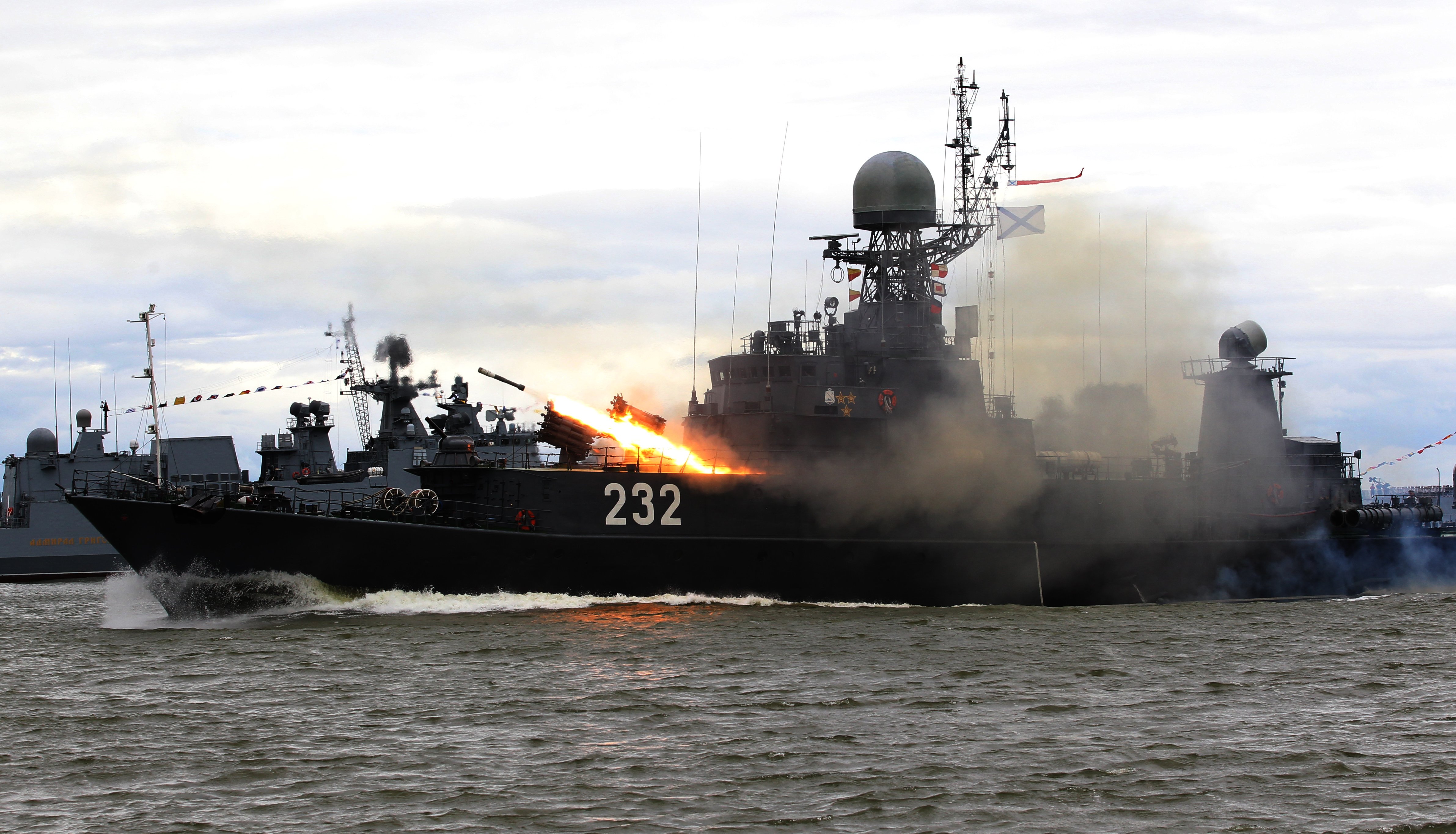 Russian Baltic Fleet units attend a naval review to honour Navy Day in Baltoysk, Kaliningrad region, Russia, in July 2015. Photo by Sasha Mordovets/Getty Images
 Already, Russia is employing cyber operations, sabotage, GPS/electronic interference, drone activity and other “gray zone” measures around NATO’s eastern flank
A modern frigate force, backed by advanced submarines, coastal anti-ship missiles, and other naval capabilities, will give Warsaw considerably more reach and flexibility both inside the Baltic and beyond it.
However, there remains a question over whether Poland can generate enough people, infrastructure, and sustained resources to turn its ambitious procurement plans into a genuinely effective fleet. The Polish Navy has historically operated with a relatively small personnel base, currently numbering just over 6,000, while the country’s armed forces are simultaneously pursuing one of Europe’s most expansive modernization programs. Manning, training, maintaining, and sustaining an expanded fleet could ultimately prove a challenge.
Poland has an option with Babcock to build a further five ships to the same design. Perhaps more significantly, construction infrastructure built for the program, and the accompanying skills base, will be available for projects in the future, helping the Polish Navy continue its modernization.
Contact the author: [email protected]