 By The War Zone | Created at 2026-07-29 00:19:24 | Updated at 2026-07-29 02:09:05
2 hours ago
By The War Zone | Created at 2026-07-29 00:19:24 | Updated at 2026-07-29 02:09:05
2 hours ago
The TWZ Newsletter
Weekly insights and analysis on the latest developments in military technology, strategy, and foreign policy.
After more than 42 years of service as one of America’s most potent power-projection platforms, the nuclear-powered submarine USS Georgia has returned home from operations for the final time ahead of its retirement. The boat is one of four Ohio class nuclear-powered guided missile submarines, or SSGNs. The SSGNs are some of the most capable and in-demand submarines in the U.S. Navy’s inventory today, but are all set to leave service before the end of the decade.
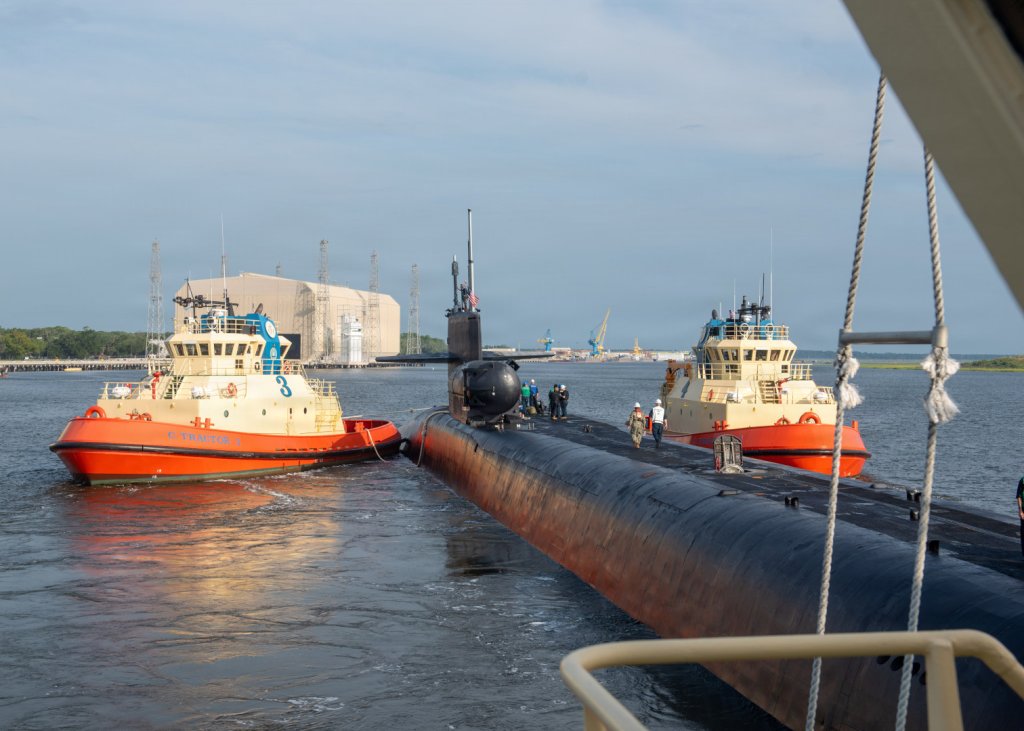 USS Georgia seen returning to its homeport of Naval Submarine Base Kings Bay, Georgia, on July 27, 2026. USN/Petty Officer 1st Class Travis Alston
 The USS Georgia returned to its homeport of Naval Submarine Base Kings Bay, Georgia, on Monday. The boat is scheduled to be officially inactivated on July 31, the first step on a long road through retirement that is set to end with it being recycled.
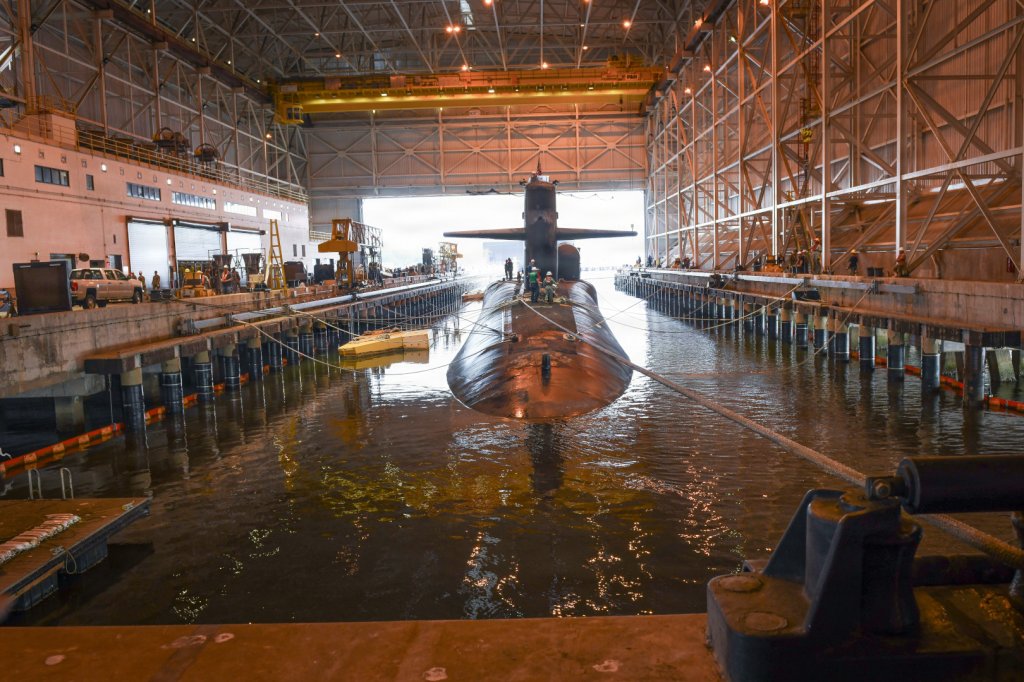 Another look at the USS Georgia after its recent return to Naval Submarine Base Kings Bay. USN/Petty Officer 1st Class Travis Alston
 Georgia was first commissioned as an Ohio class nuclear ballistic missile submarine, or SSBN, in 1984. It was the last of the four Ohio class boats to be converted into a conventionally armed SSGN, returning to the fleet in its new form in 2008. However, it was used as the main testbed for proving out the concept initially, as you can read about in much more detail in this past TWZ feature.
The Ohio class SSGNs are most widely known for their ability to carry up to 154 Tomahawk land-attack cruise missiles. However, they typically only carry around 100 of these weapons – a still impressive amount – and are actually highly capable multi-mission platforms. These boats can be fitted with up to two dry deck shelters, for deploying special operators underwater, including in mini-submarines, as well as uncrewed platforms. They are also equipped to act as discreet underwater intelligence fusion nodes and command centers.
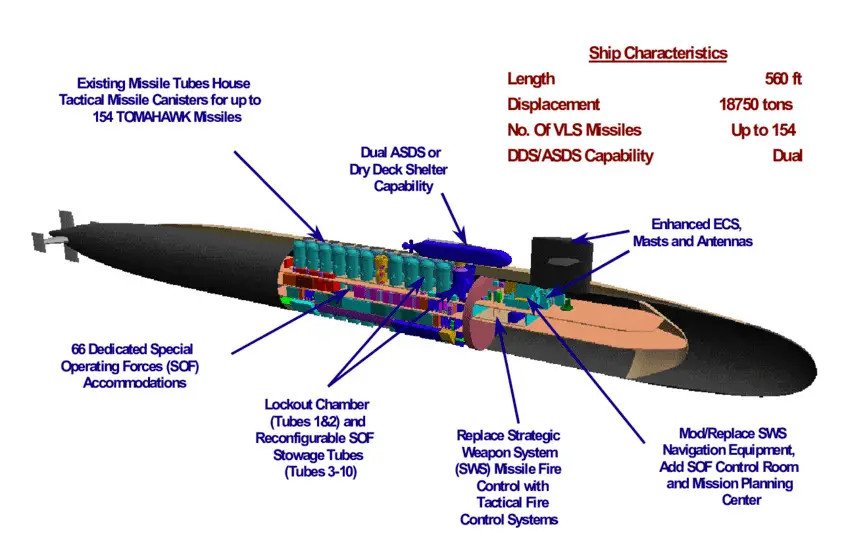 A graphic offering a very general overview of the key features of the Ohio class SSGN configuration. USN
 This unique mix of capabilities has led the four converted Ohios to become among the most heavily tasked submarines in the Navy. The public presence of one of these SSGNs, as well as their SSBN cousins, in any region of the world sends powerful signals to opponents, as well as allies and partners. Over the years, they have made somewhat regular appearances during spikes in geopolitical friction globally.
Guided-missile submarine USS Georgia (SSGN 729) transits on the surface of the Arabian Gulf.#AmericasAwayTeam is always on watch – ensuring maritime stability & security in the critical waters of the Central Region. pic.twitter.com/fOGeBIXvsg
— U.S. Naval Forces Central Command/U.S. 5th Fleet (@US5thFleet) December 22, 2020USS Georgia, specifically, has been used for this purpose on several occasions in the past, especially in the Middle East. In late 2020 and early 2021, Georgia made rare publicized trips on the surface through the Strait of Hormuz during periods of particular tension with Iran. In May 2021, Iranian boats harassed the submarine and its escorts during one of these transits, prompting a U.S. Coast Guard patrol boat to fire warning shots.

Iranian fast boats around USS Georgia in the Strait of Hormuz
The USS Georgia is also very likely to have been the submarine that fired more than two dozen Tomahawks at the Iranian nuclear facility at Isfahan as part of Operation Midnight Hammer in 2025. Whether or not it took part in subsequent strikes on Iran as part of Operation Epic Fury this year is unclear.
Despite what the Ohio class SSGNs continue to bring to the table, the Navy currently plans to inactivate all of them over the next three years. The plan had previously been to have all of these boats out of active service by 2028. This timeline has now been just slightly extended, with the USS Ohio, USS Florida, and USS Michigan set to follow Georgia into retirement in Fiscal Years 2027, 2028, and 2029, respectively. USS Ohio is also notably the lead boat in the class and, by extension, the oldest, having entered service in 1981.
As it stands now, there is no direct replacement for the Ohio SSGNs in the Navy’s shipbuilding pipeline. The service does have a number of Virginia class attack submarines capable of supporting special operations missions in service now and is planning to acquire enlarged Block V subvariants. Each Block V will feature what is known as the Virginia Payload Module (VPM), which gives the boat four additional larger vertical launch tubes, and will really make it more of an SSGN. Between the VPM and the existing launch tubes carried over from the Block IV design, these submarines will be able to carry up to 40 Tomahawk missiles at a time. The VPM tubes will also be able to accommodate the forthcoming Intermediate-Range Conventional Prompt Strike (IRCPS) hypersonic missile. However, no version of the Virginia class is expected to provide the same level of capability, at least in some regards, as is found on the Ohio SSGNs, based on what is publicly known. The first Block V Virginia class submarine with the VPM is not expected to enter service until 2028.
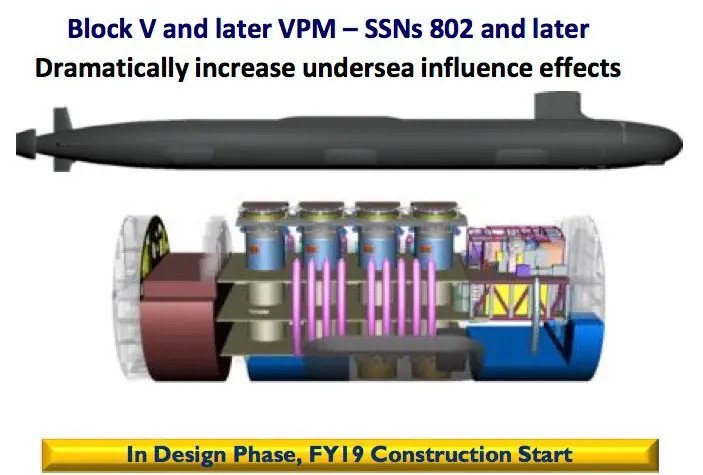 A briefing slide offering a general look at the Virginia Payload Module (VPM) that will be incorporated in Block V Virginia class submarines. USN
 The Navy is also in the process of replacing its Ohio SSBNs with new Columbia class types. There has been talk in the past of acquiring new “Large Payload Submarines,” possibly based on the Columbia design, as a more direct replacement for the Ohio SSGNs. However, the Columbia class program has suffered delays and cost growth, and the priority remains on getting the new SSBNs into service. It is critical for those boats to be delivered on a tight schedule to ensure there is no gap in the ability of the maritime leg of America’s nuclear triad to meet operational requirements.
In the meantime, the USS Georgia is already heading toward retirement and, unless the Navy changes course, the last of these highly capable submarines will be out of active service by 2029.
Contact the author: [email protected]