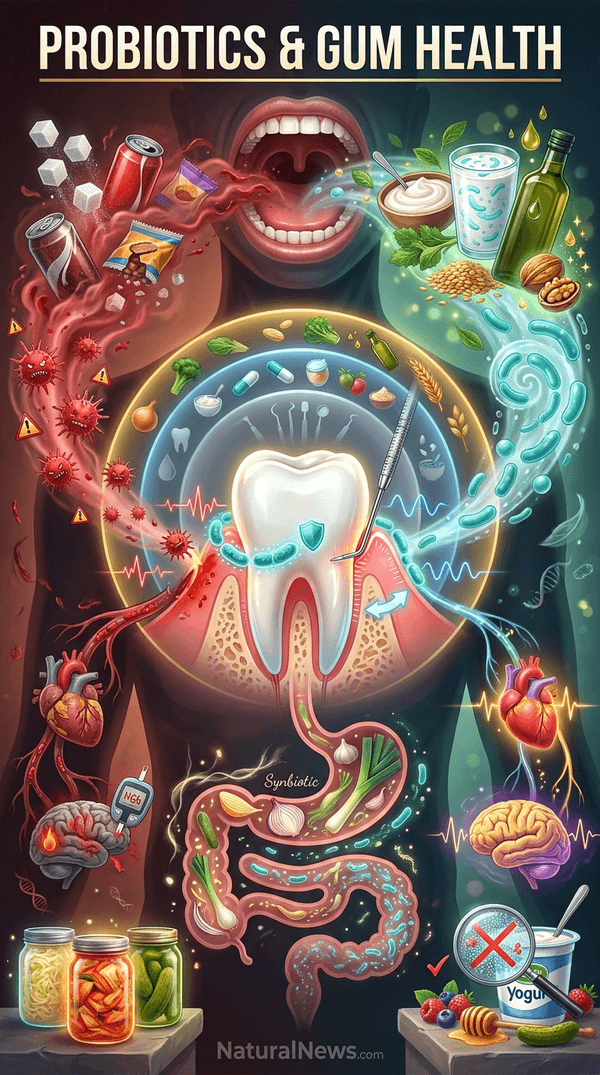
A pilot trial published in BMC Oral Health in 2025 examined whether probiotic supplementation combined with an anti-inflammatory diet reduces measures of gum disease. Researchers followed 120 women ages 20 to 60 with periodontitis and no other systemic health conditions over six weeks, according to the report reviewed by NaturalHealth365.
Both probiotic groups showed significant improvement in pocket depth and attachment loss, two clinical measures dentists use to track periodontitis. The group that combined the probiotic supplement with the personalized anti-inflammatory diet recorded the strongest results, the report stated.
Study Design and Findings
Participants were assigned to one of three groups. One group received standard care alone, one received standard care plus a probiotic supplement and one received standard care plus the supplement combined with a personalized anti-inflammatory diet. The diet emphasized vegetables, whole grains, legumes, olive oil, walnuts, yogurt and kefir, according to the report.
After six weeks, the two probiotic groups showed greater improvement than the standard-care group on both measured outcomes. Researchers described the added improvement in the diet group as an additive effect, according to the report. Dietary patterns high in fermented foods have previously been tied to increased gut microbiome diversity and lower levels of inflammatory proteins in a 10-week study highlighted by NaturalNews.com [1].
Why Food May Amplify Probiotics
Food-based probiotic sources differ from supplements in the additional nutrients they deliver. Fermented foods such as yogurt and kefir introduce live bacterial cultures, and fiber has been studied as a carrier that can help deliver probiotic bacteria through the gastrointestinal tract [2]. Consistent fiber and prebiotic intake also feeds beneficial gut microbes, according to reports on fermented food research [3].
The trial's anti-inflammatory diet removed refined sugar and processed foods almost entirely. Nutrition guides describe a diet high in sugar, alcohol and highly processed grains as acid-forming and linked to mineral depletion, while a whole-food diet supplies supportive nutrients [4]. The report said removal of processed food likely contributed to the healing observed independently of the probiotic bacteria.
Broader Health Context and Oral-Systemic Links
Gum disease does not remain confined to the mouth. Research cited by NaturalNews.com has linked gum disease to heart attacks, strokes, and diabetes, with harmful oral bacteria entering the bloodstream and driving inflammation that damages arteries [5]. A 2025 study from the University of Minnesota also found that disrupting chemical signaling among oral bacteria can shift the microbial community toward healthier species, according to a report on NaturalHealth365 [6].
Probiotic research extends beyond oral health. Beneficial bacteria have been shown to counteract inflammation and control disease-causing bacteria, and the gut microbiome is an integral part of immune function, according to a review by Mercola.com [7]. David Perlmutter's Brain Maker describes gut microbes as a central influence on brain health [8].
Practical Recommendations
The report recommended adding a daily serving of organic plain yogurt or kefir, with fresh berries or honey instead of flavored versions that contain added sugar. Labels matter for fermented products; commercial brands of dairy alternatives and related foods often contain added sugars and thickeners that some people find difficult to digest [9]. The report also recommended rotating fermented foods such as sauerkraut, kimchi and unpasteurized pickles to broaden bacterial diversity, and pairing probiotic foods with prebiotic fiber from onions, garlic, and leeks [3].
Conclusion
The trial's small size and six-week duration limit the scope of the findings, and the results do not establish that probiotic foods alone can replace periodontal treatment. The report said the diet-supported group's outcome points toward a genuine additive effect, and that food choices may play a supportive role in oral health.
References
- Coco Somers. "Diet Rich in Fermented Foods Linked to Increased Gut Microbiome Diversity, Reduced Inflammation, Stanford Study Finds". NaturalNews.com. May 25, 2026.
- Shanthi G. Parkar. "Gut Health Benefits of Kiwifruit Pectins: Comparison with Commercial Functional Polysaccharides". Journal of Agricultural and Food Chemistry. 2010.
- NaturalNews.com. "The Probiotic Myth: Why Timing Your Fermented Foods Won't Revolutionize Gut Health". April 29, 2026.
- Kristine Miles. "The Green Smoothie Bible: 300 Delicious Recipes".
- Cassie B. "Study Shows Oral Health Could Be Key to Preventing Heart Disease". NaturalNews.com. May 6, 2025.
- Patrick Tims. "Researchers Find Disrupting Oral Bacteria Signaling May Improve Oral Health". NaturalNews.com. May 1, 2026.
- Mercola.com. "Modern Life Depletes Your Gut Microbes in a N...". May 6, 2015.
- David Perlmutter. "Brain Maker: The Power of Gut Microbes to Heal and Protect Your Brain for Life".
- Christine Bailey. "The Gut Health Diet Plan: Recipes to Restore Digestive Health and Boost Wellbeing".
Explainer Infographic