 By The Epoch Times | Created at 2026-08-18 12:20:34 | Updated at 2026-08-18 12:29:24
15 minutes ago
By The Epoch Times | Created at 2026-08-18 12:20:34 | Updated at 2026-08-18 12:29:24
15 minutes ago
Rapper Tupac Shakur was fatally shot in 1996 in revenge for a beating he and members of his entourage gave to a Los Angeles gang member in the MGM Grand casino in Las Vegas a few hours earlier, a prosecutor told a jury at the start of the trial of Duane “Keffe D” Davis on Aug. 17.
Shakur, who was 25, is widely considered to be one of the most influential rappers in the history of the genre, but nobody has been convicted of his murder, which took place shortly after a heavyweight title boxing match between Mike Tyson and Bruce Seldon at the MGM Grand.
Chief Deputy District Attorney Binu Palal on Monday showed the jury a video of Shakur’s entourage allegedly attacking Davis’s nephew Orlando “Baby Lane” Anderson in the casino on Sept. 7, 1996.
Palal said Davis was furious about this attack and spent the next two-and-a-half hours planning a payback attack, which eventually took place just off the Las Vegas Strip.
Shakur suffered fatal wounds when a white Cadillac pulled up next to the car he was in, at an intersection, and shots were fired.
He died in hospital six days later, while the head of Shakur’s Death Row Records, Marion “Suge” Knight, who was driving the car, survived the shooting.
The prosecution says Davis was one of four men in that white Cadillac. The other three men have all died in the years since. Police have not said who fired the gun at Shakur.
Prosecutors say the violence at the casino stemmed from hostility between two Los Angeles-area street gangs, the South Side Compton Crips, of which Davis was the self-described leader, and Mob Piru, which police say was associated with Knight and Death Row Records.
‘Davis Did Not Pull the Trigger’
“Let’s be clear, Duane Davis did not pull the trigger. But he did plan the shooting in retaliation of the beating of his nephew,” Palal said. “Remarkably, you will learn that from Duane Davis himself.”
Palal said that over the years Davis was the “one person who has a hard time being silent.”
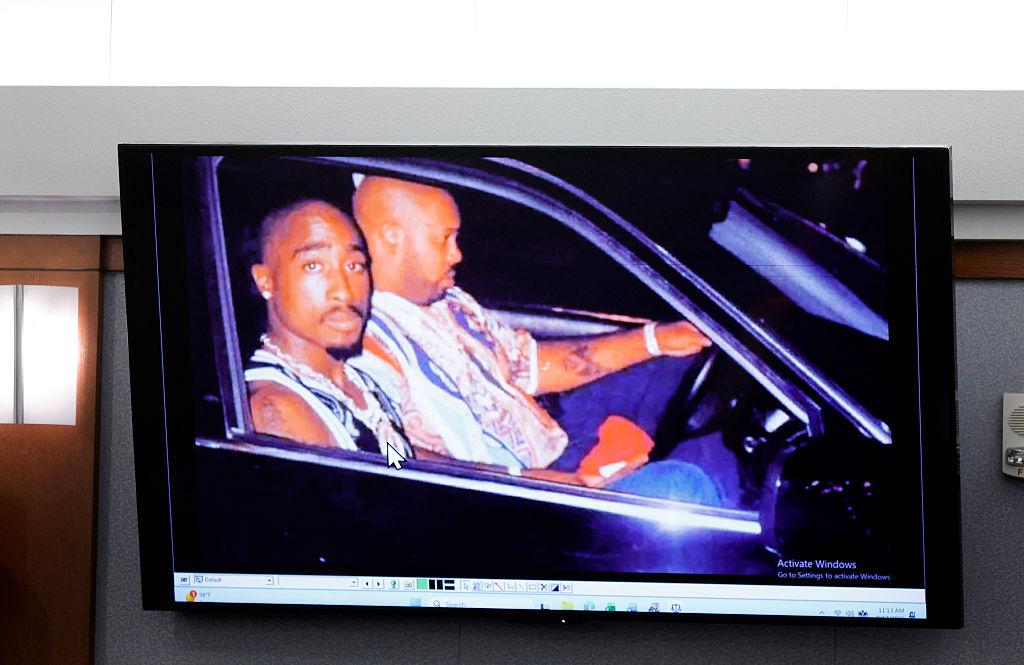
A 1996 photo of rapper Tupac Shakur (L) and Marion "Suge" Knight is displayed during the Duane Davis murder trial, related to the 1996 killing of the rapper, at Clark County District Court at the Regional Justice Center in Las Vegas, Nevada, on August 17, 2026. Steve Marcus/AFP via Getty Images
“And now 30 years later, we’re going to ask you to finally hold Duane Davis accountable,” Palal said.
In March 1997, Notorious B.I.G.—real name Christopher Wallace—was fatally shot in Los Angeles in a crime that also remains unsolved.
Palal said Davis talked to the FBI in 1998 and again the following year, both times admitting he had been in Las Vegas on the night of the Shakur shooting.
Palal said that in 2008, a federal task force investigating the killing of Wallace interviewed Davis again under a federal proffer agreement, which protected him from being prosecuted for what he told them as a witness.
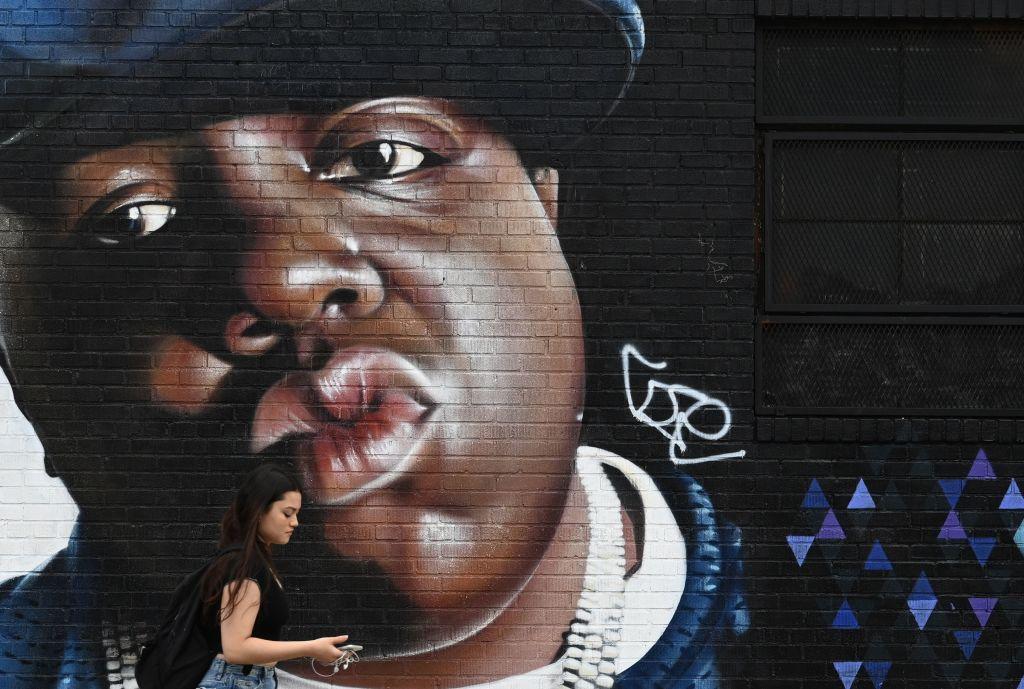
A woman passes by a mural of rapper Notorious B.I.G. (Biggie Smalls) on a wall in the Bishwick section of Brooklyn, New York City, on June 6, 2019. Timothy A. Clary/AFP via Getty Images
During that interview, he described handing a gun to the men in the backseat of a white Cadillac that fired on a black BMW with Shakur and Marion “Suge” Knight inside.
On Monday, Shakur’s family, including his stepbrother Maurice “Mopreme” Shakur, a former rapper, listened as the prosecutor played the audio of that interview.
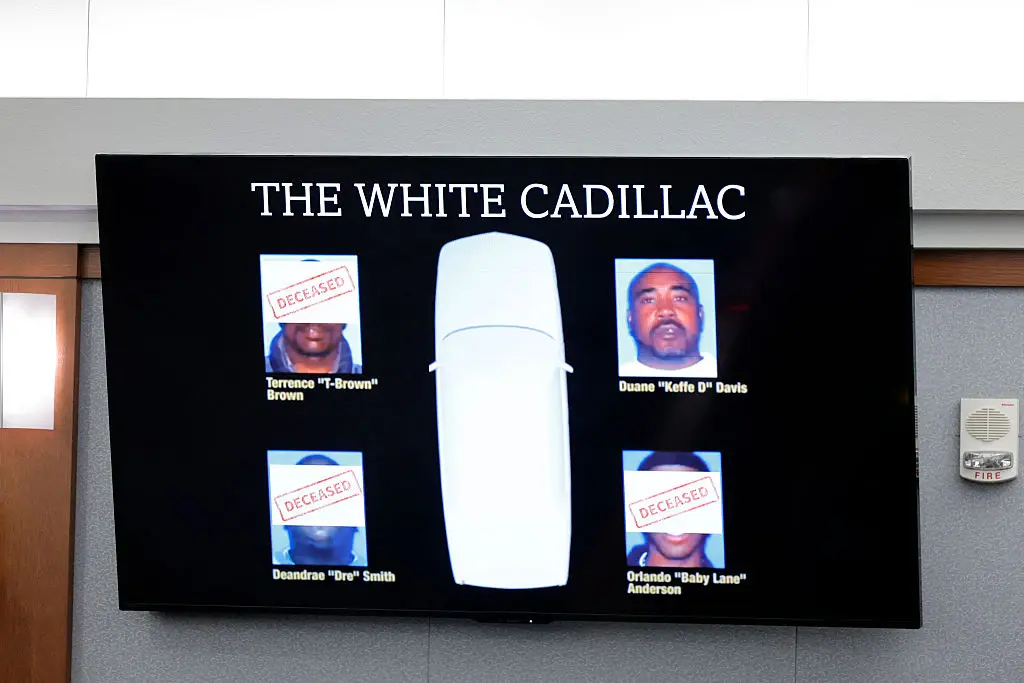
An illustration is displayed during opening statements in the murder trial of Duane Davis, related to the 1996 killing of rapper Tupac Shakur, at Clark County District Court in the Regional Justice Center in Las Vegas, Nevada, on August 17, 2026. Steve Marcus/AFP via Getty Images
In 2009, Palal said Davis made similar admissions in another interview with Las Vegas police.
In June, Judge Carli Kierny ruled that the statements he gave in 2008 and 2009 were voluntary and admissible at trial.
She also ruled that a 2019 memoir Davis co-authored, called “Compton Street Legend,” could be used by the prosecution as the defendant had repeatedly referred to it as the “real truth.”
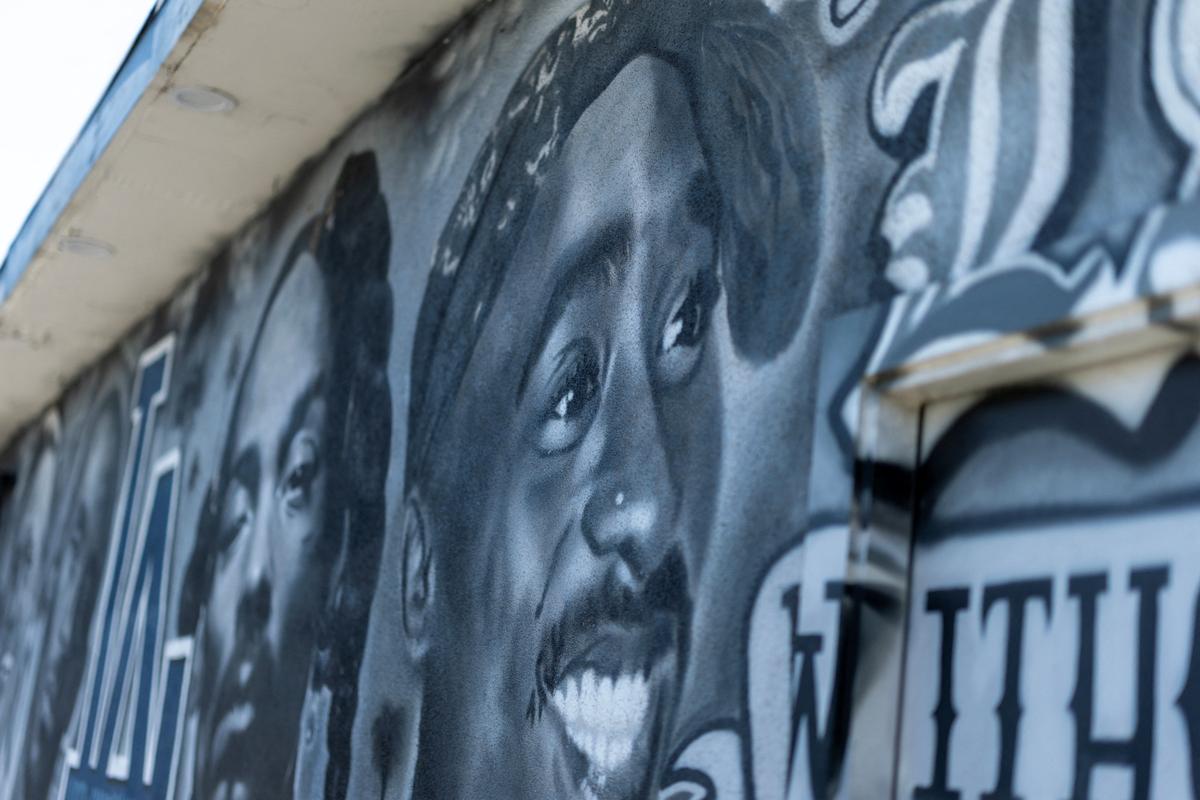
A mural depicting the late rapper Tupac Shakur on the side of a building in Bellflower, Calif., on Aug. 10, 2026. Mike Blake/Reuters
After Palal gave his opening statement, the prosecution called its first witness, former Los Angeles Police Department detective Fred Miller, who testified remotely. Miller said Davis had briefly been suspected in the shooting of Wallace in 1997. Davis had admitted to being present at a party at the Petersen Automotive Museum in Los Angeles, where Wallace and Combs were guests. Wallace was shot as he left the party.
Defense lawyer Michael Sanft objected to Miller’s testimony, and Kierny told the jury, with the agreement of the prosecutors, that the LAPD does not believe Davis was involved in Wallace’s killing.
Defense Says Prosecutors’ Narrative Is ‘Fiction’
In his opening statement to the jury, Sanft criticized the prosecution’s version of events.
“What they are telling you, they are representing as fact, when it’s really fiction,” Sanft said. “There’s no facts.”
He said law enforcement had known Davis was “full of [expletive],” which was why he had never been charged prior to 2023.
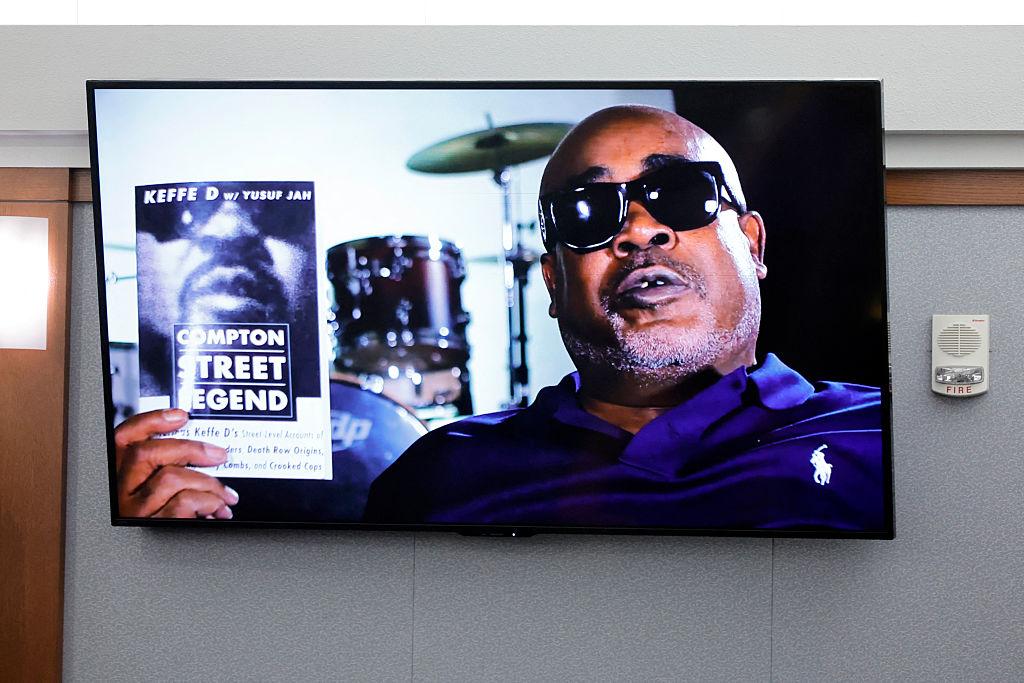
A photo of Duane Davis holding his book "Compton Street Legend" is displayed during opening statements of his murder trial, related to the 1996 killing of rapper Tupac Shakur, at Clark County District Court in the Regional Justice Center in Las Vegas, Nevada, on August 17, 2026. Steve Marcus/AFP via Getty Images
Sanft said one detective’s work on the case was “biased,” “sloppy,” and “incomplete” and that there were several missing documents in the original investigation.
Outside court, Sanft offered his insight into the trial, which is due to last six weeks.
“The length of time is going to be a huge problem for people trying to recall things, to remember things,” Sanft said. “That’s just not how it works.”
Asked about saying his client was “full of [expletive]” and similar things, he said, “We all have a family member who’s like that.”
Reuters and The Associated Press contributed to this report.