 By The Rio Times | Created at 2026-10-19 10:11:24 | Updated at 2026-10-19 22:10:44
12 hours ago
GUIDES · MOROCCO
Key Facts
- —Country Morocco is a kingdom in North-West Africa. More than 99 percent of people are Sunni Muslim as of 2022, and Islam is the state religion.
- —Head of faith King Mohammed VI holds the title Commander of the Faithful. He chairs the Supreme Council of the Ulema, the only body allowed to rule on fatwas.
- —School of law The Maliki school of Sunni Islam, with the Ashari creed. By law, schools teach it, apart from private Jewish schools.
- —Minorities Jews, Christians, Shia Muslims and Baha’is together make up under 1 percent. Jewish leaders estimated about 3,500 Jews in 2022.
- —Minister Ahmed Toufiq runs the Ministry of Endowments and Islamic Affairs. He kept the post in the cabinet sworn in on 16 October 2026.
- —Travel Morocco sits at Level 2, exercise increased caution, on the US advisory scale, last issued on 21 April 2025. The cited risk is terrorism.
Religion in Morocco explained: the state faith, the king’s role, the Jewish and Christian minorities and the rules of daily life. Each figure carries its date.
Morocco religion is defined by one fact: Islam is the state religion, and the king is its protector. More than 99 percent of Moroccans are Sunni Muslims, as of 2022.
For US readers this matters because religious rules touch travel safety, family law, business routines and visas. This guide sets out who decides, what the law says and where the limits lie as of October 2026.
Islam Is the State Religion
Article 3 of the 2011 constitution makes Islam the religion of the state. The state also guarantees to all the free exercise of beliefs, and the preamble calls Morocco a sovereign Muslim state.
The preamble lists Arab-Islamic, Amazigh and Saharan-Hassanic components of national identity. It adds African, Andalusian, Hebraic and Mediterranean influences.
Article 7 bars political parties founded on a religious basis, and it forbids parties whose aim is to harm the Muslim religion. Article 175 adds that no constitutional revision may touch the provisions on the Muslim religion.
The US State Department puts the Sunni Muslim share above 99 percent in its report for 2022, with Shia under 0.1 percent. Christians, Jews and Baha’is together make up less than 1 percent.
By law, schools must teach Sunni Islam in the Maliki-Ashari tradition, except private Jewish schools. Foreign-run schools may choose whether to include Islamic instruction, the same report says.
Maliki is one of the four main schools of Sunni jurisprudence, and Ashari is a long-established school of Sunni theology. Together they give Moroccan religious teaching a settled, official line.
The King as Commander of the Faithful
Article 41 gives King Mohammed VI the title Commander of the Faithful, or Amir al-Mouminine. It says he sees to the respect for Islam and guarantees the free exercise of beliefs.
The king presides over the Supreme Council of the Ulema, a body of senior religious scholars. The constitution makes the council the only body that may rule on fatwas, which are formal religious opinions.
The State Department says a fatwa binds only once the king endorses it by decree and parliament confirms it in law. It adds that such rulings bind Maliki Sunni Muslims only.
The system was visible in December 2024, when the king chaired a council session on proposed changes to the family code. Minister Ahmed Toufiq said the council agreed with the majority of the 17 issues put to it, according to Morocco World News.
The council said three proposals touched fixed religious texts and could not be reformed by interpretation. Reports list DNA proof of paternity, ending the male-relative priority called taasib, and Muslim to non-Muslim inheritance among those not approved.
How the State Runs Religious Life
The Ministry of Endowments and Islamic Affairs oversees mosques, religious endowments called habous, and Islamic education. Ahmed Toufiq leads it and kept the post in the cabinet sworn in on Friday 16 October 2026.
The State Department says the ministry guides and monitors sermons, Quranic schools and religious broadcasting, which it presents as a counter-extremism measure. Imams must follow a ministry guide for preachers.
Mosques must close to the public shortly after prayer times, to prevent what the government calls unauthorised activity. Building or renovating any mosque, church or synagogue needs approval from the interior and Islamic affairs ministries.
Public television must give 5 percent of airtime to Islamic content and broadcast the call to prayer five times a day. Assadissa, a state channel, carries mainly Quran and hadith readings, the recorded sayings of the Prophet Muhammad.
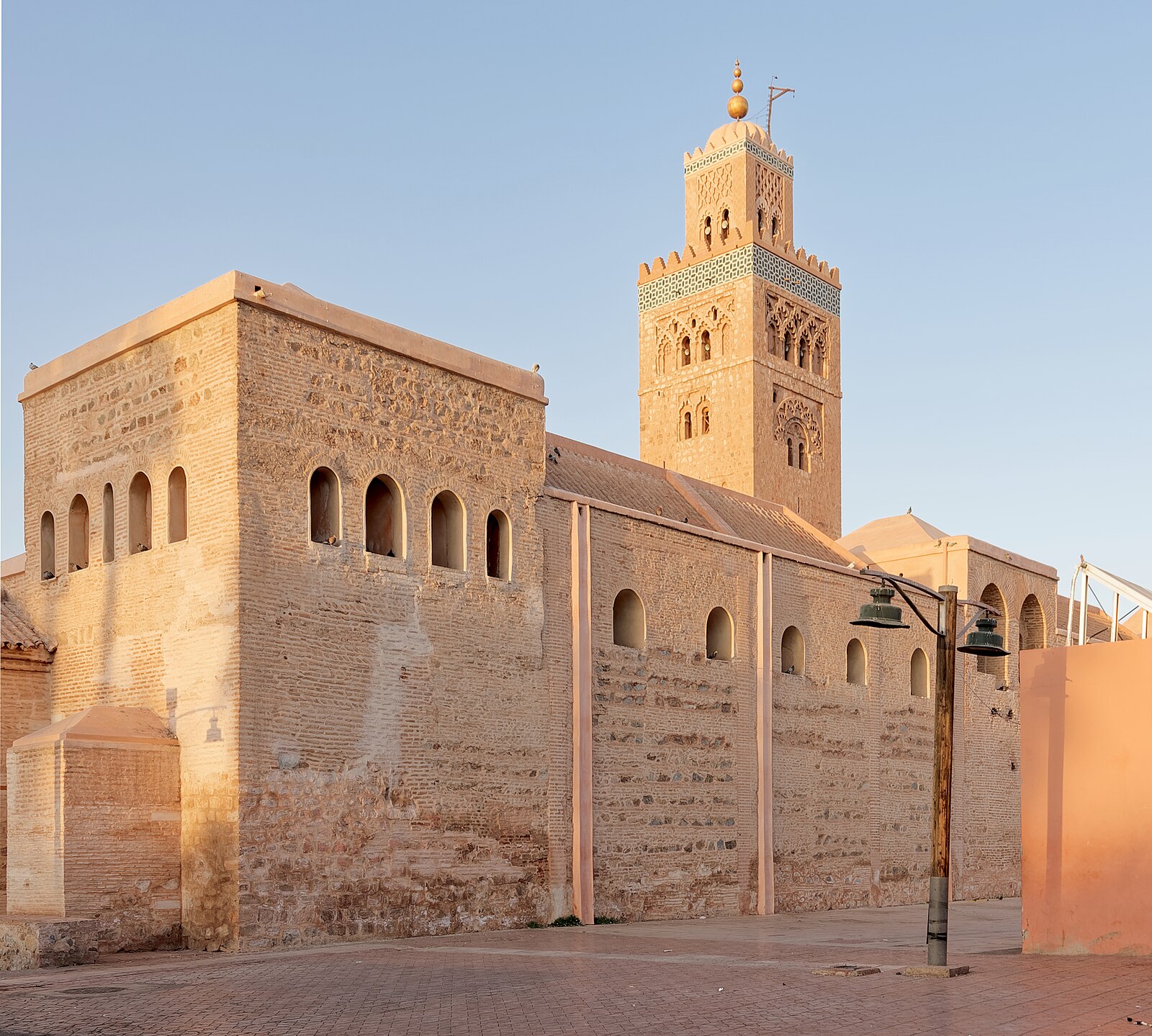
In February 2026 the king ordered 157 mosques opened before Ramadan, for 647.3 million dirhams (about US$67 million). All conversions here use the Bank Al-Maghrib reference rate of 9.7153 dirhams to the US dollar on 16 October 2026.
In 2025 the minister told parliament that 2,217 mosques had been damaged by the Al Haouz earthquake of 2023. A three-year programme was set up to repair them and other damaged places of worship.
The Mohammed VI Institute in Rabat trains imams, and women religious guides called morchidates, who do not lead communal prayers. A royal decree created it in 2014, and its first building opened in March 2015.
By 2022 the institute had trained more than 6,000 religious officials, about 4,200 of them foreigners, the State Department said. The Mohammed VI Foundation of African Ulema lists students from Senegal, Mali, Guinea, Côte d’Ivoire, Nigeria, Gabon, Chad and France.
Sacred Sites and Places of Worship
The Hassan II Mosque in Casablanca is the country’s best-known modern religious building. Construction began on Saturday 12 July 1986 under King Hassan II, and the mosque was completed on Monday 30 August 1993.
Its foundation says the prayer hall covers 2 hectares and the minaret rises about 200 metres. It was financed by a national subscription, to which Hassan II invited all Moroccans to contribute.
Visitors who are not Muslim can tour the mosque with a guide, by reservation. The foundation lists a foreign adult ticket at 140 dirhams (about US$14).
The medina of Fez was inscribed on the UNESCO World Heritage list in 1981. UNESCO says the city was founded in the ninth century and holds madrasas, mosques and fountains from the Marinid period.
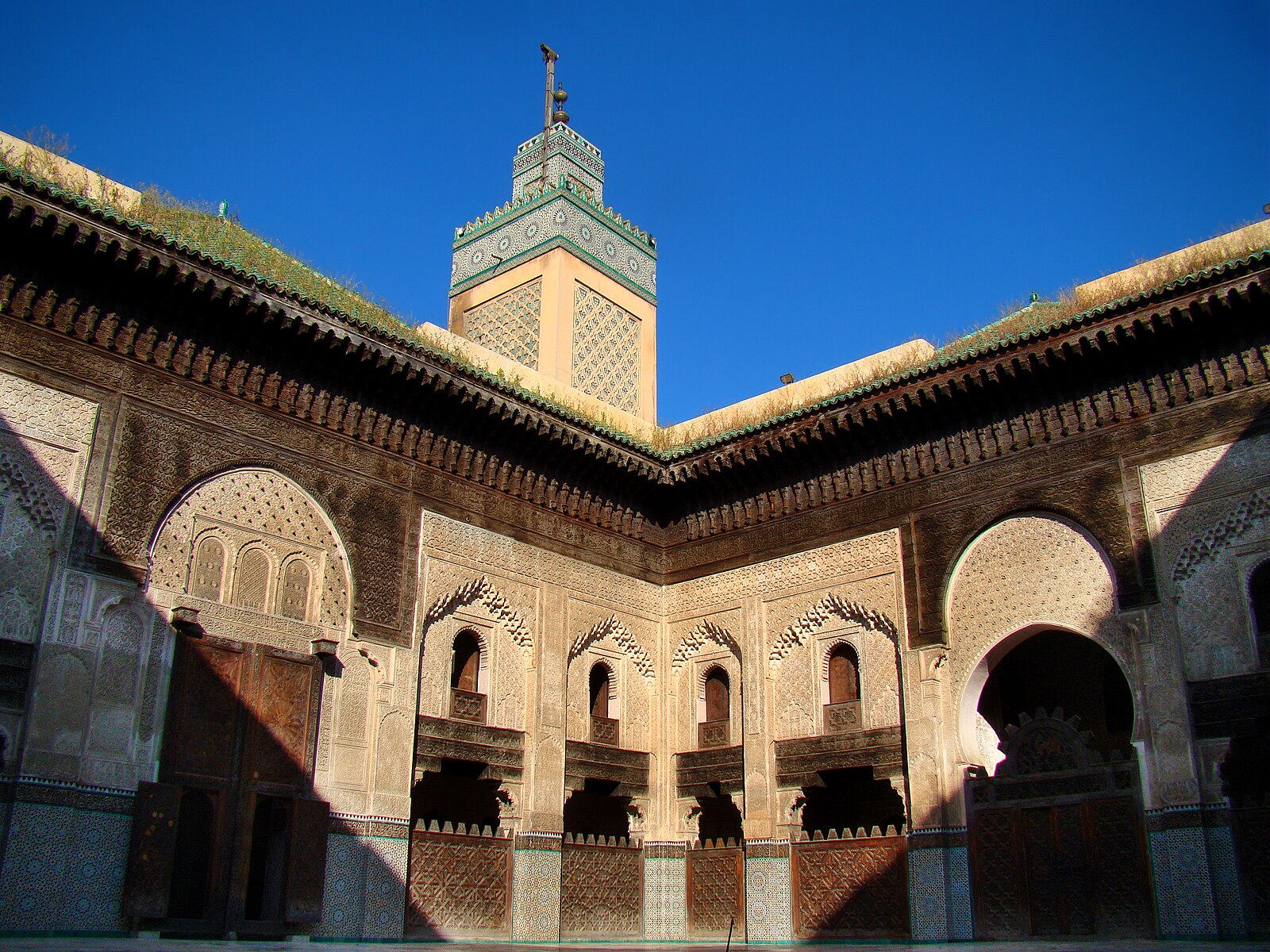
A madrasa is a religious college, and Fez has several in its old city. The Bou Inania courtyard shown here is one of them.
Ramadan, Eid and Public Observance
Ramadan, the Muslim fasting month, shapes daily routines across Morocco. In 2026 it was expected to begin on Thursday 19 February, depending on the moon sighting.
The penal code punishes a person known to be Muslim who breaks the fast in public without a religious exemption, with a prison term and a fine. Citizens have been arrested for eating in public during fasting hours, says the State Department.
Restaurant owners may stay open during Ramadan, and the rule targets Muslims who eat in public. It does not apply to non-Muslim visitors.
Eid al-Adha, the feast of sacrifice, marks the end of the pilgrimage season. On Wednesday 27 May 2026 the king led the Eid prayer at the Ahl Fès Mosque in Rabat and sacrificed a lamb.
In 2025 the king, as Commander of the Faithful, asked Moroccans to forgo the sacrifice after six years of drought. Minister Toufiq read the message on Wednesday 26 February 2025, and the king said he would sacrifice on the nation’s behalf.
The message cited the Quranic principle that God has not imposed hardship on believers in religion. It was framed as an invitation to abstain, not as a legal ban.
Jews and Jewish Heritage
The State Department notes that the constitution recognises only Sunni Muslims and Jews as native religious groups. The preamble’s reference to Hebraic influences sits beside that recognition.
Jewish community leaders estimated about 3,500 Jews in 2022, around 2,500 of them in Casablanca. Rabbinical courts handle Jewish personal-status matters such as marriage and inheritance.
In July 2022 the king announced three bodies: a Jewish community council, a committee for Moroccan Jews abroad and a heritage foundation. The council is meant to manage community affairs and protect Jewish religious and cultural heritage.
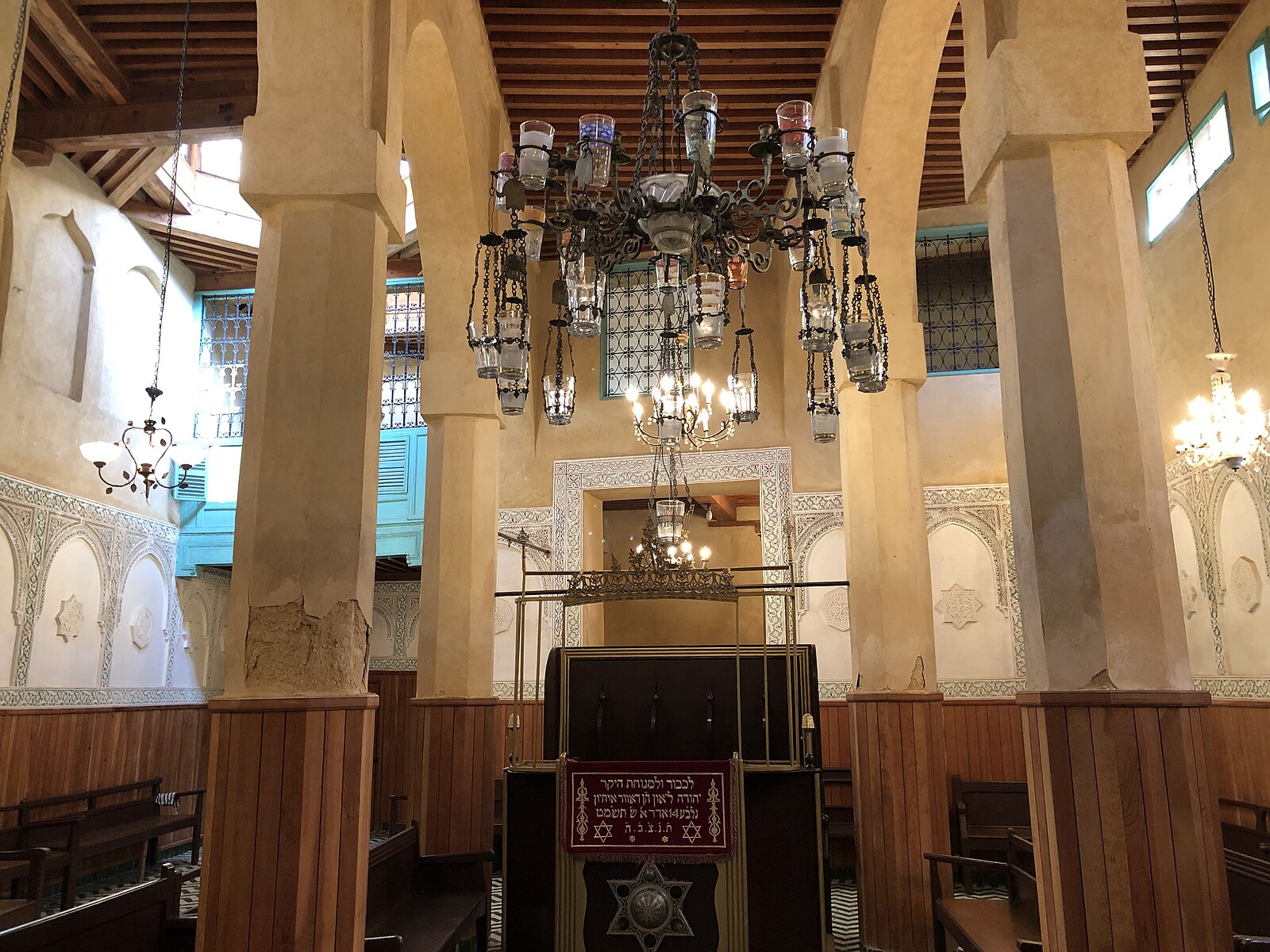
The monarchy has backed the restoration of synagogues and Jewish cemeteries, which it presents as a symbol of tolerance. In November 2022 a university campus near Rabat opened a synagogue beside its mosque, described as the first on a university campus in the Arab world.
Public schools began adding Jewish heritage and history to the curriculum from the fourth year of primary school, in Arabic and French. School administrators said Muslim students make up a significant share of pupils at Jewish schools in Casablanca.
A US embassy project with the Mimouna Association aims to revive the mellahs, the Jewish quarters of Fez, Essaouira and Rabat. Jewish citizens told US officials they attended services in safety.
Christians, Shia and Other Minorities
Morocco’s laws do not recognise religions other than Islam and Judaism, yet foreign-resident churches operate. As of 2022 the government allowed 44 registered foreign-resident Christian churches.
Foreign-resident Christian leaders estimated at least 30,000 Catholics and about 10,000 Protestants, many of them migrants from sub-Saharan Africa. Estimates of Moroccan Christians range from 1,500 to 12,000 by church leaders and 25,000 by a human rights association.
The State Department says authorities deny citizen Christian groups Christian marriage and funeral services and new churches. Voluntary conversion is not a crime, but using enticements to convert a Muslim carries six months to three years in prison.
Pope Francis visited Rabat on 30 and 31 March 2019, meeting King Mohammed VI and issuing a joint appeal on Jerusalem. He visited the imam institute and said Mass at the Prince Moulay Abdellah Stadium.
Shia leaders estimate several thousand Shia citizens, but the state refuses to register Shia groups as associations. No Shia mosques are known, and public Ashura processions are allowed only for Sunni Muslims.
Ahmadi leaders put their community at about 750 people and Baha’i leaders at 350 to 400. A 2017 ban on producing and selling the burqa was still in effect in 2022.
Religion, Politics and Dissent
The Party of Justice and Development, the PJD, is an Islamist party that led governments from 2011 to 2021. It fell to 13 seats in 2021 and rose to 54 of 395 seats in the election of Wednesday 23 September 2026.
The Authenticity and Modernity Party won 97 seats, and the National Rally of Independents took 66. Turnout was about 38 percent, and no party reached the 198 seats needed for a majority.
The State Department says the Unity and Reform Movement, the largest registered Islamic social organisation, keeps a close relationship with the PJD. The Justice and Charity movement, Al Adl Wal Ihsane, rejects the king’s spiritual authority and remained banned but active in 2022.
Criticising Islam on public platforms is an offence, which the State Department says is punishable by up to two years in prison and fines of up to 200,000 dirhams (about US$20,600). The same report says impeding people from worship is also illegal.
What It Means for US Readers
Morocco is at Level 2, exercise increased caution, on the US advisory scale, last issued on Monday 21 April 2025. The advisory cites terrorism and says attacks may come with little or no warning at tourist sites, transport hubs, markets, shopping malls and local government facilities.
Visitors should dress modestly at religious sites and ask before entering any mosque. Non-Muslims can tour the Hassan II Mosque with a guide, by reservation.
During Ramadan, restaurants may stay open at the owner’s discretion, but Muslims who eat in public risk prosecution. Visitors should avoid eating or drinking openly in busy public places out of respect.
For investors, religion is a fixed part of the state order, since the king’s role and Article 175 are constitutional protections. The main variables are the government of Fatima Ezzahra El Mansouri, sworn in on 16 October 2026, and a stronger PJD in opposition.
For expats, the State Department says a Muslim woman may not marry a non-Muslim man unless he converts. Non-Muslims must also convert to Islam and hold permanent residence to become guardians of abandoned children.
Missionary activity is risky: the law punishes enticements to convert a Muslim, and officials can expel foreigners they see as a public-order threat. Foreign congregations worship openly in registered churches.
What Is Not Known
It is not known when the family code reform will reach parliament, or whether the new legislature will keep the December 2024 proposals. No filing date had been publicly announced as of mid-October 2026.
There is no official count of Moroccan Christians, and estimates range from 1,500 to more than 30,000. Figures for Shia citizens are also vague, with leaders saying only several thousand.
It is also open whether a stronger PJD will press religious or social legislation from the opposition benches. The king and the Supreme Council of the Ulema keep the final word on religious questions under Article 41.
Frequently Asked Questions
What is the official religion of Morocco?
Islam is the religion of the state under Article 3 of the 2011 constitution, which also guarantees the free exercise of beliefs. More than 99 percent of Moroccans are Sunni Muslim, according to the US State Department’s 2022 estimate.
Who is the Commander of the Faithful?
The title belongs to King Mohammed VI under Article 41 of the constitution. As Commander of the Faithful he sees to the respect for Islam and presides over the Supreme Council of the Ulema.
Are there Jews and Christians in Morocco?
Yes, though both groups are small. Jewish leaders estimated about 3,500 Jews in 2022, and foreign-resident Christian leaders estimated at least 30,000 Catholics and about 10,000 Protestants.
Is it illegal to eat in public during Ramadan?
The penal code punishes a person known to be Muslim who breaks the fast in public without an exemption. The State Department says offenders can be fined and imprisoned, and citizens have been arrested for eating in public during fasting hours.
Can non-Muslims enter mosques in Morocco?
Non-Muslims can tour the Hassan II Mosque in Casablanca with a guide, by reservation. Visitors should ask before entering any other mosque.
Can a Moroccan change religion?
Voluntary conversion is not a crime under the law. Using enticements to convert a Muslim is punished with six months to three years in prison, and converts often keep their faith private.
Sources: US State Department, 2022 Report on International Religious Freedom: Morocco; Constitution of Morocco 2011 (Constitute Project); Fondation de la Mosquée Hassan II; UNESCO, Medina of Fez; Bank Al-Maghrib, reference exchange rates; US travel advisory for Morocco; Vatican, Apostolic Journey to Morocco; Mohammed VI Foundation of African Ulema, imam training institute; Morocco World News, new government, 16 October 2026; Morocco World News, 157 mosques, February 2026; Morocco World News, family code reforms, December 2024; L’Economiste, mosque budget and earthquake damage, February 2025; Atalayar, Eid al-Adha 2025 message; Atalayar, Eid al-Adha prayer, 27 May 2026; Atalayar, legislative election results, September 2026; Times of Israel, final election results, September 2026. All accessed 19 October 2026.