 By Daily Mail (U.S.) | Created at 2026-06-04 21:29:49 | Updated at 2026-06-07 09:00:19
2 days ago
By Daily Mail (U.S.) | Created at 2026-06-04 21:29:49 | Updated at 2026-06-07 09:00:19
2 days ago
Unsolicited advice for the midterm curious: Push past the betting-market-friendly framing, low quality polling and wafting whiffs of scandal – and recognize that coast-to-coast elections are an opportunity for the nation's voters to express how they feel about Donald Trump, the Democrats, the economy, Iran and so much more.
Thought of that way, it is easy to understand why the conventional wisdom says the President's party is headed for a difficult election night.
Besides historical precedent – which almost always means losses for the party that controls the White House – the clearest explanation for Democratic optimism is the increasingly well-documented reality that many voters, including those in deeply Republican areas, are feeling less jolly about Trump than they did on Election Day 2024.
Consider the new Fox News poll from Ohio, which shows roughly a 20-point drop in Trump's favorability rating from where he stood when he defeated Kamala Harris comfortably in the state less than two years ago.
That staggering reversal is consistent with what has happened to the President's standing in other red states, including Florida, Texas, Alaska and Iowa, all of which happen to feature Senate races that look considerably more competitive today than Republican strategists would have thought possible only a few months ago.
The same Fox poll shows Democratic Senate candidate Sherrod Brown leading Republican incumbent Jon Husted by eight points.
By my count – at this moment and subject to change – Democrats are threatening to pick up, on a really great night for them, as many as eight Senate seats, which would flip control of Congress, as Republicans are almost guaranteed to lose the House majority.
Political hobbyists know that Republican-held Senate seats in Maine, Ohio, and North Carolina are all up for grabs. The next set of targets include Iowa, Texas, Alaska, and Iowa. But would you believe Florida and Montana could also be in play? If gas prices stay high and the prospects of the end of the Iran conflict stay low, they just might be.
It is easy to understand why the conventional wisdom says the President's party is headed for a difficult election night.
Coast-to-coast elections are an opportunity for the nation's voters to express how they feel about Donald Trump , the Democrats, the economy, Iran and so much more
What has soured so many voters on the president?
The answer is neither mysterious nor especially ideological. It is largely the economy, gas prices and a growing belief among swing voters that Trump has not fully delivered on some of his most important promises, particularly those related to inflation and cost of living concerns.
Conversations I had this week with Republican strategists from different corners of the country sounded remarkably similar.
Voters are angry at the current situation and disappointed in the administration. For weeks, those strategists have been telling me the same thing: the Iran conflict needs to end and gas prices need to come down if Republicans hope to avoid a substantial Democratic wave.
And time is beginning to run short.
Republican consultants and candidates are also getting exercised with the President. By and large, they don't think he particularly cares all that much about sticking to the messaging that will help them focus voter attention on GOP strengths.
Don't just take it from them.
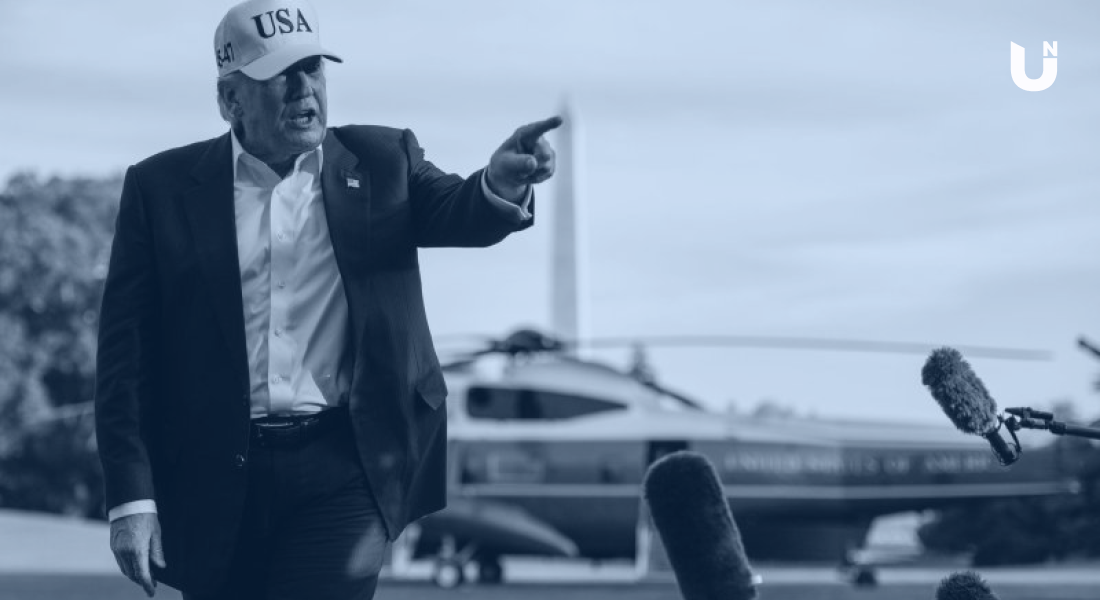
'I don't care about the midterms,' Trump said last week, in remarks meant to signal his fidelity to the national security imperative of stopping Iran from being a nuclear power, but caused 10,000 Republican palms to smack 10,000 Republican foreheads in frustration.
What else is on voters' minds?
One striking theme is their distrust of powerful institutions and well-funded interests. The traditional villains – corporate America, Wall Street, Washington lobbyists – remain unpopular. But increasingly, the AI industry has emerged as a particularly resonant black hat in voter conversations. Americans are fascinated by artificial intelligence, but many are also deeply uneasy about it.
Strategists have been telling me the same thing: the Iran conflict needs to end and gas prices need to come down if Republicans hope to avoid a substantial Democratic wave (Pictured: Smokes rises amid explosions in Tehran in March)
Republican consultants and candidates are also getting exercised with the President
Voters want candidates who will fight for them and stand up to powerful interests.
Yet it isn't simply populism.
Counterintuitively, voters also want competence. They want public officials who can actually make government work, who can deliver results, who seem capable of managing problems rather than merely talking about them. Americans may be angry, but they are not looking to hire more chaos if it doesn't lead to better performance.
Republicans who acknowledge that the current trajectory could spell trouble for their candidates have a straightforward playbook.
Improve the fundamentals. End the Iran conflict. Bring down prices.
Unfortunately, not even the ghost of legendary Republican strategist Lee Atwater could force a war to end or lower gasoline prices by Labor Day. On those fronts, Republican candidates are largely reduced to hoping, praying and changing the subject.
Which brings us to Plan B.
The alternative is to turn the election into less of a referendum on Trump and more of a choice between the two parties, shifting attention away from family finances and back toward the cultural issues where polling suggests Republicans continue to hold an advantage.
In other words, remind voters why they became skeptical of the Democratic brand in the first place.
This week offered a revealing example.
A Republican Super PAC released a video targeting newly minted Democratic Senate candidate Josh Turk, an Iowa state legislator.
The ad introduces viewers to 'America's favorite liberal' before ticking through a familiar Republican bill of particulars: transgender policies in schools, DEI requirements in higher education, taxpayer-funded diversity programs, opposition to school choice and opposition to tax cuts.
The ad also portrays Turk as aligned with powerful interest groups, liberal activists, big labor, and national Democrats.
In case any viewers missed the point, the commercial features such boogeymen as Rachel Maddow and Bernie Sanders and concludes with a cackle unmistakably designed to evoke Kamala Harris.
The alternative is to turn the election into less of a referendum on Trump and more of a choice between the two parties, shifting attention toward the cultural issues where polling suggests Republicans continue to hold an advantage
Mark Halperin is the editor-in-chief and host of the interactive live video platform 2WAY and the host of the video podcast 'Next Up' on the Megyn Kelly network
The ad is not especially subtle. But subtlety is rarely the point of political advertising.
The issue is whether this kind of messaging will work this year.
That question may ultimately determine the outcome of the midterms.
If voters walk into polling places primarily thinking about the price of gas, their grocery bills and whether the country is on the right track, Republicans will be in for a rough night.
If, however, Republicans can persuade voters to spend the next several months thinking about progressive cultural policies, elite institutions and whether Democrats are too far outside the mainstream, the political landscape looks very different.
The media will spend the next five months obsessing over individual polls, campaign gaffes, fundraising reports and whatever scandal is trending on social media that day.
Those things matter. But the bigger story is actually simpler.
The midterms are shaping up to be a national conversation about what kind of country Americans think they are living in – and what kind of country they want to live in next.
Everything else is mostly scorekeeping.
Mark Halperin is the editor-in-chief and host of the interactive live video platform 2WAY and the host of the video podcast Next Up on the Megyn Kelly network