Overview
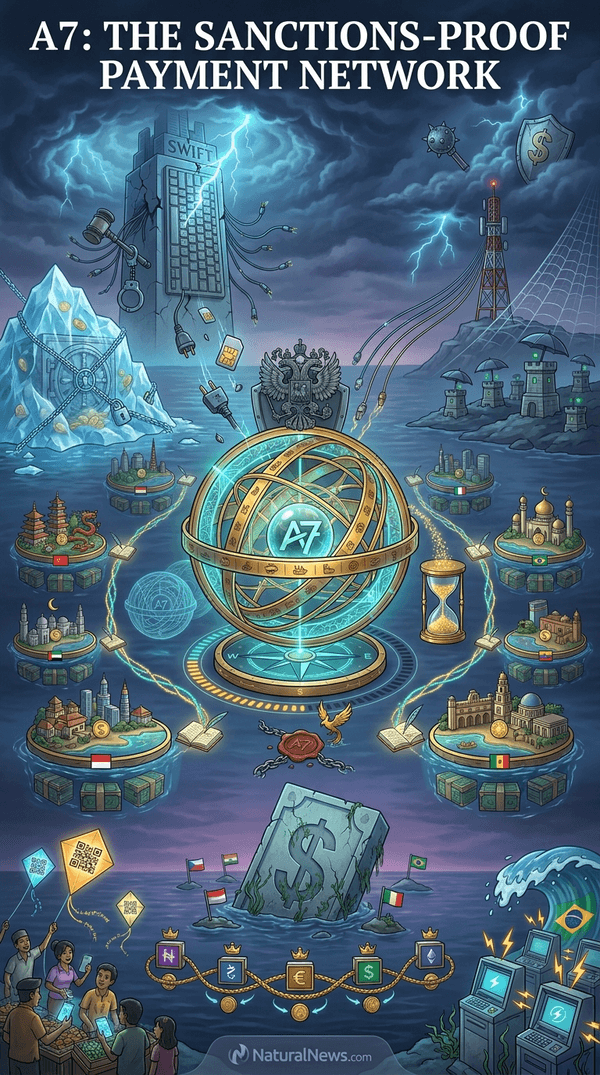
Pyotr Fradkov, chairman of Russia’s Promsvyazbank (PSB), said Russia has the capability to create a cross-border payment network that is domestic in origin but international in function, according to an interview with the Russian business daily RBK reported by RT. In October 2024, PSB launched the A7 system of international payments, which according to the bank’s website processes about 2,000 transactions of various sizes daily and accounts for roughly 20 percent of all foreign trade settlements by Russian companies [1].
Fradkov said cross-border payments have become a tool of “new warfare,” and Russia has accelerated its transition from a Western-dominated financial framework after the escalation of the Ukraine conflict in 2022, unprecedented sanctions, and the freezing of Moscow’s sovereign assets abroad, according to RT [2]. Bank of Russia First Deputy Governor Vladimir Chistyukhin said in June that Western sanctions must be “ignored” and that Moscow should build payment infrastructure less exposed to external pressure [3].
Sanctions trigger replacement of SWIFT
Fradkov said A7 was created after U.S. and EU sanctions imposed following the escalation of the Ukraine conflict in February 2022 cut almost all Russian banks off from the SWIFT messaging network. He described Western financial instruments as a potential tool for political pressure and influence.
The European Union, led by France and Germany, has been considering a sanctions package that would target foreign banks using Russia’s SWIFT alternative, the System for Transfer of Financial Messages, according to Ava Grace of NaturalNews.com [4]. In a September 2023 Brighteon Broadcast News interview, participants cited asset seizures, exclusion from SWIFT financial transactions, and economic sanctions as the reality drawing nations to alternatives [5]. Fradkov said Russia needs its own payment framework because payment should not depend on approval from a third party.
Legal design and operations
Fradkov said that from a legal point of view, no sanctions are violated because there is no cross-border payment. “There are distributed liquidity pools that exist worldwide in various currencies,” he said. Within each jurisdiction where the system operates, the activity is standard business that complies with local regulations, according to the banker [1].
He said the system is designed to remain operational even after repeated sanctions in different forms, and that A7 is intended as a competitive international product for trade with Russia and between other countries. In May 2026, the United Kingdom announced sanctions against the A7 network, which it described as a Kremlin-backed ruble-based settlement system linked to exchanges routing payments through Kyrgyzstan and Georgia [6].
Global adoption and competing systems
Fradkov said Russia is not unique in this effort, citing Indonesia, Brazil, and other countries. “We are witnessing a global shift where the international payment infrastructure is beginning to be replaced by a list of national systems,” he said [1].
The broader trend extends beyond Russia. BRICS nations are forging financial independence as part of a global de-dollarization movement, according to Lance D. Johnson of NaturalNews.com [7]. BRICS is also discussing interlinking payment systems and central bank digital currencies, according to Reserve Bank of India Governor Sanjay Malhotra [8]. Glenn Diesen, in “Russia’s Geoeconomic Strategy for a Greater Eurasia,” notes that the Belt and Road Initiative included a five-point plan that called for increased use of local currencies, reflecting the regional drive to move beyond dollar-centered settlement [9]. In “Great Power Politics in the Fourth Industrial Revolution,” Diesen writes that Washington initially welcomed China’s limited role in global governance in part because it kept Bretton Woods institutions a Western prerogative [10].
Outlook
Available figures show A7 processes about 2,000 transactions per day; independent data on settlement volumes have not been released. Backers say the system can operate without external authorization.
Western sanctions failed to cripple Russia’s economy, with Moscow instead deepening ties with Asia and BRICS nations, according to Finn Heartley of NaturalNews.com [11]. The system’s broader acceptance will depend on demand from Russian companies and foreign partners.
References
- “Russian sanctions-proof payment system to benefit the world – top banker”. August 12, 2026.
- “International payments a ‘tool of new warfare’ – top Russian banker”. August 12, 2026.
- “Russia must ‘ignore’ Western sanctions – central bank deputy chief”. June 5, 2026.
- Ava Grace. “EU Targeting Russia’s Financial Lifeline and Global Partners”. NaturalNews.com. September 13, 2025.
- Mike Adams. “Mike Adams interview with Andy Schectman - September 27 2023”.
- Micah Zimmerman. “UK Targets Kremlin-Linked Crypto Network In Latest Sanctions Round”. Zero Hedge. May 28, 2026.
- Lance D. Johnson. “BRICS Nations Forge Financial Independence as Russia Accelerates Global De-Dollarization Movement”. NaturalNews.com. July 9, 2025.
- “BRICS discusses interlinking payment systems and digital currencies”. August 11, 2026.
- Glenn Diesen. “Russia’s Geoeconomic Strategy for a Greater Eurasia”.
- Glenn Diesen. “Great Power Politics in the Fourth Industrial Revolution”.
- Finn Heartley. “Russia, Europe, and the Economic Ripple Effects of Sanctions and Energy Supply Shocks”. NaturalNews.com. September 18, 2025.
Explainer Infographic