By The Rio Times | Created at 2026-06-12 13:06:53 | Updated at 2026-06-12 20:45:27
7 hours ago
By The Rio Times | Created at 2026-06-12 13:06:53 | Updated at 2026-06-12 20:45:27
7 hours ago
DR CONGO · GEOPOLITICS
Key Facts
—The investigation: A Global Witness report published on 10 June 2026 traces more than 2,000 tonnes of smuggled coltan from DR Congo’s Rubaya mines into global supply chains.
—Why Rubaya matters: The mines in North Kivu supply about 15 percent of the world’s tantalum, the metal behind capacitors in phones, laptops and cars.
—M23’s war chest: UN experts estimate the rebel group earns about US$800,000 a month by taxing the coltan trade at US$4 per kilogramme.
—Exporters implicated: Smugglers told Global Witness that at least five of the seven companies behind 85 percent of Rwanda’s coltan exports routinely buy conflict ore from Rubaya.
—An export boom: Rwanda’s official coltan exports rose 2.5 times between 2021 and 2025, and coltan is now its second-largest export earner after gold.
—Brand exposure: Microsoft, Apple, Sony, Amazon, Nvidia and Toyota are among brands whose supply chains may unwittingly carry the conflict mineral, the report says.
Conflict coltan mined under M23 control in eastern DR Congo is being smuggled into Rwanda, relabelled as Rwandan and sold into the supply chains of the world’s largest electronics brands, according to a Global Witness investigation published on 10 June 2026.
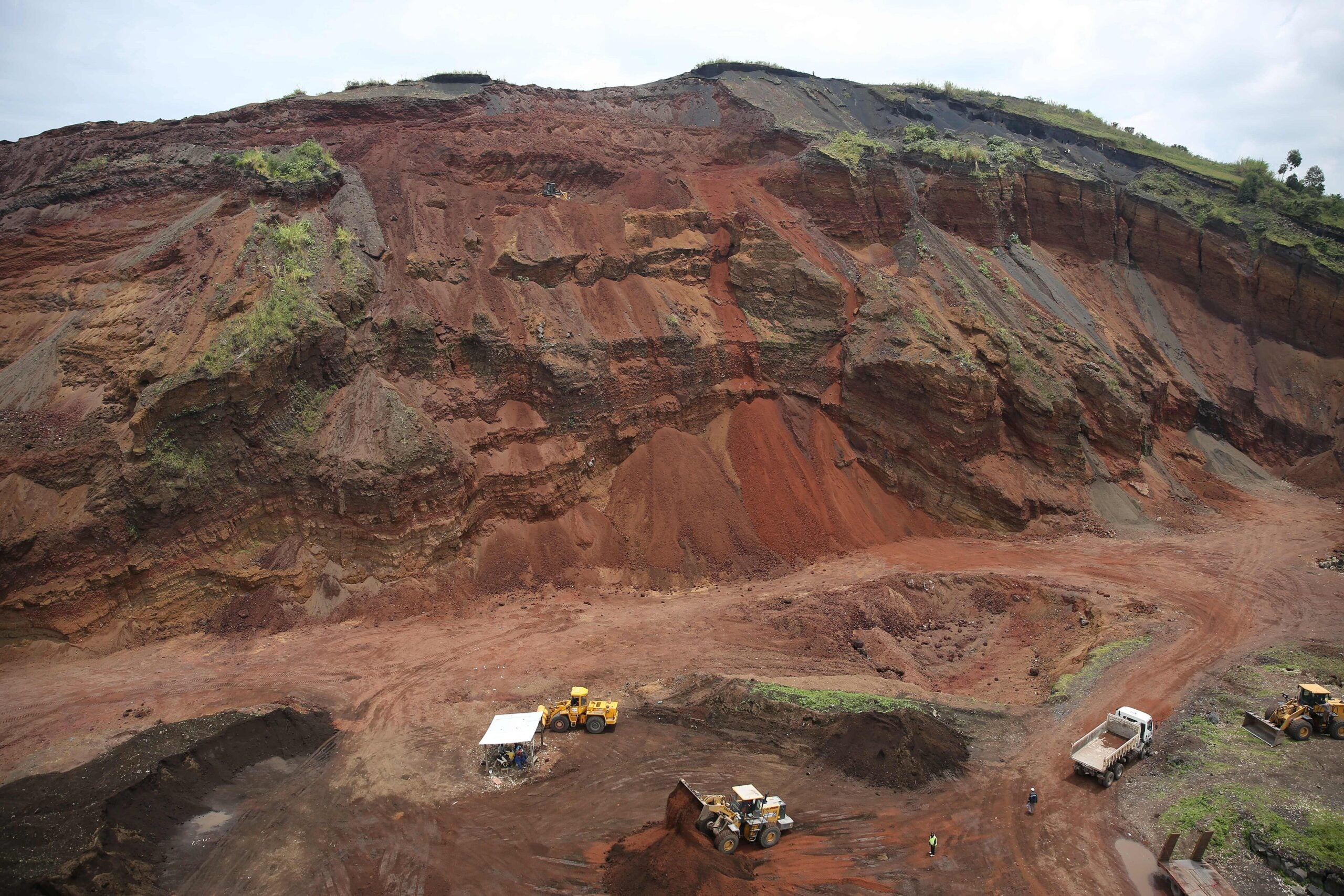 An artisanal mining site near Goma in North Kivu, the corridor through which smuggled coltan crosses into Rwanda. (Photo: MONUSCO Photos, CC BY-SA 2.0, via Wikimedia Commons)
A war financed by the mineral in your phone
The mines around Rubaya, in North Kivu’s Masisi territory, supply about 15 percent of the world’s tantalum, the heat-resistant metal refined from coltan. Tantalum capacitors sit inside virtually every smartphone, laptop and modern car.
Eastern DR Congo has endured nearly three decades of war. The advance of the Rwanda-backed M23 since 2022 has killed thousands and displaced hundreds of thousands of civilians, with abuses documented on all sides.
M23 seized the Rubaya mines in April 2024 after taking the main transport routes around them in late 2023. Since then, the ore has become one of the group’s main sources of funding.
The group runs a parallel administration that taxes the trade, charging US$4 per kilogramme of coltan, according to UN experts. They estimate M23 has collected about US$800,000 every month since May 2024.
How conflict coltan becomes Rwandan
Smuggling once relied on roundabout night journeys across lightly monitored stretches of the border. Since M23 took Goma in January 2025, loads often cross the city’s Grande Barrière post in plain sight of Rwandan officials, Global Witness reports.
UN experts estimate that more than 120 tonnes of coltan a month moved from Rubaya into Rwanda between May and October 2024. Within a year of the takeover at least 1,400 tonnes had crossed, in what UN experts called the “largest contamination of mineral supply chains” in the Great Lakes region in a decade.
Miners in Rubaya’s pits work in dangerous conditions, and landslides have killed hundreds. Some told investigators they are beaten if they defy M23’s orders.
Once inside Rwanda, the ore is mixed with local production and trucked to Kigali. Much of it then leaves the country carrying tags from the ITSCI traceability scheme that label it Rwandan.
Five of the seven biggest exporters implicated
Global Witness identified the seven companies behind 85 percent of Rwanda’s coltan exports. Smugglers interviewed during the year-long investigation said at least five of them routinely buy conflict coltan from Rubaya.
The five named are African Panther Resources, Sunrise Metal Company, Boss Mining Solution, Kanzamin and Philbert Trading Minerals. From Kigali, cargoes travel through Tanzania to the ports of Dar es Salaam and sometimes Mombasa, then on to smelters mainly in China, with a share going to Kazakhstan.
From smelters to the world’s biggest brands
After smelting, the tantalum becomes capacitors for the electronics and car industries. Global Witness says conflict coltan may have unwittingly entered the supply chains of Microsoft, Apple, Sony, Amazon, Nvidia, Toyota, Vodafone, LG Display, Ericsson and Honda.
The report does not claim the brands knowingly bought conflict minerals. It argues that the due diligence systems they rely on, including ITSCI tagging and the Responsible Minerals Initiative’s smelter audits, have failed to detect the laundered ore.
Coltan connected to the conflict has also likely entered Better Mining, an alternative traceability scheme, according to the report.
Numbers that do not add up
Rwanda’s official coltan exports rose more than 2.5 times between 2021 and 2025, according to central bank figures cited in the report. Coltan has been the country’s second-largest export earner after gold since 2023.
Kigali levies a 5 percent tax on coltan exports, and UN experts say a further US$3 per kilogramme is collected on the smuggled trade. Global Witness found no evidence that Rwandan officials confiscated any smuggled coltan in the past two years.
Rwanda has declined to apply the analytical fingerprint method, a German-developed geochemical test that can verify a mineral’s origin. The government also does not publish mine-level production figures that would let experts check its claims.
Why it matters far beyond the Great Lakes
Tantalum demand keeps rising as the electronics, defence and electric-vehicle industries expand, and as the great-power contest for African minerals intensifies. The investigation lands while Washington, Brussels and Beijing all court Kinshasa for access to its critical minerals.
For buyers and investors, the findings carry a hard message: paperwork is not provenance. Until traceability schemes can withstand a war economy, clean-supply-chain promises in the region rest on weak ground.
Frequently asked questions
What is conflict coltan?
Conflict coltan is coltan ore mined in war zones whose trade finances armed groups. The Rubaya mines in eastern DR Congo, under M23 control since April 2024, are the most prominent current case.
How does smuggled coltan from DR Congo reach global brands?
Coltan is smuggled from Rubaya into Rwanda, mixed with local ore and exported with ITSCI traceability tags labelling it Rwandan. Smelters in China and Kazakhstan process it into tantalum used in electronic components.
How much money does M23 make from coltan?
UN experts estimate M23 has collected about US$800,000 a month since May 2024 by taxing coltan production and trade at US$4 per kilogramme.
Which companies may be exposed to conflict coltan?
Global Witness says conflict coltan may have unwittingly entered the supply chains of Microsoft, Apple, Sony, Amazon, Nvidia, Toyota, Vodafone, LG Display, Ericsson and Honda.
The Rio Times · Power Map
See who really holds power in Latin America
Click to open the Power Map →