By The Straits Times | Created at 2026-08-31 06:09:34 | Updated at 2026-08-31 07:33:33
1 hour ago
By The Straits Times | Created at 2026-08-31 06:09:34 | Updated at 2026-08-31 07:33:33
1 hour ago
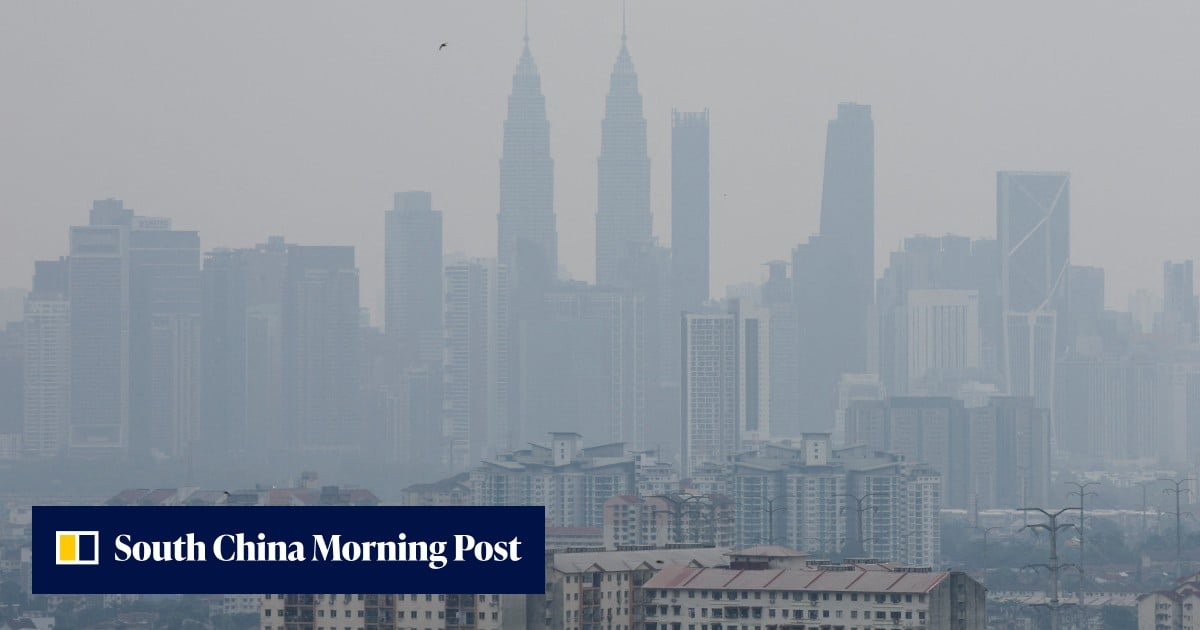
KUALA LUMPUR – The East Malaysian state of Sarawak is experiencing its worst air quality since 2019, with one monitoring station recording a peak Air Pollution Index (API) level of 475 – nearing the threshold for an emergency declaration.
If such a declaration were made, all government and private offices, excluding essential services, would close, said State Disaster Management Committee chairman and Deputy Premier Douglas Uggah Embas on Aug 30.
“If the API threshold of 500 is breached, the National Disaster Management Agency will assess the situation and, if prescribed criteria are met, advise on initiating the emergency declaration process,” Uggah said in a separate statement on Aug 31.
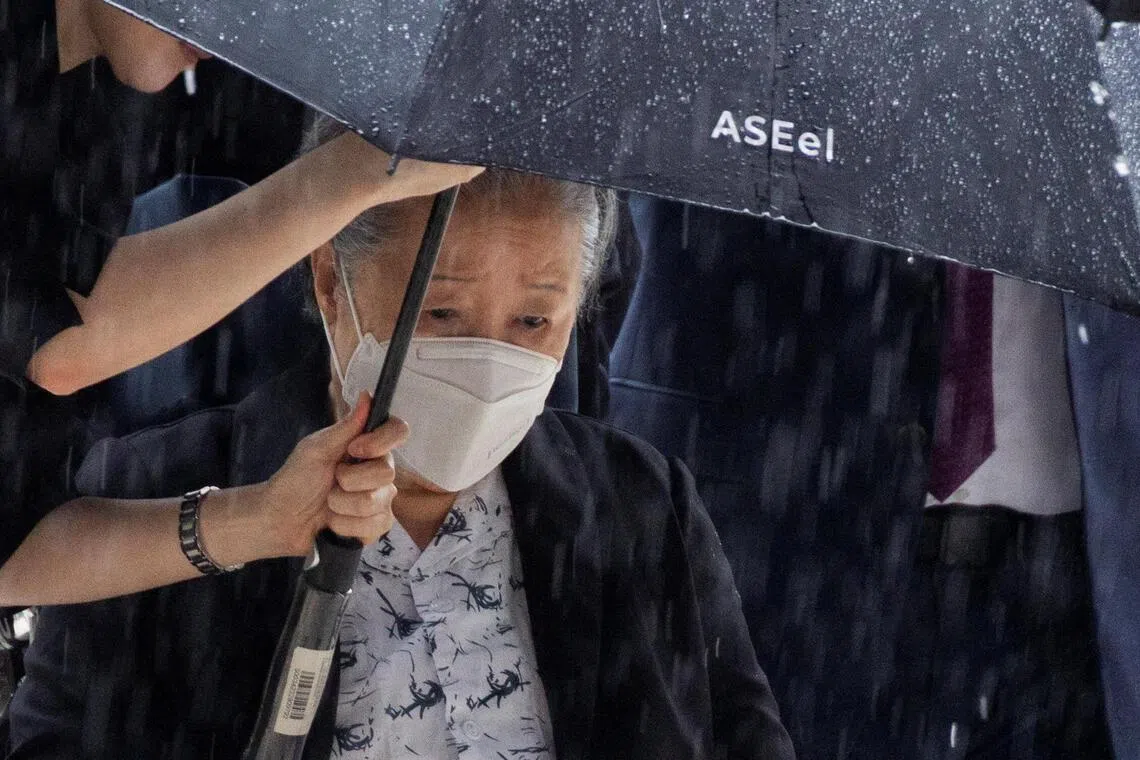
He also urged the public to wear a face mask when outdoors.
Around noon on Aug 30, the API surpassed the 301 hazardous threshold in the state capital of Kuching as well as the neighbouring districts of Samarahan and Serian. Sri Aman also reached hazardous levels at midnight on Aug 31.
Sarawak’s worst air quality level in the last decade was in 2019, with a recorded API of 405.
The last haze emergency in Sarawak was declared in September 1997, when the API peaked at a hazardous 860. Meanwhile, Peninsular Malaysia declared a haze emergency in June 2013 across Muar and Ledang, Johor, after API readings surpassed 750.
During the crisis nearly three decades ago, Kuching resident Kenny Boon, now 40, was confined to his home.
“I was a sixth grader then. Normally, I would play badminton with cousins who lived in the neighbourhood, but I couldn’t do that,” he told The Straits Times on Aug 31.
Fast-forward to now, Kuching-based pig farmer Veronica Chew, 62, said she was forced to wear a mask due to the deteriorating air quality.
“My air purifier showed an API of 124 at 6 am on Aug 29. By night, it was 405. Visibility was poor, and the air I breathed had a burning smell,” she told ST.
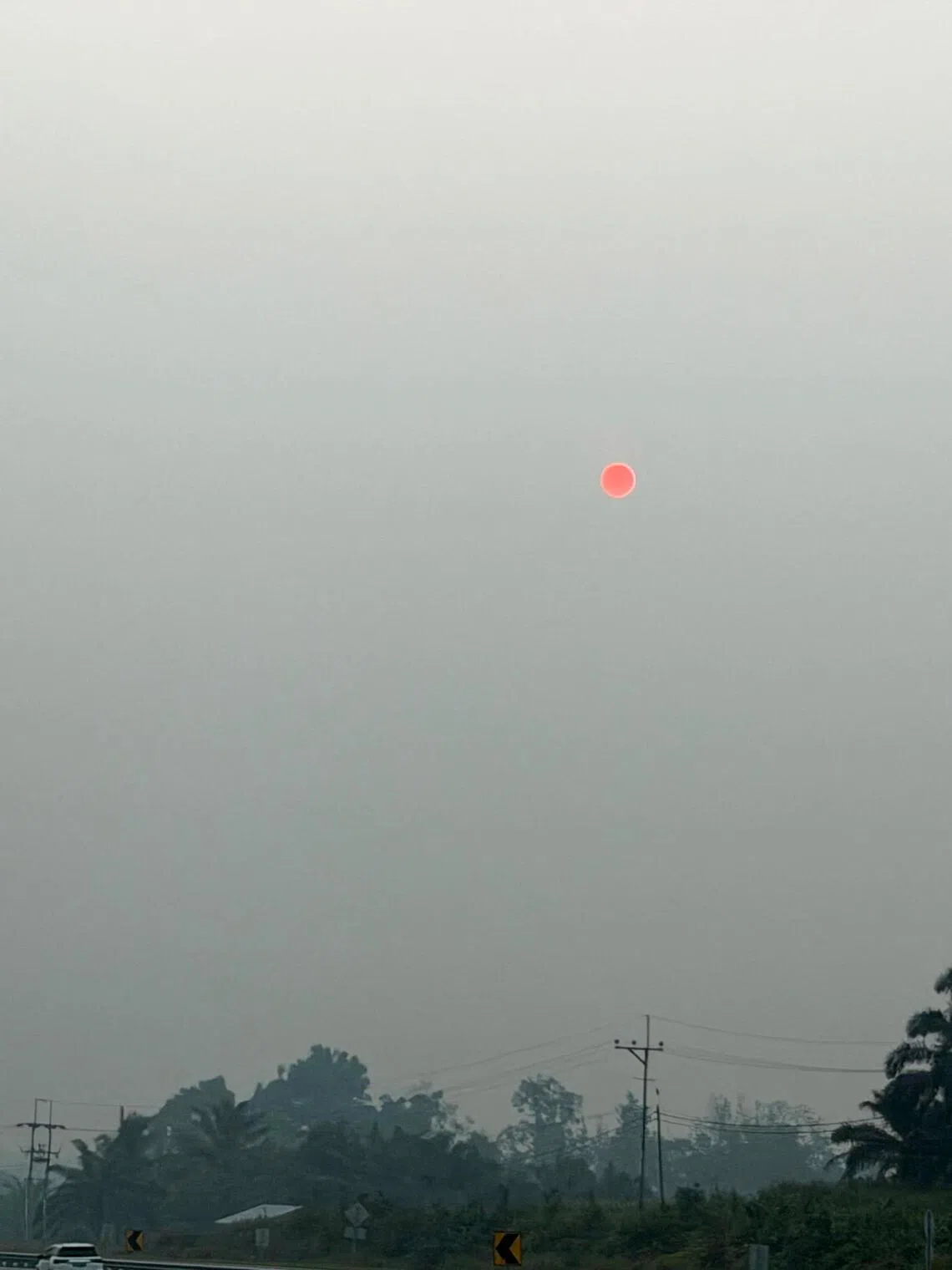
The haze in Kuching on Aug 29.
PHOTO: VERONICA CHEW
As of 1pm on Aug 31, three Sarawak locations recorded “very unhealthy” API levels, defined as between 201 and 300. Across Malaysia, 14 locations reached “unhealthy” levels (101 to 200) – including six in Sarawak and three in Penang.
The API is calculated using a 24-hour running average of the primary pollutant, which is drawn from key parameters like PM2.5 – fine airborne particulate matter measuring 2.5 micrometres or smaller – sulphur dioxide, carbon monoxide and ozone.
Similarly, the neighbouring East Malaysian state of Sabah is also on haze alert after air quality in Kota Kinabalu and Tawau deteriorated to unhealthy levels, with API readings of 122 and 153 respectively on Aug 31.
Authorities attribute the situation to transboundary haze from forest and peat fires in Kalimantan, compounded locally by a fire that destroyed 202 stilt houses in Kampung Numbak, Kota Kinabalu.
Unlike neighbouring Sarawak, Sabah had largely enjoyed good air quality during the current dry spell, despite its proximity to northern Kalimantan, where more than 1,000 peat fires have been detected.
However, API readings have risen over the past 48 hours.
Sarawak cancels National Day festivities
Sarawak Premier Abang Johari Tun Openg said the state-level National Day celebrations in Kapit, an inland town 430 km east of Kuching, were called off due to the haze.
Worsening haze forced Prime Minister Anwar Ibrahim to relocate his Aug 30 National Day address from the open-air Merdeka Square in Kuala Lumpur to the indoor Putrajaya International Convention Centre. However, the federal National Day Parade proceeded in Putrajaya on Aug 31 as air quality in the Klang Valley improved.
Kuala Lumpur carried out cloud-seeding operations starting in Putrajaya on Aug 30 before extending to areas in Sarawak, Kedah, and Perlis where the API exceeds 150, said Deputy Prime Minister Zahid Hamidi.
“This needs to be done because we know that water levels at many dams have been declining,” national news agency Bernama quoted Zahid as saying.
The operation is being conducted jointly by the Malaysian Meteorological Department (MetMalaysia) and the Royal Malaysian Air Force.
A MetMalaysia spokesperson confirmed to ST on Aug 30 that cloud-seeding operations will take place in early September in Sarawak “to raise water levels in the dams such as Bengoh and Batang Ai dams.”
The spokesperson noted that the seeding is also expected to help mitigate haze in the Kuching area as winds continue to blow smoke from Kalimantan, Indonesia.
Tackling transboundary haze remains a severe challenge for Malaysian authorities, with over 1,000 hotspots detected across Kalimantan, the spokesperson added.
Ongoing haze since mid-August has driven a surge in respiratory illnesses, with 1,811 asthma cases recorded between Aug 23 and 29 – an eightfold increase compared to the previous week, according to the Malaysian Health Ministry on Aug 29.
In response, environmental group Greenpeace Southeast Asia has urged Malaysia to pass a Transboundary Haze Pollution Act to hold local companies accountable for overseas operations contributing to air pollution.
“Indonesian authorities claim Malaysian companies are involved,” Heng told ST. “It’s time to prove that Malaysian companies are not contributing to forest fires in Indonesia. Strict laws would serve as a deterrent to curb these unsustainable practices – otherwise, the haze will continue to recur.”
Greenpeace noted that several Malaysian palm oil firms were linked to burned land in Indonesia between 2015 and 2018. In August 2026, Indonesian authorities sanctioned six forestry concession holders – without identifying their countries of origin – after fires scorched over 1,500 hectares across Kalimantan.