By The Rio Times | Created at 2026-08-09 19:51:40 | Updated at 2026-08-09 22:07:21
2 hours ago
By The Rio Times | Created at 2026-08-09 19:51:40 | Updated at 2026-08-09 22:07:21
2 hours ago
Saudi Arabia · GEOPOLITICS
Key Facts
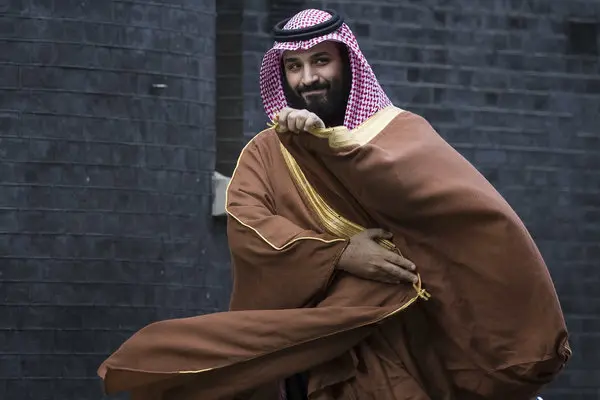
—The signing: Crown Prince Mohammed bin Salman, President Recep Tayyip Erdogan and Prime Minister Shehbaz Sharif signed the Mecca Joint Defence Agreement on Friday, 7 August 2026, in Mecca, Saudi Arabia.
—The core pledge: The joint statement said any armed attack against one of the three states shall be regarded as an attack against them all, framing the pact as purely defensive.
—Negotiation timeline: Reuters reported the pact followed nearly a year of negotiations, with Pakistan’s defence-production minister confirming a draft existed in January 2026 after about 10 months of talks.
—The foundation: The trilateral deal builds on a Saudi-Pakistani bilateral mutual-defence agreement signed in September 2025, which Chatham House called Riyadh’s first formal bilateral defence pact outside its traditional Western security relationships.
—What is not known: The full text has not been released, leaving unclear whether the pledge implies an automatic military response or only political solidarity and consultation.
—Existing alliances: Reuters noted the pact does not automatically abrogate any existing agreements the three states have with other countries, including Turkey’s North Atlantic Treaty Organisation membership.
Saudi Arabia, Turkey and Pakistan signed the Mecca Joint Defence Agreement on 7 August 2026, formally declaring that an armed attack on any one of them will be treated as an attack on all three, a move that reshapes security calculations across the Middle East and South Asia.
One-stop reference
Company Intelligence
Every listed company in Latin America — financials, ownership and structure for 1,450+ companies across 26 exchanges, in one place.
A new collective-defence axis takes shape
The signing ceremony in Mecca brought together three of the Sunni world’s most consequential leaders at a moment of deep regional turmoil. Crown Prince Mohammed bin Salman, President Recep Tayyip Erdogan and Prime Minister Shehbaz Sharif put their names to a document whose joint statement said it would “strengthen collective deterrence against any act of aggression.”
The pact’s central clause mirrors the language of the North Atlantic Treaty Organisation’s Article 5, stating that “any armed attack against any one of the three States shall be regarded as an attack against them all.” Yet the full text remains unpublished, leaving analysts to parse the joint statement for clues about enforcement mechanisms.
Reuters reported that the agreement followed nearly a year of negotiations. In January 2026, Pakistan’s defence-production minister had already confirmed that a draft trilateral defence agreement was in the pipeline after roughly 10 months of discussions.
Why the Mecca Joint Defence Agreement matters now
The pact formalises a strategic triangle that brings together three distinct but complementary assets. Saudi Arabia contributes financial power, energy wealth and political-religious influence centred on the holy cities of Mecca and Medina.
Turkey brings the North Atlantic Treaty Organisation’s second-largest army and a rapidly expanding defence industry, as the Associated Press noted. Pakistan contributes a large, battle-tested military and remains widely described in the coverage as the Muslim world’s only declared nuclear power.
Analysts cited by regional media argue the combination could deepen cooperation in intelligence sharing, joint exercises, defence production, technology transfer and counterterrorism. The Atlantic Council assessed that Riyadh is using the deal to bolster leverage while confronting both an emboldened Iran and perceived limits of United States deterrence.
Doubts about American security guarantees drive the deal
Several analyses link the Mecca Joint Defence Agreement to Gulf doubts about the reliability of the United States as a security provider. Chatham House noted that Saudi Arabia’s 2025 bilateral defence pact with Pakistan came after what it described as American inaction in earlier crises.
Reuters placed the trilateral pact squarely against the backdrop of Iranian missile fire, Houthi attacks from Yemen and broader fears that the Middle East conflict could widen further. The Associated Press, the British Broadcasting Corporation and Al Jazeera all framed the signing as a response to regional shocks and inconsistent United States responses.
The result is less a clean break with Washington than a form of hedging across multiple power centres. Turkey remains a North Atlantic Treaty Organisation member, and Pakistan retains ties to Western security and economic networks, even as all three signatories deepen non-Western partnerships.
The Saudi-Pakistan foundation and the Turkey layer
The trilateral agreement builds directly on a Saudi-Pakistani bilateral mutual-defence agreement signed in September 2025. Chatham House called that earlier pact the first formal bilateral defence agreement Riyadh had concluded outside its traditional Western security relationships.
Adding Turkey to the framework significantly raises the pact’s military weight. Ankara’s defence-industrial base has grown rapidly, and its armed forces give the grouping a conventional heft that neither Saudi Arabia nor Pakistan could supply alone.
The New York Times reported that the agreement does not automatically abrogate any existing commitments the three states have with other countries. That clause preserves Turkey’s North Atlantic Treaty Organisation obligations while still allowing the new axis to function as a parallel security architecture.
What the Mecca Joint Defence Agreement means for great-power competition
The pact lands at a moment when middle powers are increasingly building security arrangements outside the post-Cold War alliance system. Saudi Arabia is balancing United States ties with new partnerships, Turkey is leveraging its unique position inside the North Atlantic Treaty Organisation while pursuing an independent foreign policy, and Pakistan is navigating its relationships with China, the United States and the Gulf states simultaneously.
For readers tracking the reshaping of global power, the agreement fits a pattern visible across what The Rio Times calls Africa: The New Scramble, where regional blocs are forming that do not align neatly with any single great power. The Mecca pact extends that logic into the heart of the Middle East.
The Atlantic Council described the agreement as a possible foundation for a broader regional security architecture that is not fully aligned with either the United States or Israel. Its primary near-term purpose, however, appears to be raising deterrence against Iran and Iranian-backed forces.
What to watch next
The most immediate question is whether the three governments will release the full text of the agreement. Without it, the precise military obligations remain unknown, and the gap between a political declaration and an operational defence commitment could prove wide.
A second question is how the pact will interact with each country’s existing commitments. Turkey’s North Atlantic Treaty Organisation allies will watch closely for any sign that the new axis constrains or complicates Ankara’s alliance obligations, while Pakistan’s relationship with China adds another layer of complexity.
Finally, the pact’s real test will come only if one of the three signatories faces an armed attack. Until then, the Mecca Joint Defence Agreement functions primarily as a signal, one intended to reshape the deterrent calculus of adversaries across the region.
Frequently Asked Questions
What is the Mecca Joint Defence Agreement?
It is a trilateral mutual-defence pact signed by Saudi Arabia, Turkey and Pakistan on 7 August 2026 in Mecca, declaring that an armed attack on any one of the three states will be treated as an attack on all three.
Does the pact require an automatic military response if one country is attacked?
The full text has not been released, so it remains unclear whether the pledge implies an automatic military response or only political solidarity and consultation.
How does the agreement affect Turkey’s NATO membership?
Reuters reported that the pact does not automatically abrogate any existing agreements the three states have with other countries, meaning Turkey’s NATO obligations remain intact.
Connected Coverage
The Mecca Joint Defence Agreement mirrors a broader pattern of middle powers building security blocs outside traditional alliances, a dynamic The Rio Times tracks in Africa: The New Scramble.
Sources
This article was produced by The Rio Times’ automated newsroom system. How we use AI · Report an error
The Rio Times · Power Map
See who really holds power in Latin America
Click to open the Power Map →