 By Miltary.com | Created at 2026-06-17 14:06:06 | Updated at 2026-06-17 21:33:33
7 hours ago
By Miltary.com | Created at 2026-06-17 14:06:06 | Updated at 2026-06-17 21:33:33
7 hours ago
Published Jun 17, 2026, 9:54 AM EDT
Lawmakers' efforts to curb the administration's military operations in the Middle East failed again, largely on party lines.
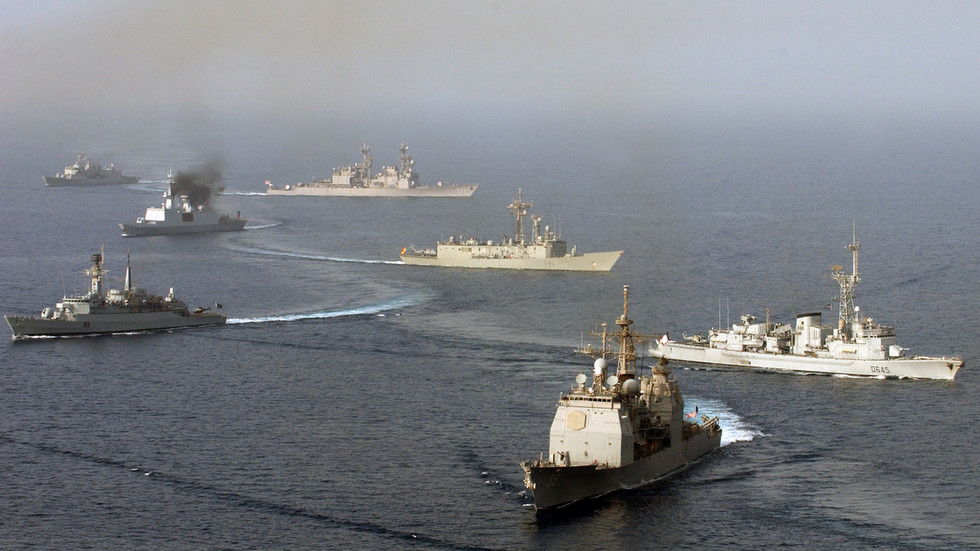
For the ninth time, the U.S. Senate has failed to pass a war powers resolution aimed to minimize the Trump administration's military operation in Iran.
The legislative failure again fell short mainly on party lines and concluded with a 47-48 vote, even as four Republicans—Bill Cassidy of Louisiana, Susan Collins of Maine, Lisa Murkowski of Alaska, and Rand Paul of Kentucky—voted in favor of the war powers resolution introduced by Sen. Raphael Warnock (D-Ga.). Sen. John Fetterman (D-Pa.) voted against it.
This latest vote comes on the heels of what the Trump administration has touted as an agreement reached between U.S. and Iranian officials to end the war, reopen the Strait of Hormuz, and ensure that Iran does not have the ability to manufacture a nuclear weapon. However, some lawmakers and outside observers remain skeptical as no specifics of the purported agreement have been publicly disclosed while President Donald Trump and Vice President JD Vance have stated the agreement should be ready by this Friday.
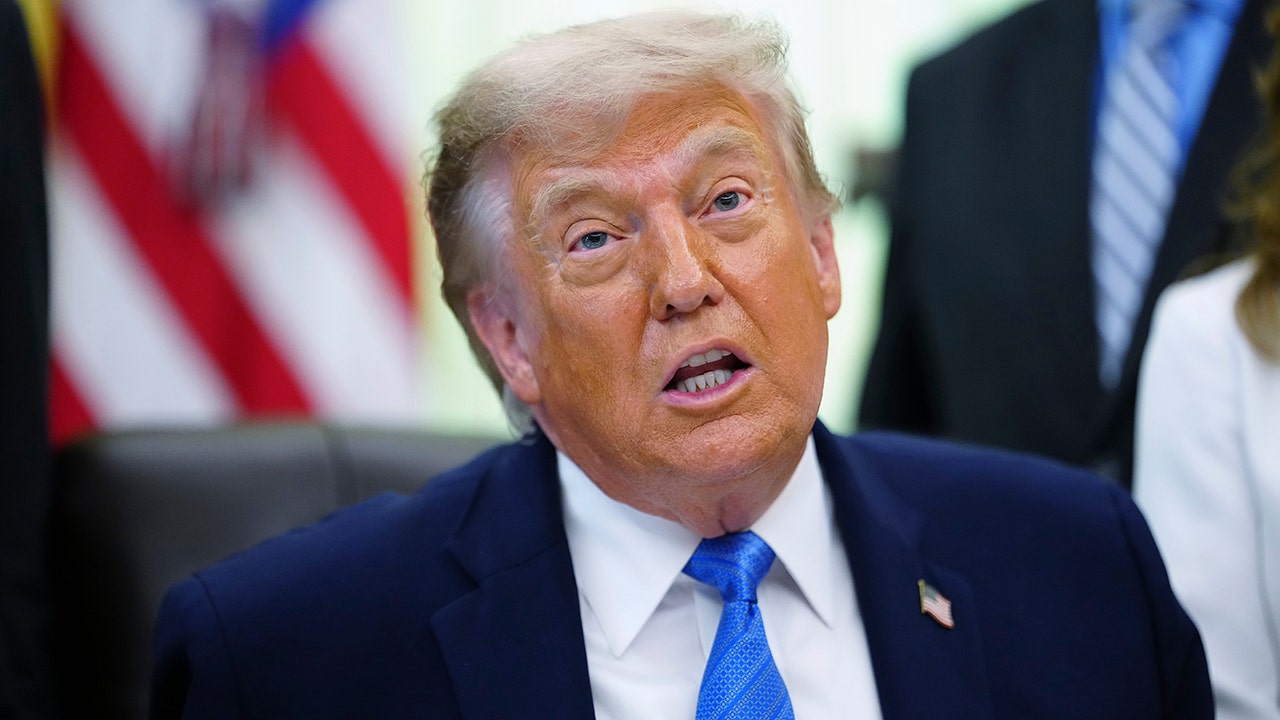
"Iran has agreed to never have a Nuclear Weapon! Also, the story that the U.S. is paying Iran 300 million Dollars is Fake News, put out by the Dumocrats!!!" Trump said Tuesday on Truth Social.
Critiques of the strikes that were initially launched by the United States and Israel toward Iran on Feb. 28 have been routine, namely from the Democratic Party, as that ignited a broader operation engulfing multiple Middle East nations while having detrimental economic effects on Americans—namely at gas pumps and grocery stores.
“Join me in putting a check on this president’s lawless warmongering,” Warnock (D-Ga.) said before he voted, according to the Associated Press. “The time is always right to do what’s right."
 Sen. Bill Cassidy, R-La., heads to a closed-door Republican policy meeting at the Capitol in Washington, Tuesday, June 16, 2026. (AP Photo/J. Scott Applewhite)
Cassidy, who lost his latest GOP primary after not getting the president's endorsement and will leave office next year, have in recent weeks voted against his own party's efforts. Other Republicans leaving Washington, such as another administration critic, Sen. Thom Tillis (R-N.C.), stuck by the president's side on Tuesday.
“I just don’t think that it’s productive for me to cast a protest vote on something that I fundamentally support.” Tillis said, per the AP. “I support the engagement in Iran. But I have a discerning eye over what the agreement will say.”
Sen. Tim Kaine (D-Va.), one of the loudest voices in the Senate when it comes to war powers, said the resolution would have helped shore up a diplomatic framework to avoid more half-measure ceasefires as have been customary the past nearly four months.
“If we’re really in a period of maybe some stability here, let’s not just allow it to start up again without Congress being involved in that decision,” Kaine said.
War Powers Separate Politics From Policy
Congressional efforts to put legislative checks on the executive branch are nothing new, according to Katherine Yon Ebright.
Ebright is a lawyer in the Brennan Center’s Liberty and National Security Program, where she focuses on war powers and the constitutional separation of powers. She told Military.com that politics certainly intertwine with the policies in war powers votes, as such resolutions can directly juxtapose a lawmaker's personal constitutional beliefs but must measure that morality with allegiance to a party and president.
In the roles of individuals like House Speaker Mike Johnson, for example, Ebright said he has to "insulate the president against that kind of criticism...but also insulate his own caucus against some of the blowback we've seen from the White House." She mentioned how Republican Sens. Josh Hawley and Todd Young voted against the U.S. military operation to remove Venezuelan President Nicolas Maduro from power, and they were later name-checked by Trump in a negative manner.
"I think this is something that lawmakers should be thinking about from the practical perspective, like, what are people paying at the pump? Are people going to feel good voting for representatives who have supported or failed to rein in the conflict?" Ebright said. "But also, I think it should weigh on the lawmakers from a legal perspective and what their constitutional duty [is]."
 Senate Majority Leader John Thune, R-S.D., leaves a closed-door Republican meeting at the Capitol in Washington, Tuesday, June 16, 2026. (AP Photo/J. Scott Applewhite)
Being a D.C. politician isn't just about advancing a president's agenda or being an attack dog on the commander's behalf, she added.
"[What] all of these lawmakers across the aisle should be doing is thinking about their role under the Constitution, and the role of the Congress in matters of war and peace," Ebright said. "It's supposed to be democratic decision-making, public accountability.
"And when these lawmakers fail to take these votes, I think it's the combination of signaling to the American public that they're not cognizant of the price of groceries or the price of gas at the pump, but also not cognizant of what our democracy and what our Constitution demands."
History of the War Powers Act
The House is the only chamber to have approved a war powers resolution earlier this month, though nothing actually came of the vote beyond putting in record how lawmakers voted—which could have enormous political consequences come this November, as midterm election campaigns are in full swing.
War powers are actually not as dated as some may think, as Ebright points out.
"This has historical roots dating back to the dawn of the Cold War, but it also in some ways is really this administration and this Congress standing alone," Ebright said. "Under the Constitution, Congress has the power to declare war. It has the power to establish, create rules governing and regulating the military. It has a unique two-military-affairs duty to oversee—the military, and its appropriations for the military.
"The founding generation was very concerned about all of these powers being concentrated in the executive. So, it put them in the Congress and said, 'Congress, you obviously have to make all of these decisions on a whole range of different policy matters, but war and peace in particular, the military in particular, you have to exercise this exacting review that is periodic.' It's constitutionally obligated. This is basically the status quo, how things operate for over a century."
 U.S. President Donald Trump meets with Egypt's President Abdel Fattah al-Sisi on the sidelines of the G7 summit, Wednesday, June 17, 2026, in Evian-les-Bains, France. (AP Photo/Julia Demaree Nikhinson)
By the dawn of the Cold War and in the shadow of World War II, Ebright describes a "post-war order" being set up. More questions unraveled under President Harry Truman and the authority to use force in the Korean Peninsula. While debate on unilateral authority took place, Truman ultimately describes the military necessity as a "police action" and goes it alone, without congressional oversight.
"He gets his State Department to write up a legal-ish opinion that explains why he can do this without going to Congress,' Ebright said. "Frankly, not totally unlike what we've seen in the past several months, Truman thought this could be a small endeavor and thought it could be handled quickly.
"Then, it spiraled out of control and he never went to the Congress to get the authorization after signaling to the public, 'This is going to be small. It's just a police action.' But that really set us on this trajectory up until the end of the Vietnam War when Congress steps in, passes the War Powers resolution over Nixon's veto and says, 'Wait a minute.'"
The War Powers Act went into effect on Nov. 7, 1973, overpowering President Richard Nixon's veto to check his power overseas.
But it's been done by presidents from both parties, Ebright noted, such as the Kosovo intervention during the Clinton administration, or the Libyan intervention during the Obama administration.
"The Trump administration is building off of that series of practices that really starts with Harry S. Truman and persists even past Congress enacting the war powers resolution and trying to use the War Powers resolution sometimes successfully, as in the first Trump administration when they passed war powers resolutions for Iran and for Yemen," she said.