By The Rio Times | Created at 2026-10-08 15:47:02 | Updated at 2026-10-08 18:30:05
3 hours ago
By The Rio Times | Created at 2026-10-08 15:47:02 | Updated at 2026-10-08 18:30:05
3 hours ago
SOUTH AFRICA · POLITICS
Key Facts
- —The country Parliamentary republic of nine provinces; the National Assembly elects the president.
- —Who governs Cyril Ramaphosa’s ANC shares government posts with the DA and seven others.
- —What happened ANC fell to 40.18% in 2024, ending 30 years of majority rule.
- —The numbers ANC 159, DA 87, MK 58, EFF 39 of 400 seats (2024).
- —What comes next Local elections on 4 November 2026; next national vote due 2029.
- —Still open A court ruling on Ramaphosa’s Phala Phala challenge was pending in October.
Since 2024 no party has ruled South Africa alone, so power now runs through coalitions, courts and a crowded opposition.
South Africa politics in 2026 turns on one fact: no party holds a majority, so power must be negotiated. President Cyril Ramaphosa governs through a coalition in which nine parties hold government posts.
This guide maps who holds power as of October 2026, from the presidency and cabinet to the courts, police and provinces. Daily news is in the Rio Times South Africa section.
How South Africa Politics Works Since 2024
South Africans do not vote for a president directly. They elect the 400-member National Assembly by party-list proportional representation, and the Assembly then elects the president.
The constitution limits a president to two terms, and a two-thirds vote of the Assembly can remove one. A second chamber, the National Council of Provinces, has ten delegates from each province.
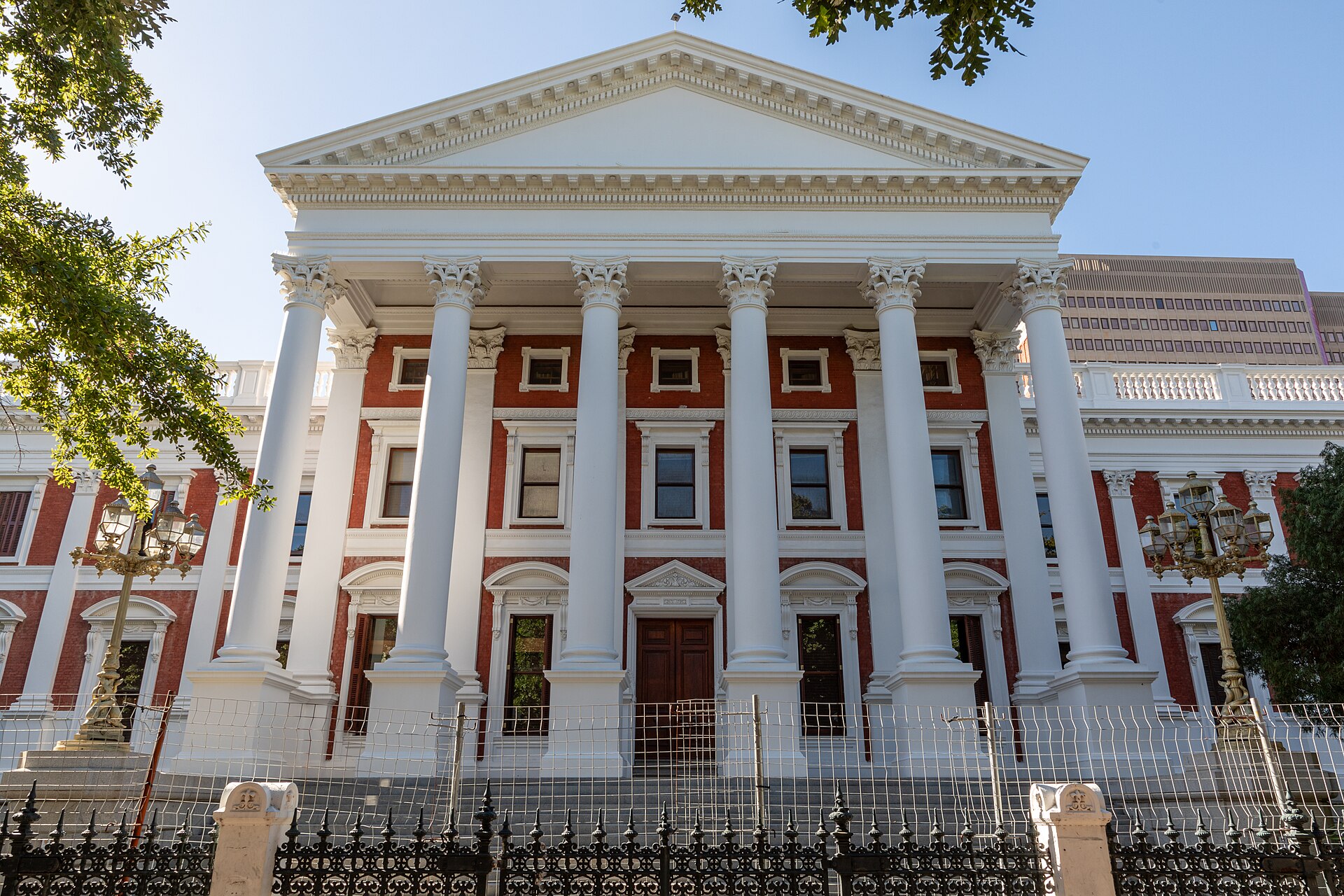
The country has three capitals. The executive sits in Pretoria, Parliament in Cape Town and the Supreme Court of Appeal in Bloemfontein.
The African National Congress (ANC), Nelson Mandela’s liberation movement, governed alone from 1994 until 2024. In the May 2024 election it won 40.18% of the national vote, the Electoral Commission’s results show.
That gave the ANC 159 seats, well short of the 201 needed for a majority. The pro-market Democratic Alliance (DA) took 21.81% and 87 seats.
Jacob Zuma’s uMkhonto weSizwe Party (MK) came third with 14.58% and 58 seats. The left-wing Economic Freedom Fighters (EFF) won 9.52% and 39 seats.
Fourteen smaller parties shared the other 57 seats. Instead of ruling as a minority, the ANC built what it calls a Government of National Unity (GNU) in June 2024.
On 8 October 2026 the government’s own directory listed 32 ministerial portfolios. Besides the ANC and DA, seven parties held ministerial or deputy ministerial posts.
They are the Inkatha Freedom Party (IFP), Patriotic Alliance (PA), Freedom Front Plus, GOOD, PAC, UDM and Al Jama-ah. Each is explained below.
Coalition rule has made policy slower and more negotiated. A law that once passed on the ANC’s votes alone now needs partners to agree.
For the basics on population, economy and daily life, see South Africa explained.
The President and His Inner Circle
Cyril Ramaphosa, 73, has been president since 15 February 2018, when he replaced Jacob Zuma mid-term. A former mineworkers’ union leader and businessman, he is both head of state and head of government.
The National Assembly re-elected him in June 2024, and his second and final full term runs to 2029. His life story is in who is Cyril Ramaphosa.
Paul Mashatile is deputy president of both the country and the ANC. Gwede Mantashe, the mining minister, chairs the party, and Fikile Mbalula runs its organisation as secretary-general.
The ANC chooses its next leader at a national conference due in 2027. Whoever wins is likely to be its presidential candidate in 2029.
The biggest threat to Ramaphosa is the Phala Phala affair. It concerns the alleged theft of a large sum of foreign currency from his private game farm in 2020.
An independent panel found in November 2022 that he may have committed serious violations of the constitution and the law. In December 2022 the Assembly voted not to refer its report for impeachment.
On Friday, 8 May 2026, the Constitutional Court set that vote aside as unconstitutional. It sent the report to Parliament’s Impeachment Committee, chaired by Rise Mzansi MP Makashule Gana.
Ramaphosa then asked the Western Cape High Court to review and set aside the panel’s report. On Friday, 24 July 2026, the court barred the committee from holding public hearings until the review is decided, SABC News reported.
Judgment was reserved on Friday, 4 September 2026, and the Judge President promised to fast-track it. The court case is explained in Ramaphosa asks the court to halt his own impeachment inquiry.
Removal under section 89 of the constitution needs two-thirds of the Assembly, or 267 votes. That cannot happen unless many ANC MPs turn on their own leader.
The Cabinet and Who Runs What
The ANC keeps the heavyweight posts. Finance Minister Enoch Godongwana controls the budget, and Ronald Lamola runs foreign policy as minister of international relations.
Angie Motshekga is defence minister and Mmamoloko Kubayi is justice minister, both from the ANC. Gwede Mantashe heads mineral and petroleum resources, a key post in a mining economy.
The DA holds six ministries. They include Home Affairs under Leon Schreiber, Basic Education under Siviwe Gwarube and Public Works under Dean Macpherson.
On 30 June 2026 Ramaphosa reshuffled the DA’s team after consulting its leader, Geordin Hill-Lewis. Willie Aucamp became agriculture minister and David Maynier environment minister.
Former DA leader John Steenhuisen moved from agriculture to deputy minister of trade, industry and competition. The swap showed that partners now pick their own ministers, with the president signing off.
IFP leader Velenkosini Hlabisa runs Cooperative Governance, which oversees municipalities. PA leader Gayton McKenzie runs Sport, Arts and Culture.
Pieter Groenewald of the Freedom Front Plus runs Correctional Services, and GOOD leader Patricia de Lille runs Tourism. PAC leader Mzwanele Nyhontso is minister of land reform and rural development.
Two more party leaders serve as deputies. Bantu Holomisa of the UDM is a deputy defence minister, and Ganief Hendricks of Al Jama-ah a deputy social development minister.
The Parties in Government and Opposition
Eighteen parties won seats in the National Assembly in 2024. These are the ones that matter most, with their national vote share.
- ANC (40.18%, 159 seats): the centre-left former liberation movement led by Ramaphosa. It anchors the GNU and holds seven of nine provincial premierships.
- Democratic Alliance (21.81%, 87 seats): a pro-market liberal party led by Geordin Hill-Lewis, also its Cape Town mayoral candidate. It holds six ministries and governs the Western Cape.
- uMkhonto weSizwe Party (MK) (14.58%, 58 seats): led by former president Jacob Zuma and named after the ANC’s old armed wing. It won 45.93% of the national-ballot vote in KwaZulu-Natal and sits in opposition.
- Economic Freedom Fighters (9.52%, 39 seats): a left-wing party led by Julius Malema that wants land expropriation without compensation and nationalisation. It is in opposition.
- Inkatha Freedom Party (3.85%, 17 seats): a conservative party rooted among Zulu voters, led by Velenkosini Hlabisa. Its Thami Ntuli is premier of KwaZulu-Natal.
- Patriotic Alliance (2.06%, 9 seats): Gayton McKenzie’s party, strongest in the Northern Cape (8.36%) and Western Cape (7.33%). It is in government.
- Freedom Front Plus (1.36%, 6 seats): a conservative party focused on Afrikaner interests, led by Corné Mulder. Its Pieter Groenewald is correctional services minister.
- ActionSA (1.20%, 6 seats): founded by former Johannesburg mayor Herman Mashaba, with its support concentrated in Gauteng. It is outside government.
- Smaller parties: the ACDP and UDM have three seats each. The ATM, BOSA, Rise Mzansi, Al Jama-ah and NCC have two, and GOOD, the PAC and UAT one each.
Vuyolwethu Zungula, the ATM’s leader in Parliament, tabled the original Phala Phala motion. Rise Mzansi, led by Songezo Zibi, supplies the Impeachment Committee’s chair.
Much opposition energy now flows through the courts, where the EFF and ATM won the Phala Phala case. MK lost its court challenge to the 2024 results on 25 September 2026.
Malema was sentenced in April 2026 to an effective five years in prison for firing a rifle at a 2018 rally. On 29 September two High Court judges let him appeal his conviction, the Mail & Guardian (M&G) reported.
Malema remains an MP while his appeals run. Zuma, 84, was taken to hospital on Tuesday, 6 October 2026, after campaigning, TimesLIVE and M&G reported.
His MK party called it a routine check-up and said on 7 October that he had been discharged.
Parliament, Courts and Watchdogs
Speaker Thoko Didiza of the ANC presides over the National Assembly, with Annelie Lotriet of the DA as her deputy. Refilwe Mtshweni-Tsipane chairs the National Council of Provinces.
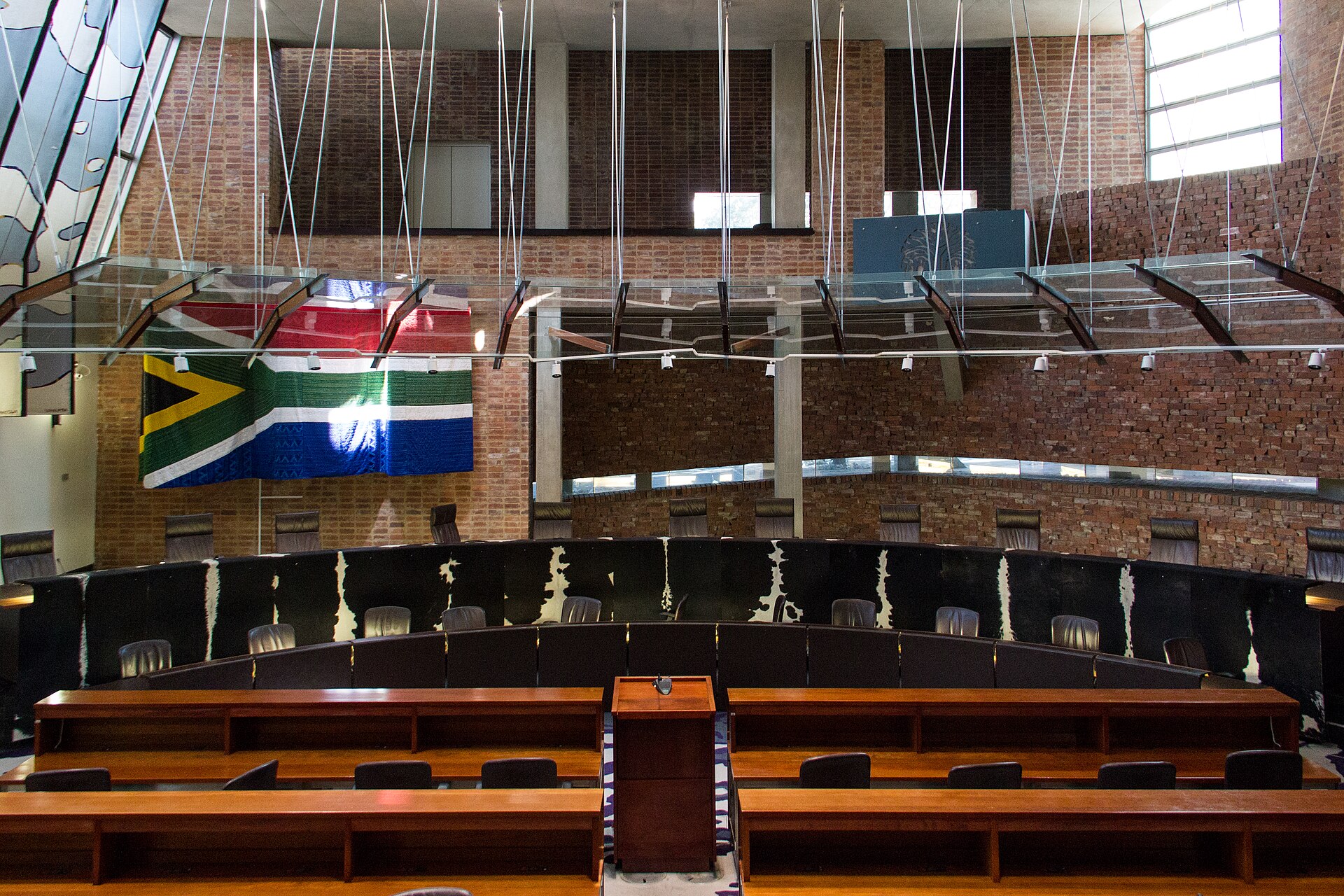
The Constitutional Court, the country’s highest court, sits in Johannesburg. It is led by Chief Justice Mandisa Maya and Deputy Chief Justice Dunstan Mlambo.
Its rulings regularly reshape politics, and the Phala Phala judgment is the latest example. The judges wrote three separate judgments in that case, showing a divided bench.
Andy Mothibi is National Director of Public Prosecutions, heading the National Prosecuting Authority (NPA). The NPA decides who is charged, including politicians.
The Electoral Commission of South Africa (IEC), chaired by Mosotho Moepya, runs every election. The Electoral Court hears disputes about them.
Security Forces and the Police Crisis
Under section 202 of the constitution, the president is commander-in-chief of the South African National Defence Force (SANDF). Defence Minister Angie Motshekga exercises political control day to day.
The police are the sharper political problem. In July 2025 KwaZulu-Natal police commissioner Lieutenant-General Nhlanhla Mkhwanazi accused senior officials, including Police Minister Senzo Mchunu, of political interference.
Ramaphosa placed Mchunu on leave and set up a judicial inquiry, the Madlanga Commission, which was still hearing witnesses in October 2026. Law professor Firoz Cachalia, appointed from outside Parliament, runs the police ministry.
A parliamentary ad hoc committee chaired by ANC MP Soviet Lekganyane finalised its draft report on Wednesday, 7 October 2026. It found no evidence linking Mchunu to alleged crime boss Vusimusi “Cat” Matlala, TimesLIVE reported.
The government directory still listed Mchunu as a minister without a portfolio on 8 October 2026. Whether he returns, or leaves the cabinet, is up to Ramaphosa.
Provinces, Premiers and the 4 November Vote
Each of the nine provinces elects a legislature, which chooses a premier, roughly equivalent to a US governor. The ANC holds seven of the nine premierships.
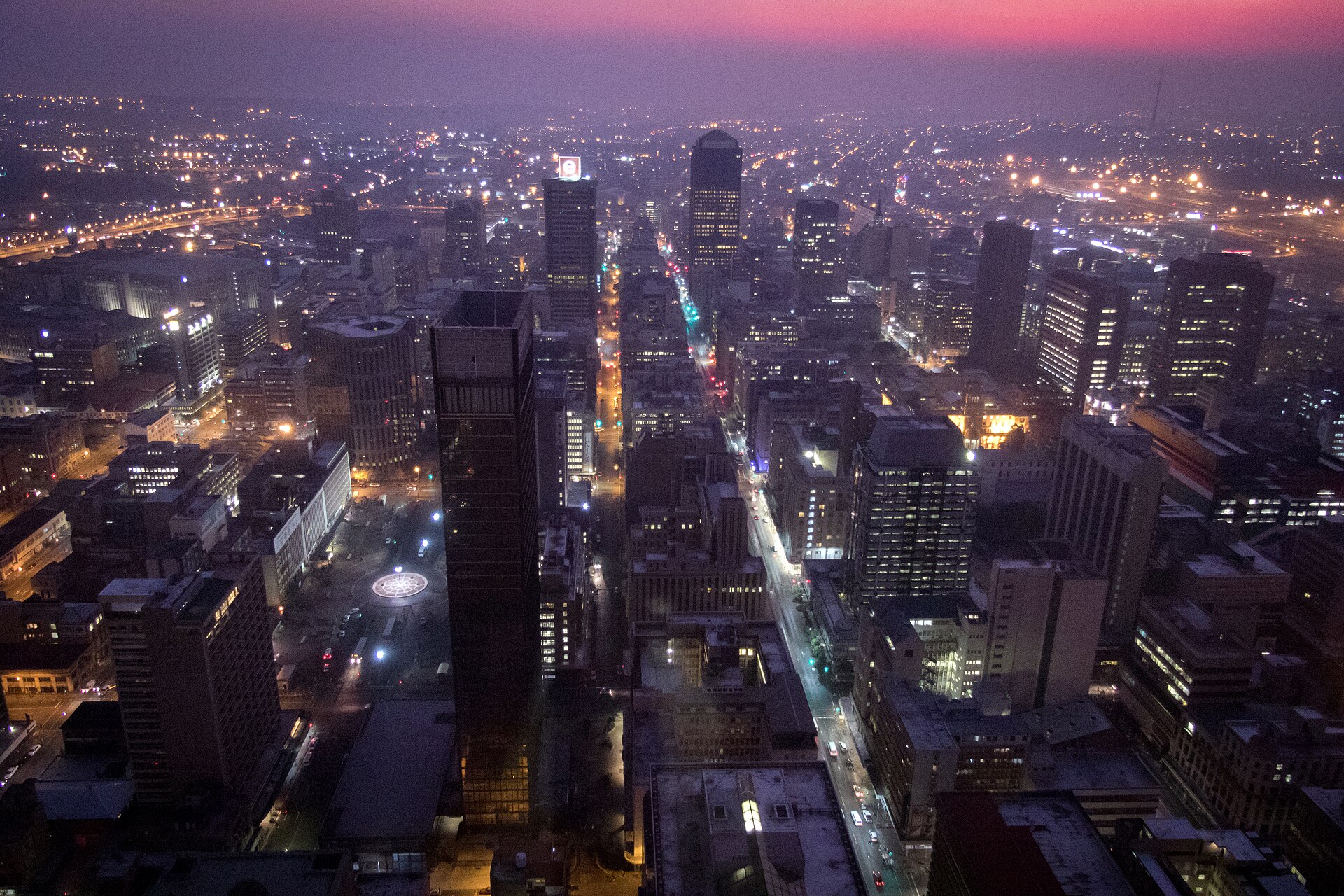
The DA’s Alan Winde governs the Western Cape, and the IFP’s Thami Ntuli governs KwaZulu-Natal. Panyaza Lesufi of the ANC is premier of Gauteng, the economic hub around Johannesburg and Pretoria.
Local government is the next test. Voters elect councils in all 257 municipalities on Wednesday, 4 November 2026.
Cooperative Governance Minister Hlabisa proclaimed the election on 7 August 2026. The IEC certified 136,790 candidates for 10,526 council seats, against 95,427 candidates in 2021.
The voters’ roll holds 29,230,808 people, 55% of them women, the IEC’s figures show. Johannesburg’s party ballot lists 75 parties, forcing a double-column ballot paper.
The ANC itself is missing from some ballots. It failed to submit 181 candidates in six municipalities before the deadline, M&G reported, and has appealed to the Constitutional Court.
Coalitions already run many councils. Since 2021 the ANC has been the largest party in 117 of 175 hung-council administrations, but held the mayoralty in only 55.
Those figures come from the Mapungubwe Institute’s Coalitions Barometer 2026, as reported by TimesLIVE. The DA and IFP turned their pluralities into office more often.
Public trust is low. A Human Sciences Research Council survey, cited by the IEC chair, found only 17% of adults satisfied with the direction of democracy.
In KwaZulu-Natal, the same survey found, adult support for democracy fell from 54% in 2004 to 6%. The polling firm Ipsos found MK remains largely a KwaZulu-Natal force.
Ipsos interviewed 3,600 people in June and July 2026. Between a fifth and a quarter of registered voters in Ekurhuleni, eThekwini, Tshwane and Buffalo City said they would not vote.
The full election timetable is in South Africa local elections set for 4 November 2026.
Rising Figures to Watch
Geordin Hill-Lewis took over the DA from John Steenhuisen in 2026 and is also its Cape Town mayoral candidate. His June reshuffle request showed a leader ready to remake the DA’s cabinet team quickly.
Paul Mashatile holds the post that preceded the ANC presidency for both Zuma and Ramaphosa. No candidates for the party’s 2027 contest have been declared.
Leon Schreiber, the DA’s home affairs minister, controls visas and identity documents, among the most visible jobs in government. Thami Ntuli leads KwaZulu-Natal, the province where MK is strongest.
Helen Zille, a former Western Cape premier, has campaigned in Johannesburg for months, Ipsos noted. Who governs Johannesburg after 4 November will be read as a national verdict.
What It Means for US Readers
For investors, coalition rule means slower policy, with a pro-market party inside the cabinet. The companies, banks and state firms are mapped in who runs South Africa’s economy.
Relations with Washington are strained. On 30 September 2026 the foreign ministry issued a third formal démarche to US Ambassador L. Brent Bozell III, Parliament said.
The earlier protests followed his criticism of a Constitutional Court ruling on the “kill the boer” chant. He had also warned that Washington was “running out of patience” over black economic empowerment and foreign policy.
Visitors and residents deal mainly with Home Affairs, run by the DA’s Leon Schreiber, for visas and permits. Water, power distribution and roads depend on the councils elected on 4 November.
The wider picture of ties with the United States, China and BRICS is in South Africa geopolitics explained.
What Is Not Known
How the Western Cape High Court will rule on the Phala Phala report is open, and either side may appeal. No ruling had been reported by 8 October 2026.
Nobody knows how the 4 November results will reshape coalitions in Johannesburg, Tshwane, Ekurhuleni and eThekwini. Whether the Constitutional Court will restore the ANC’s 181 missing candidates was also unclear.
The ANC’s 2027 succession race has no declared candidates. Zuma’s health, and who would lead MK after him, are unanswered.
Mchunu’s future is unresolved, and the Madlanga Commission has not reported. Malema’s appeals against his conviction and sentence have not yet been decided.
Frequently Asked Questions
Who is the president of South Africa in 2026?
Cyril Ramaphosa of the ANC, in office since February 2018. His second and final full term runs to 2029.
Which parties are in South Africa’s government?
The ANC and the DA lead a Government of National Unity formed in June 2024. The IFP, PA, Freedom Front Plus, GOOD, PAC, UDM and Al Jama-ah also hold posts.
Who are the main opposition parties?
Jacob Zuma’s MK, with 58 seats, and Julius Malema’s EFF, with 39, are the largest. ActionSA and the ATM are smaller opposition voices.
Can Ramaphosa be impeached over Phala Phala?
Removal needs 267 of 400 votes in the National Assembly. A committee is examining the case, but a court has paused its public hearings while Ramaphosa’s review is pending.
When are South Africa’s next elections?
Local elections for all 257 municipalities take place on 4 November 2026. The next national and provincial elections are due in 2029.
How is the South African president chosen?
Voters elect the 400-member National Assembly from party lists. The Assembly then elects the president, who may serve at most two terms.
Sources: South African Government, government leaders directory (president, ministers, deputy ministers, premiers); The Presidency, changes to the National Executive, 30 June 2026; Democratic Alliance, changes to DA representation in the GNU, 17 June 2026; Constitution of the Republic of South Africa (sections 60, 88, 89, 91, 202); Electoral Commission, 2024 national ballot results; Electoral Commission, 2024 National Assembly seat calculation; Electoral Commission, 136,790 candidates certified, 16 September 2026; Electoral Commission, registered voters as at 29 September 2026; Electoral Commission, 2026 local elections timetable; Electoral Commission news (chairperson’s keynote of 23 September 2026; Electoral Court ruling on MK, 25 September 2026); Parliament of South Africa, members by party; Parliament, National Assembly presiding officers; Parliament, NCOP presiding officers; Parliament, third démarche to the US ambassador; Constitutional Court, EFF and Another v Speaker of the National Assembly, CCT35/24, 8 May 2026; Constitutional Court, current justices; National Prosecuting Authority, National Director of Public Prosecutions; African National Congress, national officials; uMkhonto weSizwe Party, president; SABC News, court halts impeachment hearings, 24 July 2026; SABC News, judgment reserved on Phala Phala review, 4 September 2026; SABC News, Impeachment Committee chair Makashule Gana; SABC News, Madlanga Commission, 8 October 2026; SABC News, ANC list appeal, 4 October 2026; TimesLIVE, ad hoc committee draft report on Mchunu; TimesLIVE, Mistra Coalitions Barometer 2026; M&G, Malema leave to appeal; M&G, Zuma admitted to hospital; M&G, MK says Zuma is healthy, 8 October 2026; TimesLIVE, conflicting reports over Zuma hospital stay, 7 October 2026; SABC News, FF Plus leader Corné Mulder, 12 September 2026; SABC News, ATM parliamentary leader Vuyo Zungula, 12 August 2026; M&G, ANC appeal over 181 candidates; Ipsos South Africa, local elections survey, 4 September 2026 (all accessed 8 October 2026).