By Engadget | Created at 2026-08-06 12:04:34 | Updated at 2026-08-06 15:05:36
4 hours ago
By Engadget | Created at 2026-08-06 12:04:34 | Updated at 2026-08-06 15:05:36
4 hours ago
Lunar orbiters are currently trying to take images of the crash site.
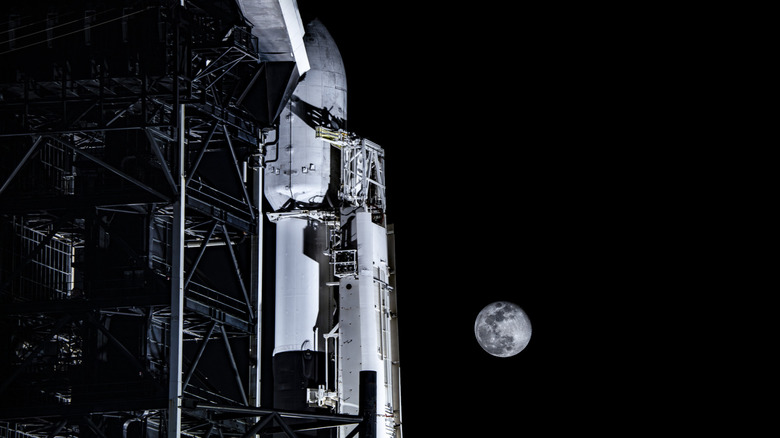
SpaceX
Back in April, independent astronomer Bill Grey wrote on his website that a SpaceX Falcon 9 rocket was on track to crash into the moon in the early hours of August 5. Now, scientists believe that the rocket has already crashed into the lunar surface as Grey had predicted. Carl Schmidt, a planetary scientist from Boston University's Center for Space Physics, told CBS News that the Very Large Telescope in Chile observed a plume of sodium and lithium gas, indicating the the collision already happened. He also told Leonard David's Inside Outer Space that the plume was "10's of kilometers in size" and lasted between five to 10 minutes.
As The Guardian notes, professional and amateur astronomers weren't able to confirm the impact, because it took place on the sunlit side of the moon. The brightness in that area made it difficult to observe the event. Further, the collision wasn't particular large in size, even though the four-ton rocket slammed into the surface of the moon at a speed of 5,400mph. Although it's far less common for human-made objects to crash into the planetary satellite, the lunar surface regularly absorbs impacts from meteoroids with the same force. That said, NASA believes the rocket's collision still created a new crater about 60 feet wide and 12 feet deep.
NASA's Lunar Reconnaissance Orbiter and South Korea's Korea Pathfinder Lunar Orbiter will attempt to image the crash site, though their success depends on several factors like lighting and timing. It could also take them several days to capture and send the images to Earth.
The Falcon 9 rocket, specifically its upper stage, came from the January 15, 2025 Blue Ghost mission, which carried two lunar landers to orbit. "For most of our missions, we plan a controlled deorbit of the Falcon second stage so it safely reenters over the ocean," SpaceX wrote in a post on X. "For higher energy missions like those to a lunar transfer orbit, nearly all performance on the vehicle is devoted to successfully placing the payload in the intended orbit, and a controlled disposal maneuver is not always possible."
In other words, the rocket used most of its fuel to accomplish its goal and couldn't make it back to Earth. SpaceX said solar activity and gravity led the rocket to the moon instead. While the event raised concerns about space debris, NASA said "disposing of upper stages on the lunar surface is a technically accepted and safe method and, in some cases, can be the only practical option for missions in low lunar orbit."